Vintage Chairs

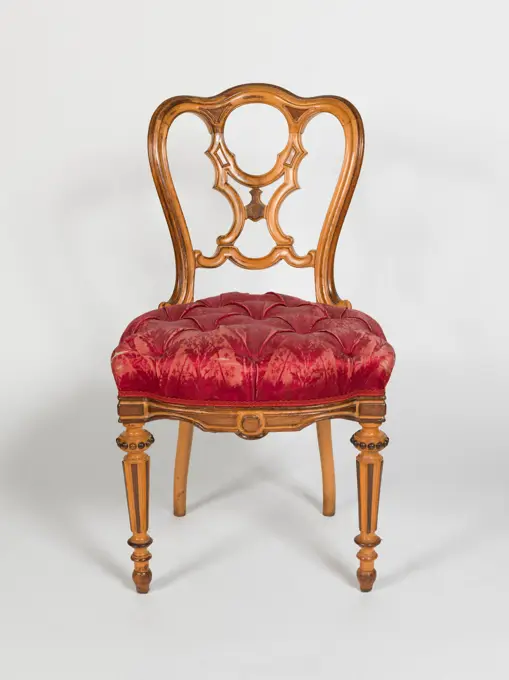
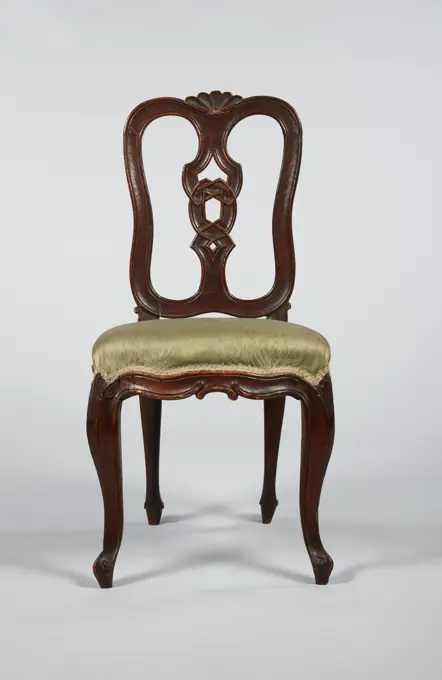
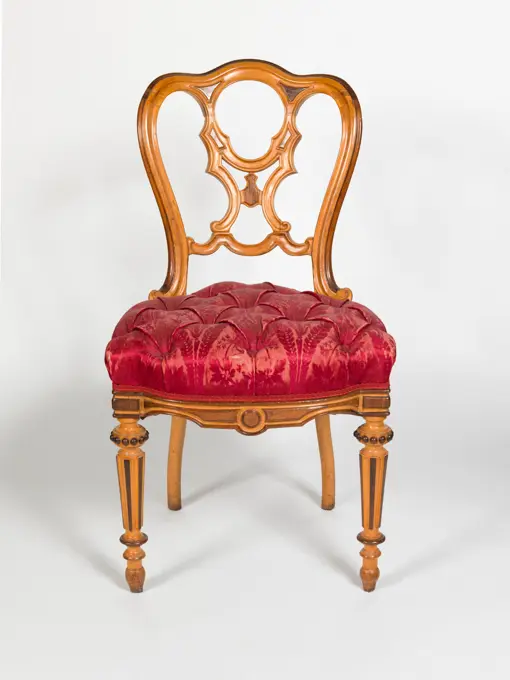
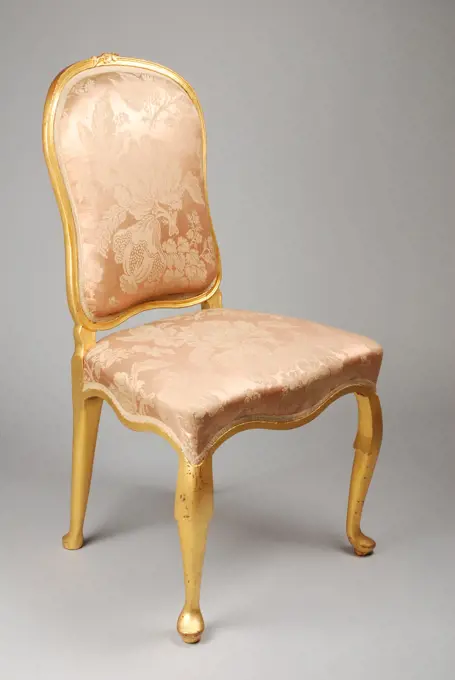
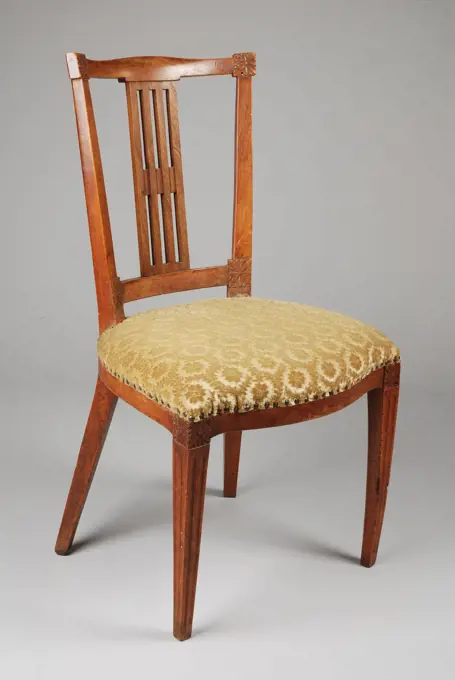
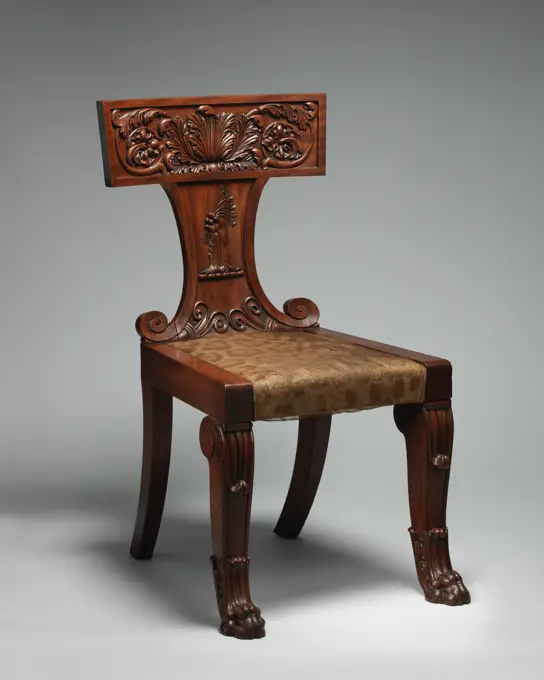
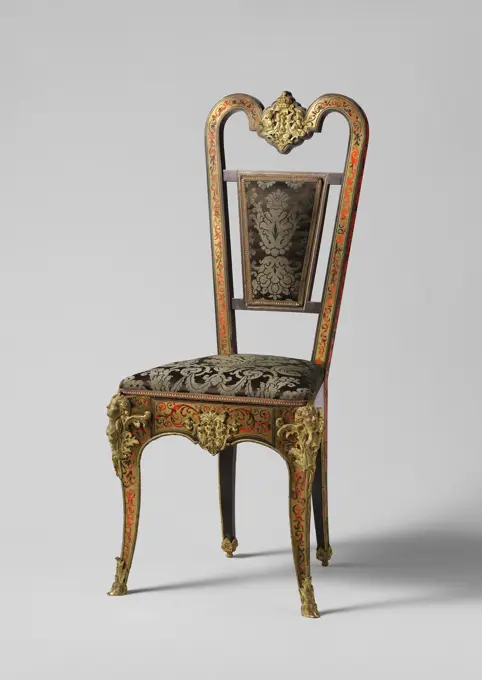
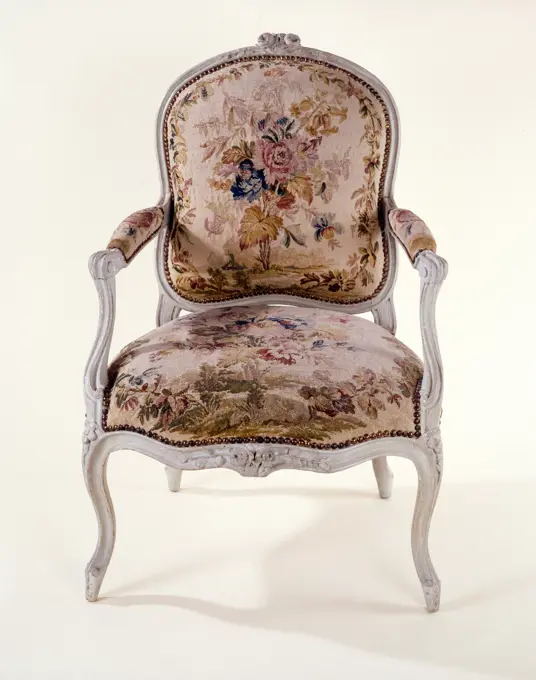
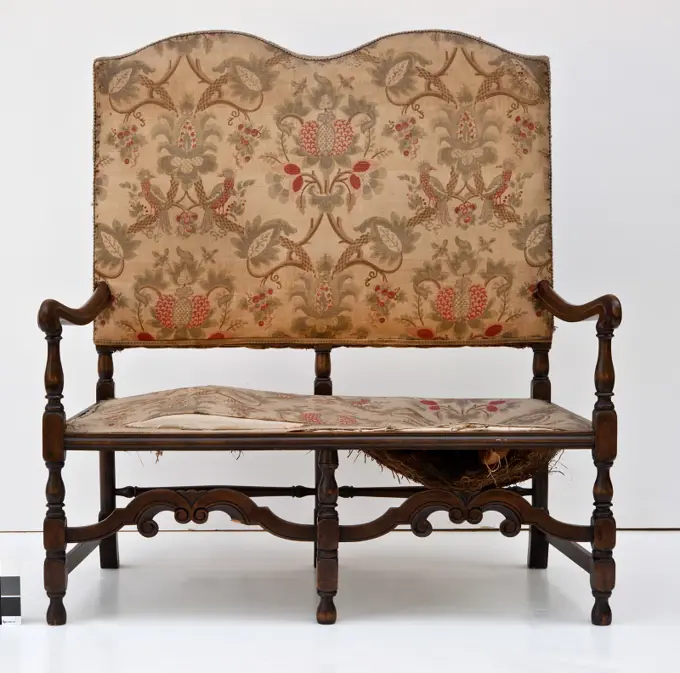
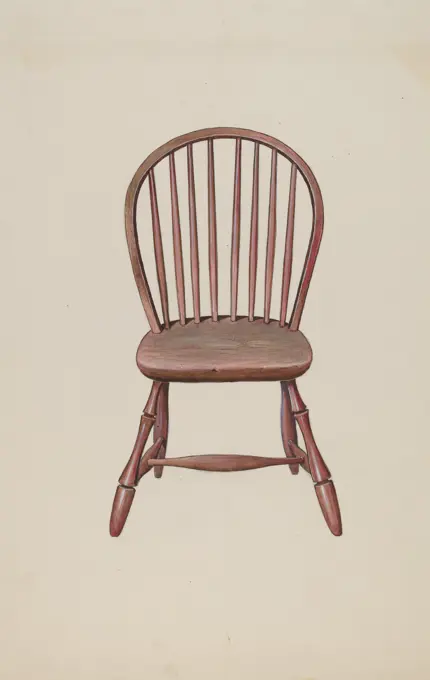
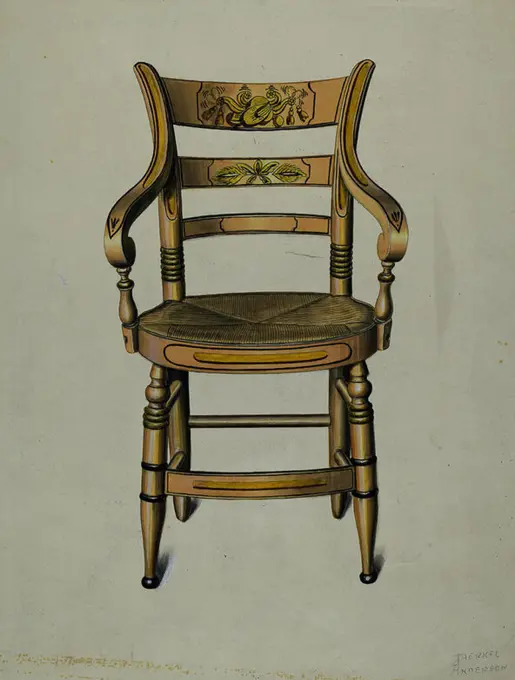
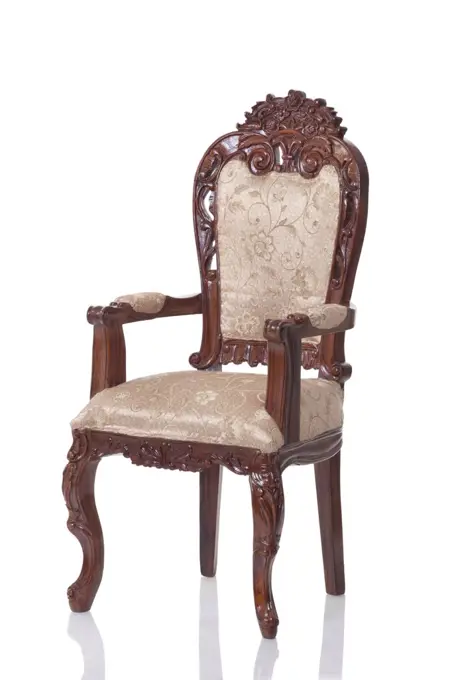
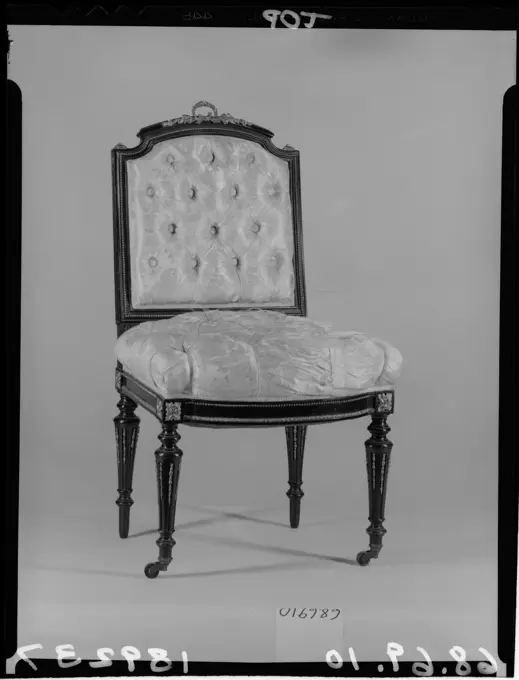
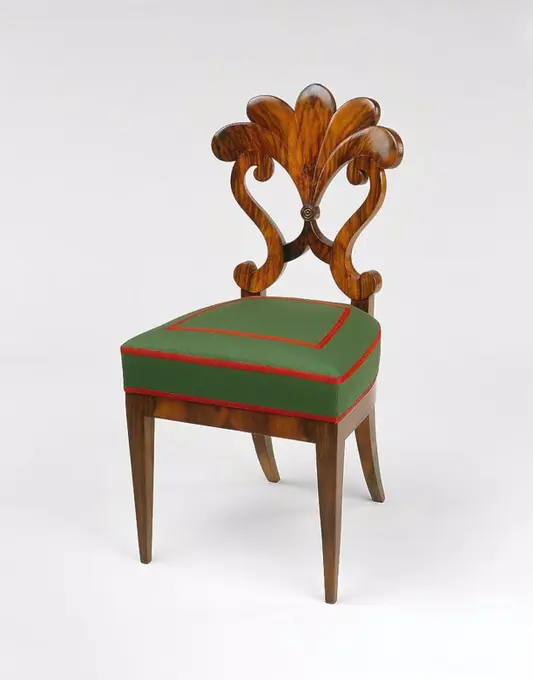
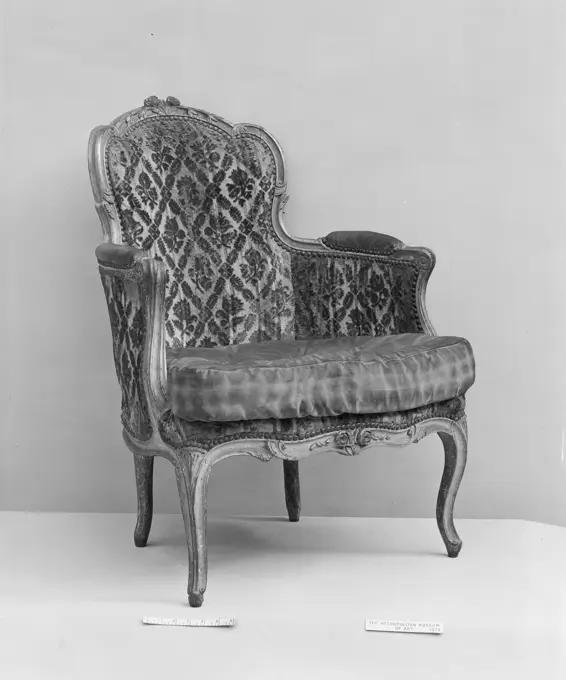
An assortment of antique chairs with intricate designs and upholstery, showcasing classic craftsmanship and historical styles from different periods.

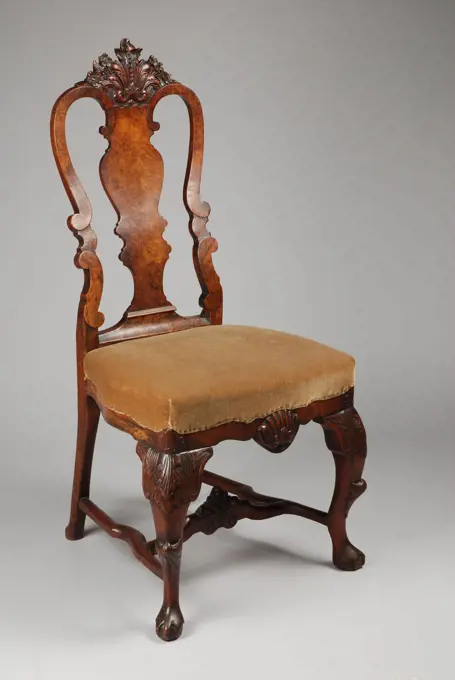
Iron wood chair and rattan -stretched seat (series of 4 seats), Anonymous, 1725 - 1750 Chair (series of four identical seats BK-1994-A, B, C, D) of ironwood with rattan-stretched seat. Faint backwards bent hind legs and overhoeks placed S-shaped front legs that end in Leeuklauws and are decorated at the top with shell motifs. The cross has scalloped side sports and a scalloped cross -sport. The hind legs are connected by a second transverse sport under the session. The lower edge of the seating rules on front and sides is made up of two S-Voluten with a shell motif in the middle. The high back has scalloped styles and a wide baluster -shaped center leaf that is crowned by a shell from which leaf clocks depend on leaf voltuten, and that is decorated from below with a standing leaf clock on a pedestal. Where the styles touch the center leaf, they end up with leaf motifs decorated volutes. Indonesia wood (plant material). ironwood. rattan Chair (series of four identical seats BK-1994-A, B
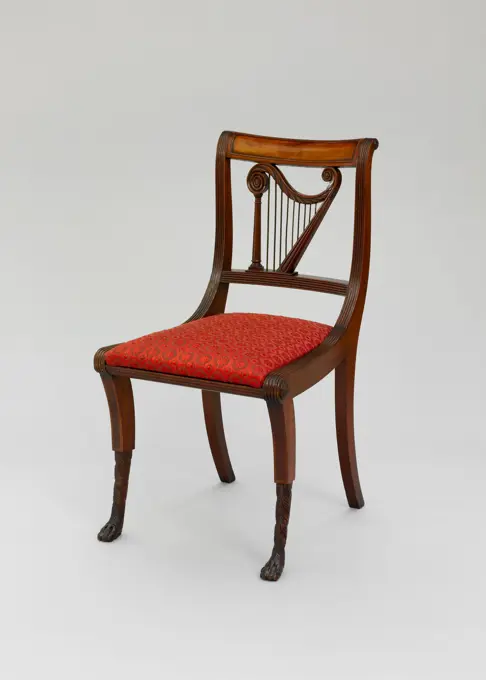
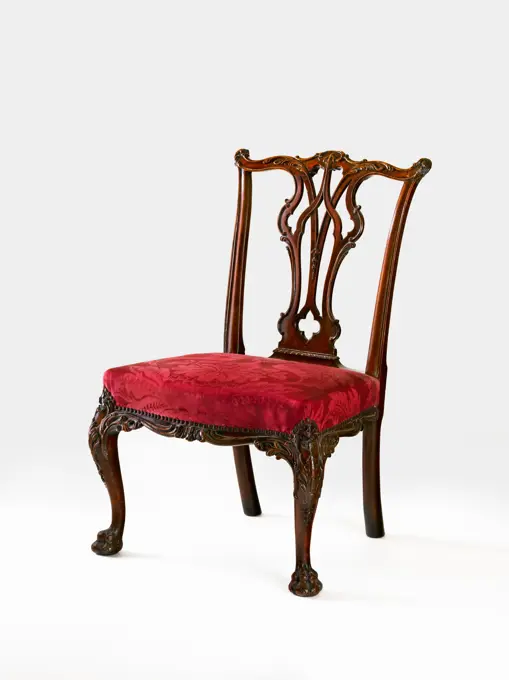
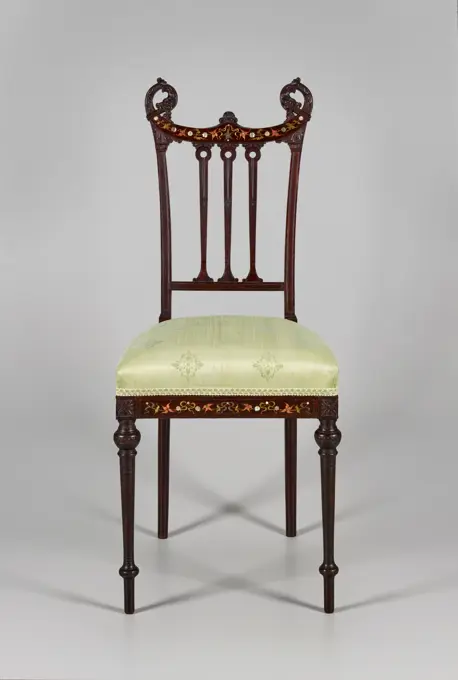
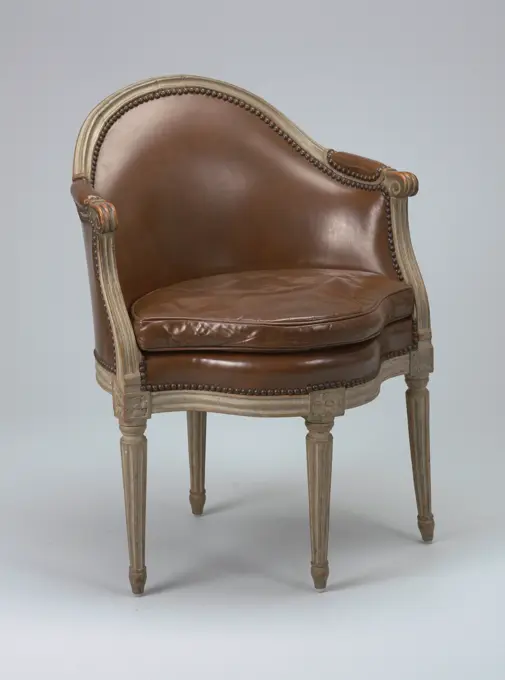
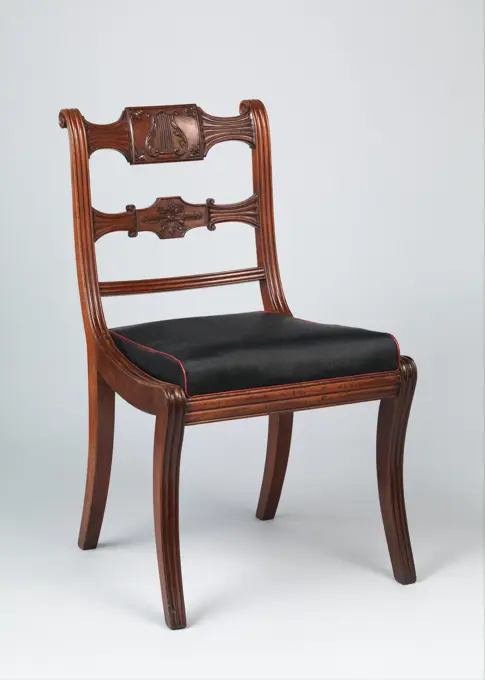
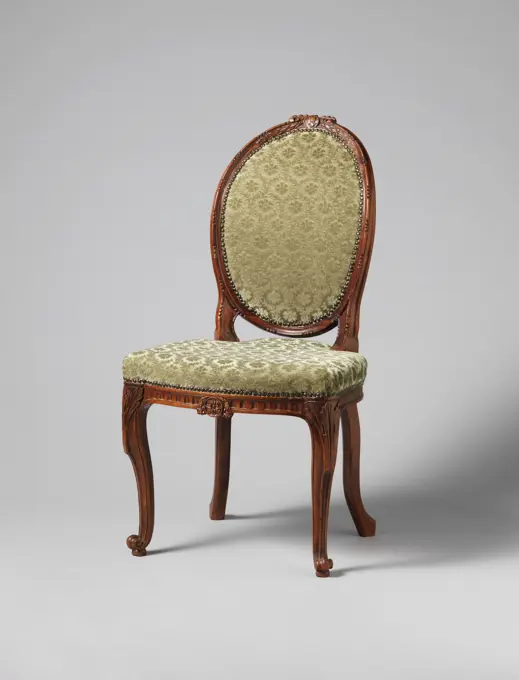
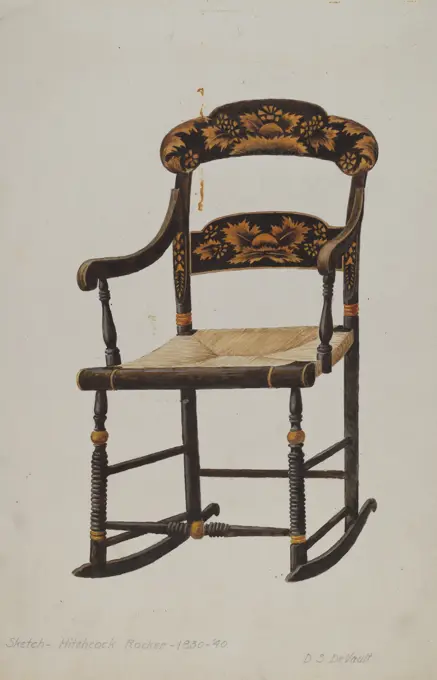
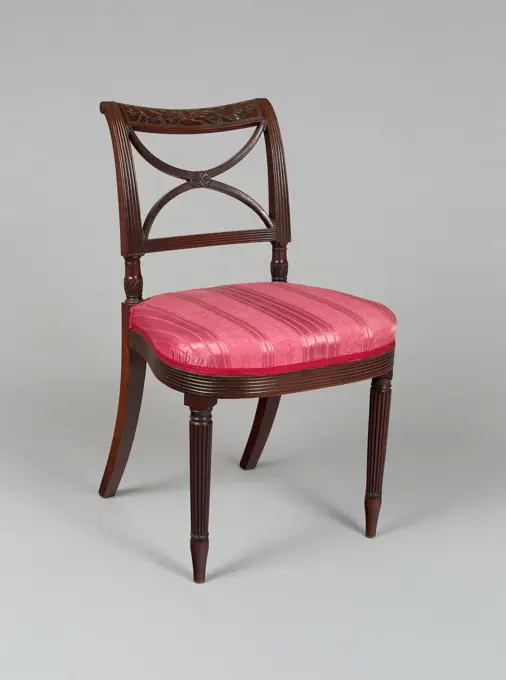
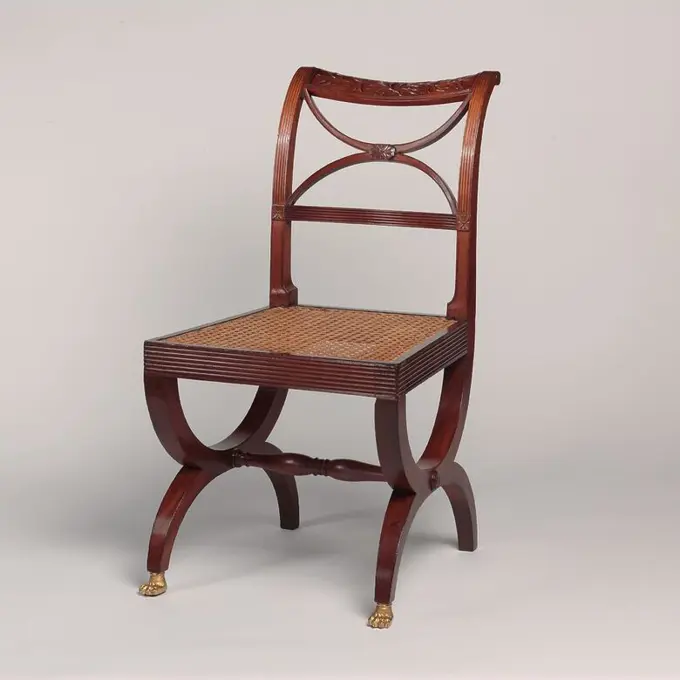
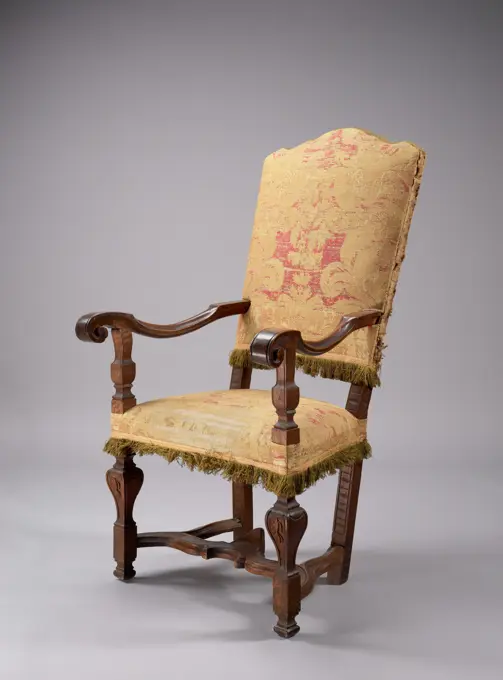
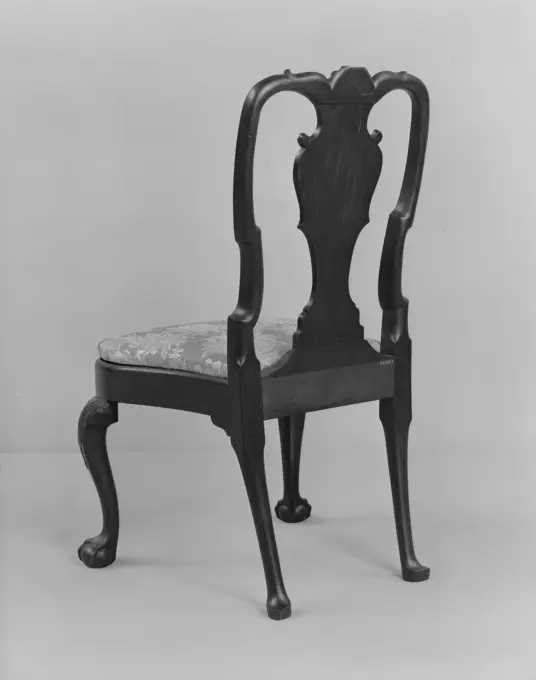
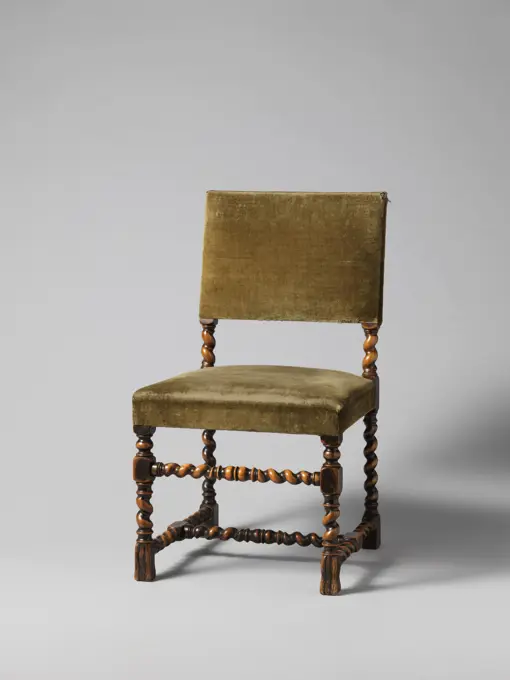
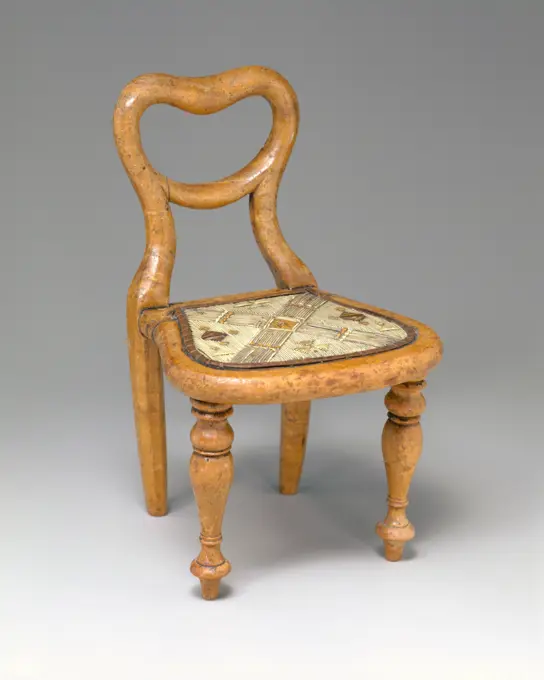
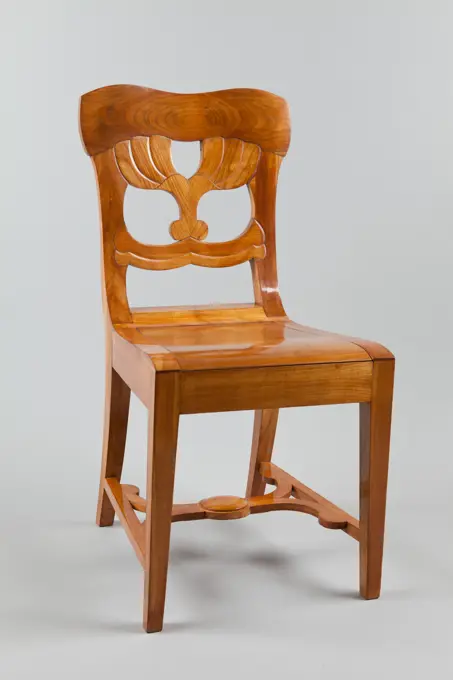
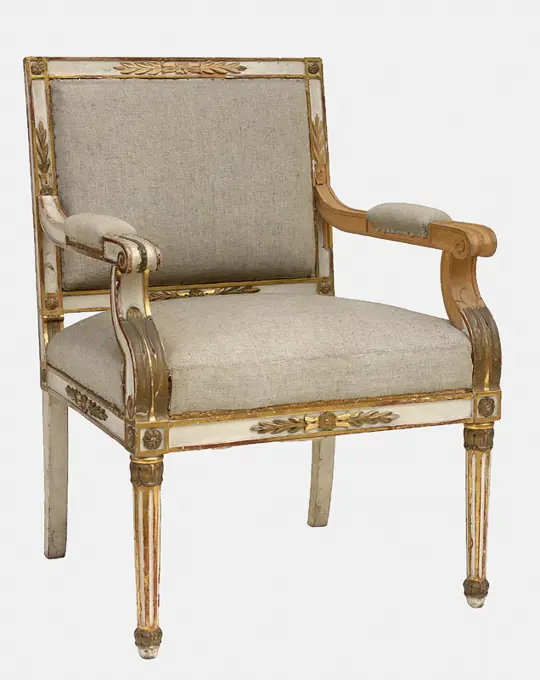
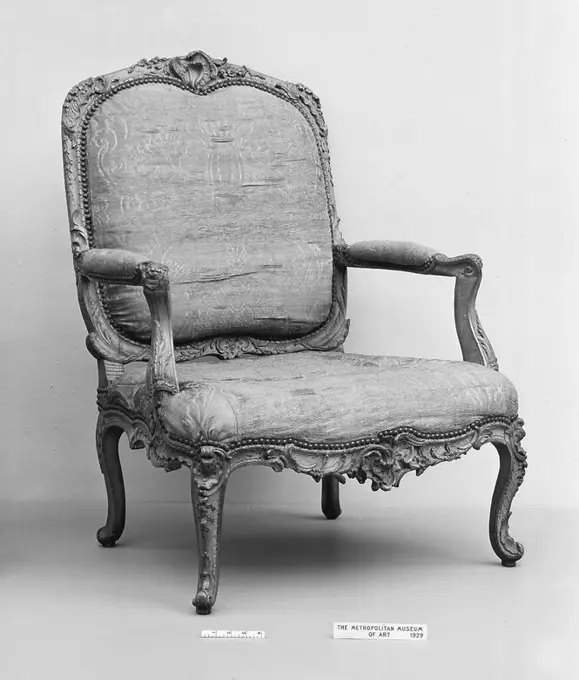
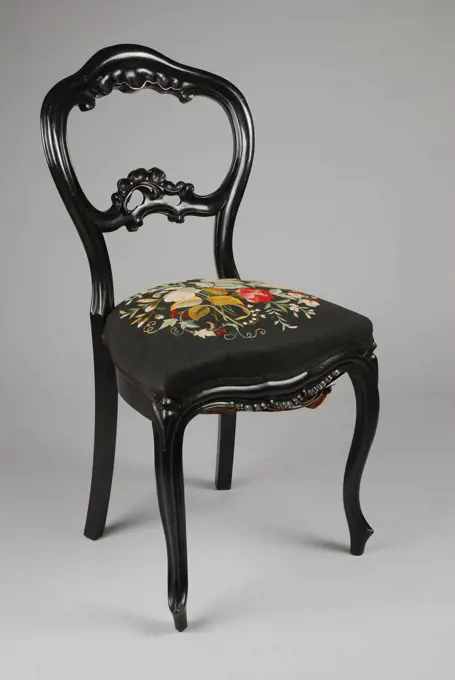
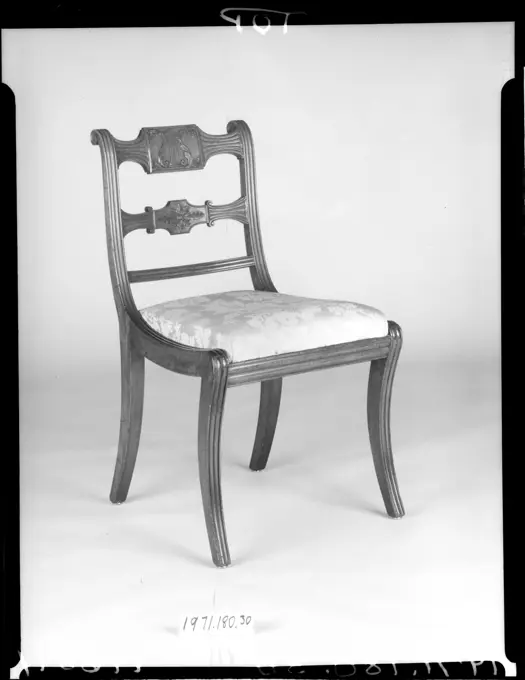
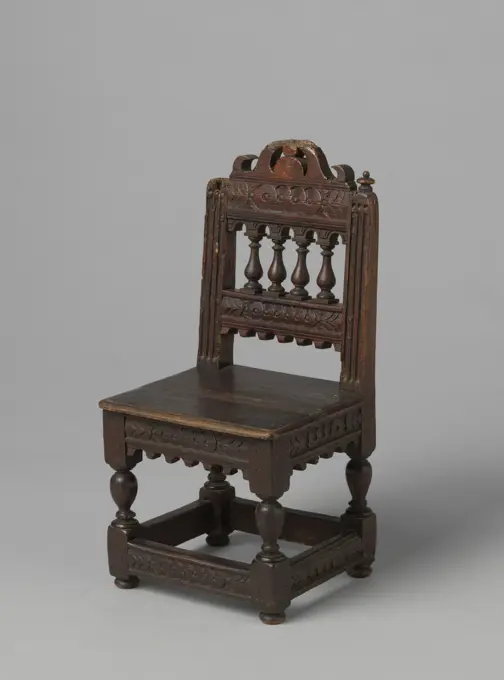
Side chair 1755-75 American The distinctive designs of the crest-rail shell, pierced splat, and claw-and-ball feet on this chair indicate a Newport origin. The execution, as well as the ample form and powerful stance, is in the manner of the preeminent Newport maker John Goddard (1723- 1785). The chair has an unrestored old finish, and the original upholstery foundation survives beneath the old seat cover of dark green velvet.. Side chair 16978Elm -wood chair, with the exception of the rear completely decorated with marquetery, anonymous, c. 1780 - c. 1790 Chair of elm wood (series of six pieces: A to F). With the exception of the back completely decorated with marquetery work in satin, palm and ebony. The upholstery is modern. Netherlands elm (wood). satinwood (wood). boxwood. ebony (wood). maple (wood). purpleheart (wood). rosewood (wood). textile materials Chair of elm wood (series of six pieces: A to F). With the exception of the back completely decorated with marquetery work in satin, palm and ebony. The upholstery is modern. Netherlands elm (wood). satinwood (wood). boxwood. ebony (wood). maple (wood). purpleheart (wood). rosewood (wood). textile materialsChair with rattan seat. Hood with crested between s-shaped volutes and leafwork, at the bottom Three arc shapes with seediller motif. Coroland wood chair with a rattan seat. The overhoeks placed S-shaped front legs exhibit leafwork; The angular rear legs deviate backwards. They are connected to each other on three sides by scalloped sports. The partially profiled front and side rules show down S volutes and leafwork. The lightly healed back shows a hood with crested between s volutes with leafwork and on the bottom three arc shaped recesses that, just like the scalloped center leaf, showing seedile motifs.Side Chair 1810-20 American. Side Chair 1681Side chair 1760-90 American The squat proportions of the back of this chair and the carved rail skirts are suggestive of English work, but the oval rear legs, side rails with through tenons, and design and carving of the back are in the classic Philadelphia manner. The refined carving that accentuates the integrated design of the crest and splat represents the fullest development of the Gothic splat pattern in Philadelphia. The hairy paw feet are a restoration.. Side chair. American. 1760-90. Mahogany. Made in Philadelphia, Pennsylvania, United StatesSideChair. Maker, possibly by: Herts Brothers, American, 1874-1908Chair ca. 1775 James Wyatt British. Chair. British. ca. 1775. Mahogany, leather. Woodwork-FurnitureSide Chair. American; New York. Date: 1805-1812. Dimensions: 83.8 × 48.3 × 43.2 cm (33 × 19 × 17 in.). Mahogany, ash, cherry, and white pine. Origin: New York City. Museum: The Chicago Art Institute, Chicago, USA. Author: School of Duncan Phyfe.Iron wood chair and rattan -stretched seat (series of 4 seats), Anonymous, 1725 - 1750 Chair (series of four identical seats BK-1994-A, B, C, D) of ironwood with rattan-stretched seat. Faint backwards bent hind legs and overhoeks placed S-shaped front legs that end in Leeuklauws and are decorated at the top with shell motifs. The cross has scalloped side sports and a scalloped cross -sport. The hind legs are connected by a second transverse sport under the session. The lower edge of the seating rules on front and sides is made up of two S-Voluten with a shell motif in the middle. The high back has scalloped styles and a wide baluster -shaped center leaf that is crowned by a shell from which leaf clocks depend on leaf voltuten, and that is decorated from below with a standing leaf clock on a pedestal. Where the styles touch the center leaf, they end up with leaf motifs decorated volutes. Indonesia wood (plant material). ironwood. rattan Chair (series of four identical seats BK-1994-A, BArmchair (France); wood, leather; 84.5 x 63 x 51 cm (33 1/4 x 24 13/16 x 20 1/16 in. ); 1978-178-3-a,bSide Chair ca. 1815 American Boston chair makers developed several versions of the ancient Greek klismos form, this model being one of the most popular. The fine, crisp carving on the crest and stay rails is characteristic of Boston, as are the reeds in the legs, stile, and seat rail, which are bolder and fewer in number than in the chairs' New York and Philadelphia counterparts. The upholstery foundations on the slip seats are original and provide an accurate period shape, crisp and rectilinear at the sides and gently contoured at the front.. Side Chair 1759Chair with a woman's head cut into a medallion with Lauwerslingers, Anonymous, c. 1775 - c. 1780 Mahoniehout chair, covered with green trijp (not original). The two slightly s-shaped bent legs are decorated with a ribbed band that is crowned by a large motif an acanthus leaves. The powerful curved hind legs are unadorned. The straight seating rule shows cannelures at the front and sides, interrupted in the middle of the front by a round medallion with rosette of which laurelslingers hang on either side. Along the oval, slightly hollow back and the high, C-shaped bent supports, a list of alternating bars and three pearls. This is interrupted at the top by a round medallion with a women's head in profile, used to the left, hanging on a bow and flanked on either side by hanging Lauwerslingers. Numbered on the inside of the front line: VII with two stripes underneath, above one; Furthermore, the letter C with double point. Netherlands mahogany (wood). textile materials Mahoniehout chair, cDavid S De Vault, Hitchcock Rocker, 1935 1942 Hitchcock RockerFurniture, Anonymous, 1850 - 1875 Chair from Mahonieen Kindersueblement consisting of three chairs and two arm chairs. The round front legs are decorated with turning and with a border of semicircular profiles. The saber -shaped hind legs run into the back window with bent styles and upper sill and with an intermediate rule, decorated with symmetrically placed leaf skins, between which a vertically profiled final piece. The S-shaped armrests and struts end in a volute; The underside of the struts wear semi -round profiles. Covered session. Northern NetherlandsNetherlands wood (plant material). mahogany (wood). textile materials Chair from Mahonieen Kindersueblement consisting of three chairs and two arm chairs. The round front legs are decorated with turning and with a border of semicircular profiles. The saber -shaped hind legs run into the back window with bent styles and upper sill and with an intermediate rule, decorated with symmetrically placed leaf skins, between which a verticaSidechair.   Maker: Eliphalet Chapin, American, 1741-1807Armchair of walnut with drawing parts. Armleggerstut with women's bust on vase-shaped, around pedestal. Covered velvet .. Uped armchair of walnut, resting on swapped legs with houses and connected by a roared H-shaped cross and a kissed upper sport, applied between two houses. The raating armrests are supported by arm struts, which consist of women's busts, placed on a vase-shaped pedestal. The upholstery was murdered. The back frames are smooth.Side Chair c 1805-1812 New York City. Mahogany, ash, cherry, and white pine . Artist unknownSide Chair. Culture: American. Dimensions: 32 3/4 x 17 x 19 5/8 in. (83.2 x 43.2 x 49.8 cm). Maker: Attributed to the Workshop of Duncan Phyfe (1770-1854). Date: ca. 1815. Museum: Metropolitan Museum of Art, New York, USA.Anonymous. "Houbigant perfume chair". Charm and rosewood; Garnish: Damascus. 1855. Paris, Carnavalet museum. 100080-10 FURNITUREArmchair c 1690-1725 Boston. Maple with leather . Artist unknownChippendal chair (lined seat) (dummy title). Carved and textile wood. House of Victor Hugo - Hauteville House.Anonymous. "Houbigant perfume chair". Charm and rosewood; Garnish: Damascus. 1855. Paris, Carnavalet museum. 100080-4 FURNITUREArmchair. Armchair from walnut. The furniture has a coated seat and rest on front legs in the form of S-volutes and articulated hind legs, resting on flat bulbs and connected by an X-shaped cross. The armrests have been rolled and finished in volutes, decorated with acanthus leaf. The armrest tricks are vase shaped. The detached corner styles of the open-worked back are baluster-shaped. The middle web has volutes, graces and acanthus leaf; The styles on both sides just volutes and acanthus sheet.Chair. unknown, creatorSide Chair. Culture: American. Dimensions: 32 3/4 x 17 7/8 x 16 1/4 in. (83.2 x 45.4 x 41.3 cm). Maker: Attributed to Duncan Phyfe (1770-1854). Date: 1791-1818. Museum: Metropolitan Museum of Art, New York, USA.Chair of mahogany, covered with green tripe. Chair of mahogany, covered with green tripe, belonging to an amele. The hind legs deviate from the conical, fluted legs. The sitting window is round; The oval healed back window rests on C-shaped struts with acanthus leaf. The rule and the upper spray are decorated with a vase, in the middle of branches with leaves, hung on rings. See also: BK-18323-a / l and n.Chair -. Armchair from walnut. The furniture is stretched with cane and has killed legs that are connected by an H-shaped window. The armrests rest on sliced armrest tricks, have been rolled and finish in a volute, decorated with acanthus leaf. The detached corner styles are hurled. The back framework and advance exhibit openwork acanthus curls with a royal wreath in the middle in the top line and in advance. In the sitting room there is a bond of window braids above and aside.Furniture, Anonymous, 1650 - 1700 Chair of walnut, covered with black velvet and cracking tie risles. The furniture has hurled legs that are connected by an H-shaped cross and an upper sport, all also hurled. The tapisserie decoration on the upholstery shows flowers and lilies in green, salmon color, liver color and blue. The lining of the backs is made of yellow damask. The canals are old. One chair from a series of six (inv.no. BK-KOG-1797-A to -F). Northern Netherlands wood (plant material). walnut (hardwood). velvet (fabric weave) tapestry / damask Chair of walnut, covered with black velvet and cracking tie risles. The furniture has hurled legs that are connected by an H-shaped cross and an upper sport, all also hurled. The tapisserie decoration on the upholstery shows flowers and lilies in green, salmon color, liver color and blue. The lining of the backs is made of yellow damask. The canals are old. One chair from a series of six (inv.no. BK-KOG-1797-A to -F). Northern NetherlandArmchair in neo-rococo style of djatihout and trenched seat and back. Armchair in Neo-Rococo style of Djatihout, sitting and oval backrest struck with reeds. S-shaped curved front legs and curved rule, strongly bent out, arms built up from two volutes, a cut-away back with loose side styles and a grlaneg of a large flower flanked by full-length horns from which flowers come.Chair of mahogany, covered with green tripe. Chair of mahogany, covered with green tripe, belonging to an amele. The hind legs deviate from the conical, fluted legs. The sitting window is round; The oval healed back window rests on C-shaped struts with acanthus leaf. The rule and the upper spray are decorated with a vase, in the middle of branches with leaves, hung on rings. See also: BK-18323-A / I and K / N.Armchair. unknown, authorChair. unknown, creatorChair with winding pots, covered with tripe with a pattern of red and green grenades, anonymous, 1650 - 1700 Chair of Notenhout, covered with Trijp. The chair has flung legs, which are connected by an H-shaped cross and a middle sport, all also thrown. The Trijp shows a pattern of red and green grenades on a soil of shaved pole. The fringe has small raised brushes above a fringe head. The backstyles are covered. One from a series of three (inv.no. BK-KOG-1443-A to -c). Northern Netherlands wood (plant material). walnut (hardwood). velvet (fabric weave) Chair of Notenhout, covered with Trijp. The chair has flung legs, which are connected by an H-shaped cross and a middle sport, all also thrown. The Trijp shows a pattern of red and green grenades on a soil of shaved pole. The fringe has small raised brushes above a fringe head. The backstyles are covered. One from a series of three (inv.no. BK-KOG-1443-A to -c). Northern Netherlands wood (plant material). walnut (hardwood). velvet (fabrikoloniale armstoel, anonymous, c. 1700 - c. 1800 Armchair. Seat with dust covered, back with rattan. One from set of 6 Indonesia velvet (fabric weave). rattan Armchair. Seat with dust covered, back with rattan. One from set of 6 Indonesia velvet (fabric weave). rattanSquare-back armchair 1800-1810 American This chair and a matching one in the collection (1971.17.2) are from a set that descended in the family of the architectural historian Henry-Russell Hitchcock (1903-1987). A number of documented chairs similar to these examples were made by Ephraim Haines (active 1790-1811) and Henry Connelly (1770-1826) of Philadelphia.. Square-back armchair 263Trellis-back side chair, 1800-1810, 37 x 21 x 17 1/4 in. (93.98 x 53.34 x 43.82 cm), Mahogany, maple, silk damask, United States, 19th centuryChair of mahogany, covered with tripe with a continuous pattern from the beans hanging onto ovals in which a flower on striped soil. Chair of mahogany, covered with tripe with a continuous pattern of beans hanging ovals in which a flower on a striped soil. The square legs are channeled. The front seat is decorated in the middle with a laurel wreath and a pendulum. The back window is parallelogrammed and rolled. The upper shell is decorated with a straight vase and laurel garland. The coating is attached with gold-plated heads. The chair belongs to an amele (inv.no. BK-16145-A to -G).. Armchair from walnut. The furniture has a cane tension and sleeved legs. The flat open-worked pre-medium sport has been put on putti, which wear a crown and acanthus drinks. The armrests have been slightly rolled, end in volutes with rosettes and are decorated with acanthus leaf. The armrest struts are hurled. The corner styles of the back are crowned by vases. The upper sprin is decorated as the for-middle agent, the sills and the oval around the middle field they decorated with acanthus drinks.Old Viennese Chair Old Viennese chair on an isolated studio background Copyright: xZoonar.com/AndreyxSkatx 8602102Chair -Mahogany chair, anonymous, 1775 - 1800 Mahogany chair with a covered seat. The scanninged front legs with bobbins with small rosettes have the front legs; The backwards hind legs are also raised. The trapezoidal back window is crowned by a vase, decorated with leaf vines hanging over the top sill. The openwork middle part shows a sliced rosette inside rectangular surrounding and in the midst of angular tire work. The brown out lines carries a leaf wreath with Festoen. Northern Netherlands wood (plant material). mahogany (wood). textile materials Mahogany chair with a covered seat. The scanninged front legs with bobbins with small rosettes have the front legs; The backwards hind legs are also raised. The trapezoidal back window is crowned by a vase, decorated with leaf vines hanging over the top sill. The openwork middle part shows a sliced rosette inside rectangular surrounding and in the midst of angular tire work. The brown out lines carries a leaf wreath with Festoen. Northern NetheSide Chair 1835-50 American. Side Chair 1748Armchair. unknown, creatorSide Chair 1760-90 American. Side Chair. American. 1760-90. Mahogany, cherry, white oak. Made in New York, United StatesSide Chair ca. 1865-70 American. Side Chair 17550High-back chair (pair with 1975.1.1998). Culture: Northern Africa (Morocco) or Syrian (). Dimensions: H. 124.8 cm, W. 63.6 cm, D. 65 cm. Date: late 19th or early 20th century. Museum: Metropolitan Museum of Art, New York, USA.Armchair (Austria); Manufactured by Gebrüder (Brothers) Thonet (Austria); beechwood, rattanSeat of oak with a covered seat. Mainted parts., Anonymous, 1880 - 1920 Chair belonging to a set of three chairs and an armchair made of walnut with a covered seat. The flared legs are connected by a flung H-shaped cross and a also flung for sport. The covered back window rests on articulated struts. The armchair has flagging armrest stars and armrests. See: BK-19959-116-A/D.  wood (plant material). walnut (hardwood). textile materials Chair belonging to a set of three chairs and an armchair made of walnut with a covered seat. The flared legs are connected by a flung H-shaped cross and a also flung for sport. The covered back window rests on articulated struts. The armchair has flagging armrest stars and armrests. See: BK-19959-116-A/D.  wood (plant material). walnut (hardwood). textile materialsArm chair, covered with batikt parchment, Carel Adolph Lion Cachet, c. 1900 Arm chair of oak and ebony, covered with batikt parchment. Netherlands oak (wood). ebony (wood). parchment (animal material) Arm chair of oak and ebony, covered with batikt parchment. Netherlands oak (wood). ebony (wood). parchment (animal material)Gold plated straight rococo chair, straight-seat chair furniture furniture interior design wood elmwood goldpaint silk, With pink silk damask upholstered sober model with only small cut flower rococo. Chair of light green painted beech wood, resting on four round conical fluted legs. The light rear-hearted rectangular back, resting on fluted struts, is connected to a widening at the sitting window, as well as the hind legs. The seat rules are profiled around three times. The back and the seat consist of braided reeds. The houses at the top of the legs and the award of back styles are decorated with a stung, dark painted, leaf ornament.Eggshade Louis Seize straight chair, straight-seat chair furniture furniture interior design wood elm wood velor, Green velvet upholstery and openwork backsheet on the houses of the forelegs rosettes Louis XVI Louis XVI Louis SeizeLouita Gourley, Chair, c 1941 ChairElm wood chair, on conical legs and with trapezoidal back with three bars. Black wash cloth upholstery., Anonymous, 1785 - 1800 Elm -wood chair resting on conical legs, the hind legs of which slightly give way. They are connected by four, in diameter rectangular, sports. The trapezoidal back shows three bars. The session has a nailed upholstery of black washing cloth. Northern Netherlands (possibly) wood (plant material). elm (wood). Elm -wood chair resting on conical legs, the hind legs of which slightly give way. They are connected by four, in diameter rectangular, sports. The trapezoidal back shows three bars. The session has a nailed upholstery of black washing cloth. Northern Netherlands (possibly) wood (plant material). elm (wood).Side chair (part of a set) ca. 1820 Attributed to Thomas Hope British, born Holland The klismos, with splayed legs and round back, was an antique form resuscitated in the archaeological enthusiasm of the late eighteenth century. The signature "C. Dixwell 1820" beneath the seat rail of the side chair (see 67.63.1) is that of Charles Dixwell, a London "upholder," a profession including the tasks of upholsterer, furniture repairman, and undertaker.. Side chair (part of a set). British. ca. 1820. Mahogany. Woodwork-FurnitureEbbening chair with boulle marquetery. Ebbening chair with boulle marquetery. The chair is stamped W.Walnut Queen Anne chair, chair furniture furniture interior design walnut beech wood velours burr walnut wood, Carving on the hood the front and backrest line and lines veneered with root walnut green velor upholstery Queen AnneArmchair ca. 1820 Possibly Thomas Ash. Armchair 1763Arm chair, Empire model, with back and seat of reeds, painted red and gilded and heighted with gold, c. 1800 - c. 1825 Two arm chairs (A and B) of a tropical wood (djati), Painted red, pledged parts and heighted with gold, the back and the loose sitting window with reeds. Empire model with straight, slightly backwards vaulted back, widening session with curved sides, baluster-shaped front legs and army tits, bent, spinning arms and closed cheeks with deepened fields, which are repeated under the sitting line in mirror image and in smaller size. Sculpted with acanthus and palmmet motifs that are gilded. Mutual differences in proportions and detailing. On both label: 'This chair once stood in the Batavia castle. Later he was in use at the Hoogerchechtshof of the Dutch East Indies Wagener '. Dutch East Indies, first quarter of the 19th century. Indonesia wood (plant material).   Batavia Two arm chairs (A and B) of a tropical wood (djati), Painted red, pledged parts and heighted with gold,Lillian Causey, Chair, c 1936 ChairArmchair (chaise à bras) 15th or 16th century (textiles) and 16th century, second half (woodwork) French and Italian. Armchair (chaise à bras). French and Italian. 15th or 16th century (textiles) and 16th century, second half (woodwork). Walnut, carved and turned; upholstered with various fragments of silk and gilt-metal embroidered fragments, silk, and brocatelle and knotted silk fringe.Jean-Baptiste Lelarge (1743-1802). Archair at the Queen in carved beech and painted in white, Beauvais tapestry with large bouquets of flowers on a creamy background (overview on a light background), around 1765-1770. Paris, Cognacq-Jay museum. Armchair at the Queen, Fleur, Cream background, Grand Bouquet, Hetre sculpt, Manufacture de Beauvais, furniture, white paint, Louis XV style, tapestry, 18th century, wood, furnitureSettee. unknown, authorDana Bartlett, Windsor Chair, 1936 Windsor ChairArmchair (one of a pair) 1780-1785 Paris. Beechwood, painted and gilded, modern reproduction upholstery . Jean AvisseArmchair ca. 1780-90 French. Armchair 232178Chair (high chair) of oak wood with baluster -shaped legs and wooden seat, anonymous, 1600 - 1650 Chair (high chair) of oak wood with baluster -shaped legs and wooden seat. The sports and rules are decorated with braid tape motif. The backstyles are scanned. The back has a sawn -out crown and balusters between the head and middle back sport. Northern NetherlandsNetherlands wood (plant material). oak (wood) Chair (high chair) of oak wood with baluster -shaped legs and wooden seat. The sports and rules are decorated with braid tape motif. The backstyles are scanned. The back has a sawn -out crown and balusters between the head and middle back sport. Northern NetherlandsNetherlands wood (plant material). oak (wood)Hitchcock Armchair. Dated: c. 1937. Dimensions: overall: 30.6 x 22.8 cm (12 1/16 x 9 in.) Original IAD Object: front legs 15 1/2"; back 35".. Medium: watercolor, colored pencil, graphite and some heightening on paper. Museum: National Gallery of Art, Washington DC. Author: Therkel Anderson.Dollhouse Chair ca. 1860 Micmac. Dollhouse Chair. Micmac. ca. 1860. Wood, birchbark, porcupine quill. Canada, New Brunswick or Nova Scotia. Wood-SculptureChair. The carved decoration of the chairback calls to mind expensive gold or silver embroidery. It resembles designs by Daniël Marot.Easy chair, c. 1800, Moses Grant, American, (Boston, Massachusetts), 43 1/2 x 29 1/2 x 24 1/2in. (110.5 x 74.9 x 62.2cm), Mahogany, United States, 18th-19th centuryOne pair of Armchairs. Georges Jacob, maker (French, 1739 - 1814, master 1765) about 1790-1792Chair Maskowski, Karol (1860 1936)Armchair third quarter 18th century Italian The interlaced scrolls that form the back of these chairs were a popular feature of eighteenth-century Venetian seating furniture.. Armchair 232241Armchair. unknown, authorChair, mahogany, covered with velor d'Utrecht, on which a pressed sunflower motif, anonymous, c. 1760 - c. 1775 Chair lined with velor d'Utrecht, on which a pressed large sunflower motif. The S-shaped front legs end in a bird claw with ball and are extra profiled over the Welfing. The hind legs neighborhoods in spread stand. The seating rules and the back rules and sills are vaulted. The upper sill of the covered back window is crowned by a small floral pattern. The upholstery is nailed. The hollow bent back window rests on canaly vaulted struts. Netherlands wood (plant material). mahogany (wood). wool Chair lined with velor d'Utrecht, on which a pressed large sunflower motif. The S-shaped front legs end in a bird claw with ball and are extra profiled over the Welfing. The hind legs neighborhoods in spread stand. The seating rules and the back rules and sills are vaulted. The upper sill of the covered back window is crowned by a small floral pattern. The upholstery is nailed. The holloSiila, siglo XVIII.M.A.D.B.Chair with open backrest with middle style, sitting with green velvet. Chair of mahogany, round open backrests with middle style; straight rule, back legs of hind legs and overhoeks placed S-shaped front legs; Seat covered with green velvet with filling over blackboard paper.Chair. unknown, authorArmchair. Culture: French. Dimensions: Overall: 42 1/8 × 31 1/2 × 25 5/8 in. (107 × 80 × 65.1 cm). Date: 18th century. Museum: Metropolitan Museum of Art, New York, USA.Venetian furniture suit chairShaker rockingchairFa. Johann Diedrich Schmidt & Co. en Cord Heinrich Schmidt, Straight neo-rococo chair, straight-seat chair furniture furniture interior design wood mahogany shellac textile, Black polished mahogany with black upholstery embroided with multicolored flowers on the hood and the front line rocailles and other rococo carving Rotterdam City Center Cool Schiedamsesingel neorococo Supposedly delivered to the Polak-Rosenthal couple in front of their house Schiedamsesingel 143 Rotterdam.Side Chair ca. 1815 American Boston chair makers developed several versions of the ancient Greek klismos form, this model being one of the most popular. The fine, crisp carving on the crest and stay rails is characteristic of Boston, as are the reeds in the legs, stile, and seat rail, which are bolder and fewer in number than in the chairs' New York and Philadelphia counterparts. The upholstery foundations on the slip seats are original and provide an accurate period shape, crisp and rectilinear at the sides and gently contoured at the front.. Side Chair. American. ca. 1815. Mahogany, maple, tulip poplar. Made in Boston, Massachusetts, United StatesChair (high chair) of oak with baluster-shaped legs and wooden seat. Chair (high chair) of oak with baluster-shaped legs and wooden seat. The sports and rules are decorated with braid pattern. The back styles are channeled. The back has a challenged crowning out and balusters between the head and medium-backed.Beechwood rococo armchair, armchair armchair chair seat furniture interior design wood beech wood silk wool brass, Tapisserie show in medallion surrounded by multicolored flowers on Bois-de-Rose fond. Backrest: sitting woman (Chinese appearance) with flower basket Sitting: bird of prey with spread wings on tree branch In the right-wing style above the seat by means of letters: P. FORGET JME (JMA = jurande des menuisiers ébénistes (guild stamp)) rococo guildChair; Wojciechów - Furniture Factory of Green (Wojciechów; 1870-1939); around 1900 (1895-00-00-1905-00-00);Ash chair, chair furniture furniture interior design wood ash walnut velvet, Three legs tub-like model six-angled seat with closed arm and backrest backrest with 'ears' velvet cushion loose in seat.SideChairElegant chair Retro wooden chair with clipping path included Copyright: xZoonar.com/Baloncicix 7273243ChairChair -Side Chair ca. 1860 Léon Marcotte French This side chair is part of a suite of Louis XVI-style furniture that John Taylor Johnston (1820-1893) purchased from the firm of Ringuet-Leprince and L. Marcotte in about 1856. This international firm had showrooms in both Paris and New York, and it is believed that at least some of the pieces of the suite were made in Paris for the New York commission. Johnston, a railroad executive and the first president of The Metropolitan Museum of Art, used the furniture in the music room of his residence at 8 Fifth Avenue. The suite (68.69.1-68.69.11, 68.165.1-68.165.6) includes two sofas, two armchairs, a table, two matching cabinets, a third large cabinet, six matching side chairs, a pair of lyre-back side chairs, and a firescreen. After Ringuet-Leprince retired in 1860, the firm became known as L. Marcotte and Company. Léon Marcotte was New York's most noted cabinetmaker and interior decorator during the 1860s.. Side Chair. American. ca. 1860. Maple, pOne pair of Armchairs. Georges Jacob (French, 1739 - 1814, master 1765)Stool;  2. PO. 18th century (1751-00-00-1800-00-00);Brandt, Józef (1841-1915), Brandt, Józef (painter - 1841-1915) - collection, gift (provenance), crown (motif), lions, plant decorationChair. Vienna, Austria. Date: 1815-1820. Dimensions: 93.5 × 48.5 × 48 cm (36 13/16 × 19 1/16 × 18 15/16 in.). Walnut and modern replacement upholstery. Origin: Vienna. Museum: The Chicago Art Institute, Chicago, USA. Author: UNKNOWN.Harry Mann Waddell, Armchair, 1940 ArmchairChair of Coromandel and Buxushout, partly covered with Trijp, Gerrit Willem Dijsselhof, c. 1900 Coromandel wood chair with boxwood wooden panels. The rectangular legs slightly flared at the bottom are connected to the top by sports, filled with a panel on the sides. The hind legs pass into the backstyles; High struts. The backrest has two covered panels on either side of the middle style, which show a different pattern at the back. The excellent top sill ends in a volute lying backwards. Urgliny of beige trijp with red flowers. Northern Netherlands wood (plant material). boxwood (hardwood). Coromandel wood chair with boxwood wooden panels. The rectangular legs slightly flared at the bottom are connected to the top by sports, filled with a panel on the sides. The hind legs pass into the backstyles; High struts. The backrest has two covered panels on either side of the middle style, which show a different pattern at the back. The excellent top sill ends in a volute lying backwards. UrgliArmchair (bergère) 18th century French. Armchair (bergère). French. 18th century. Carved and painted gray fruitwood. Woodwork-Furniture