Vintage Decorative Hardware and Jewelry

A collection of ornate metallic objects including a decorative pull, a Tibetan bridle, a golden lorgnette, an annular earring, and a rope sample, showcasing intricate craftsmanship and historical sign

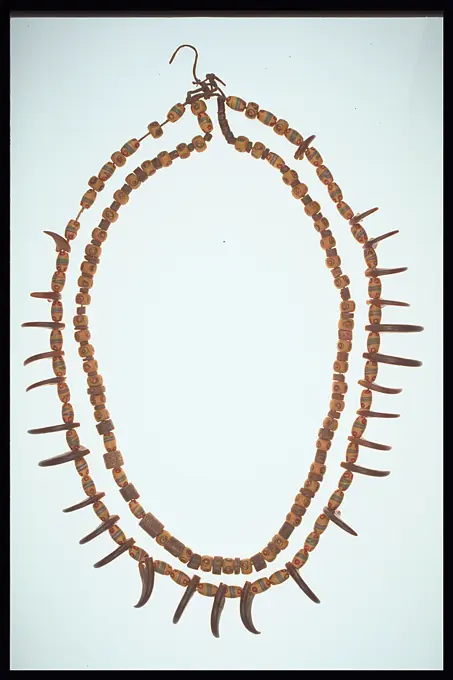
Necklace, 20th century, 15 in. (38.1 cm), Turquoise, trade beads, bone, United States, 20th century
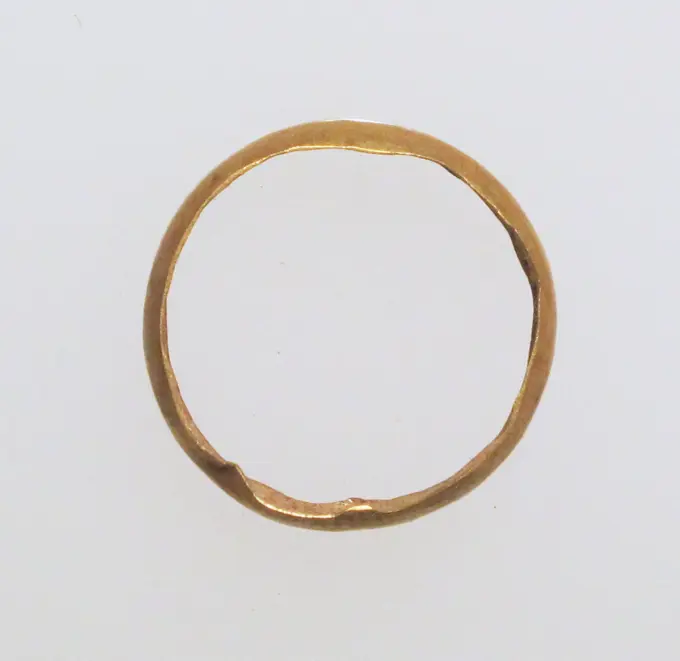
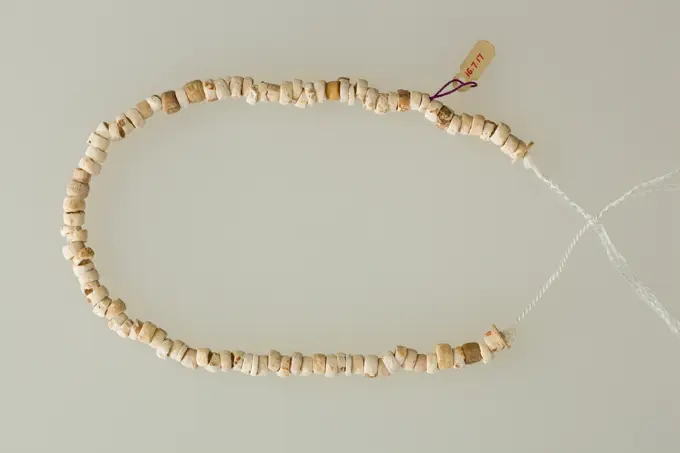
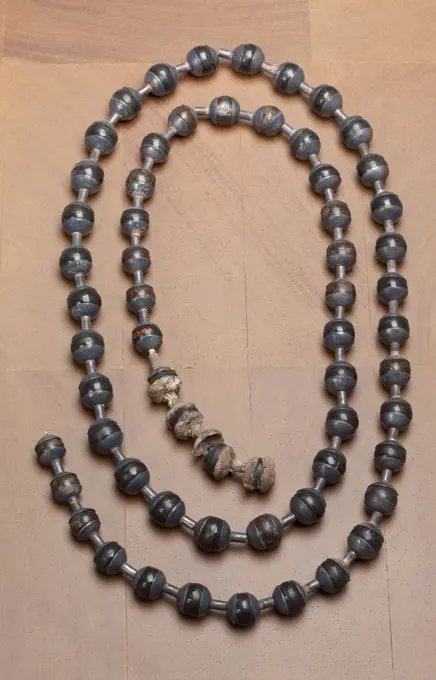
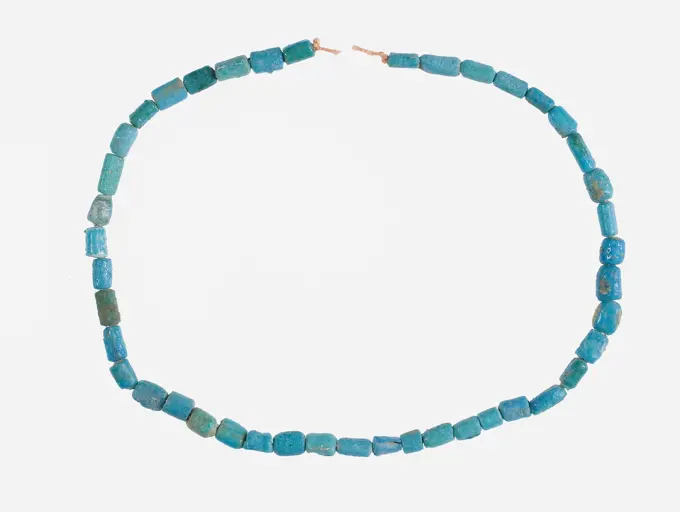
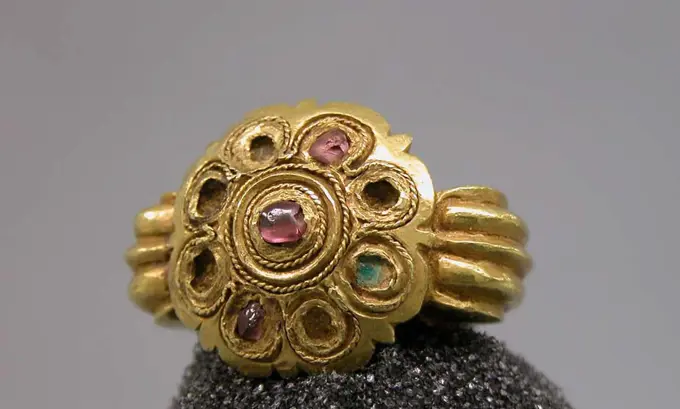
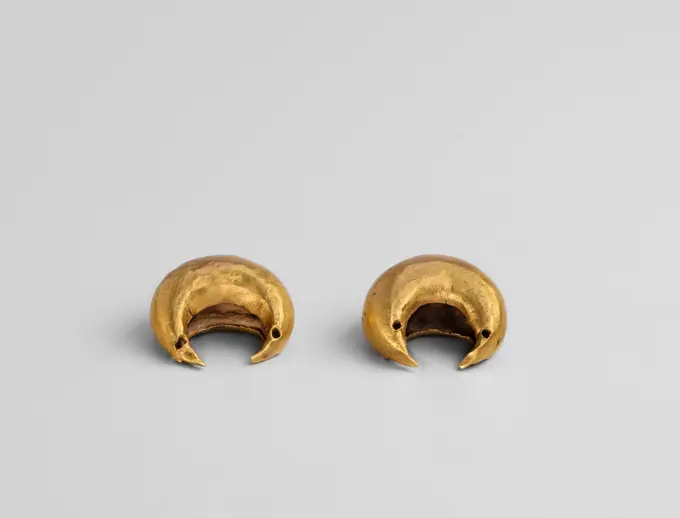
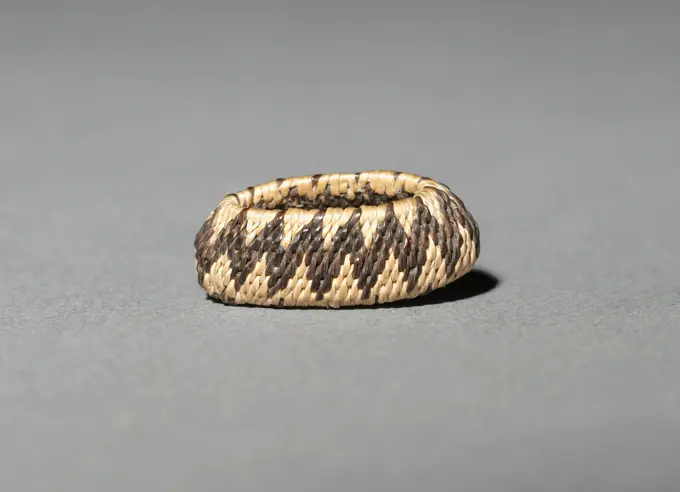
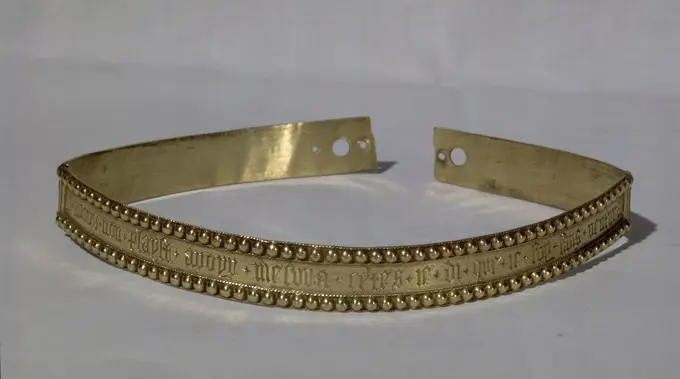
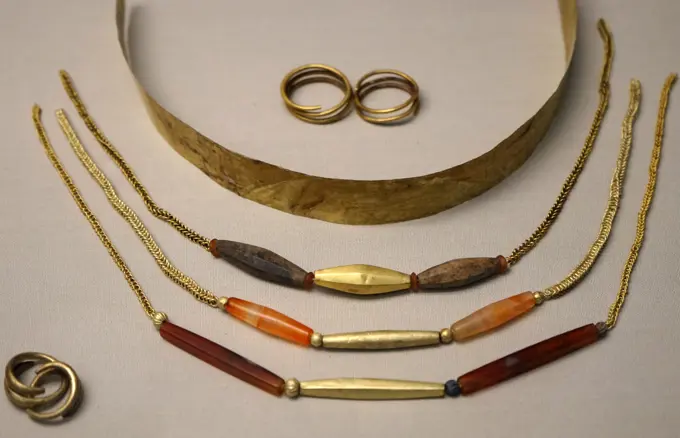
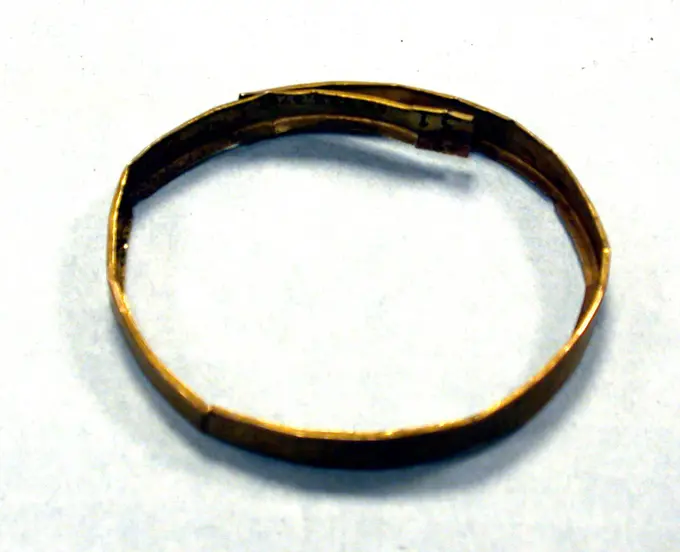
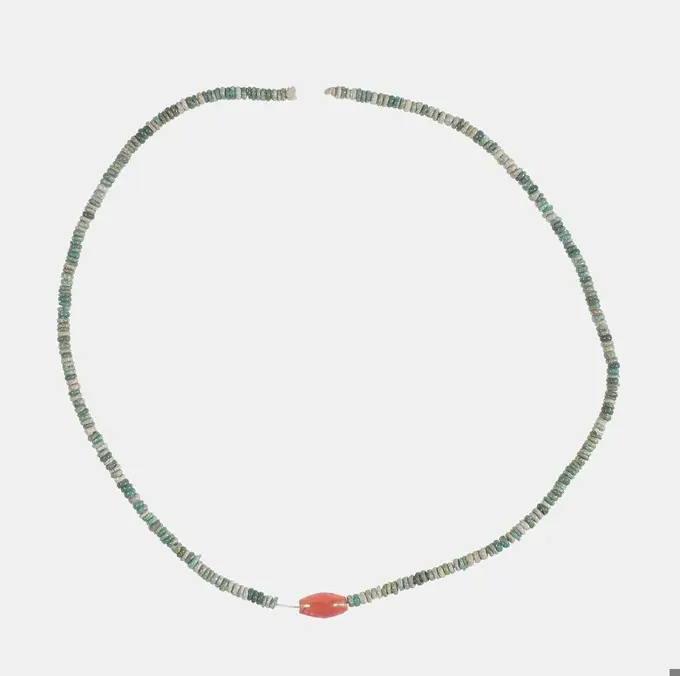
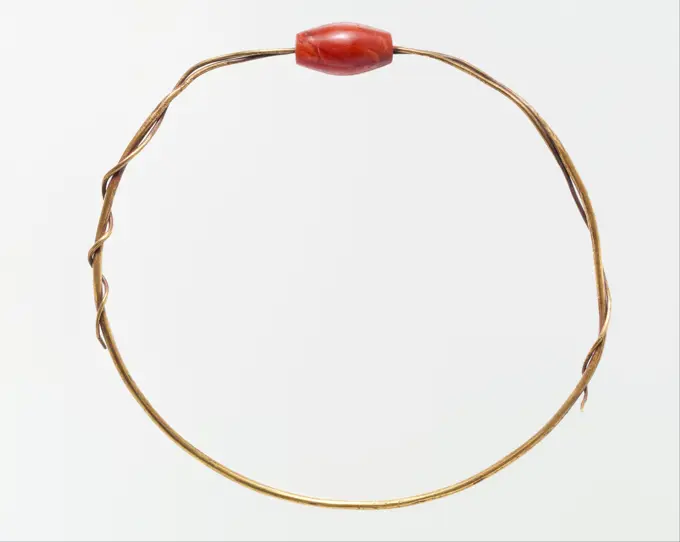
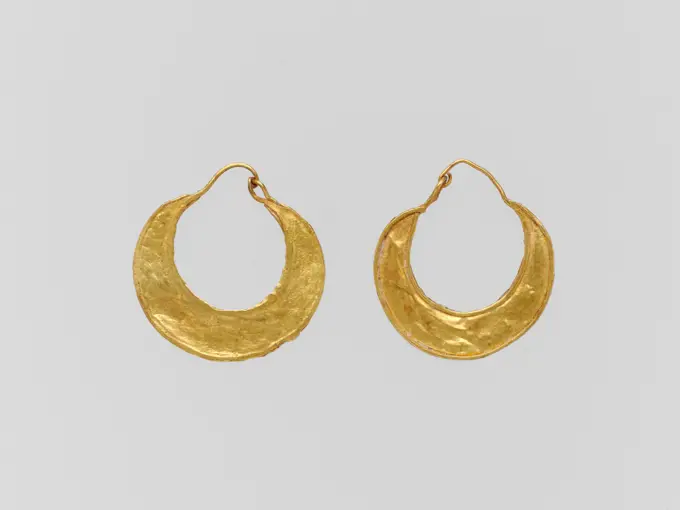
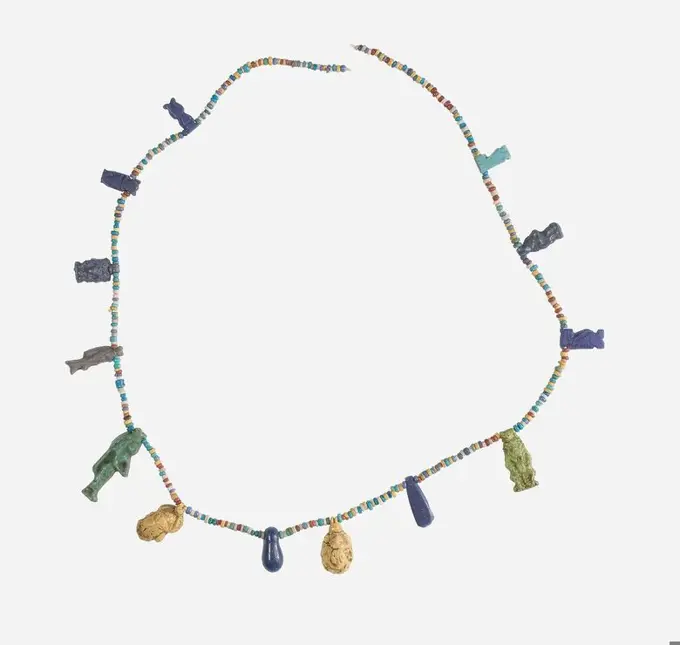
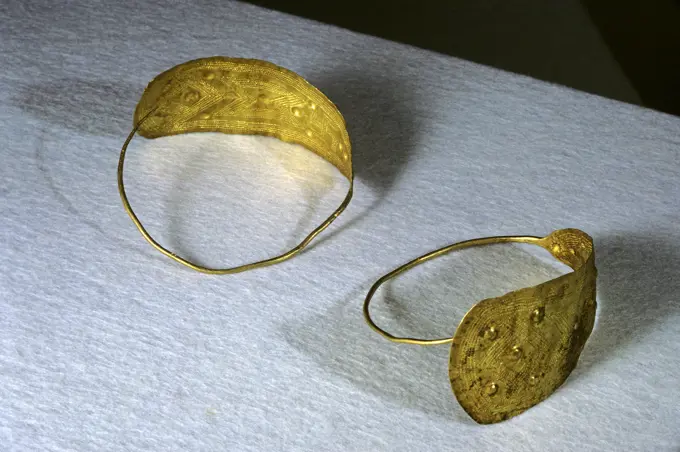
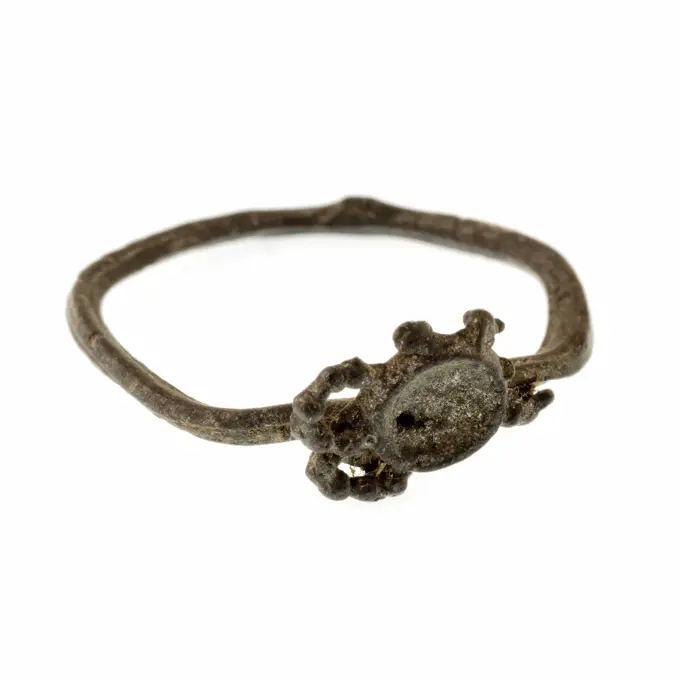
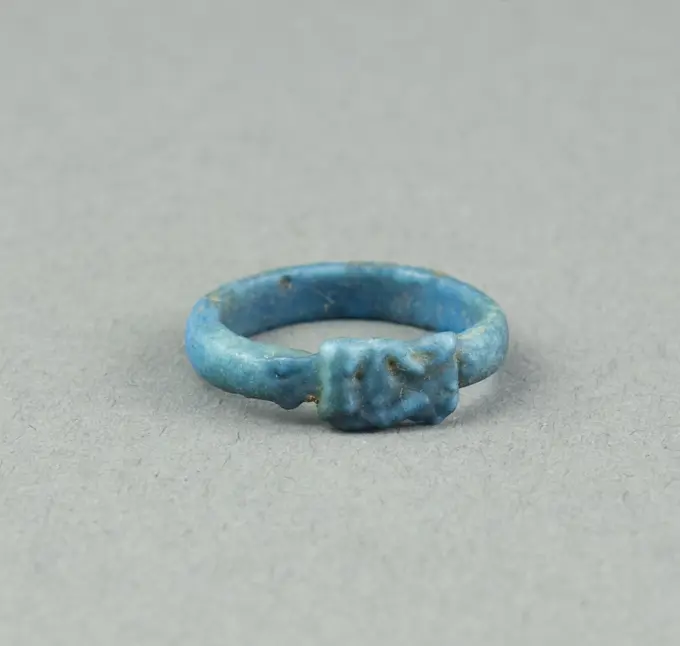
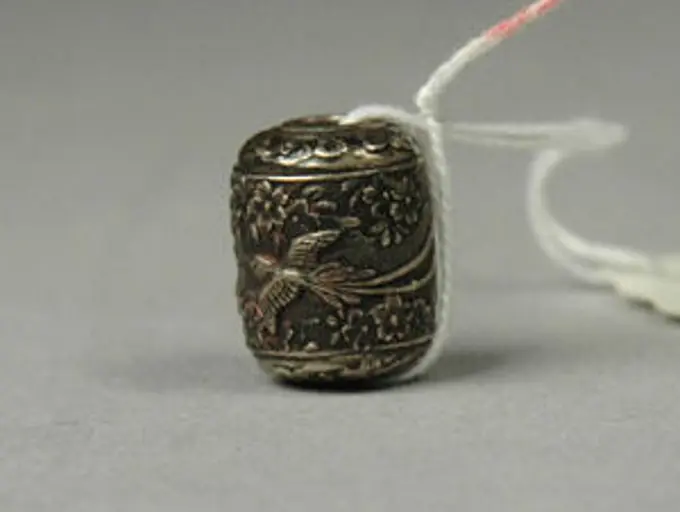
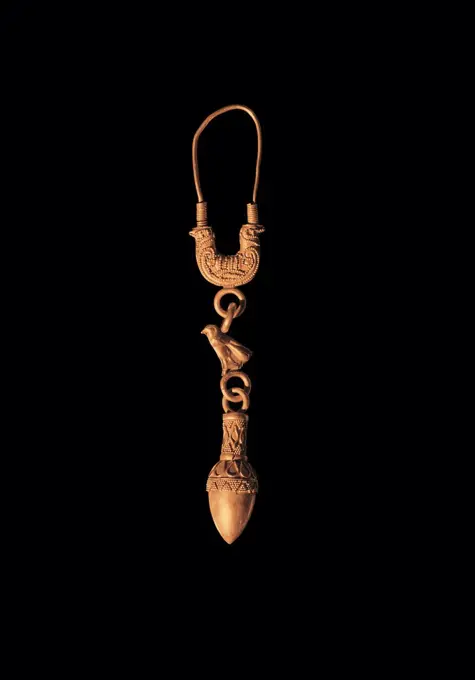
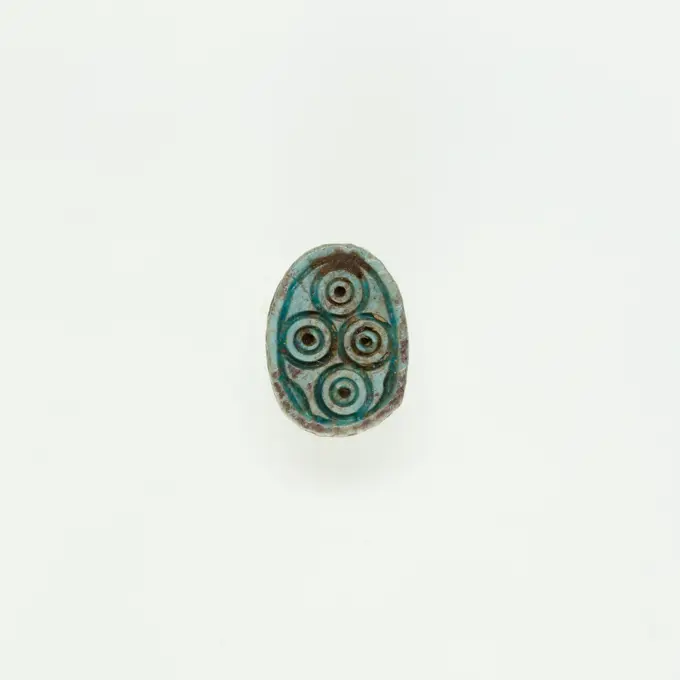
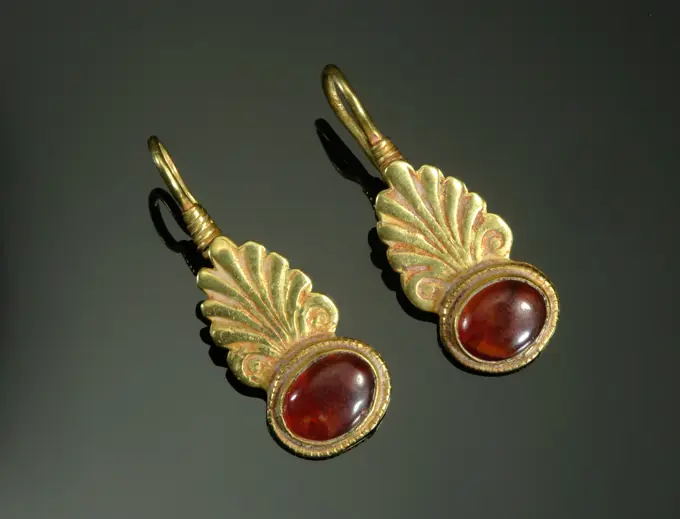
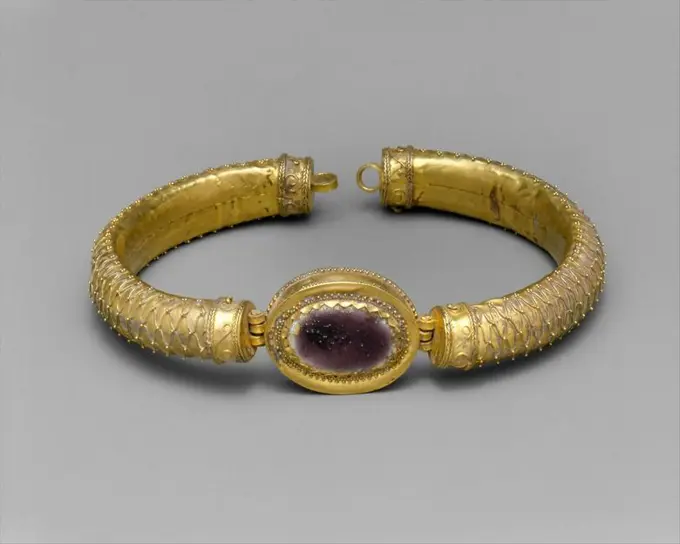
Gold and glass bracelet with central medallion. Culture: Greek. Dimensions: diameter 3 7/16 in. (8.7 cm). Date: 2nd century B.C..The most distinctive feature of this bracelet or armlet is the treatment of the outer surfaces of the hoops, which are covered with a delicate network of filigree created by placing parallel rows of wire in a zigzag pattern and dotting the points of contact with granules. This unusual decoration is best paralleled in a few exceptional works from Thessaly. It is a rare forerunner of a popular kind of Roman bracelet featuring twisted hoops and hinged box settings decorated with gemstones. Museum: Metropolitan Museum of Art, New York, USA.Torque, 9 x 9 1/2 x 7/16 in. (22.86 x 24.13 x 1.11 cm), Silver, ChinaRing with hollow hoop. Ring with hollow hoop 243543Necklace -Beads, string ca. 3850-2960 B.C. Predynastic Period. Beads, string 571017Gold crescent-shaped earring. Culture: Cypriot. Dimensions: Other: 11/16 in. (1.8 cm). Date: 5th century B.C.-1st century A.D..The crescent-shaped earring is very long-lived in Cyprus and, as yet, impossible to date securely. Most examples are probably Roman. Museum: Metropolitan Museum of Art, New York, USA.Hat band, 7 3/8 in. (18.73 cm), Silver, turquoise, United StatesBliżej Kultury Głowacki, Wacław (1828 1908)Silver ornaments (body jewellery) from India 19th centuryNecklace of Hapiankhtifi ca. 1981-1802 B.C. Middle Kingdom One of the complete burial groups excavated at Meir belonged to the Steward Hapiankhtifi. When the mummy was unwrapped numerous objects were discovered: a model dagger and sheath, two mirrors, a bat amulet, jewelry, and a ceremonial flail. The necklace here is made out of obsidian ball beads that are capped in silver.. Necklace of Hapiankhtifi. ca. 1981-1802 B.C.. Black obsidian ball beads; silver capsSilver. Middle Kingdom. From Egypt, Middle Egypt, Meir, Tomb of Hapiankhtifi, Mummy, Khashaba excavations, 1910-12. Dynasty 12String of Short Cylindrical Beads ca. 1390-1353 B.C. New Kingdom. String of Short Cylindrical Beads. ca. 1390-1353 B.C.. Faience. New Kingdom. From Egypt, Upper Egypt, Thebes, Malqata, Palace of Amenhotep III, MMA excavations, 1910-12. Dynasty 18Earrings 19th century probably Austrian. Earrings. probably Austrian. 19th century. metal, pearlBroekgesp met parelrand, c. 1800 - c. 1900 Pants with pearl edge. Europe (possibly) metal Pants with pearl edge. Europe (possibly) metalHeart shape formed out of gold color chain on canvasStirrup-Shaped Ring with Stones Set in Circular Bezel Last quarter of the 10th-last quarter of the 15th century Indonesia (Java). Stirrup-Shaped Ring with Stones Set in Circular Bezel 50409Para kolczyków w kształcie półksiężyca. unknown, authorBracelet with Three-Headed Snake 15th-16th century Northern Thailand. Bracelet with Three-Headed Snake 64264Miniature Rhomboidal Basket, late 1800s-early 1900s. California, Pomo, late 19th-early 20th century. Plant materials; overall: 2.3 cm (7/8 in.).Set of Gold Jewelry, c. 1840. Germany, possibly, 19th century. Gold and jewels; overall: 3.3 x 2.9 cm (1 5/16 x 1 1/8 in.).Gold earring with woman's head 3rd2nd century B.C. Greek. Gold earring with woman's head 242948Hair Ornament or Plait Ornament 19th century Among the many beautiful adornments worn by Uzbek women, were jewels to adorn their hair. This ornament would have attached to a womans plait, or braid and embellished her long tresses. A variety of materials make up this object including silk, gilt-silver pendants, coral, turquoise, pieces of green glass and a large carnelian stone. These individual components were not all locally sourced and illustrate the strategic location of Uzbekistan along the silk road. The regions of Bukhara, Khiva, Samarkand and Kokand were important centers for the trade of jewels, textiles, and other luxury goods. View more. Hair Ornament or Plait Ornament. 19th century. Gold, silk, coral, turquoise, glass. Attributed to probably Uzbekistan. JewelryGold, enamel and glass earring, Crimea. Jewellery. Sarmatic Civilization, 1st-2nd Century.Chain with Pendant and Two Crosses, early 500s. Byzantium, Syria, Byzantine period, early 6th century. Gold with enamel and glass; overall: 16.9 cm (6 5/8 in.).COLLAR DE SUERO DE QUINONES (SANTIAGO ALFEO) S XV. Location: CATEDRAL-INTERIOR. SANTIAGO DE COMPOSTELA. A CORUÑA. SPAIN.Bracelet, 1700s-1800s. Bulgaria, 18th-19th century. Silver; diameter: 6.4 cm (2 1/2 in.).Ring Figure of Tawaret (Thoeris) 1390 BCE Egypt. Faience . Ancient EgyptianJewellery found in the tomb of Queen Puabi, an important person in the Sumerian city of Ur. Dated 27th Century BCOjime 19th century Japan. Ojime. Japan. 19th century. Edo period (1615-1868). OjimeHammered Gold Band A.D. 200-900 Peruvian. Hammered Gold Band 308900Necklace with carnelian barrel bead. Dimensions: l. 27.5 cm (10 13/16 in). Dynasty: Dynasty 12, early. Date: ca. 1981-1640 B.C.. Museum: Metropolitan Museum of Art, New York, USA.Engraved Scaraboid. UnknownTaditional Turkish metal plates in the bazaarSweret Bead on Gold Wire ca. 1479-1425 B.C. New Kingdom The "sweret" bead, when first used in the Middle Kingdom, was worn on a string around the neck (see 11.150.15b). Found in the New Kingdom burial of an Egyptian queen, this bead may have been intended to continue in the old practice. In later times, such beads seem to have been strung on wire and slipped around the mummy's arm.. Sweret Bead on Gold Wire 547641Gold crescent-shaped earring 5th century B.C.-1st century A.D. Cypriot Although this type of earring was made in Cyprus over a long period of time, most examples are probably Roman.. Gold crescent-shaped earring. Cypriot. 5th century B.C.-1st century A.D.. Gold. Classical-Roman. Gold and SilverNecklace -Pair of earrings 19th century B. A. (of Spain). Pair of earrings. Spanish. 19th century. Gold, jacinths ()Pair of Earrings 8th-12th century Indonesia (Central Java). Pair of Earrings 64219Gambling wheel -Necklace with Amulets. Dimensions: L. 36.5 cm (14 3/8 in). Dynasty: Dynasty 18. Reign: reign of Amenhotep III. Date: ca. 1390-1352 B.C..This string of beads and amulets was found in the same deposit with a longer string and a well preserved menat necklace. The amulets include several depictions of the god Bes and the goddess Taweret, a standing goddess who may be Nut or Isis, and two scarab beetles. Museum: Metropolitan Museum of Art, New York, USA.Europe, Former Yugoslavia. Novi Pazar Pair of gold belts. 6-5th cent. BC. SerbiaNecklace with 16 beads. Necklace with 16 beads. Glass. GlassBuckle, 1900s. China, 20th century. Silver gilt, engraved and set with green jade and rose quartz; overall: 8 cm (3 1/8 in.).Small wire ring with flower, for children's fingers, ring jewel clothing accessory clothing soil find tin metal, cast Small ring. Children's ring. Pouring seams. Thread ring decorated with flower figure wreathed by ajour leaves archeology child wear adorn prosperity Rotterdam Soil discovery Rotterdam.Bracelet 4th-7th century Coptic. Bracelet 477754Anonymous, Passementerie (username), 1750. Filled with a soft -shaved hemp with a fine metallic wire on which are fixed tufts of silk hair tied on their middle, Hanneton eyebrows, rosettes formed by 2 rods of round tufts Silk hair, dark pink and pale pink, yellow, blue, black, bright colors yellow, blue, green, pink, white, black. Palais Galliera, fashion museum of the city of Paris.Egyptian Earrings made from gold sheets and cylinders, and beads in different shapes and materials. New Kingdom (1550-1070 BC).Ring Head of Hathor 1390 BCE Egypt. Faience . Ancient EgyptianBuckle, 1900s. China, 20th century. Engraved brass, semi-precious stones; overall: 12.4 cm (4 7/8 in.).Ojime 19th century Japan. Ojime. Japan. 19th century. Edo period (1615-1868). OjimeSygnet ringGold ear-ring - Tharros, by Unknown, 7th Century - 6th Century b.C., filigree. Italy, Sardegna, Cagliari, National Archaeological Museum. Whole artwork. Goldsmithery: goldwork ear-ring pendant bird palmettes.Beads 9th-12th century This object was excavated at Nishapur.Nishapur was a vital city in the early and middle Islamic periods, located along one of the main trajectories that connected Iran and West Asia Islamic lands with Central Asia and China. These itineraries are often referred to by the term Silk routes’ but were in fact crucial to the movement of constellations of materials and objects, as well as people and ideas. The diverse population of Nishapur and its surroundings, from the better-researched elite groups of merchants, land-owning aristocracy, and literates, to the less-known artisans, farmers, miners, and servants, were instrumental in adapting global cultural trends to create their own distinctive visual languages. This is seen in the material remains of everyday life in medieval Nishapur - from pots and pans to lighting devices, inkwells, textiles and trimmings, jewelry, games and toys, talismanic devices, weapons, coins, and architectural fragments.Nishapur lost its pPewter ring, empty, square setting for stone, ring ornament clothing accessory clothing soil find tin metal, d 0.2 cast Pewter ring with square setting for round stone. Decorated ring partly finished with rope decor, but also with 8-figures and four times three circular lines archeology Rotterdam rail tunnel wear adorn prosperity status Soil discovery: railway tunnel 1988-1993.Sword Guard (Tsuba). Culture: Japanese. Dimensions: H. 2 5/16 in. (5.9 cm); W. 2 7/16 in. (6.2 cm); thickness 3/16 in. (0.5 cm); Wt. 2.6 oz. (73.7 g). Date: ca. 1615-1868. Museum: Metropolitan Museum of Art, New York, USA.Broad Collar ca. 1353-1336 B.C. New Kingdom, Amarna Period This necklace of faience beads, called a broad collar, is a durable version of the elaborate perishable floral collars worn by banquet guests (see 09.184.216). The beads in this example imitate a row of cornflowers (center), three rows of dates (middle), and a row of lotus petals (outside). These rows are joined by strands of small ring beads. The rows end in rectangular terminals adorned with blue lotus blossoms, buds, and petals interspersed with poppy petals and persea fruit. The stringing is modern.. Broad Collar 549199Bracelet probably 14th-15th century The earliest known examples of this type of seamless mosaic glass bracelet are from the late thirteenth century; it continued to be produced well into the nineteenth century at Hebron, in Palestine. This bracelet, together with thirty-three others in the collection, comes from UpperEgypt and was probably made during the Mamluk period.. Bracelet 446040Fart with GEMM with a lion's performance;  1. PO. III century BC (-300-00-00--251-00-00);Ancient collectionScarab Decorated with Circles ca. 1640-1550 B.C. Second Intermediate Period. Scarab Decorated with Circles 557085Palmets decorated earrings;  III-II century BC (-300-00-00--101-00-00);Collection of ancient art, scenes.gal.lec.Pin of gold and amethyst, Jean Baptiste Bonnard, c. 1824 - c. 1829 Pin of gold and amethyst. The stone is surrounded with gold rosettes. Amsterdam gold (metal). amethyst (mineral) Pin of gold and amethyst. The stone is surrounded with gold rosettes. Amsterdam gold (metal). amethyst (mineral)Ornament for deity 17th-19th century Nepal. Ornament for deity 39460antique golden frame isolated on white background. for print, website, poster, banner, logo, celebrationCreative christmas concept photo of a snowflake made of paper on brown background.