Vintage Decorative Hardware

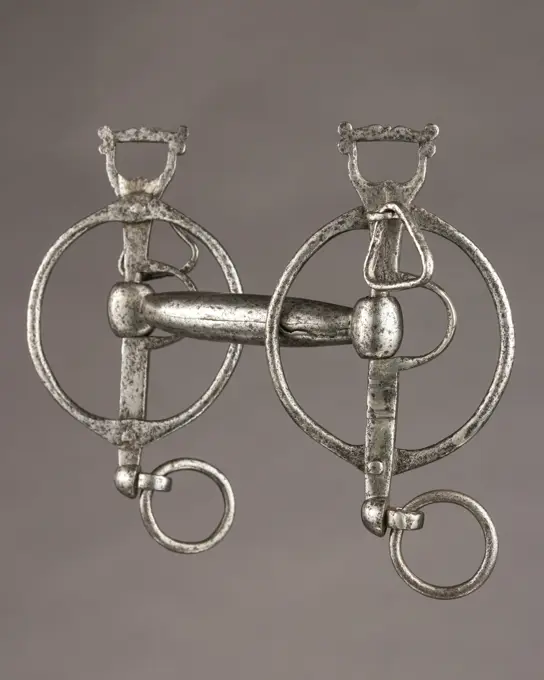
Antique hardware pieces including earrings, skewers, and a curb bit, reflecting craftsmanship from different historical periods.

Windwijzer with Vaan (marked and dated 1767), 1767   iron (metal)   iron (metal)
Windwijzer with Vaan (marked and dated 1767), 1767 iron (metal) iron (metal)
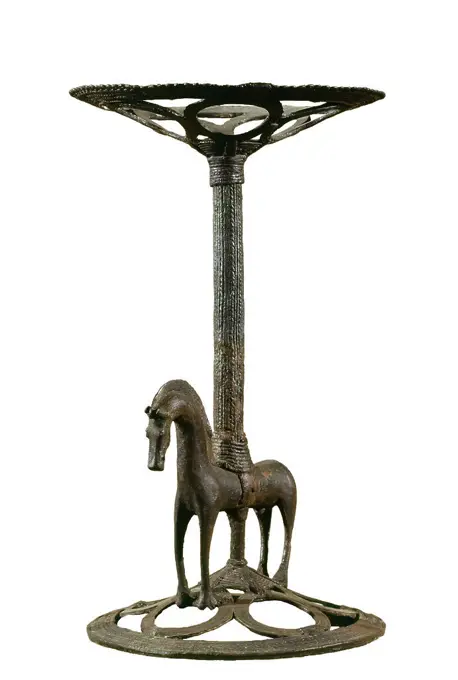
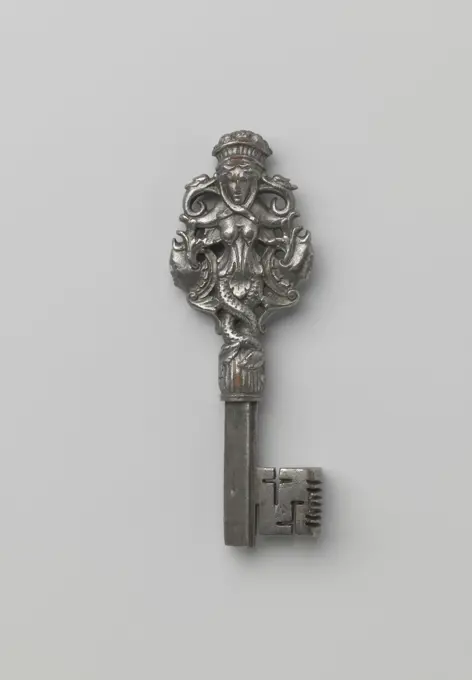
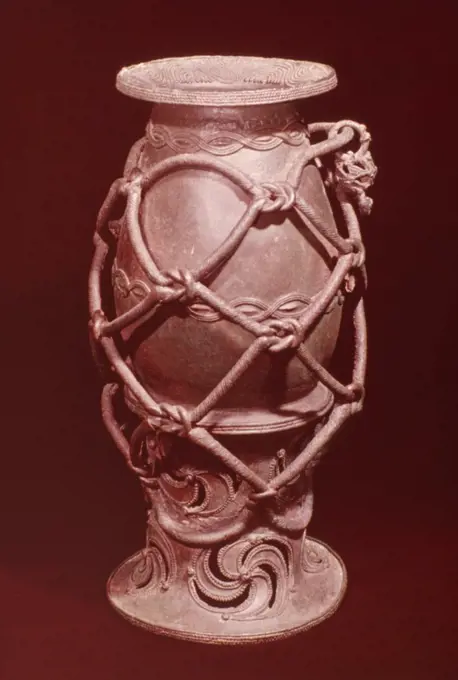
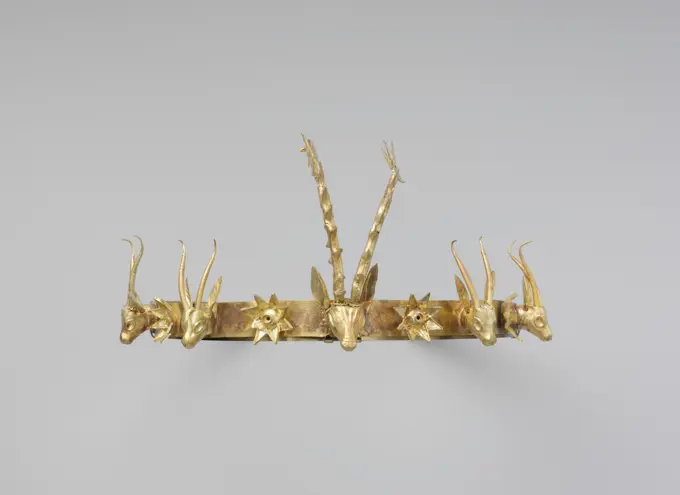
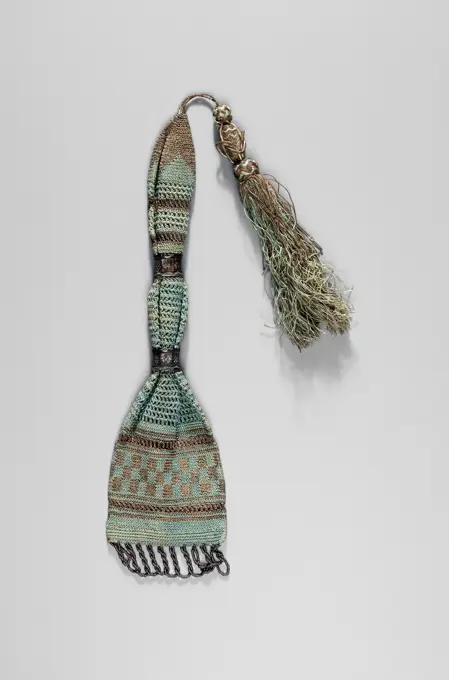
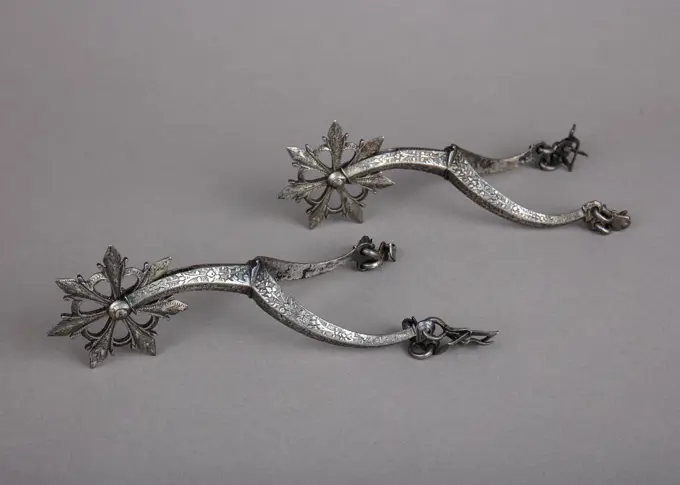
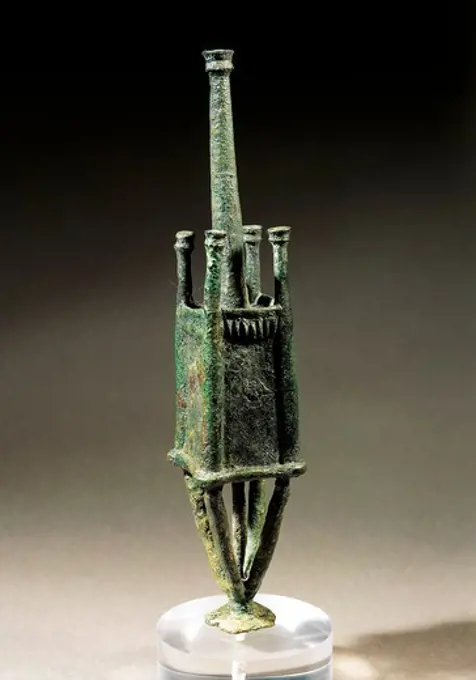
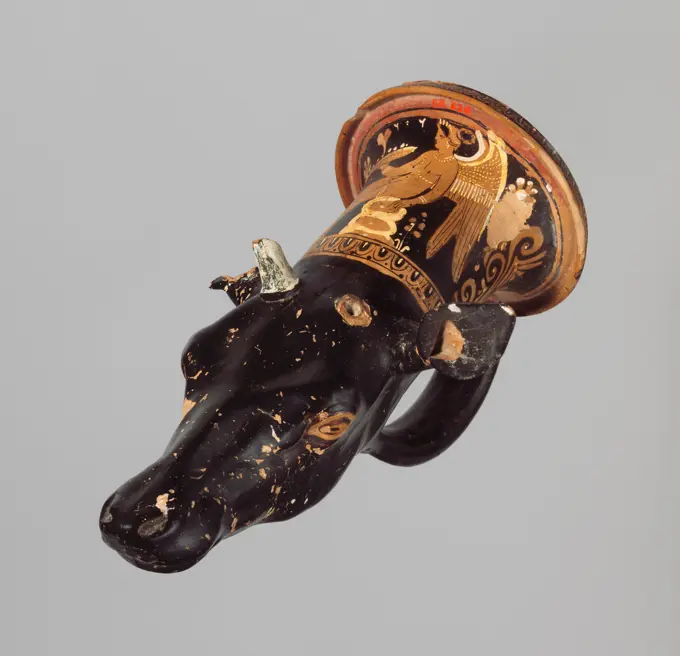
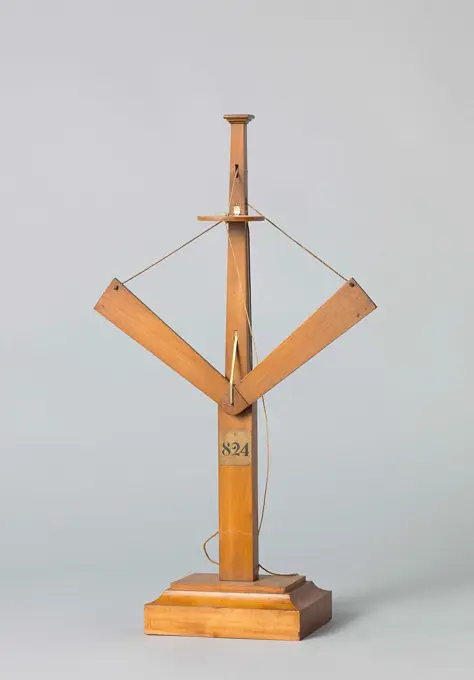
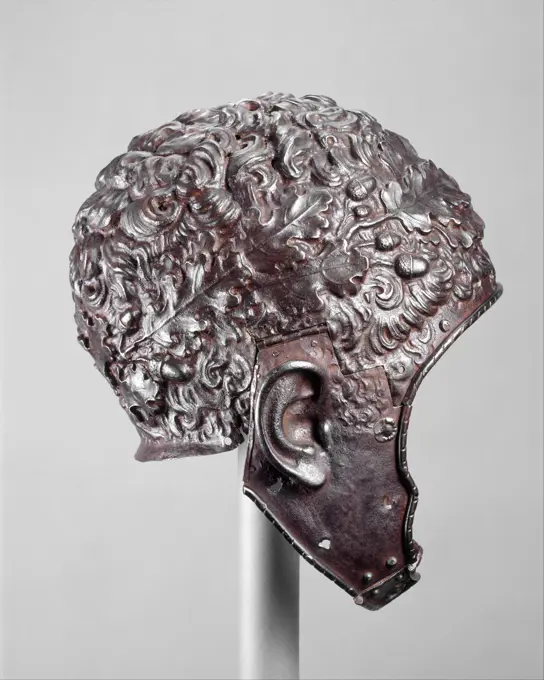
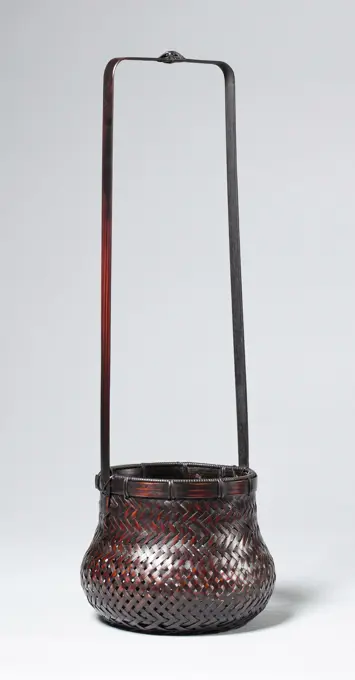
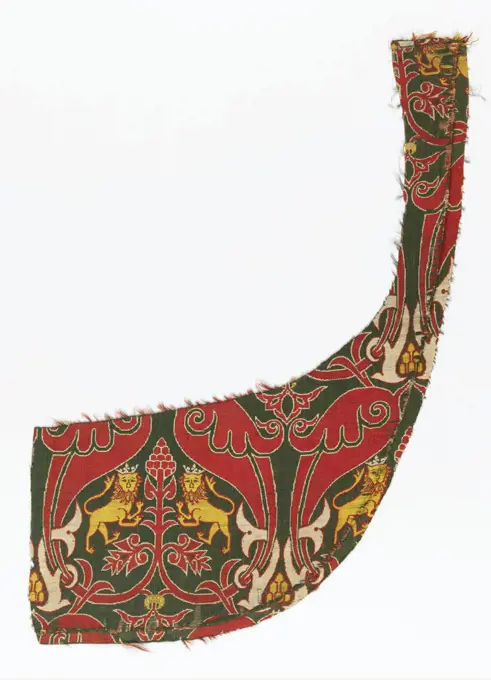
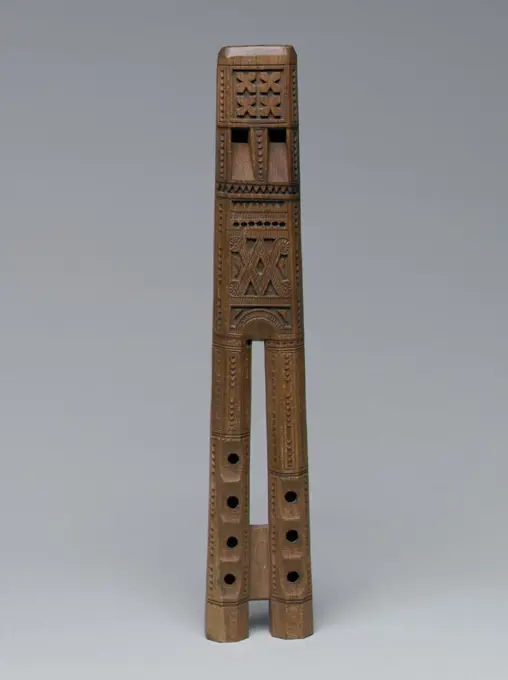
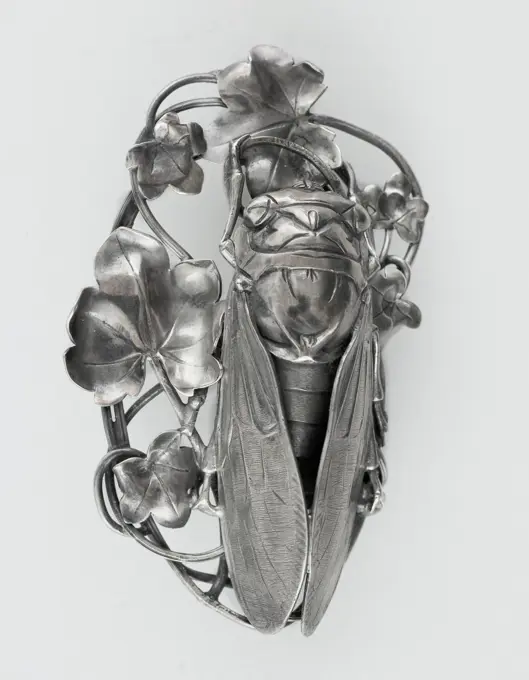
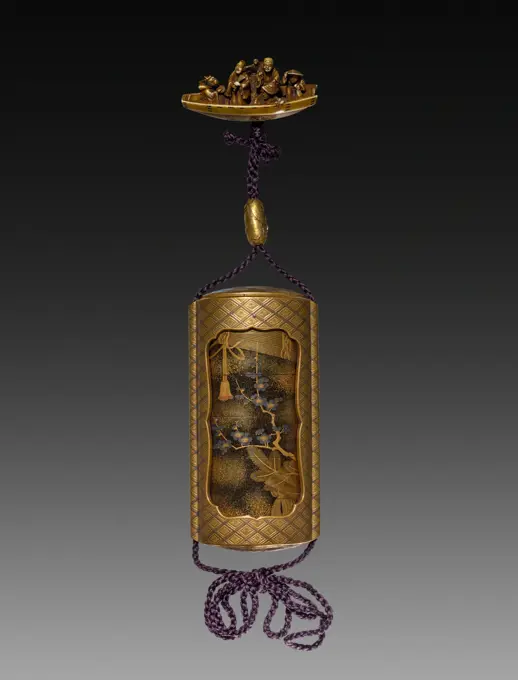
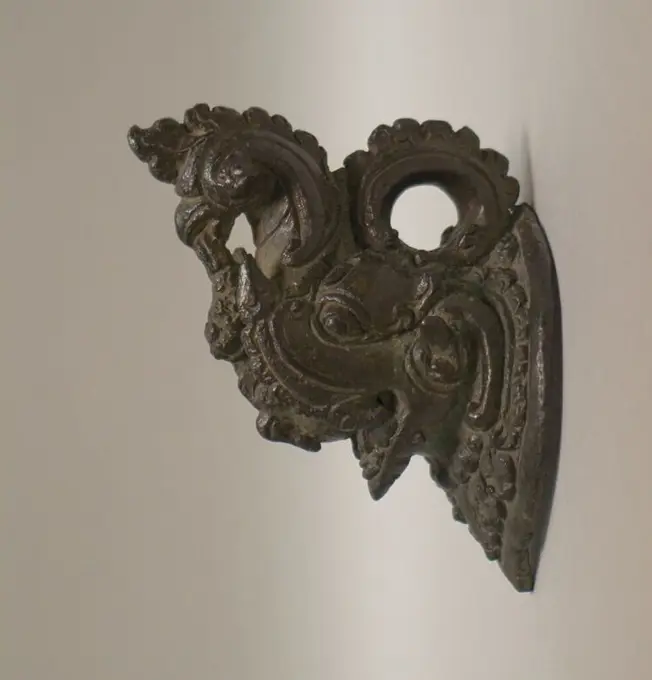
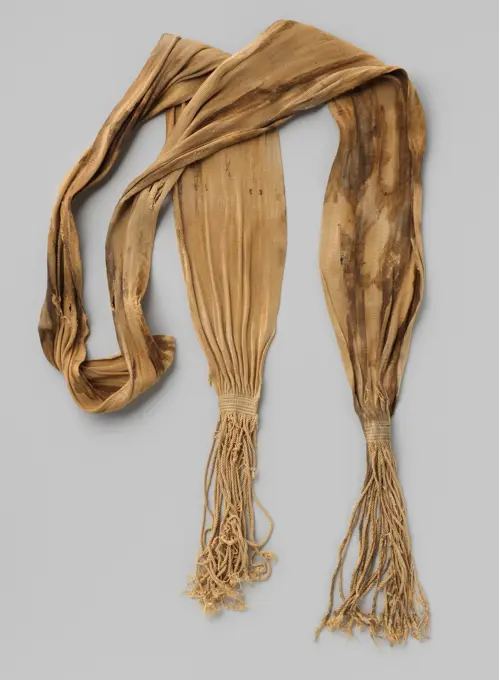
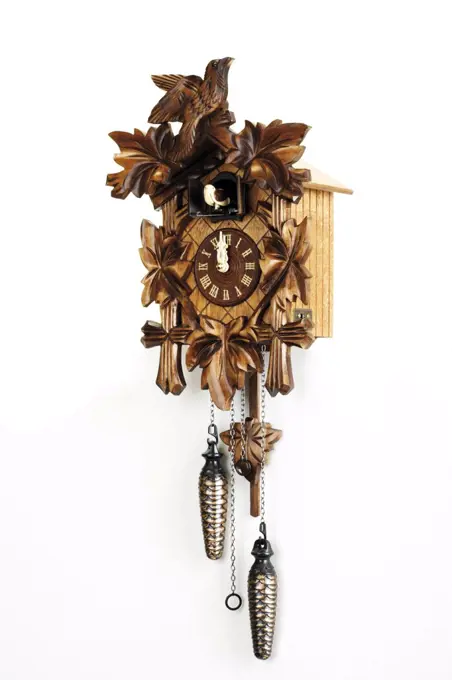
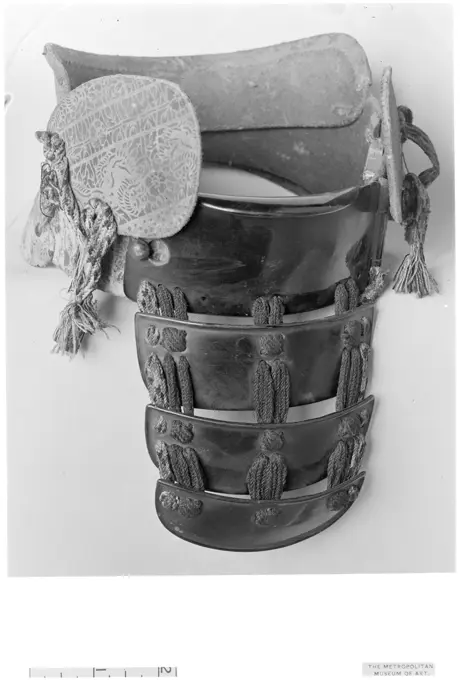
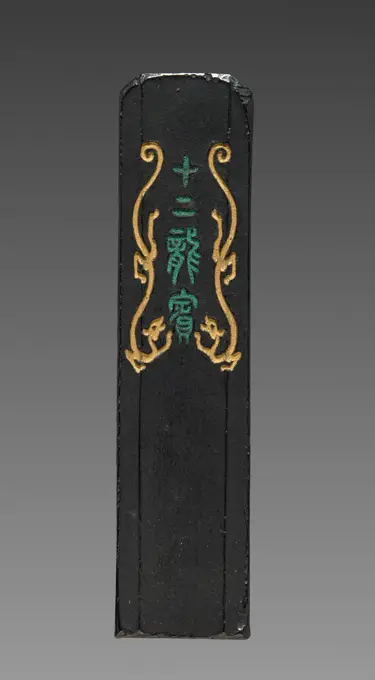
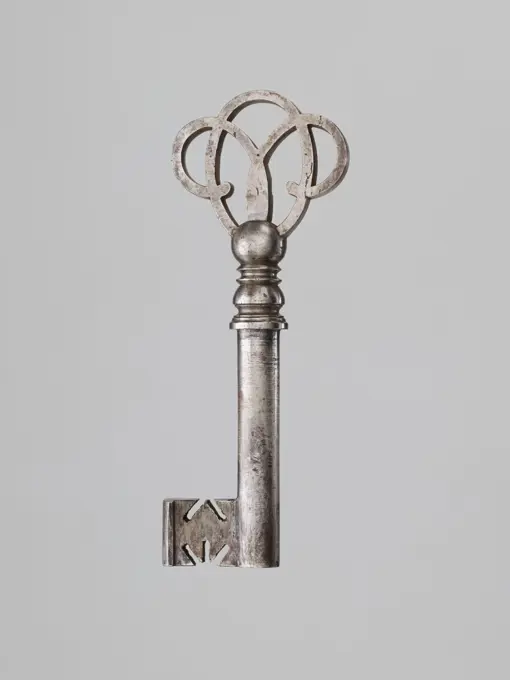
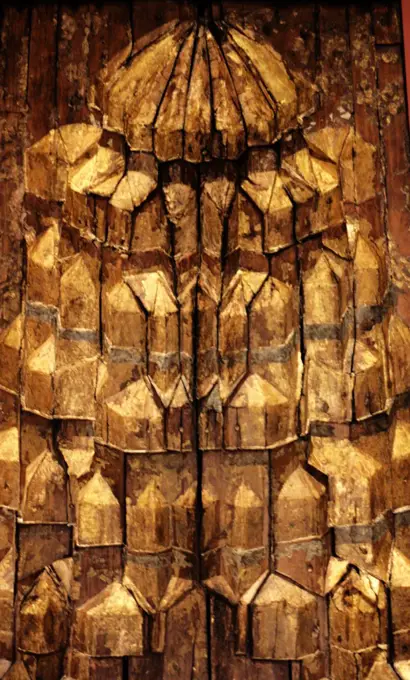
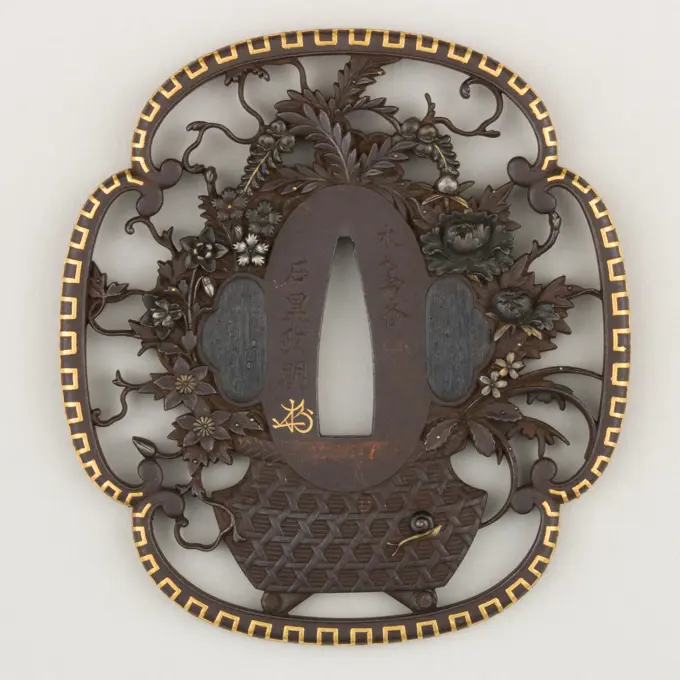
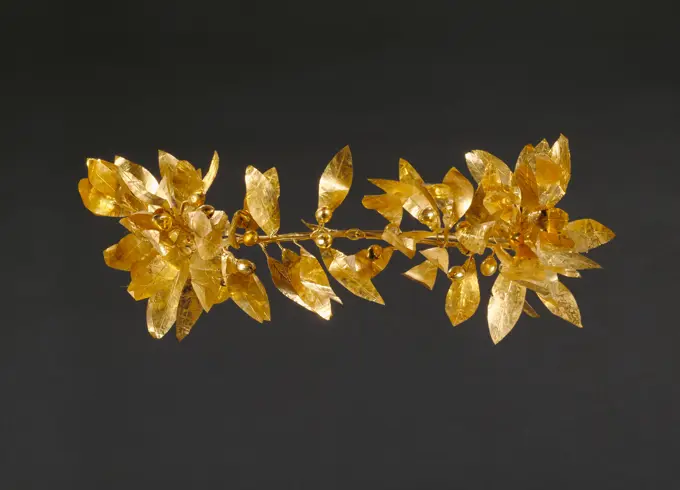
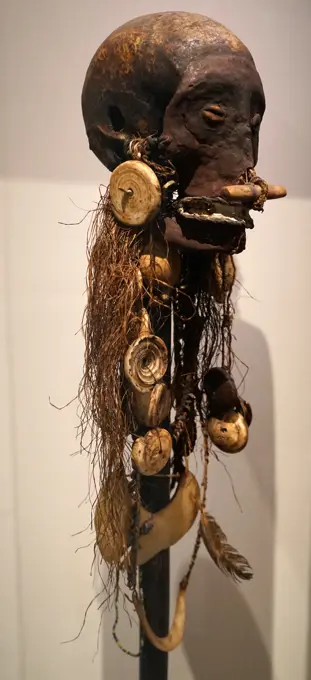
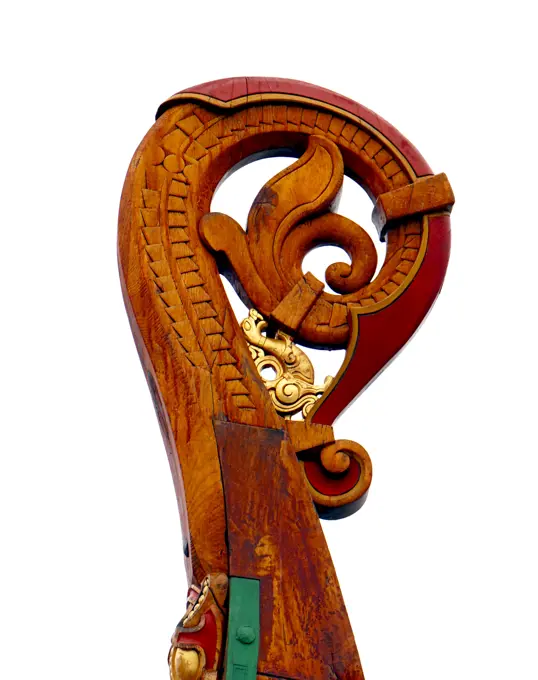
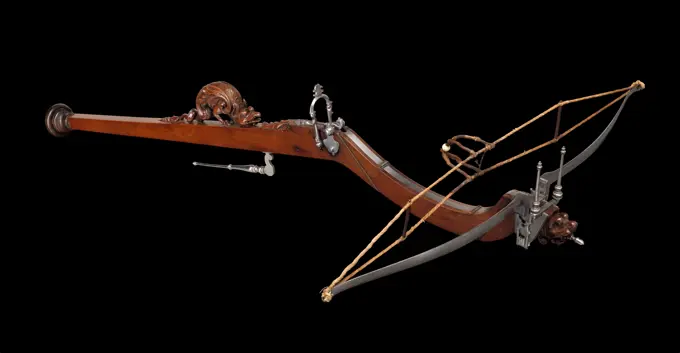
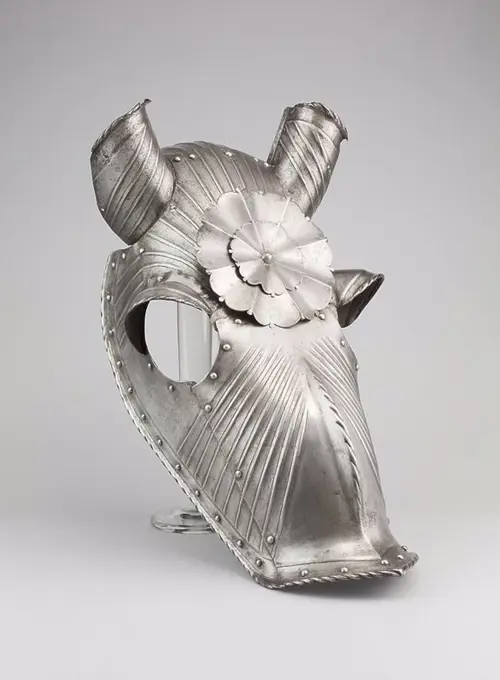
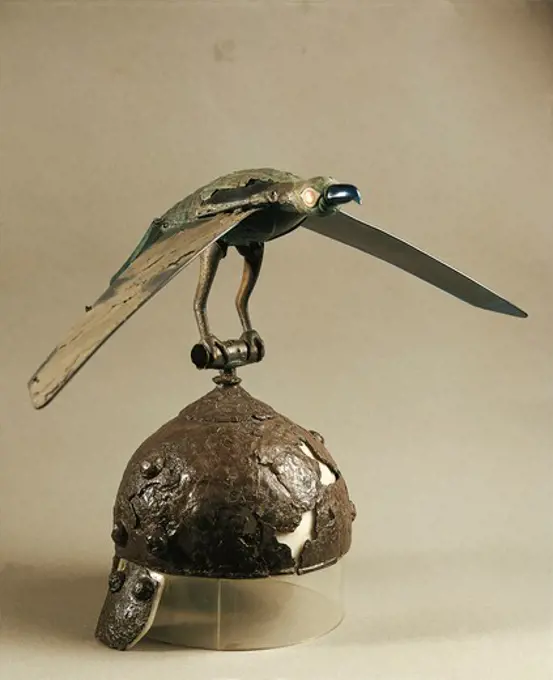
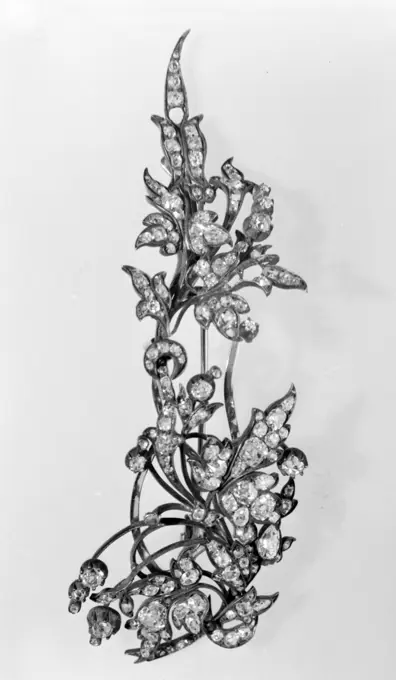
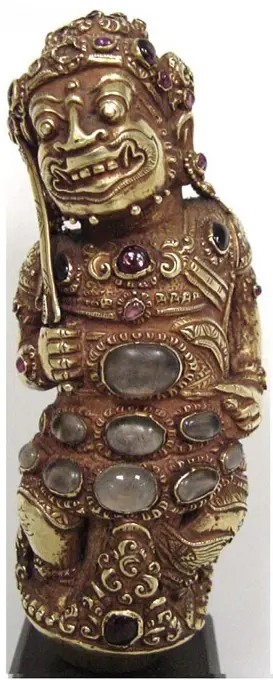
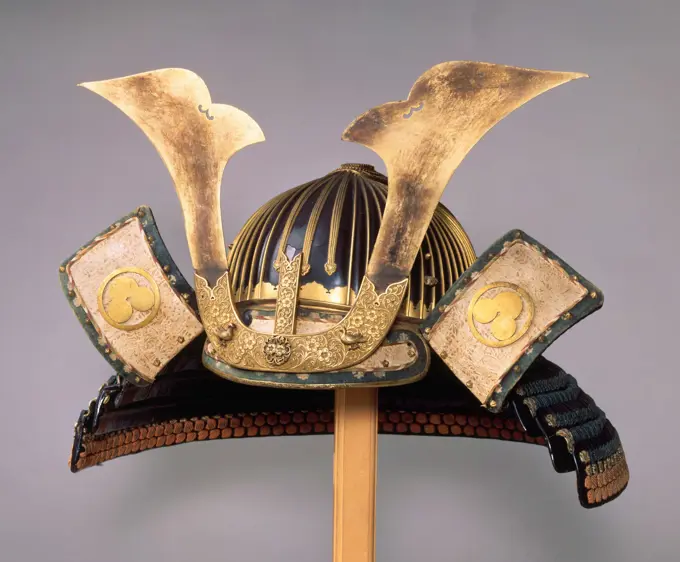
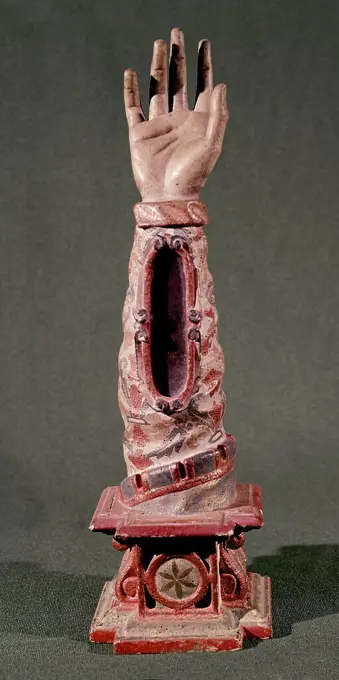
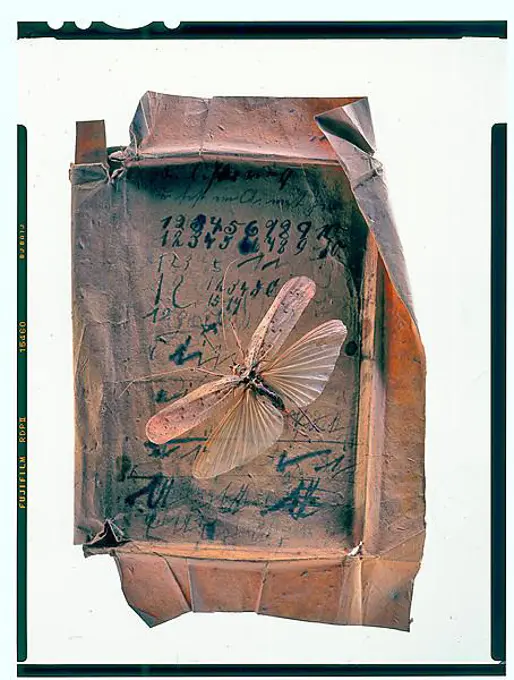
Chain with Birds and Trees of Life 1000-1200 Kievan Rus' Chains, called riazni, were created from small cloisonné enamel medallions. The chains may have joined layers of dress, been worn as necklaces or bracelets, or used to suspend circular or crescent-shaped pendants known as temple pendants or kolti. Rus' women wore temple pendants in pairs, suspended beside the face, at the temple, as part of their elaborate headdress.. Chain with Birds and Trees of Life 464578Cup-Hilted Rapier Italian late 17th century The rapier was the principal civilian sidearm throughout the sixteenth and seventeenth centuries. Designed for cut-and-thrust fencing of progressively complex techniques, the rapier is characterized by a double-edged blade with an acute point and an elaborate guard for the hand. The guards, usually of iron or steel, were subject to a variety of embellishment. They were engraved, chiseled, gilded, damascened, and encrusted in gold and silver in keeping with fashionable styles. Unless otherwise noted, the materials, attributions, and dating given here refer to the hilts. Rapier blades, invariably of steel, bear a variety of makers marks denoting their origin in the two principal centers of blademaking, Toledo in Spain and Solingen in Germany. View more. Cup-Hilted Rapier. Italian. late 17th century. Steel. SwordsLAMPIDARIO DE BRONCE DE CALACEITE (TERUEL) - TYMIATERION CELTA. Location: MUSEO ARQUEOLOGICO NACIONAL-COLECCION. MADRID. SPAIN.Key, c. 1400 - c. 1950 Key, on one side a men's- on the other a female bust and trunk.  iron (metal) Key, on one side a men's- on the other a female bust and trunk.  iron (metal)Sleeve Pieces. France. Date: 1758. Dimensions: W. 12.1 cm (4 3/4 in.). White taffeta with cut work pattern. Origin: France. Museum: The Chicago Art Institute, Chicago, USA.Purse with boys playing 10th-11th century China On the back of this purse, boys run and tumble, surrounded by flowers, plants, birds, and deer. Woven freely into the silk, this design is an early example of children at play, a form that can be traced to Central Asia in the eighth century. The silks pattern is clearly scaled to fit small objects such as this purse.. Purse with boys playing. China. 10th-11th century. Silk weft-faced compound twill. Liao dynasty (907-1125). Textiles-WovenTassel (Italy); linenPendant 5th-8th century Late Roman. Pendant 465840 Late Roman, Pendant, 5th8th century, Copper alloy, glass paste, Overall: 2 7/8 x 13/16 x 1/2 in. (7.3 x 2 x 1.3 cm). The Metropolitan Museum of Art, New York. Gift of J. Pierpont Morgan, 1917 (17.194.1914)Nigeria, Ancient Artifact, 'Igbo-Ukwli Bronze Pot Dating From 9Th Century Ad, 32.3Cm In Height. '2008.0217.. Sea Turtle. Sea turtle remains - from the natural history museum collection in Aston Hall, 1858Hat, 5 x 6 15/16 x 6 5/8 in. (12.7 x 17.62 x 16.83 cm), Silk (), cotton (), metal, ChinaHeadband with Heads of Gazelles and a Stag Between Stars or Flowers ca. 1648-1540 B.C. Second Intermediate Period During the late twelfth and then the thirteenth dynasty, late in the Middle Kingdom, people from western Asia established themselves among the Egyptian inhabitants of the eastern Nile Delta, especially at a place later called Avaris (now Tell el-Dab'a). A multicultural mix was thus established that culminated during Dynasty 15 in the rule of a line of kings now known as the Hyksos (from the Egyptian phrase "rulers of foreign lands") who resided at Avaris but dominated a good part of northern and middle Egypt, while the south remained under the indigenous Dynasty 17 of Thebes. The northern "Hyksos" culture combined Egyptian and Middle Bronze Age Levantine traditions. This diadem, with animal heads alternating with flowers, has Near Eastern affinities and is typical of the commingling of artistic styles.. Headband with Heads of Gazelles and a Stag Between Stars or Flowers 54Model of an Optical Telegraph. Model of an optical telegraph on octagonal foot. De Telegraaf consists of a mast with three rotating arms; These consist of a trellis to keep their weight layer, and on one side black, on the other hand, which only serves a counterbalance, white and open, so that this end remotely invisible. Each arm has six positions. At the foot, half the octagonal hut with point roof is built that shows the inside and the operation of the signal mechanism.Miser's purse. unknown, authorPair of Rowel Spurs early 17th century probably German This type of silver-inlaid decoration standing out against a blackened background was very popular on 17th-century German metalwork. In the first half of the 17th century, the fashion trend for gentlemen was to wear boots and spurs even non-riding circumstances, including for dancing or walking around at court. Spurs became then more than equestrian tools, but pieces of male jewelry often enriched by the same goldsmiths also working on armor and weapons. Their decoration was sometimes intended to match the sword hilt and the general outfit and horse tack of their owner. These trendy accessories were also a significant mark of status for gentlemen, sometimes nonetheless copied by the bourgeoisie. This fashion progressively disappeared after the mid-17th century. Pair of Rowel Spurs. probably German. early 17th century. Iron alloy, silver. Equestrian Equipment-SpursKhakkhara (ringed staff) used by wandering Buddhist monks, bronzeSnuffer with a chronometer and compass;  19th century (1801-00-00-1900-00-00);Italy, Sardinia region, bronze standard, from Olmedo graveyardFlower Pyramid of Delftware, Anonymous, 1690 - 1720. Bags with silver clasps became fashionable at the end of the 17th century. Soon thereafter, purses were alsoprovided with clasps made of other precious metals. The bags remained fashionable up to the early 20th century. The silk thread of this purse has been worked into points in an unknown technique.Ornamental plaque 11th-12th century China. Ornamental plaque 60658Scholar's rock 18th-19th century China. Scholar's rock 42738Terracotta rhyton (vase for libations or drinking) ca. 350-300 B.C. Attributed to the Patera-Ganymede Workshop The rhyton is in the shape of a deer's head. On the cuff is a seated Eros with a bowl of fruit.. Terracotta rhyton (vase for libations or drinking) 24697919th century egg beater at King's Landing historical settlement in New Brunswick CanadaNautilus cup, anonymous, c. 1550 - c. 1600 Nautilus cup with gold -plated silver frame, in the form of a crane. The bird is on one leg and clamps a white silver ball into the other. Along the mouth edge of the shell engraved hunting performances. The foot consists of dragons placed six rays. Southern Germany silver (metal). nautilus shell gilding Nautilus cup with gold -plated silver frame, in the form of a crane. The bird is on one leg and clamps a white silver ball into the other. Along the mouth edge of the shell engraved hunting performances. The foot consists of dragons placed six rays. Southern Germany silver (metal). nautilus shell gildingModel of an Optical Telegraph for Ships. Model of an optical telegraph. Schematic model of an optical telegraph, on pedestal. The pole, although rectangular in diameter, represents a mast and steam, to which the moving parts are attached. These consist of two blazing arms under and an oval plate at the top, which can be folded up and down to a hinge; All parts are moved with ropes, which run over drives in the mast.Tassel, Medium: linen Technique: braided and knotted, Pear-shaped linen tassel, braided and knotted. Double loops are attached to pear-shaped unit to which are attached and hang seven small units made of knotting (including center)., Italy, Europe, 17th century, trimmings, TasselFragment 14th-15th century European. Fragment. European. 14th-15th century. Pot-metal glass and vitreous paint. Glass-StainedMoney Tree, 1st-2nd century, 58 x 24-1/2 x 24-1/2 in. (147.3 x 62.2 x 62.2 cm), Bronze and green glazed earthenware, China, 1st-2nd century, Among the most intriguing objects recently discovered in the Eastern Han (25-220) tombs of Szechuan province are so-called 'money trees.' Typically made of a bronze trunk and branches set into a ceramic base, they are called 'money trees' because the lower part of the lattice-like branches are decorated with coin-shaped designs that imitate actual coins of the Han period. The coinage represents the wealth and abundance necessary to nourish the spirit in the afterlife, and the tree symbolized renewable, on-going monetary sustenance and unending prosperity.Helmet all'Antica ca. 1532-35 Attributed to Filippo Negroli Italian Fashioned to resemble a head of tightly curled hair encircled by a wreath of oak leaves, this helmet evokes the appearance of an ancient hero, perhaps a Roman emperor. The reference to the oak (rovere, in Italian) may indicate that the helmet was made for a member of the della Rovere family, dukes of Urbino. The cheek-pieces are probably nineteenth-century restorations.. Helmet all'Antica 21974Vase with landscape and bird-and-flower scenes China. Vase with landscape and bird-and-flower scenes. China. Porcelain painted with cobalt blue under a transparent glaze (Jingdezhen ware, Jiangxi). Qing dynasty (1644-1911), Kangxi period (1662-1722). CeramicsHand bones, illustrationHelmet. Culture: Persian. Dimensions: H. 16 in. (40.6 cm); Diam. 8 1/8 in. (20.6 cm); Wt. 2 lbs. 9.4 oz. (1173.7 g). Date: 18th-19th century. Museum: Metropolitan Museum of Art, New York, USA.Handscreen (one of a pair) mid-19th century British. Handscreen (one of a pair) 238949Basket, 17 × 6 1/4 × 4 1/4 in. (43.18 × 15.88 × 10.8 cm), Bamboo, JapanPuppet (WayangKlitik)Fragment, Medium: silk Technique: 5&1 satin patterned by plain weave (lampas), Irregularly shaped fragment of woven silk. Large, curving leaves form an inverted heart-shaped framework resolving in a center stem surmounted by a cone. Confronted rampant crowned lions flank the center stem. In red, yellow and white on a deep green satin ground., Spain, 15th century, woven textiles, FragmentDvojnice late 19th century Bosnian The dvojnice is a double flute made of a single block of wood. It has a single mouthpiece, but two channels that direct the air flow into two separate pipes. This example from Bosnia has four finger holes on the right side and three on the left and is decorated with carved geometric designs. The dvojnice is a pastoral instrument common to many countries of the Balkans; a shepherd would play it while following his herd or performing for his friends.. Dvojnice 502153Henri Husson / Adrien-Aurélien Hébrard. Earth -ivy spindle. Now, melted silver, gilded, hammered, welded, engraved, cornear. 1909-1914. Museum of Fine Arts of the City of Paris, Petit Palais. 75296-5 Melted silver, spindle, corneal, dore, leaf, grave, insect, terrestrial ivy, hammer, gold, sodaInro, late 1700s. Japan, Edo period (1615-1868). Lacquer; overall: 12.6 x 5.6 cm (4 15/16 x 2 3/16 in.).Pair of Staffs (Edan) 1750-1900 Nigeria. This pair of intricately sculpted ivory staffs (edan) is highly unusual in the corpus of Yoruba art. Typically cast in brass, edan are symbols of membership in the politically powerful Osugbo society. These may have been crafted in ivory for an Osugbo member who was a devotee of the creator god Obatala, who is strongly associated with the color white. Edan commonly depict a man and a woman who are symbolically joined by a chain. Likewise, the flanking birds, possibly woodpeckers, on these staffs evoke pairing. In Yoruba iconography, birds often represent the supernatural powers of women, upon which rulers must rely.. Ivory, iron, and string . YorubaSword with Scabbard 18th-19th century Chinese. Sword with Scabbard 27930Makara-Shaped Handle. Culture: Indonesia (Java). Dimensions: H. 3 1/4 in. (8.3 cm); W. 3 in. (7.6 cm); D. 3 3/4 in. (9.5 cm). Date: 10th-11th century(). Museum: Metropolitan Museum of Art, New York, USA.Sjerp Worn by Captain Van Hoeg Schilthouwer van Oostee, killed on the Citadel of Antwerp on December 13, 1832., Anonymous, 1800 - 1830  Orange silk sash, faded, with blood stains. Netherlands silk.   Citadel of Antwerp (19th century)Cuckoo clock, close-upDach-Hauswurz, Common Houseleek, Sempervivum tectorum, , Illustration von Giovanni Antonio Bottione, watercolor, 1770-1781, Historisch, digital restaurierte Reproduktion von einer Vorlage aus dem 19. Jahrhundert, Record date not statedProchownica huculskaSword Guard (Tsuba) 18th century Japanese A tsuba is a sword guard and part of a sword mounting. It is mounted between the swords blade and grip to protect the users hands.. Sword Guard (Tsuba) 34968Gorget 18th century Japanese. Gorget. Japanese. 18th century. Wood, lacquered. Armor PartsMiniature mask. Wood, skin, fibre, glass and metal. Dan people, Ivory Coast, 19th century.Tassel, Medium: linen Technique: braided and knotted, with bobbin lace Label: Braided and knotted linen, wood, Long linen tassel, braided and knotted, with bobbin lace. Loop attached to long cord, terminating in pear-shaped unit which is completely covered with tiny knottings and from which are suspended six long design elements of tiny knots alternating with bobbin lace medallions, floral petals, and leaves., Italy, 17th century, trimmings, TasselInk Cake, 19th Century. China, Qing dynasty (1644-1911). Ink cake; overall: 1.6 cm (5/8 in.).Gold wreath 4th-3rd century B.C. Etruscan With leaves and rosettes mounted on thin gold plate.. Gold wreath. Etruscan. 4th-3rd century B.C.. Gold. Hellenistic. Gold and SilverHead of a wood puppetKey;  19th century (1701-00-00-1800-00-00);Earring 19th century Tibet. Earring 39480Stalaktitnische Egypt 14-15 century Stuck plated, on wood.Arrowhead (Yanone) dated 1645 Japanese Although today Japanese warriors are renowned most for their swordsmanship, archery, especially from horseback, has been an essential part of samurai warfare and culture for centuries. Arrows were fitted with heads of varying shape according to their intended use in war, the hunt, or target practice. Arrowheads made for use on the battlefield incorporated different designs intended for specialized purposes such as the piercing of armor or to cause maximum damage to horses and unarmored personnel.Large arrowheads, pierced and elaborately chiseled with landscapes, birds, flowers, dragons, and Buddhist divinities, were created to be admired for the beauty of their metalwork and design rather than for use in archery. Such highly elaborate examples may have been made for presentation or as a votive offerings to a shrine.. Arrowhead (Yanone). Japanese. dated 1645. Steel. Archery Equipment-ArrowheadsSword guard (Tsuba) With Flower Basket Motif (籠透鐔) first half 19th century Ishiguro Masaaki This tsuba shows a gorgeous flower basket in openwork and relief and is a work of Ishiguro Masaaki (石黒政明). Masaaki - first name Sadakichi (定吉), art name Moku’ensai (木鳶斎) - was born in the tenth year of Bunka (文化, 1813). He studied with the first Ishiguro master Masatsune (政常, 1760-1828). His year of death is unknown. The latest known dated work is from the fourth year of Kaei (嘉永, 1851).This katana-tsuba forms a pair with tsuba 91.71.6. That is, Ishiguro Masaaki complemented a wakizashi-tsuba by Hagiya Katsuhira (萩谷勝平) and Suzuki Katsuhiro (鈴木勝容) to create a daishō pair of sword guards.. Sword guard (Tsuba) With Flower Basket Motif (籠透鐔) 33365Earring with pendant of birds and glass beads Greek. Earring with pendant of birds and glass beads. Greek. Gold, glass. Hellenistic . Gold and SilverWreath with detached stem including leaves and detached berries. UnknownEnemy skull from Papua New Guinea. Dated 20th CenturyDragon Harald Fairhair, a large Viking long ship built in the municipality of Haugesund, Norway. It is the largest Viking ship that travel between Norway and America. Dated 21st CenturyFriendship or RomanceAllegory. Artist: UnknownModel of a Mainmast with metal futtock chains. Model of a skipped large mast with Mars, donkeyhood and the middle part of the Fokkera, on a round foot. The mast is compiled according to Sepping method. The rak consists of chains that run from the blade lamp over drives on the sides of the mast, where they are operated with hoists hanging on the donkey head. The resignation of the RA is strung over a cleat. Scale 1:20 (Scale by model).Key lock. A lock. Gothic.Curb Bit 18th century German This driving bit was used for horses pulling carriages and sleighs. The large rings prevent the bit from pulling through the horse's mouth. The triangular loops on the purchases attached the bearing reins, connected to the horse's collar. They were used to prevent the animal from lowering its head, and, for aesthetic reasons, to adjust all the horses' heads to the same level.Driving bits are usually more rigid compared to riding ones, as the voice and the hand are the only ways of communicating with the animal.. Curb Bit. German. 18th century. Iron alloy. Equestrian Equipment-BitsPellet Crossbow ca. 1550-1600 probably Italian or French The slender stock of walnut is rectangular in section, straight at the butt, with a deep dip between the bow and release hook. The stock is carved on top with a crouching dragon-like creature and at the front end with a grotesque animal head. The butt tapers slightly and terminates in a turned ebony finial. The bow of polished steel is fitted with a bowstring made of two parallel cords, separated by wooden spacers, and fitted in the center with a basket into which the pellet or stone would fit. The spring-operated release lever is of polished steel and pivots within the stock; its front end is shaped as a hook to receive the basket of the bowstring. The arched rear sight of steel is decorated with moldings and is mounted on the stock behind the release hook; the front sight consists of two vertical steel columns between which a bead originally was suspended.Pellet crossbows shot small stones or molded clay pellets rather than steCard Case, early 1900s. Japan, Meiji period (1868-1912). Ivory; overall: 9.5 x 5.7 cm (3 3/4 x 2 1/4 in.).Shaffron. Southern German. Date: 1510-1530. Dimensions: . Steel. Origin: Southern Germany. Museum: The Chicago Art Institute, Chicago, USA.Romania, Ciumesti, Ceremonial helmet with bird perching on topHandscreen (Italy); linen leaf embroidered with silk, turned wood handle; 1939-67-4IncisedTubeancient antique pendant with stones on black background. Middle-Asian vintage jewelry. old Oriental ornamentsRocking Horse. Dated: c. 1940. Dimensions: overall: 33.5 x 56.7 cm (13 3/16 x 22 5/16 in.) Original IAD Object: 37 1/4" long; 11 3/4" wide; 16" high. Medium: watercolor, graphite, and gouache on paperboard. Museum: National Gallery of Art, Washington DC. Author: Mina Lowry.Candle holder. Koenigliche Porcellain Fabrique, Meissen (1710-1763), factoryBrooch (part of a hair ornament) mid-19th century probably French. Brooch (part of a hair ornament). probably French. mid-19th century. Diamonds, gold, silverBand of blue -gray silk, with Kwast, Louis XIV, Anonymous, Before 1889 Band of blue -gray silk, with brush, Louis XIV. West-Europa silk Band of blue -gray silk, with brush, Louis XIV. West-Europa silkChestOrnamentDagger handle late 18th or 19th century Indonesia (Bali or Eastern Java) This kris hilt depicts Batara Bayu, the Hindu deity Bhima's spiritual mentor, an auspicious motif for a dagger, as one of his roles is to ward off evil and offer protection to the keeper of the weapon. Dressed in sumptuously detailed textiles, he holds a kris dagger and is seated on a rocky foliate landscape, enriched with precious stones and inset with elliptical pieces of rock crystal.. Dagger handle. Indonesia (Bali or Eastern Java). late 18th or 19th century. Engraved and chased sheet gold, inset with semiprecious stones and rockcrystal, over wood. SculptureMetal shackles isolated on the whitePair of Sword-Grip Ornaments (Menuki) 18th century Japanese Menuki are a pair of ornamental sword fittings attached to either side of a sword hilt.. Pair of Sword-Grip Ornaments (Menuki). Japanese. 18th century. Copper, copper-gold alloy (shakud). Sword Furniture-MenukiMirror 19th century China. Mirror 69700Helmet (Suji-kabuto Akoda-nari) late 15th-16th century Japanese This type of helmet is known as a suji-kabuto. The bowl is constructed of fifty-two ridged plates with a pronounced rise at the back. The overall shape is known as akoda-nari (akoda is a squashlike fruit), a style fashionable during the Muromachi period. It dates from the fifteenth century but was remounted for use in the late seventeenth or early eighteenth century. The bowl is inscribed with the character Kami (or Tatematsuru), used by the Haruta school of armorers in Nara. The badge on the turnbacks of the neck guard is that of the Sanada family, daimyo of Ueda.. Helmet (Suji-kabuto Akoda-nari). Japanese. late 15th-16th century. Iron, lacquer, copper, gold, silk. HelmetsMuslim rosary, Tasbih, 20th century, seeds and cotton, Pakistan, Anthropology National Museum, Madrid, Spain.Tie pin of two coins with chain, c. 1940 - c. 1950 Dass pin of two coins of 5 cents with chain of jasseron links. King William III is on the currency. Netherlands silver (metal) Dass pin of two coins of 5 cents with chain of jasseron links. King William III is on the currency. Netherlands silver (metal)Woman's head piece, c. 1950s, 18 x 23 in. (45.72 x 58.42 cm), Cotton, beetle carapaces, shells; macramé, India, 20th centuryOld and scratched wooden cutting board isolated on white backgroundTassel. Peru, Possibly central coast. Date: 1000-1476. Dimensions: 61 cm (24 in.). Origin: Peru. Museum: The Chicago Art Institute, Chicago, USA.Ritualistic object from Mycenae gravesTassel (Italy); linenGolden artifact from Tolima Culture, Colombia, Bogota, Museo del Oro, Pre-Columbian ArtWeather vane with figure with knots. Wind vane of red copper. De Vaan is edited a jour and shows a drawing of a rosette in a circle and lily in the diagonals; Furthermore winding lines and a corrupted figure, the profile head of yellow copper as well as a portion of the sleeve added later.Brush with Carved Designs (brush cap), 1573-1619. China, Ming dynasty (1368-1644), Wanli mark and reign (1573-1619). Carved bamboo; overall: 24.2 cm (9 1/2 in.); handle: 21 cm (8 1/4 in.); top: 16.8 cm (6 5/8 in.). The inscription on this brush with a bamboo brush cap reads: Made during the Wanli-Era of the Great Ming dynasty.Seasonal advent candle for the countdown to christmas.  France..Peineta (Comb), Shaped and pierced tortoiseshell, Large tortoiseshell comb with pierced stylized flower and vine motifs., Cuba, 19th century, costume & accessories, Decorative Arts, Peineta (Comb)Shield facing in sheet bronze. 400-300 BC. From the river Witham near Lincoln. The boss is ornamented with complex raised and engraved motifs highlighted with red coral stud. It exhibits great style, quality and technical expertise yet re-used sheet bronze forms the facing. The outline of a stylised boar disappears behind the boss: it is preserved in differential corrosion and nail holes and belongs to the original period of use.RELICARIO EN MADERA POLICROMADA S XVII. Location: CONVENTO DE LAS CLARISAS / MUSEO DE ARTE SACRO. MONFORTE DE LEMOS. LUGO. SPANIEN.Pink butterflies on packaging paper with writingPeacock feather brooch last quarter 19th century European Naturalistic motifs became increasingly popular for jewelry designs in the second half of the nineteenth century, and brooches were frequently designed with a vertical axis in contrast to the horizontal format often used earlier in the century. This brooch in the form of a peacock feather employs an emerald to serve as the eye of the feather, with a circle of rubies forming the outer edge of the eye motif. Diamonds cut in two different patterns complete the feather design.. Peacock feather brooch. European. last quarter 19th century. Silver, diamonds, rubies, emeralds, gold