Vintage Fashion Accessories

A variety of elegant fashion items such as purses, stoles, and bonnets, featuring rich fabrics and intricate details, highlighting historical styles from different periods.
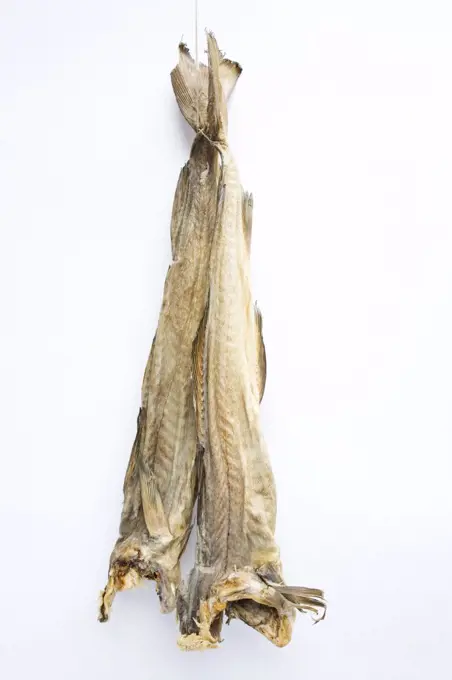
Stockfish
Stockfish
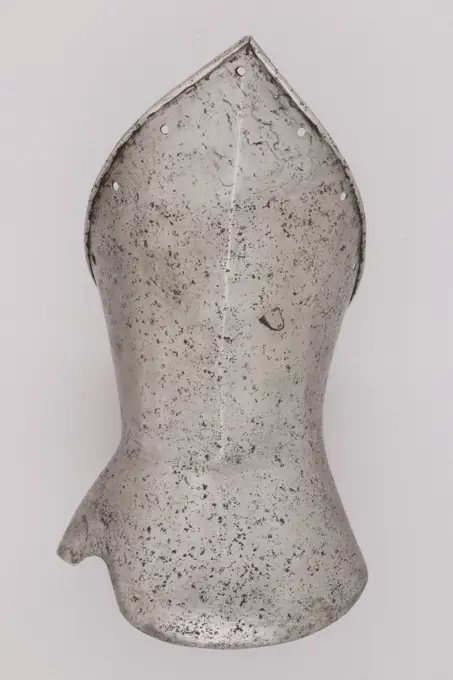
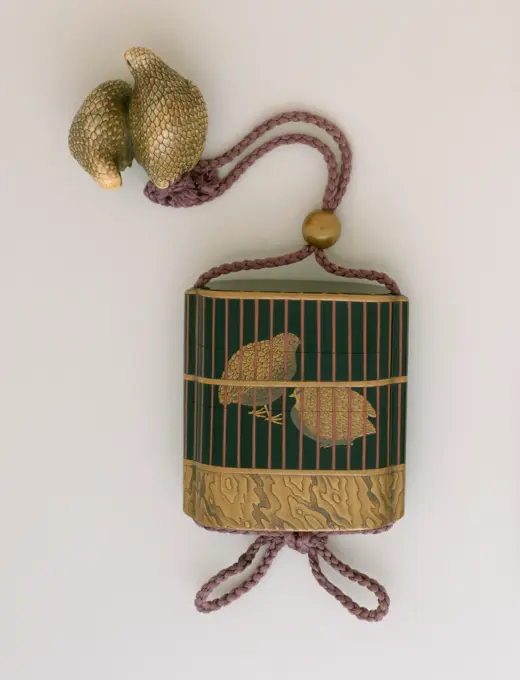
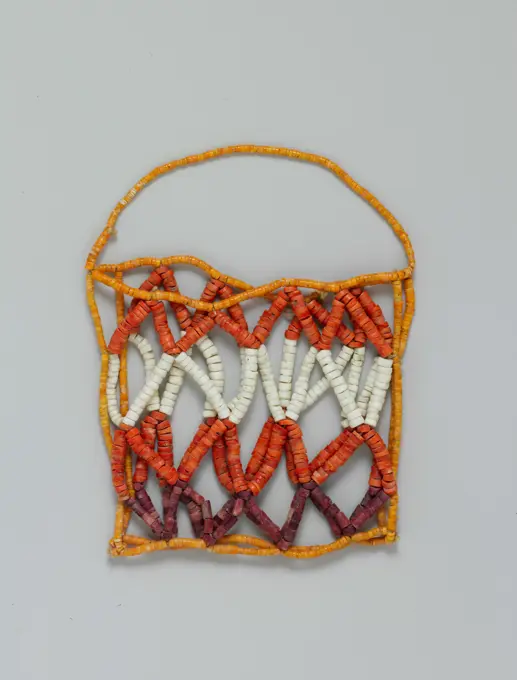
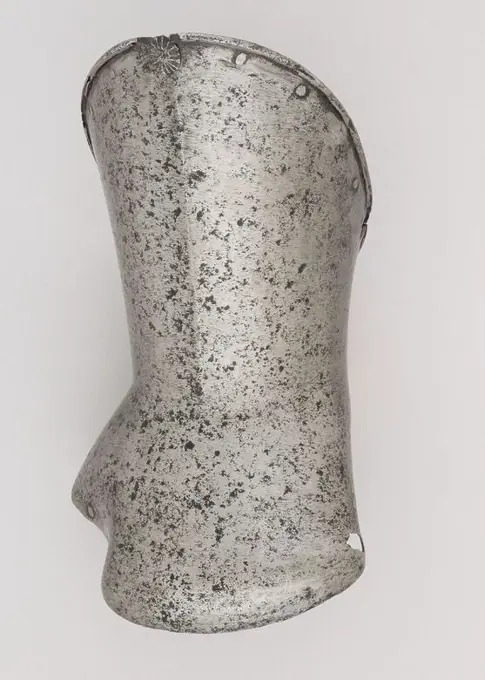
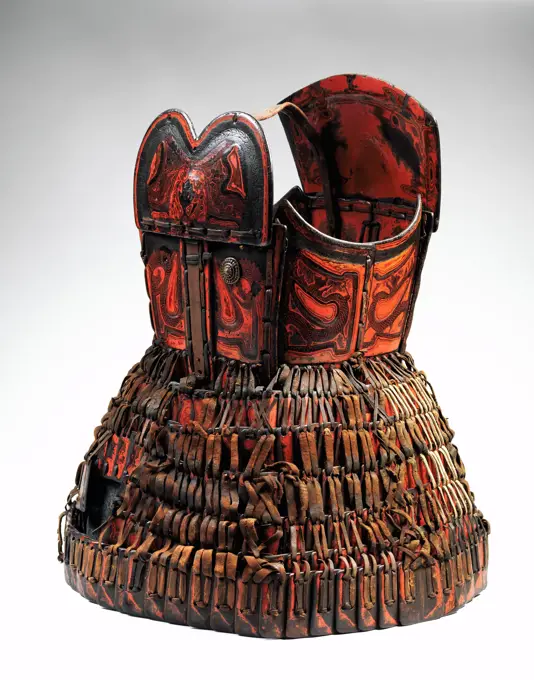
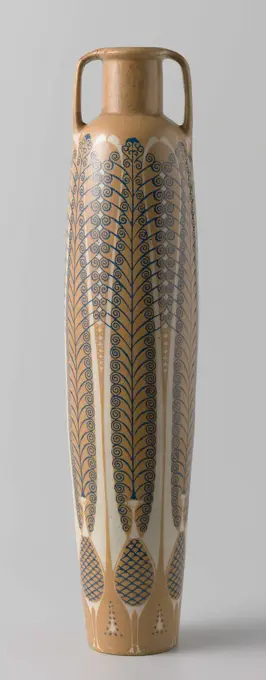
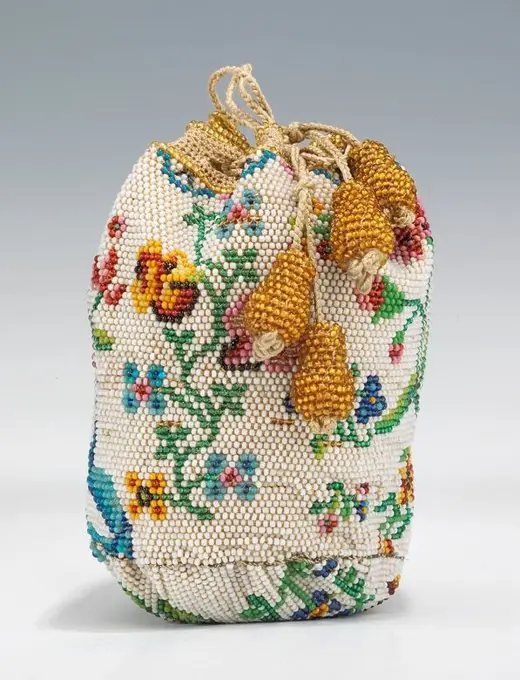
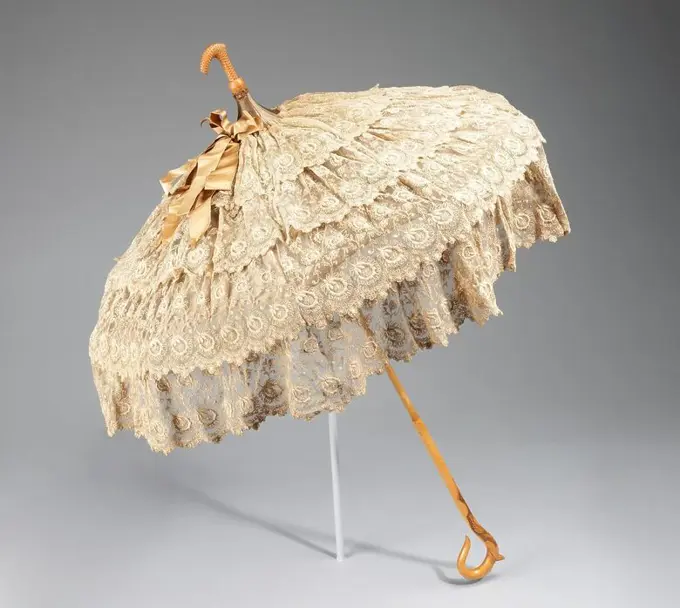
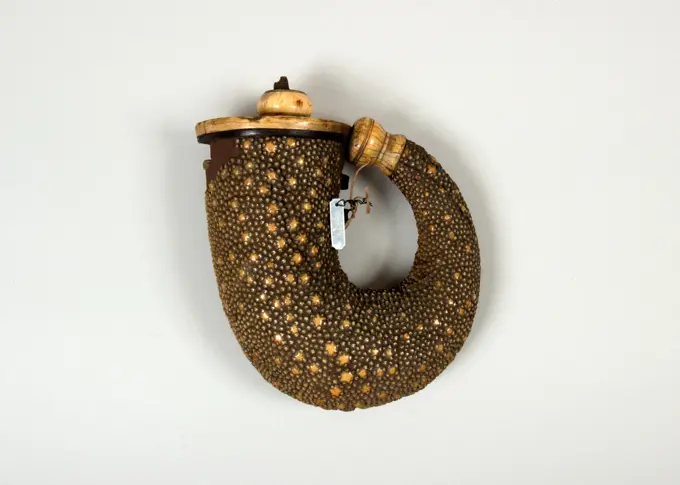
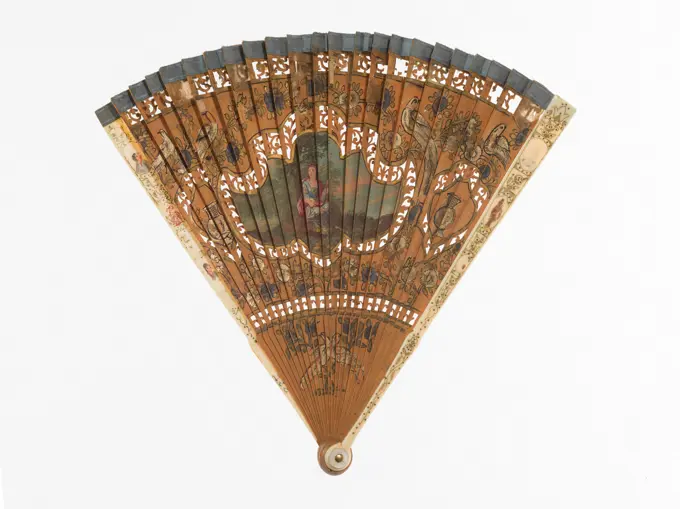
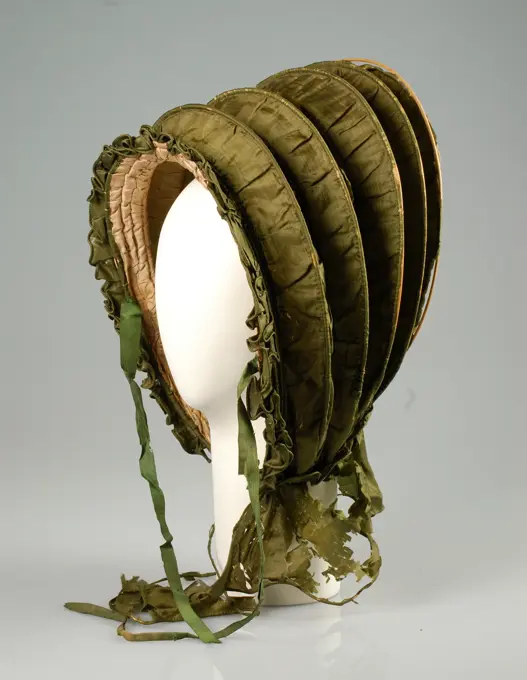
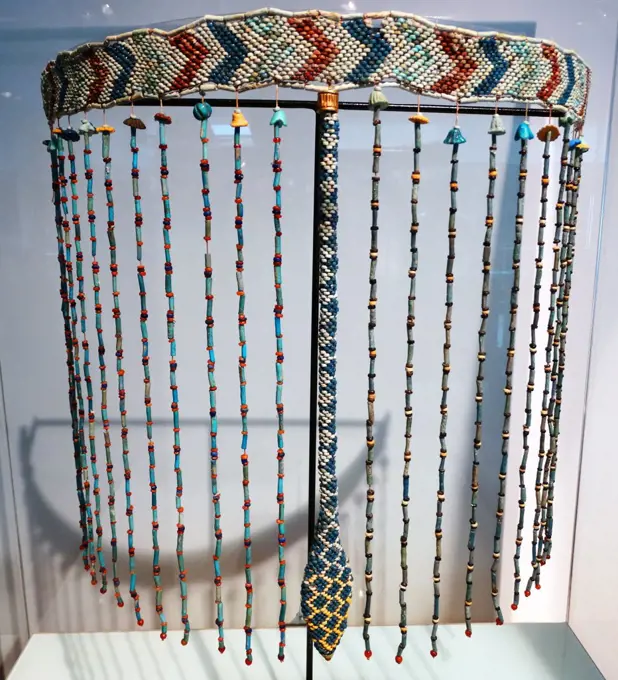
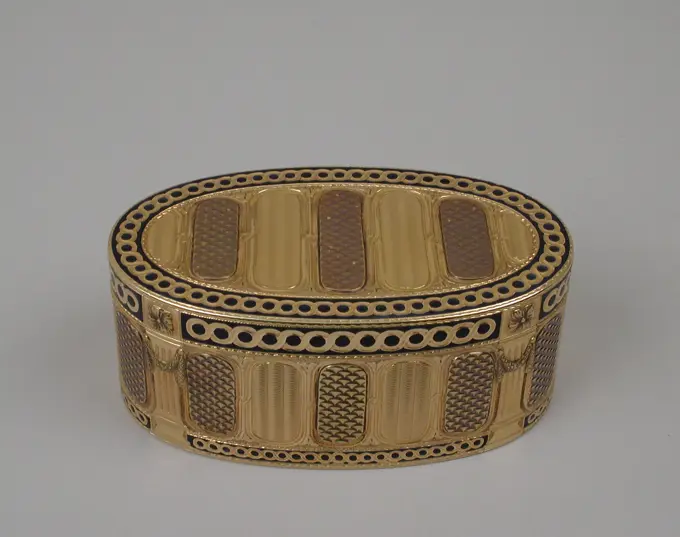
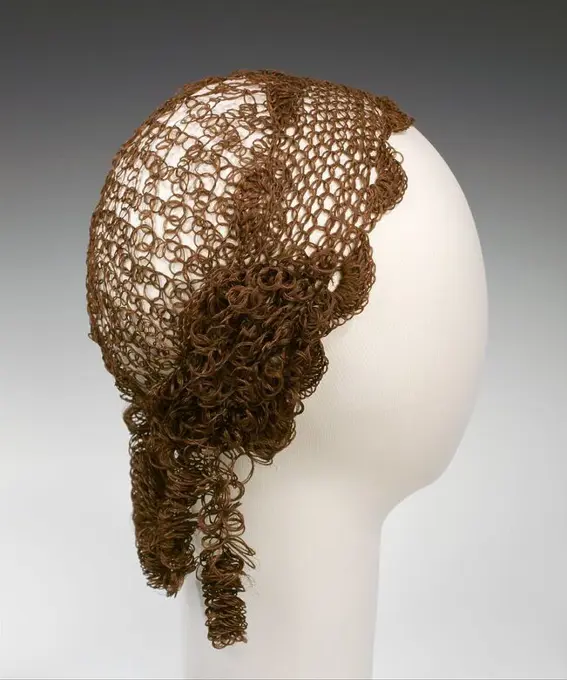
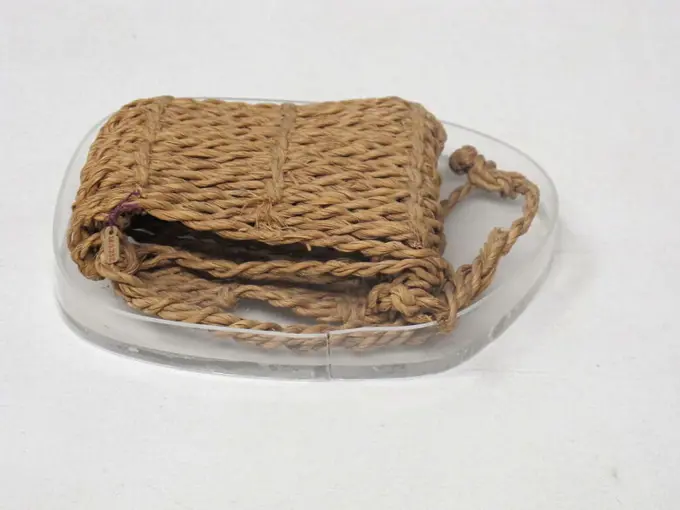
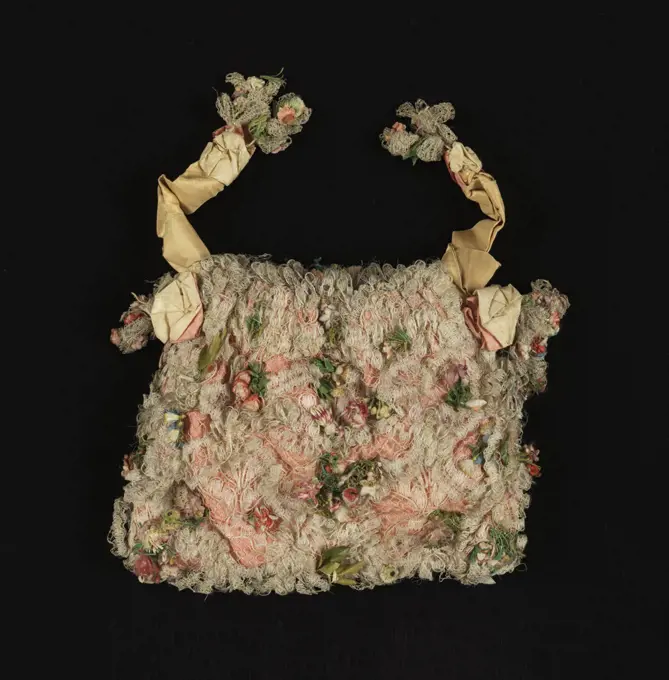
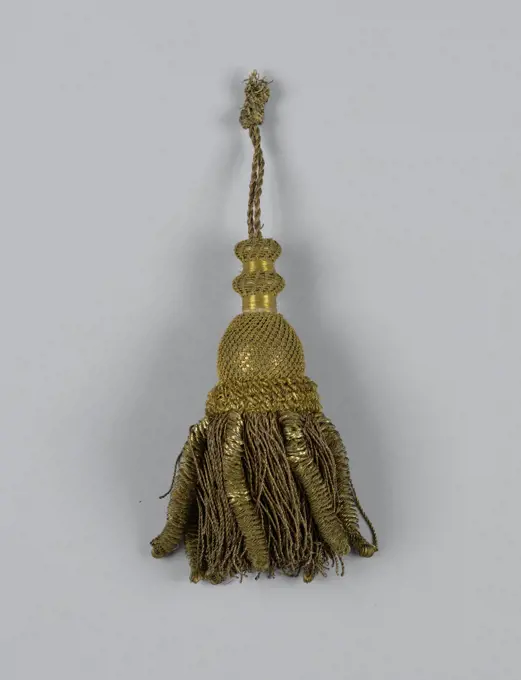
Miser's Purse (France); silk, gilt foilStole ca. 1810 British. Stole 84273Bag in red silk brocade, brass frame and coral clasp, fashion accessories, Italy, late 19th century.Poke bonnet ca. 1850 American. Poke bonnet 168376Handbag in a semi -circular model, of brown rig leather, garnished with snake leather, anonymous, c. 1940 Handbag in half a round model, from brown rig leather, with the front and back covered with snake leather. Along the entire top two metal zippers, with a leather label on the lips. The double handle is attached to the bag with two eyes by two loops of Snake Lake. The stitching on the bag and the handle is very coarse and made of ecrinked rope. The inside of the bag consists of roughened leather, with two stitched compartments, finished with an edge of snake leather. The two soufflés are fed with ecrinkeur satin. Afrika (possibly)maker: Indonesia (possibly) whole: Leather. upholstery: Leather. Closure: Metal. Stitch: rope. Lining: Silk sewing Handbag in half a round model, from brown rig leather, with the front and back covered with snake leather. Along the entire top two metal zippers, with a leather label on the lips. The double handle is attached to the bag with two eyes by two lMiser's Purse (France); silk, metal; L: 25 cm (9 13/16 in.)StockfishBracket bag with gold braces and bag of white and gold colored beads, clamp bag clothing accessory clothing gold silk glass, engraved stitched semi-circular bag clamp with inner cuffs close button on top of beaded bag with transparent and gold colored beads inner side lining inside outside bracket (beaten) storeBliżej Kultury unknownNecklace -Pearl bag. GAL1985.257.18Hat -Cuff of a Left Gauntlet ca. 1450 Italian This is part of a large find of medieval armor discovered in 1840 in the ruins of the fortress of Chalcis, on the Greek island of Euboea (then a Venetian colony called Negroponte). The fortress had been captured and destroyed by the Turks in 1470. Now divided largely between the Ethnological Museum, Athens, and The Metropolitan Museum of Art, the Chalcis hoard contains many rare and unusual elements of fourteenth- and fifteenth-century armor. Of particular importance are the variety of headpieces and the many fragments of brigandines (armor for the torso constructed of small plates riveted to layers of fabric), some of which retain portions of their original velvet covering. The Chalcis armor provides a unique picture of the armament used in the Aegean, one of the easternmost military outposts of the Venetian empire.. Cuff of a Left Gauntlet. Italian. ca. 1450. Steel. Armor Parts-GauntletsCage crinoline ca. 1880 American. Cage crinoline 174737Bonnet ca. 1855 American. Bonnet 169873Cage of Quails (Inrō/Ojime/Netsuke Ensemble). Japan, mid-late 18th century. Costumes; Accessories. inrō Gold hiramakie and red lacquer on black lacquer ground; ojime lacquer(?); netsuke ivory and silver(?)Stick by ambassador Allard Merens, Chalk & Dawson Ltd. Jones, c. 1945 - c. 1976 bicorne Flat stitch of dark blue fabric with white frills. On the right an orange rosette with a golden band with a button with crowned J, belonging to the diplomatic official clothing of ambassador Allard Merens. London textile materials. band + knoop: metalHead protector. Culture: Swiss. Date: late 18th century. Museum: Metropolitan Museum of Art, New York, USA.Hat. Culture: American. Date: early 1890s. Museum: Metropolitan Museum of Art, New York, USA.Close-up of black and green silk tiesBourse.Fringe (France); silk, glass beadsBeaded Bag 14th-15th century Chimú or Chancay. Beaded Bag 315766Gauntlet for the Left Hand. Culture: Italian. Dimensions: L. 8 1/4 in. (21 cm); W. 5 in. (12.7 cm); D. 4 7/8 in. (12.4 cm); Wt. 10.6 oz. (300.5 g). Date: ca. 1450-60. Museum: Metropolitan Museum of Art, New York, USA.Paccha 15th-16th century Inca. Paccha 317751Sleeve fragment, Medium: linen or cotton, wool Technique: embroidered, Sleeve embroidered in tightly spun black wool. Stylized flower and bird design, small doves carrying olive branches in their beaks., Salamanca, Spain, 18th-19th century, embroidery & stitching, Sleeve fragmentOjime 19th century Japan. Ojime. Japan. 19th century. Edo period (1615-1868). OjimeCap, Medium: silk, metallic thread, metal sequins, cotton Technique: embroidered, Child's cap made up of strips of pink silk moiré ribbon with three small insertions of purple and blue brocaded silk over the crown. Outlined with narrow silver lace. Floral sprays in center back and each front corner and embroidered with silver sequins and fine silver wire. Lined with white cotton. Chin ribbons of blue silk moiré. Machine-made lace facing., Europe, 18th century, costume & accessories, CapStrip open sewing with three windows, anonymous, c. 1900 - Before 1932  Strip of natural open sewing work: work with pulled out threads. The pattern with three windows made by openings in the rectangular piece of textile. Four elongated openings in the center of the windows. Above and below the point where the windows touch each other, two elongated openings. The pattern with the windows is framed with several decorative edges, including a zigzag edge, with small openings. The openings in this textile were created by pulling out threads. Stitches are embroidered around the remaining threads. West India linen (material)Balance-Beam Scale with Geometric Cut-out Motifs and String holding Shell Pendants 500 CE-800 CE Peru. Bone, string, and shell . NazcaCharm Bag 1790-1890 Mesquakie or Potawatomi. Charm Bag 319051Bonnet ca. 1863 American or European. Bonnet 113100Wampum string -Armor for the Torso and Hips 12th-13th century Dali Kingdom (present-day Yunnan, China) This armor is one of only two early examples of this type known to exist. Its distinctive form and construction are unique to Yunnan province in southwestern China. It is made of rigid leather panels coated with layers of red and black lacquer and joined together by leather laces. The layered lacquer technique, tixi (marbled) or ticai (carved colors), was well known in China from the fourteenth or fifteenth century onward. Scientific testing establishes the armors date to the time of the Dali Kingdom, an independent state that ruled the region before it was renamed Yunnan and incorporated into China during the Yuan dynasty (1271-1368). The armor, therefore, is extremely important as one of the earliest and most complete examples of this technique and for being identifiable as lacquerwork from the Dali Kingdom or the Yunnan area.. Armor for the Torso and Hips 658575Picture Frame, 20th century, 8 7/8 x 6 1/4 x 15/16 in. (22.54 x 15.88 x 2.38 cm) (without dangles or hanger), Beads, cotton, sequins, paper, United States, 20th centuryBourse. GAL1978.43.12Woman's Handbag. United States, circa 1890. Costumes; Accessories. Silk velvet, engraved silver, kid leather, silk taffetaPierced ball with silk tassel.Ball of porcelain with a cut-away wall, painted on the glaze in blue, red, green, yellow, eggplant and black with rocks and flowers. On the wall are six medallions with rocks and flowers, prunus and peony. Between the medallions a flower. Due to the sphere, a black silk cord is drawn with a knotted decoration on the top and a brush on the bottom. The sphere has been broken; A missing part has been filled. Famille Verte.Basket Company: J.K.Bliżej Kultury unknownTassel late 18th century French. Tassel. French. late 18th century. Silk and metal thread. Textiles-TrimmingsWhimsey bag, 1908, 8 3/4 x 6 5/8 x 1 1/2 in. (22.23 x 16.83 x 3.81 cm) (without dangles or hanging cord), Beads, velvet, sequins, cotton, ribbon, United States, 20th centuryHelmet. Culture: Turkish. Dimensions: H. 13 in. (33.02 cm); Diam. 8 1/4 in. (20.96 cm); Wt. 2 lb. 8 oz. (1257 g). Date: ca. 1580.The decoration of split leaves and arabesques is found frequently on Ottoman ceramics and carpets of the mid-sixteenth century. Originally, the bowl had a brim with a sliding nasal, cheekpieces, and a neck guard. Two complete examples--one Mamluk (acc. no. 36.25.126), the other Ottoman (acc. no. 04.3.456a)--are also in the Museum's collection. Museum: Metropolitan Museum of Art, New York, USA.Miser's purse, Medium: silk, metal, glass beads Technique: beaded crochet, White crocheted net miser's purse with cut steel and gold colored beads; top of soft green satin with scalloped edge, ornamented with triangular groups of gold and white beads. Edged with gold beads and tipped with gold bells, which hang down over net section. With a gold bell at each end of the drawstring., France, early 19th century, costume & accessories, Miser's pursePair of Plates for the Back End-Boards of a Saddle. Culture: Tibetan. Dimensions: H. of each 4 3/8 in. (11.1 cm); W. of each 8 1/4 in. (21 cm); Wt. of each 3 oz. (85 g). Date: probably 18th century. Museum: Metropolitan Museum of Art, New York, USA.Sash worn by Jhr. G.P.C. van Breugel, in 1830/32 1st lieutenant, 1st bat., 2nd Department. N.H. Schutterij, Anonymous, c. 1815  Sjerp van Oranje Koordzijde in technology of Egyptian braid. Both ends end in fringes with buttons at the ends. On one side there is a leather label on an orange-blue ribbon with no. 57. Hereby the text: Lieutenant Jokh. van Breugel. Sjerp van Oranje Koordzijde (Ned. Army) (M.1815). Netherlands silk braiding  NetherlandsVase of pottery, cylindrical, to top slightly wider, with an upwarded short neck; Two ears between shoulder and mouth edge. Decorated with stylized winch birds in white and blue on a yellow-brown fond. Amsterdam, Amstelhoek, to the design of C.J. Van der Hoef. Signature. Approx. 1902.Bustle 1868-69 American. Bustle 173601Coin purse. Culture: European. Date: 1780-1810. Museum: Metropolitan Museum of Art, New York, USA.Miser's Purse (France); silk, metal; L: 20 cm (7 7/8 in.)Prestige Hat (Ashetu), mid 20th century, 7 1/2 x 7 in. (19.05 x 17.78 cm), Cotton, Cameroon, 20th century, This orange, blue, and white crocheted cotton hat is another example of an ashetu. It features open work designed in white and concentric circles and geometric shapes decorating the crown. This hat also mimics the wrapped, tufted hairstyles indicating elevated social status.Hat -Cap ca. 1840 American. Cap 169968Wooden Spindle with Ceramic Whorls Made 1000-1476 Peru. Wood, polychrome ceramic, and wool .Picture frame -Bootees 1870-80 American. Bootees. American. 1870-80. Wool, silkTrimming; cotton, wool; Warp x Weft: 765 x 4 cm (25 ft. 1 3/16 in. x 1 9/16 in.)Parasol. Culture: American. Date: 1880-90.Parasols were for show, carried as an accessory to complete a toilette. This example is fitted with a crook at top so it could be carried with the canopy down for a more elegant line than carrying it from the handle end. In addition, this shows off the tiers of feminine ruffles. Museum: Metropolitan Museum of Art, New York, USA.Powder Flask 18th century Indian. Powder Flask. Indian. 18th century. Wood, shagreen, ivory. Firearms Accessories-Flasks & PrimersEVENTAIL. "Young women preparing to get into a boat with a young man". Broken, painted and gilded, ivory. Paris, Carnavalet museum. 99103-9 Fashion accessory, EventailCloche of braided white plastic, anonymous, c. 1953 - c. 1955 Summer hat of glass, white, braided plastic. Cloche with flat bottom, ring -shaped dent and hanging wider rim. At the rear a draped bar white nylontricot formed into a hanging bow. Netherlands geheel: plastic (organic material). strik: nylon. strik: braiding Summer hat of glass, white, braided plastic. Cloche with flat bottom, ring -shaped dent and hanging wider rim. At the rear a draped bar white nylontricot formed into a hanging bow. Netherlands geheel: plastic (organic material). strik: nylon. strik: braidingCalash ca. 1800 American. Calash 168292Necklace (India); thin metal (copper or gilt alloy)Parasol 1675-1725 French. Parasol 122517Egyptian Middle Kingdom girdle or decorative beaded waistband (2040-1640 BC).Netsuke tea ceremony objects, 19th century, Hoshinsai, 13/16 x 1 7/16 x 1 1/4in. (2.1 x 3.7 x 3.2cm), Ivory, Japan, 19th centuryHat -Helmet 18th-19th century Persian. Helmet 32132Baby cradle with muslin blanket and wooden toys in a baby roomSnuffbox 1762-63 Philippe-Emanuel Garbe In eighteenth-century Europe, Paris led the production of high-quality luxury goods. Parisian goldsmiths made a wide range of small, personal articles such as snuffboxes; étuis to hold sealing wax, tweezers, or utensils for sewing; souvenirs, which contained thin ivory tablets for note taking; and shuttles for knotting lace. Gold snuffboxes and boxes decorated with portrait miniatures were prized and frequently given as royal gifts, often to ambassadors or members of the court in lieu of cash payments for their services. Coveted and admired, these boxes were produced from a variety of materials. The best were skillfully made of gold and embellished with diamonds, enameled decoration, lacquer, and other luxurious materials. By the middle of the century, the taking of snuff had become an entrenched social ritual, and the snuffbox, too, had become an important social prop. Snuffboxes were considered highly fashionable accessories, with some merchantTassel, Medium: linen Technique: braided and knotted, Tassel of linen, braided and knotted. Single loop attached to pear-shaped center from which hang balls attached to clusters of knottings., Italy, Europe, 17th century, trimmings, TasselBonnet 1880s American. Bonnet. American. 1880s. net, silkHood ca. 1869 European. Hood 116465Cap. Culture: American. Date: ca. 1850.This headpiece is an elaborate example of the Victorian custom of creating jewelry and other accessories from the hair of loved ones. Designed in the style of a mid-nineteeenth-century snood, this cap approximates a hairstyle of the day. Unusual in its concept, it may have been meant to be worn completely over the wearer's hair or perhaps under a hat. Museum: Metropolitan Museum of Art, New York, USA.Bonnet ca. 1770 probably British. Bonnet. probably British. ca. 1770. silkModel Donkey Bag. Dimensions: Tray: L. 16.5 cm (6 1/2 in); W. 12.4 cm (4 7/8 in). Dynasty: Dynasty 11. Date: ca. 2030-1640 B.C.. Museum: Metropolitan Museum of Art, New York, USA.Brush cup unknownPurse, Medium: steel Technique: interlinking, Purse is vertical rectangle with fringe and attached shell-like shape at bottom., Europe, 1800-1850, costume & accessories, PurseHandled basket with fruit Italian second half 18th-mid-19th century The practice of using crèche figures to restage religious events reached the height of its complexity and artistic excellence in eighteenth-century Naples, and the Metropolitan Museum of Arts group of Neapolitan crèche is one of the finest and most complete survivals of the art form. The ensemble consists of characters traditional to eighteenth-century Italian Christmas holiday customs. The Nativity, featuring the holy family, shepherds and their flocks, and a host of angels and cherubs is joined by the procession of the three Magi, townspeople, colorful peasants, individuals from the Mediterranean shores, and animals. The figures have articulated bodies of tow and wire with polychromed terracotta heads, and are all in partially distressed condition.These vibrant characters are further brought to life by a wide-ranging set of cloth, embroidery, leather, wicker, wax, and silver accessories. Many of these, such as the fPrzeszo Przyszoci unknownLis for Bicorne Health Officers 3rd class, Regiment Lanciers no. 10, ca. 1830-1831, 1802 - 1832   Netherlands .   NetherlandsBasket Company: J.K.Hand basket made of pine cones placed on a logPendant, 21 3/8 x 12 3/4 x 1 in. (54.29 x 32.39 x 2.54 cm) (including dangles), Silver, ChinaBread basket with two raised handles, braided, anonymous, c. 1700 - c. 1799 Bread basket of braided willow with two raised handles. Holland (possibly) . braiding Bread basket of braided willow with two raised handles. Holland (possibly) . braidingHat of brown suede with the edge and knot in the middle of the sphere, Cristobal Balenciaga, c. 1956 - c. 1958 Hat of brown suede with the edge and knot in the middle of the wrinkled ball. Paris whole: Suede   Paris Hat of brown suede with the edge and knot in the middle of the wrinkled ball. Paris whole: Suede   Paris. Hair comb of orange yellow plastic, with a graceful back, deposited with five pearls and astras in metal. Seventeen teeth, with red ends.terracotta cast from the Warren Silver Cup. Roman, made about 15 BC - AD 15. found at Bittir near Jerusalem. The cup shows two male couples making love. On one side is a bearded, active lover (in Greek, the erastes), with a younger, passive lover, (the eromenos).Scalloped Caddy Spoon,  c. 1840Basket made of bamboo isolated on white background.Reticule, Medium: silk, painted paper, wire Technique: bobbin lace lined with plain weave, Flat square bag with drawstring top of white silk bobbin lace lined with rose silk plain weave. Trimmed with white silk bobbin lace and flowers made of silk thread, painted paper, silk ribbons and wire. Tan ribbon drawstring., France, late 18th century, costume & accessories, ReticuleBag. Black Ottoman. Celluloid frame imitating ivory with dragon and Japanese decor. Taupe cotton canvas lining. Around 1910. Galliera, fashion museum of the city of Paris. 73684-1 Fashion accessory, haute couture, female mode, black, ottoman, pocket, handbagTassel, Medium: wood core, metallic thread, Tassel with a turned wooden core covered with gilt thread in braided, looped and ring designs with skirt of twisted gilt threads. Cord of twisted strands runs through core and forms loop at top. Probably intended for ecclesiastical use., Italy, 19th century, trimmings, TasselDJ Grant, Market Basket, c 1940 Market BasketHandmade wicker basket isolated on the white background. Handmade wicker basket isolated on the white background. Copyright: xZoonar.com/Photographer:xAskoldsxBerowskisx 23045338Basket 1st century B.C.-A.D. 4th century Roman Period. Basket 545762Necklace 19th century Moroccan This collection of largely ethnographic jewelry includes examples from cultures in South America, North America, Europe, Asia, and Africa and dates from the Pre-Columbian period to the twentieth century. Owned by renowned art collector and fashion enthusiast Muriel Kallis Newman, the collection represents her knowledge and appreciation of a wide range of jewelry design and making traditions. Numerous items in her collection are composite artifacts made from various cultures and time periods reappropriated as modern jewelry creations by or for Muriel. It is important to note that Newman wore many of the pieces in the collection, interpreting them to suit and express her own singular, often avant-garde style.. Necklace 141590Kaper (hat), from black chenille and wool, anonymous, c. 1870 - c. 1910 Hat, hijacker, from black chenille and wool. Pointed upper part, wrinkled with a pleated neck strip that ends in sculptures. In the hood, silk chenille-threads are sewn diagonally on a machine woolen knit. Strip of open woolen grid tissue through stripes Chenille divided into courses. On top of the front raised part a pompom of the strip fillet with a black satin bow, one of which is at the closure. Amsterdam gestation (). Amsterdam (possibly) whole:. whole: Wool knitting Hat, hijacker, from black chenille and wool. Pointed upper part, wrinkled with a pleated neck strip that ends in sculptures. In the hood, silk chenille-threads are sewn diagonally on a machine woolen knit. Strip of open woolen grid tissue through stripes Chenille divided into courses. On top of the front raised part a pompom of the strip fillet with a black satin bow, one of which is at the closure. Amsterdam gestation (). Amsterdam (possibly) whoFan ca. 1870 American. Fan 120521Amazigh necklace, Libya, "Corral del Carbón" , "al-fundaq al-yadida", 14th century, Granada, Andalusia, Spain.