Vintage Knives and Tools

A range of vintage knives and tools, showcasing different materials and designs used across centuries.

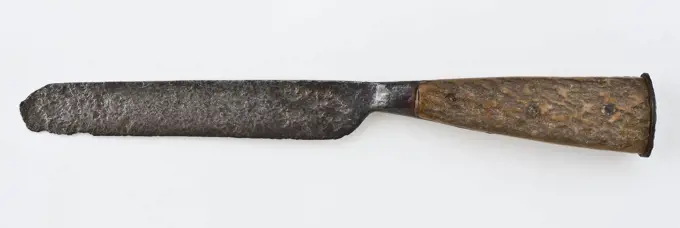
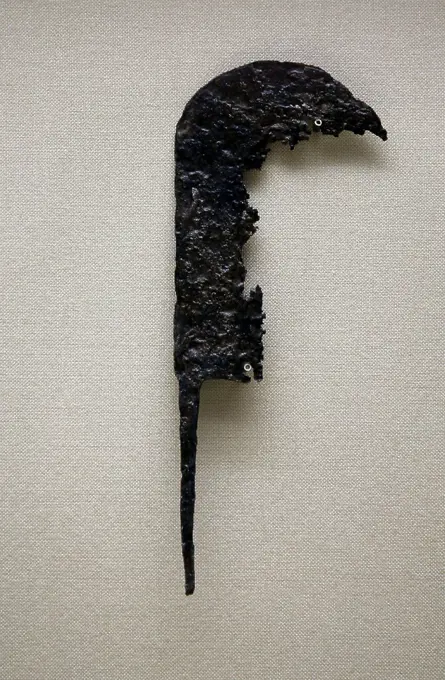
Knife with fairly wide blade and tapered handle with two legs, knife cutlery soil find leg iron metal, archeology
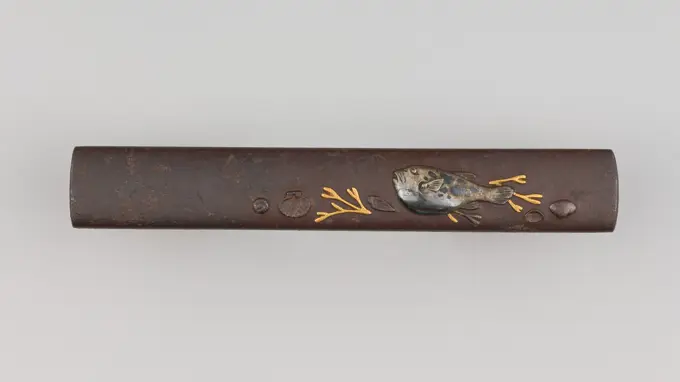
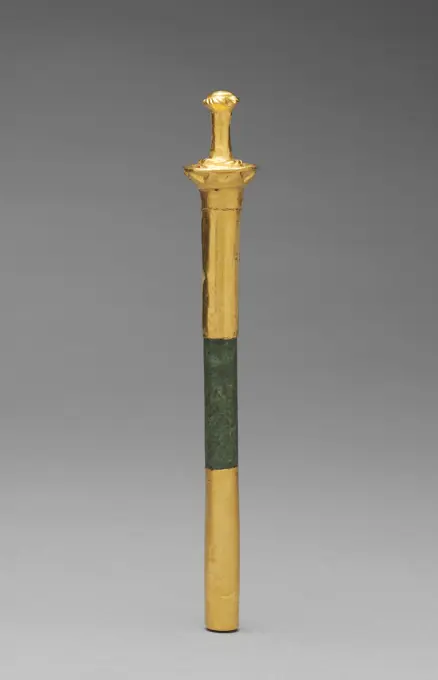
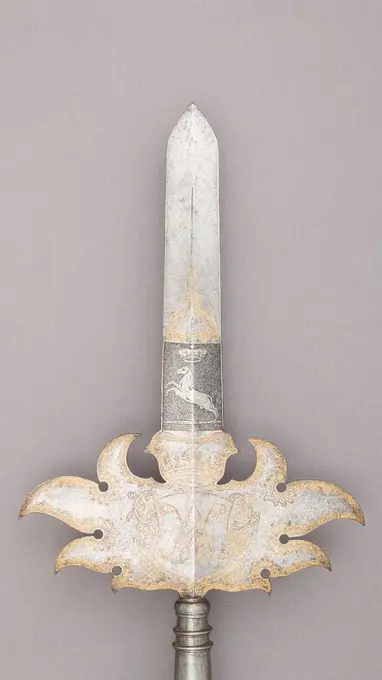
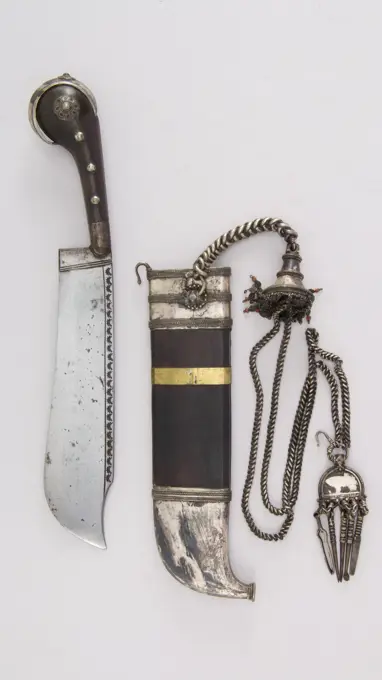
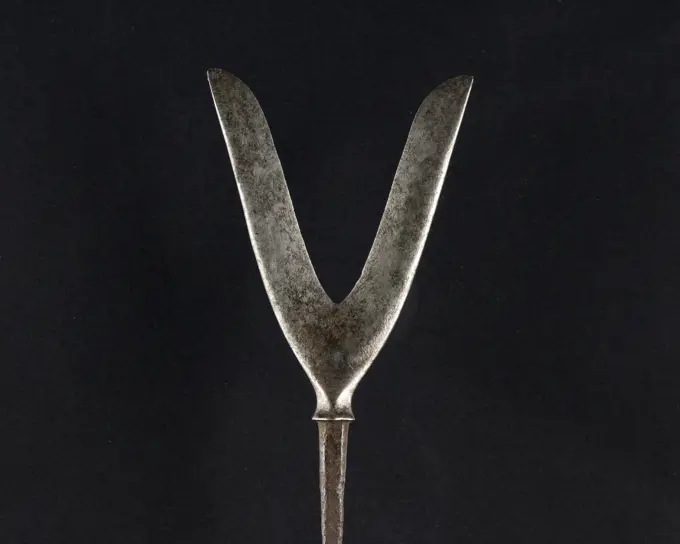
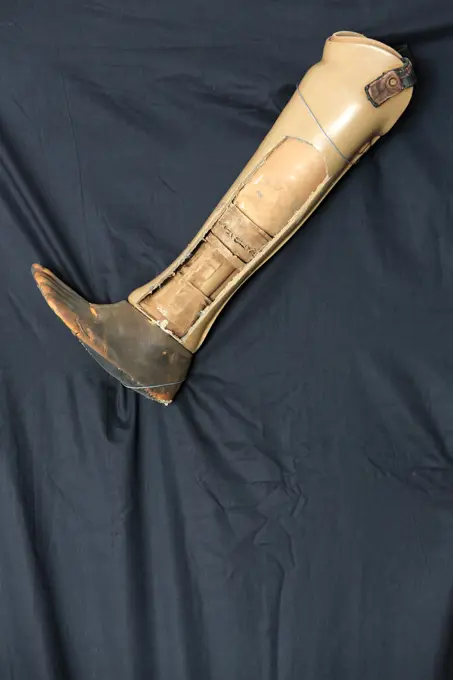
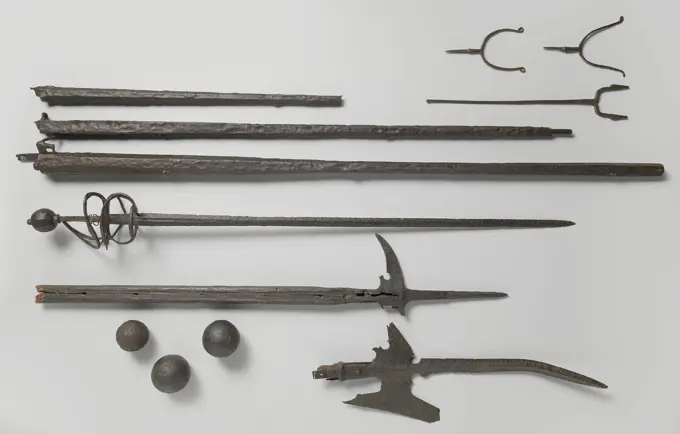
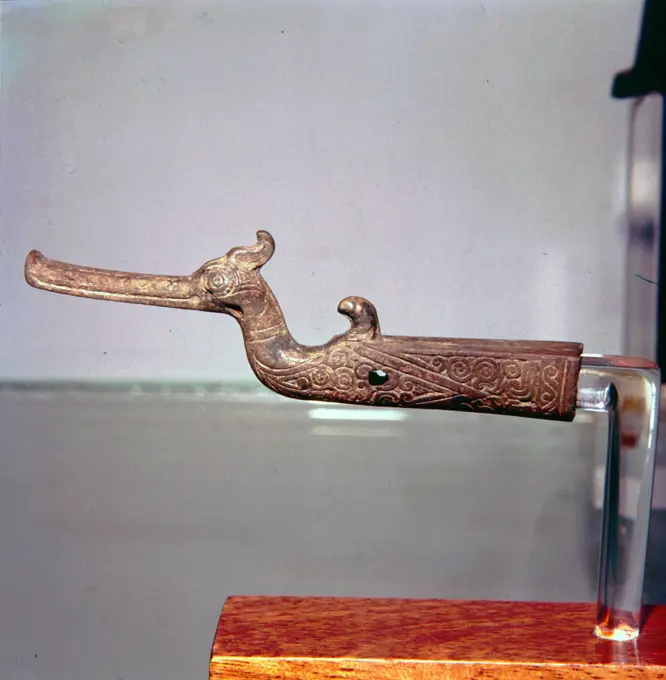
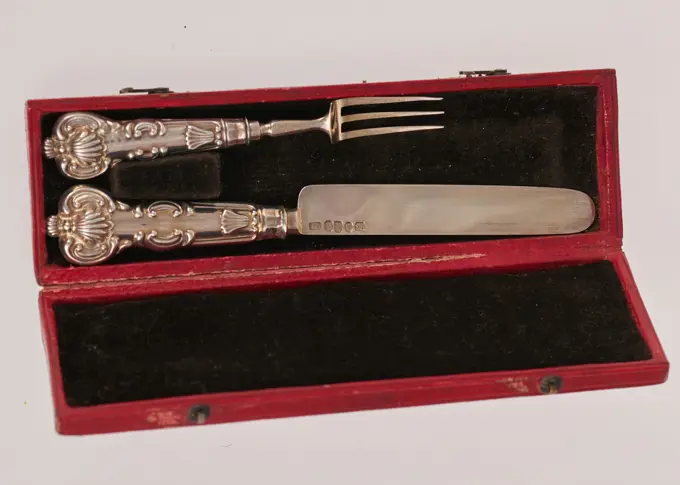
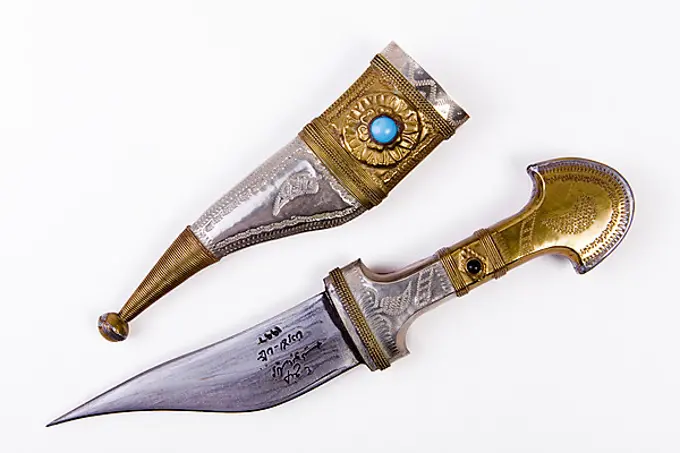
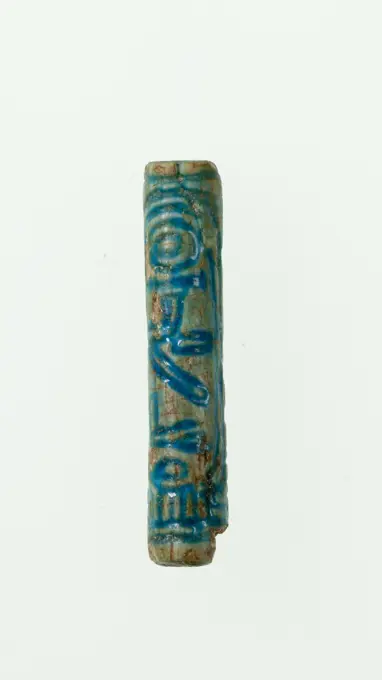
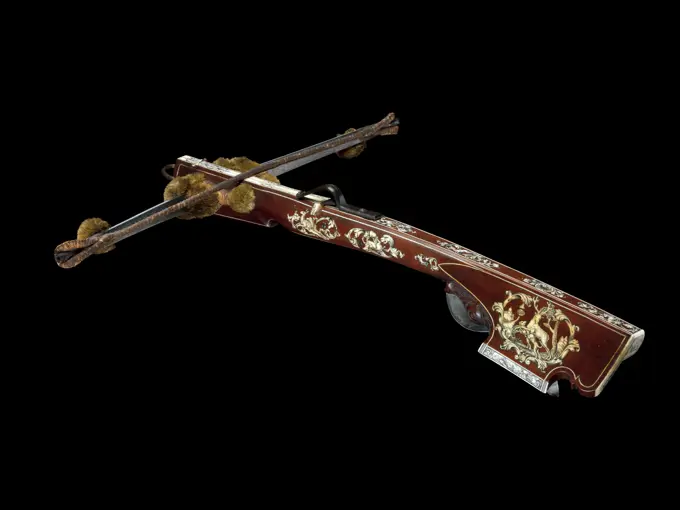
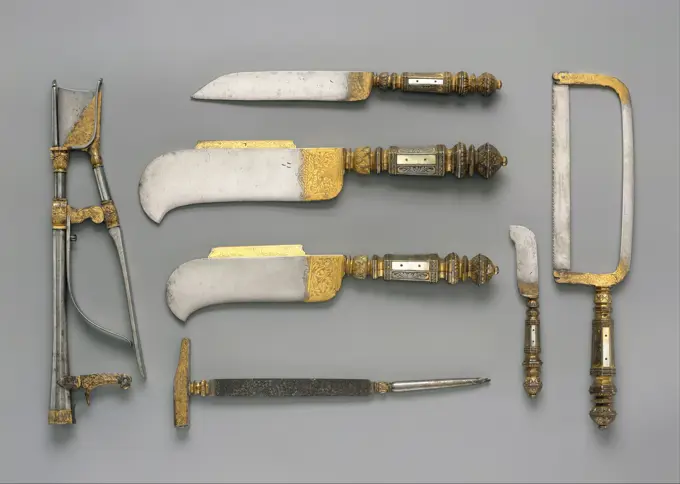
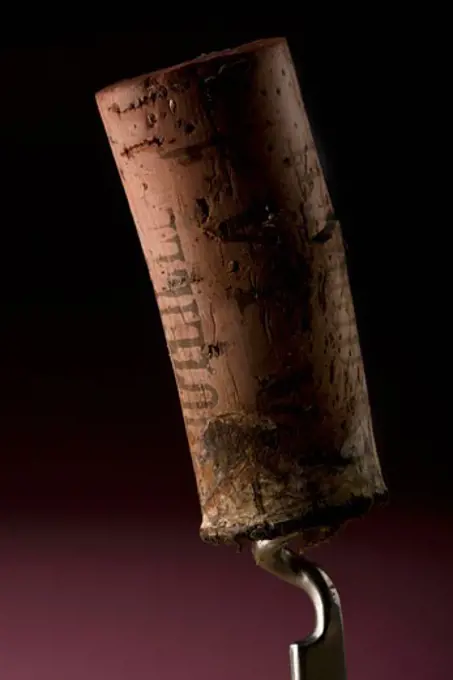
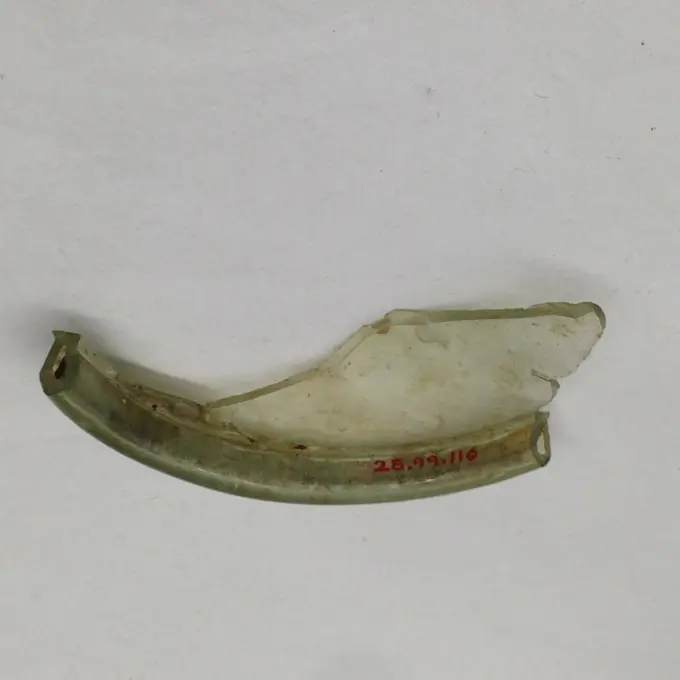
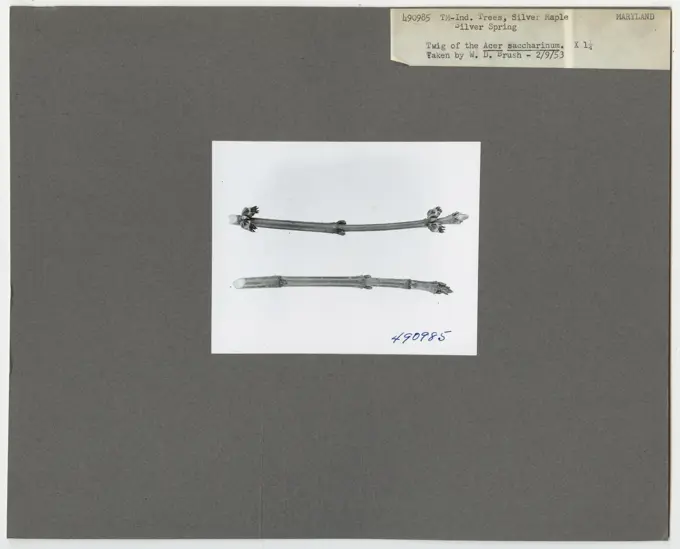
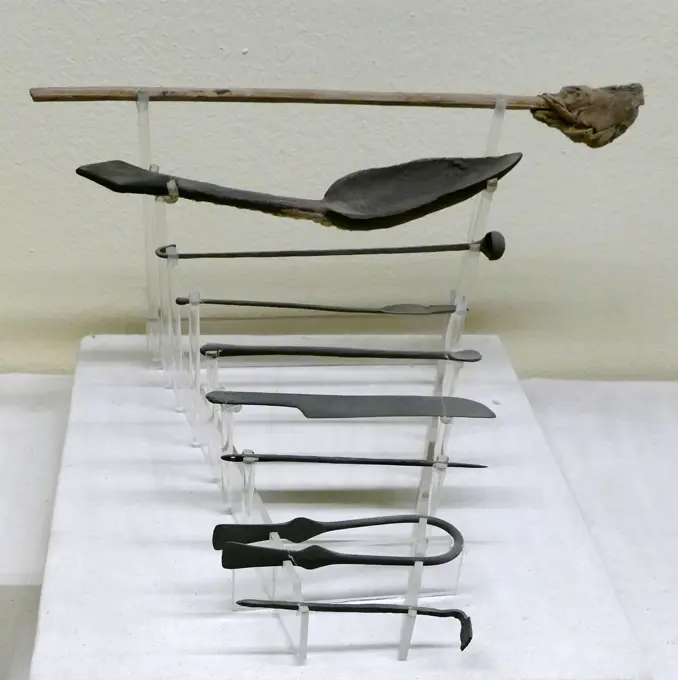
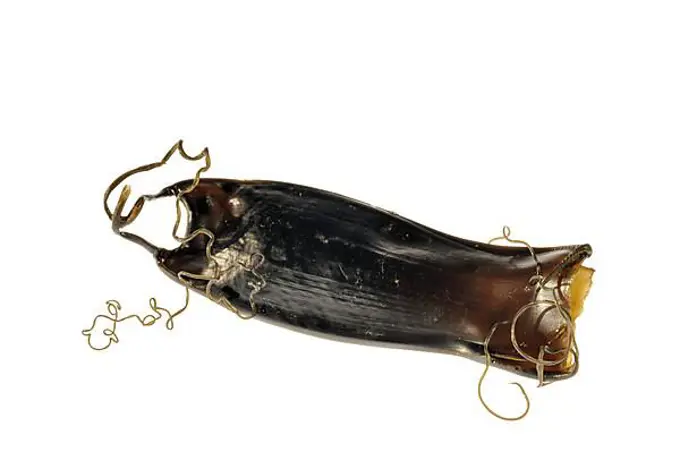
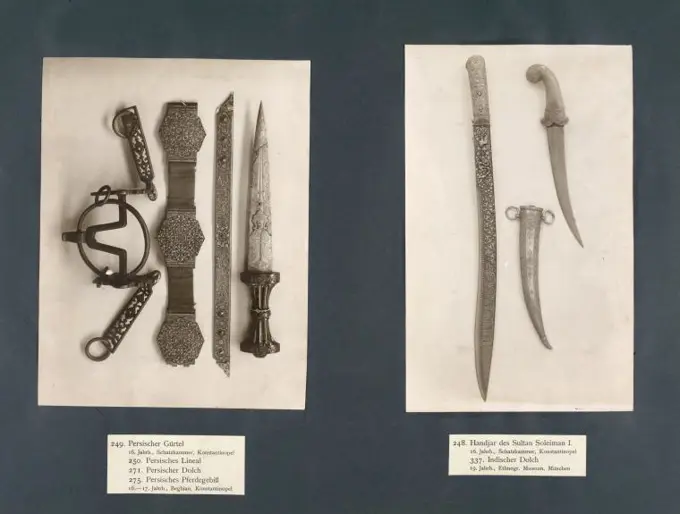
Knife Handle (Kozuka) 18th century Japanese A kozuka is a handle of a by-knife that is part of a sword mounting. It is kept in a slot on the reverse of a katana scabbard, often with a matching kgai (hairdressing tool).. Knife Handle (Kozuka). Japanese. 18th century. Iron, copper-silver alloy (shibuichi), silver, gold, copper-gold alloy (shakud). Sword Furniture-KozukaSoil of musket size, anonymous, c. 1590 - c. 1596  Soil of musket size belonging to NG-NM-7708-1-1  brass (alloy) striking (metalworking)  Nova Zembla. Saving HuysNeedle sheath 17th century possibly Italian. Needle sheath. possibly Italian. 17th century. Ivory and metal. Textiles-Methods and MaterialsMiniature Shaft and Pin 12th-16th century Middle Niger civilization. Miniature Shaft and Pin. Middle Niger civilization. 12th-16th century. Copper alloy. Mali, Inland Niger Delta region. Metal-OrnamentsEar Rod, c. 700-900. Panama, Conte style, 5th - 10th century. Hammered gold, with greenstone; diameter: 2 cm (13/16 in.); overall: 15.5 cm (6 1/8 in.). Harvard archaeologists excavated this and seven other ornaments from several burials at Sitio Conte, a cemetery famous for its lavish graves of powerful chieftains. The young man buried in Grave 26 was such a chief. His status was stunningly memorialized by 21 human companions and 475 objects, many of them personal ornaments made of gold, including a large chest plaque and the rod-shaped ear ornament shown here.Partisan. Culture: German. Dimensions: L. 90 1/8 in. (228.9 cm); L. of head 21 1/8 in. (53.7 cm); W. 11 3/4 in. (29.8 cm); Wt. 6 lbs. 9 oz. (2976.7 g). Date: dated 1718. Museum: Metropolitan Museum of Art, New York, USA.Buddhist copy;  19th century () (1801-00-00-1900-00-00);Zaleski, Władysław - collection, gift (provenance), Pali language, sutraPair of Lappets (Joined) Made 1850-1869 France. Silk, bobbin straight lace (made in vertical strips) .short double-edged sword, 5th century BC, Etxauri deposit, first iron age, Museum of Navarra, Pamplona, Navarra,Spain.Bronze, Bone and Glass Needles from Ancient Rome. Dated 1st CenturyKnife (Pichangatti) and Sheath 18th-19th century Indian, Kodagu (Coorg). Knife (Pichangatti) and Sheath 31532Opium Pipe, 1800s. China, Qing dynasty (1644-1911). Cloisonné enamel; overall: 61 cm (24 in.).Fragment ca. 1150-ca. 1250 European or Middle Eastern. Fragment 694282Arrowhead (Yanone) 18th century Japanese Although today Japanese warriors are renowned most for their swordsmanship, archery, especially from horseback, has been an essential part of samurai warfare and culture for centuries. Arrows were fitted with heads of varying shape according to their intended use in war, the hunt, or target practice. Arrowheads made for use on the battlefield incorporated different designs intended for specialized purposes such as the piercing of armor or to cause maximum damage to horses and unarmored personnel.Large arrowheads, pierced and elaborately chiseled with landscapes, birds, flowers, dragons, and Buddhist divinities, were created to be admired for the beauty of their metalwork and design rather than for use in archery. Such highly elaborate examples may have been made for presentation or as a votive offerings to a shrine.. Arrowhead (Yanone). Japanese. 18th century. Steel. Archery Equipment-ArrowheadsLeg prosthesis made of wood.screws tool at metal background textureFolding table fork early 19th century possibly French. Folding table fork. possibly French. early 19th century. Steel, damascened, blued and gilded. Metalwork-SteelClose-up of a pipeCelt 7th-6th millennium B.C.. Celt. 7th-6th millennium B.C.. Stone, dark grey veined. Neolithic. SyriaOld handforged rusty nails isolated on white with natural shadowsWeapons, anonymous, c. 1590 - c. 1596 bullet (ammunition) Cannonball for cannon of 3 lb. There is a casting seam and a dent over the center of the bullet.  iron (metal) casting  Nova Zembla. Saving HuysCannonball with a casting seam, anonymous, c. 1590 - c. 1596 bullet (ammunition) Cannonball for cannon 3LB with a casting seam in the middle. The cannonball has two dents and c. Four holes.  iron (metal) casting  Nova Zembla. Saving HuysChinese Bronze Finial in form of bird, Han Dynasty, 3rd century BC. Artist: Unknown.Knife, from a child's knife and fork set, 1833, John Bettridge, British (Birmingham), English, L.4-5/8 x W.5/8 in., Silver, England, 19th centuryTurkish dagger, 19. centuryAmerican 20th Century, Sword and Scabbard, 1935 1942 Sword and ScabbardRoman era. Agricultural tool. Sickle. Andalucia, Spain. Archaeological Museum of Seville. Spain.Cylinder seal ca. 1802-1550 B.C. Middle Kingdom-Second Intermediate Period. Cylinder seal 560673HeaddressElementSmall Crossbow (Schnepper), Probably for a Woman or Child dated 1738 Johann Gottfried Hänisch the Elder German Made by the court crossbow-maker to the dukes of Saxony, this crossbow has an elegant and finely engraved inlay that distinguishes it as a weapon of high quality intended for use at the court in Dresden or in one of the other nearby ducal residences. The theme of the decoration might suggest that it was used for hunting small game, but the delicate size of this crossbow indicates that it probably was used by a lady or a child for shooting competitions, some of which would have been held indoors.. Small Crossbow (Schnepper), Probably for a Woman or Child 35706Set of seven pruning tools 1575-1600 French, Moulins Decorated with engraved natural motifs, including fruit and fish, precious tools such as these were meant for noble patrons for whom gardening had gradually become a suitable pastime. The set, comprising clippers, a saw, four knives, and a combination hammer-rasp-file-and-auger, would have been used for trimming branches and obtaining bud grafts.. Set of seven pruning tools 203954Knife Handle (Kozuka). Culture: Japanese. Dimensions: L. 3 13/16 in. (9.7 cm); W. 9/16 in. (1.4 cm); thickness 1/4 in. (0.6 cm); Wt. 1 oz. (28.3 g). Date: ca. 1615-1868. Museum: Metropolitan Museum of Art, New York, USA.Wine cork on corkscrewNight Signal, anonymous, c. 1860 - c. 1865 instrument The night signal consists of a stick with a Lonthouder at the end, over which a cylinder can be pushed, who extracts the flame from the eye. Russia wood (plant material). brass (alloy). iron (metal)   SiberiaHistorical drawing, various stringed instruments, old forms of the violin, pochette, dancing master's violin, kit or pocket violin, a violine with a much smaller body, 17th CenturyFragment ca. 1150-ca. 1250 European or Middle Eastern. Fragment 694217Tree Identification - Maple: Silver. Photographs Relating to National Forests, Resource Management Practices, Personnel, and Cultural and Economic HistoryMessenheft from the wreck of the East Indians Hollandia, Anonymous, 1700 - in Or Before 1743  Knife, handle, cylindrical: tapering; id. NG 1979-403H. Netherlands wood (plant material). copper (metal)   SecondEmbalming materials used in Ancient Egypt for mummification of the dead. Left to right, Cassia and Cinnamon, Natron, a naturally-occurring salt and dried resinEgg case, mermaids purse of small-spotted catshark (Scyliorhinus canicula), lesser spotted dogfish shark against white backgroundKohl Stick 5th-6th century. Kohl Stick 445352Fresh Salsify Tragopogon Porrifolius Against White BackgroundBalm container in the form of a fish. unknown, goldsmithEnd of bow ca. 2120-1981 B.C. Middle Kingdom-Early New Kingdom The cord here was found attached to this fragment from the end of a bow. There was no notch in the bow for stringing, so a loop was made in the end of the cord, which was then wrapped around the bow several times and secured with half hitches.. End of bow. ca. 2120-1981 B.C.. Wood, cord. Middle Kingdom-Early New Kingdom. From Egypt, Upper Egypt, Thebes, Sheikh Abd el-Qurna, Tomb of Sebeknakht (MMA 808), MMA excavations, 1913-14. Dynasty 11Handjar des Sultan Soleiman I; Indischer Dolch; Persischer Gürtel; Persisches Lineal; Persischer Dolch; Persisches Pferdegebiß.. Prints. 1912. The Miriam and Ira D. Wallach Division of Art, Prints and Photographs: Art & Architecture CollectionMessenheft from the wreck of the East Indians Hollandia, Anonymous, 1700 - in Or Before 1743  Knife, handle, cylindrical: tapering; id. NG 1979-403H, ferrules id. NG 1980-27H426. Netherlands wood (plant material)   SecondArm Guard. Culture: Indian. Dimensions: L. 12 7/8 in. (32.7 cm); W. 3 3/4 in. (9.5); Wt. 1 lb. 7.8 oz. (618 g). Date: 17th-18th century. Museum: Metropolitan Museum of Art, New York, USA.Sword. Vang pr.gard, Vang k., Oppland. 9th century. Historical Museum. Oslo. Norway.Molds of KnifeHandlesKarte von North Carolina auf rostigem Metall - Map of North Carolina on rusty metal Karte von North Carolina auf rostigem Metall - Map of North Carolina on rusty metal Copyright: xZoonar.com/lantapixx 15131264Sharksucker on Ice