Vintage Lace Strips

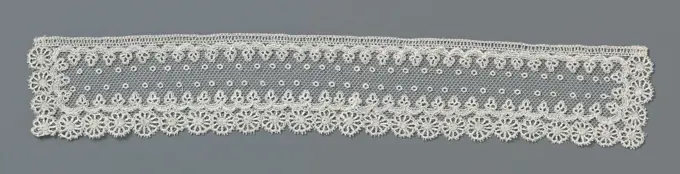
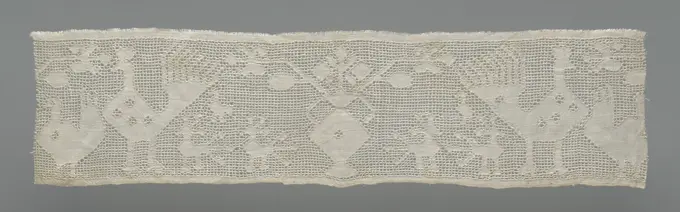
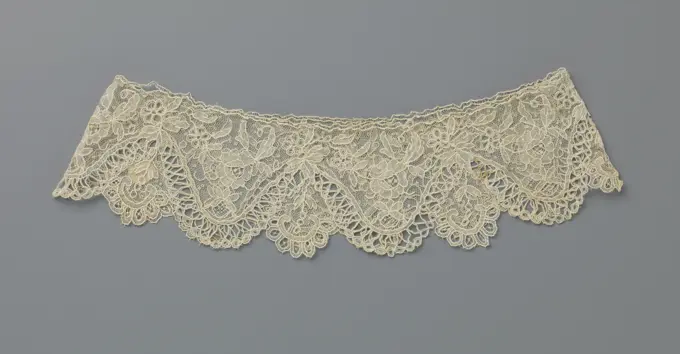
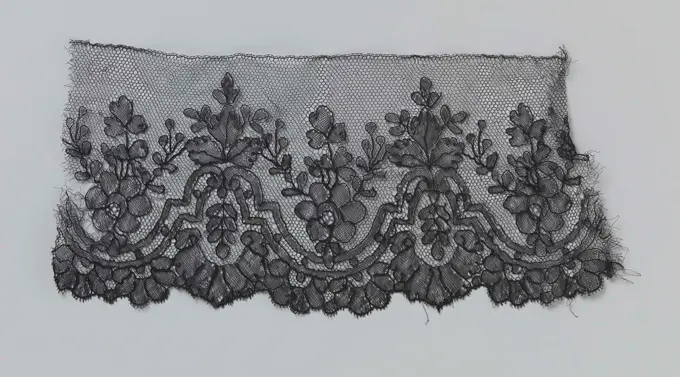
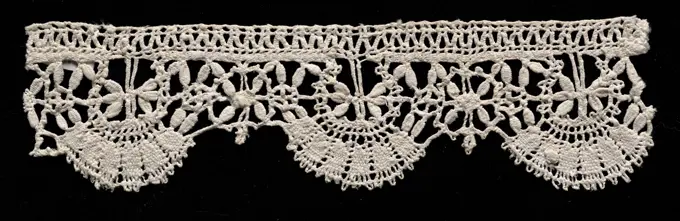
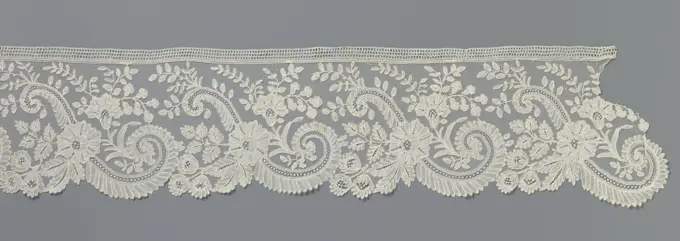
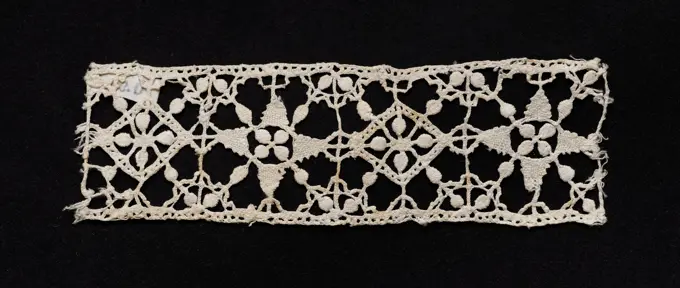
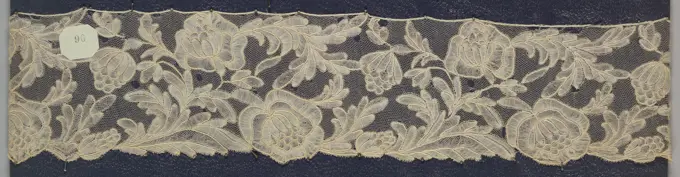
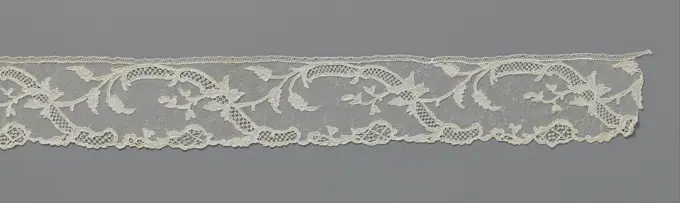
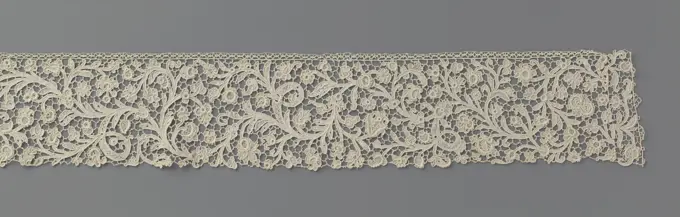
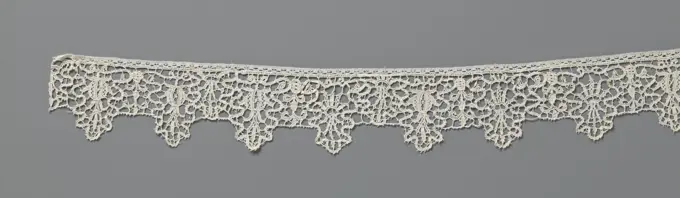
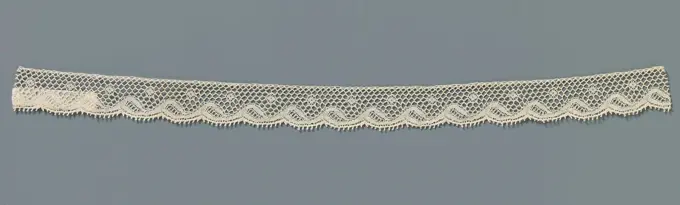
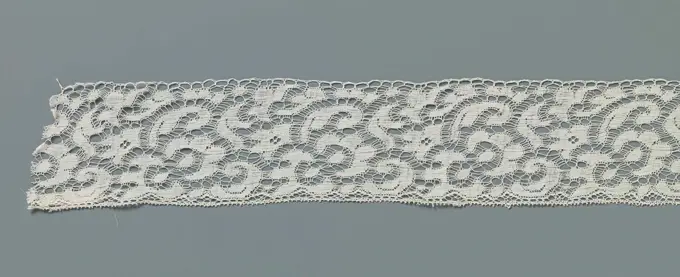
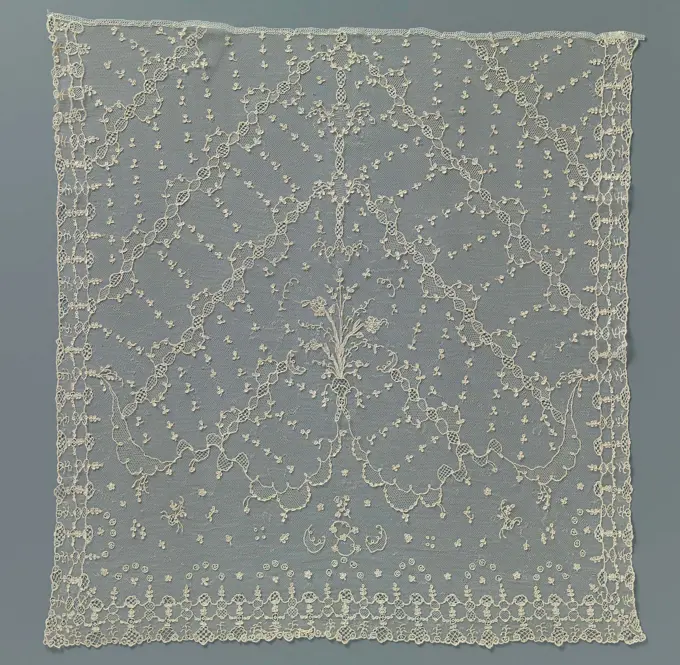
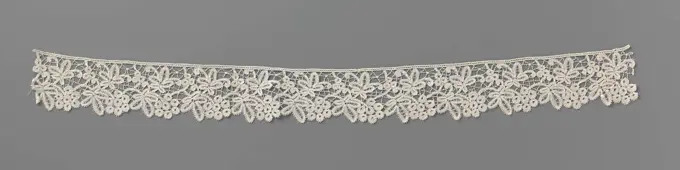
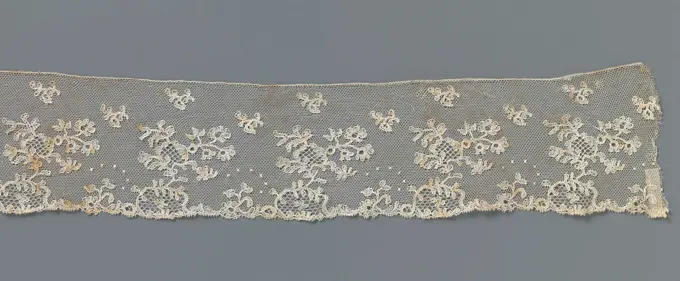
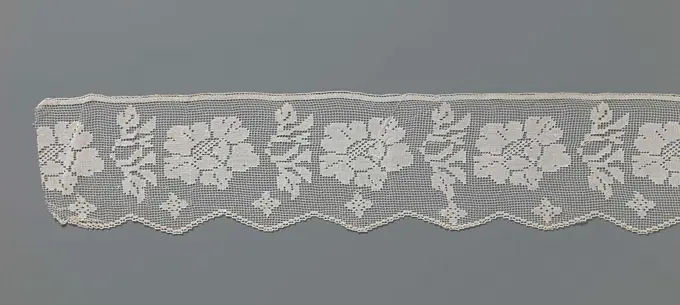
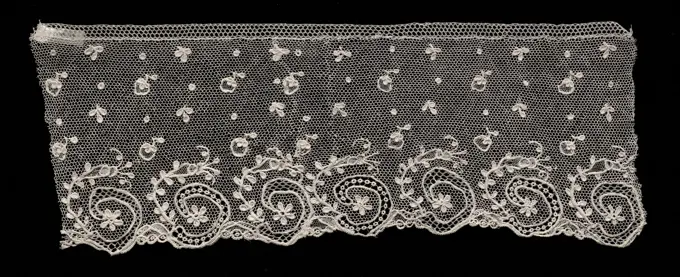
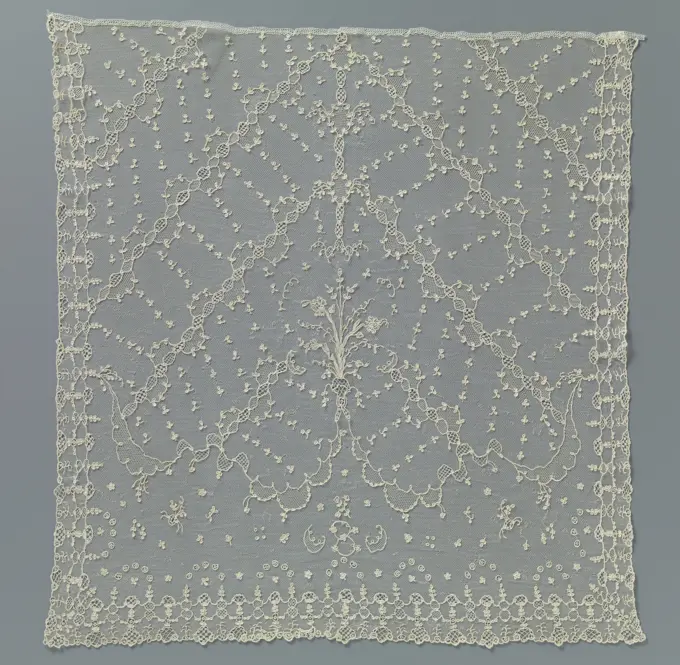
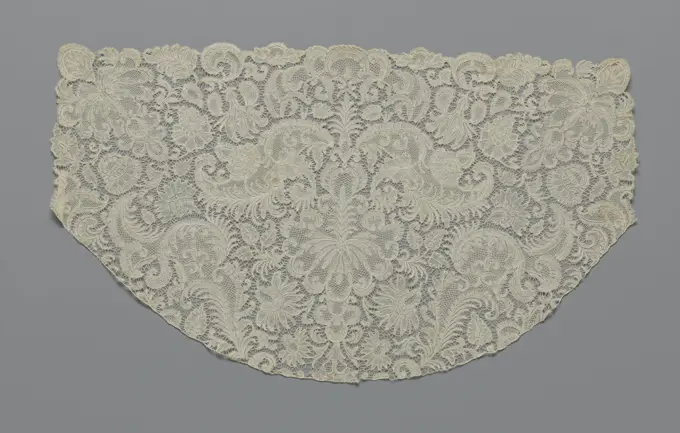
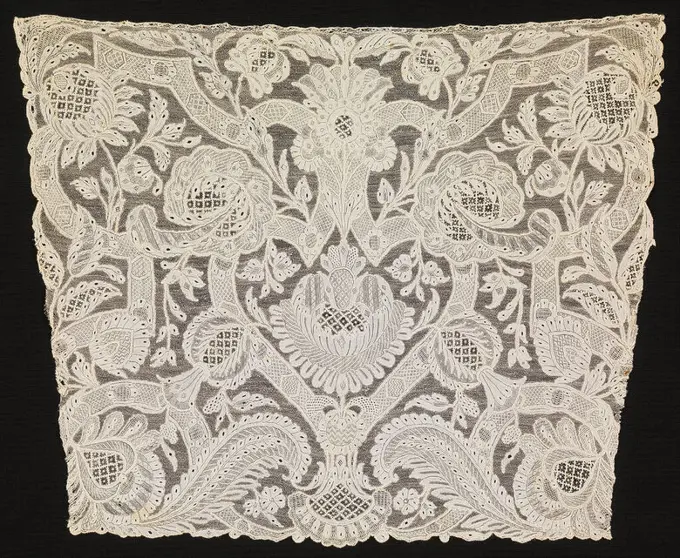
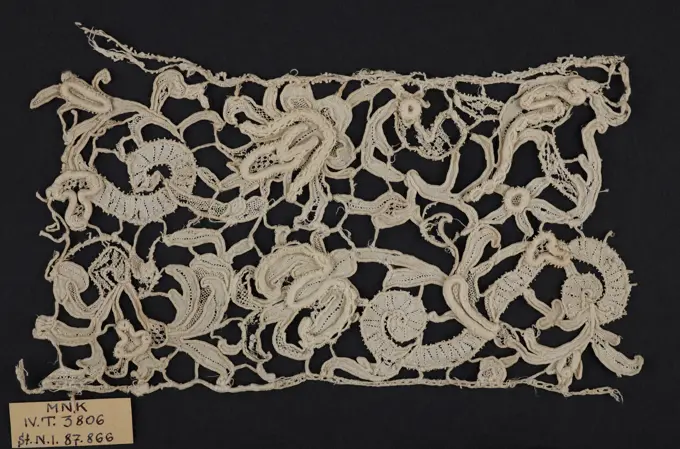
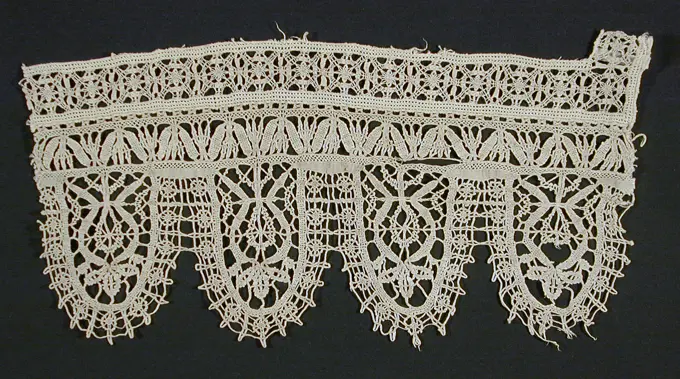
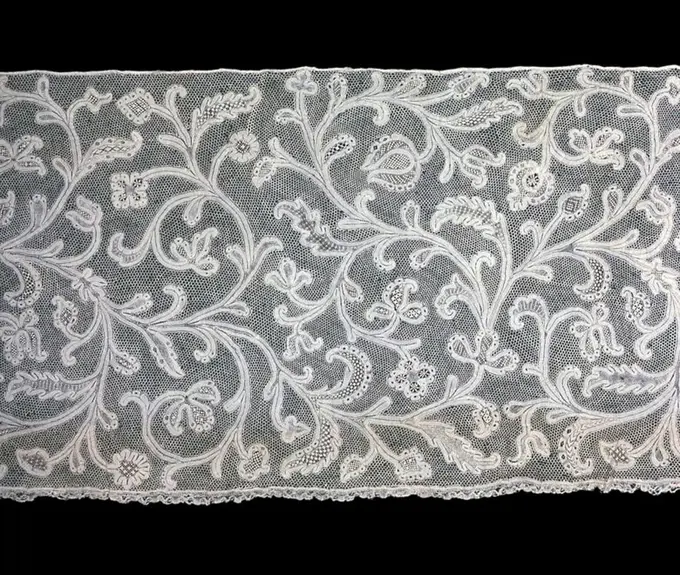
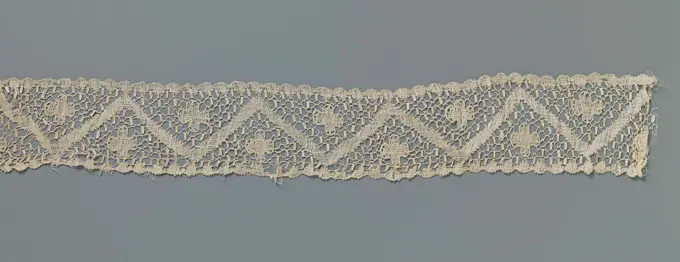
Intricate lace strips featuring floral and vine patterns, showcasing craftsmanship from the 17th to 19th centuries in natural linen shades.

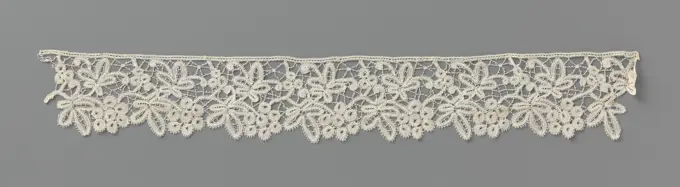
Border (Belgium); linen
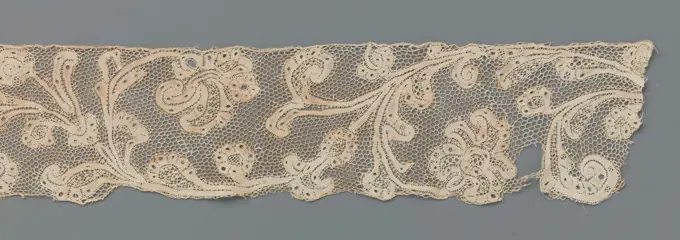
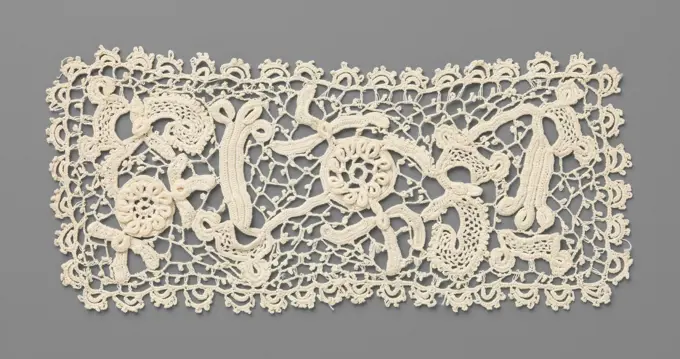
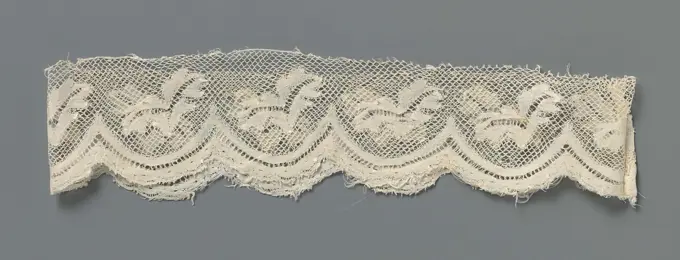
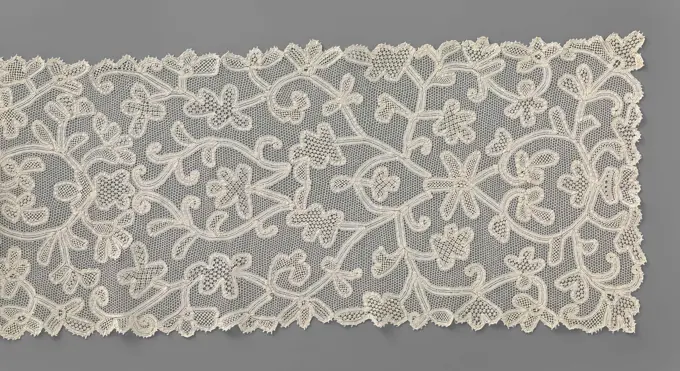
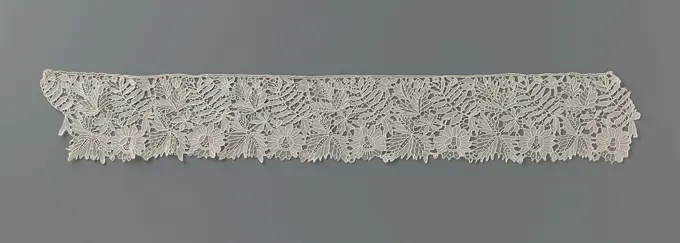
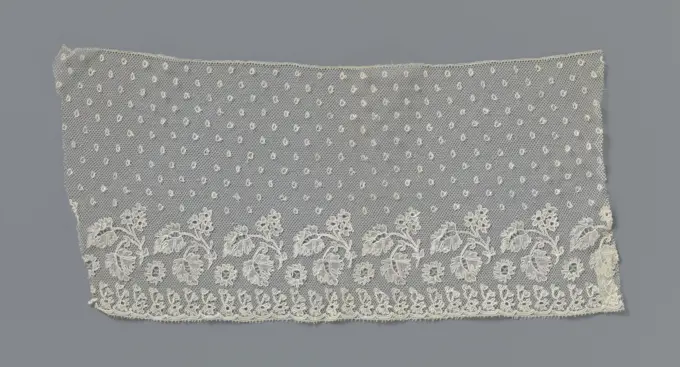
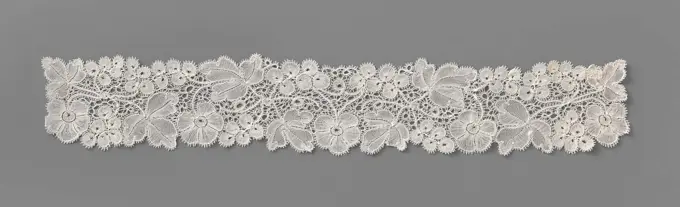
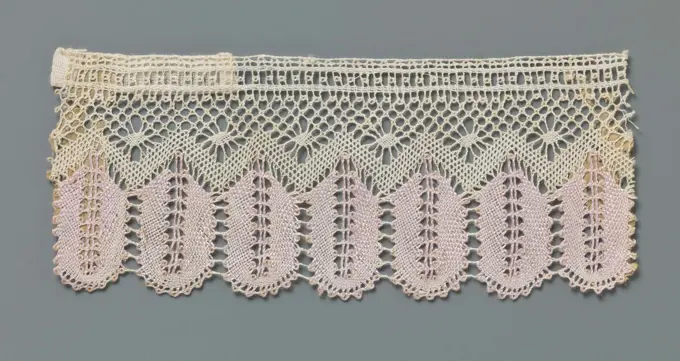
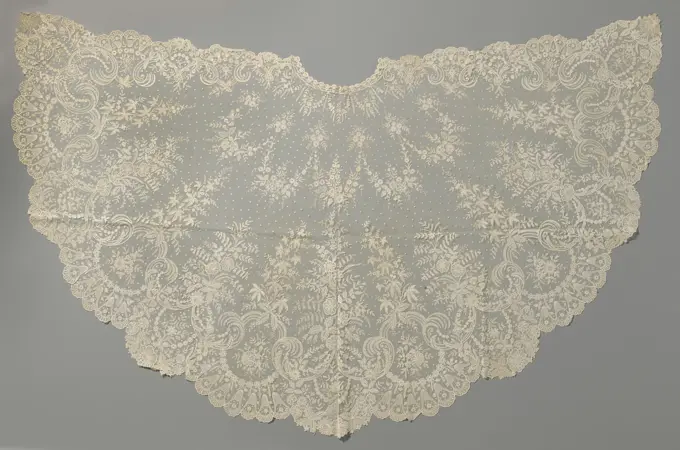
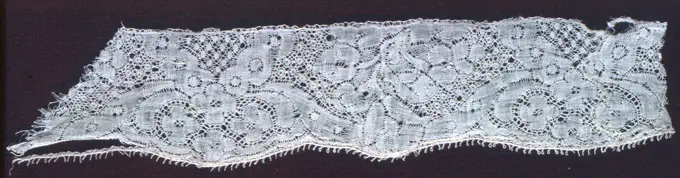
Strip bobbin with the grapes bunches, anonymous, c. 1875 - c. 1899 Strip of natural-colored bobbin, Duchesse side. On an open braid soil is a running pattern of a short branch with two vine leaves and a grapes. In turns, a leaf and the bunch form the uneven scums. Netherlands linen (material) bobbin lace Strip of natural-colored bobbin, Duchesse side. On an open braid soil is a running pattern of a short branch with two vine leaves and a grapes. In turns, a leaf and the bunch form the uneven scums. Netherlands linen (material) bobbin laceStrip of needle side with crown in oval cartouche, anonymous, c. 1700 - c. 1724  Strip of natural needle side, point the france. Pattern without a report, but with recurring and partly mirrored motifs, including an oval cartouche with a crown in it. Hexagonal soil with picoted bars. Fullwork with recesses and largely without relief, with the exception of a few smaller motifs with Kordons. On the straight edge on the underside, small palmets and ovals hang on designed and partly picoted bars. The top and sides are trimmed with a border bobbin. unknown linen (material)Strook kloskant met golvende voluutrank.Natural collate strip, old-Flemish side. The pattern consists of a wavy voluntary drink with various large and smaller flowers and curling leaves. The motifs are connected by a Maas soil. The motifs are made in linen battle with recesses and open editors. As a filling of flowers and leaves, ornamental soils are used. The top is just finished. The underside is slightly gloving and follows the edges of the motifs.Manchet van gehaakte kant met ronde bloemen en langwerpige kelkbloemen.Cuff of natural colored Irish crochet side. Rectangular model. Pattern with two round flowers and two elongated skellar flowers. The cuff is finished around with a sloping edge of double arcs, with picots on the outer bow.Border (Belgium); linenFragment; linen; 1933-1-162Lace unknownStrip of machine side with round shell shapes, anonymous, c. 1875 - c. 1899 Strip of natural-colored machine side, machine valenciennes side. The repeating pattern consists of a row of smaller and a row of larger round shell shapes, whereby the larger ones on the bottom also form the scrap edge. The motifs are connected by a mechanical square Valenciennes ground. The top of the strip is straight finished. The scrap edge along the underside of the strip is finished with picots. France (possibly) cotton (textile) Strip of natural-colored machine side, machine valenciennes side. The repeating pattern consists of a row of smaller and a row of larger round shell shapes, whereby the larger ones on the bottom also form the scrap edge. The motifs are connected by a mechanical square Valenciennes ground. The top of the strip is straight finished. The scrap edge along the underside of the strip is finished with picots. France (possibly) cotton (textile)Strip of needle side with six -flowered oval, anonymous, c. 1750 - c. 1774 Strip of natural-colored needle side: Alençon side. Repetitive motif of branches and some scattering flowers on a fine hexagonal mesh ground. Oval -shaped and round leaves hang on the winding branches, which spring from oval along the bottom edge. These ovals are filled with different decorative land. Central to the strip, between the longer branches, is always an oval that is formed by a clustering of six simple flowers, without leaves. Scalloped bottom. unknown linen (material) Alençon Lace Strip of natural-colored needle side: Alençon side. Repetitive motif of branches and some scattering flowers on a fine hexagonal mesh ground. Oval -shaped and round leaves hang on the winding branches, which spring from oval along the bottom edge. These ovals are filled with different decorative land. Central to the strip, between the longer branches, is always an oval that is formed by a clustering of six simple flowers, wManchet van kloskant met v-vormig blad in halfronde schulp.Cuff of natural colosside, Valenciennes side. The repeating pattern consists of a V-shaped sheet in a semicircular shell formed by a double band. The motifs are connected by a mesh soil, a diamond-shaped valenciennes ground. The motifs are made in linen battle with recesses and open editors. In the recesses and between the double tire along the shelter, a dash cartridge has been realized with braids. The top of the strip is straight finished. The shelters along the underside are finished with picots.Fragment (Flanders, Belgium); linen; 1946-42-35Echarpe van gemengde kant met symmetrische takken.Echarpe of natural-colored mixed side: Milanese ribbon side. Symmetrical, dependent rectangles, display a coarse mesh soil (needle side), on which stiff double branches are growing, which form different medallions over the length axis. The very stiff flowers are five- or triple. The four scalloped sides are formed by part of the interior pattern.Kloskant intermediate mate with zigzag line, anonymous, c. 1875 - c. 1949 Piles of Natural -colored bobbin side: Mechelse side. In the middle of the fine grid, a Mechelen soil (also known as ice soil), an openwork band runs in Zigzaglijn, cut over by two types of rosettes. Belgium linen (material) bobbin lace / Mechlin (lace) Piles of Natural -colored bobbin side: Mechelse side. In the middle of the fine grid, a Mechelen soil (also known as ice soil), an openwork band runs in Zigzaglijn, cut over by two types of rosettes. Belgium linen (material) bobbin lace / Mechlin (lace)Manchet van applicatiekant met keten van miniatuurrozetten.Cuff of natural-colored application side, dock edge - duchesse-lace - applicated on machinery. Narrow, rectangular. Symmetrical design of a stiff edge of connected miniature rosettes and bowets with palms. A speckled distance is only decorated in the pointed collar tips with a loose flour branch.Strook naaldkant met strooipatroon van verschillende bloemtakjes.Strip natural needle side: Argentan side. The strip is equipped with a scattering pattern of different flower branches. The flat sculpture along the bottom edge consists of a concatenation of elongated oval filled with a row of riderpicots, over each oval is always a half oval-shaped bow. The motifs are on a hexagonal mesh of hexagonal mesh, which are close to feston stitches. The folder is made with feston stitches without recesses and the motifs are equipped with relief contour lines, here and there provided with picots. As ornamental soil is used under the arcs in the edge pattern and a very fine maas soil in a few flower hearts. Except in the edge pattern, radar picots also occur in most flower hearts. One side is finished with a straight edge, the other side has been cut. The top is finished with a border clamping side.Border (From a Cover) Made 1675-1725 Southern Italy. Linen, pulled thread work in overcast stitches .Cuff of needle side with wavy zigzag-siering and rose branch, anonymous, c. 1900 - c. 1924 Cuff of natural -colored needle side: Brussels mesh side. The repeating pattern consists of a regular wavy decorative frame, with a rose branch in each valley. On the rose branch there is one big rose in the center under which a smaller rose hangs, on the thin branch that goes to the top two more open work rosette flowers. Under each wave top, a semi -circular flour hangs on a thin handle with two heart -shaped leaves. The flower consists of a horizontal C-Volut with seven lobes as petals. The wavy decorative frame consists of two sealed contour threads that form a narrow line and under which a strong winding contour wire hangs, which ensures an open zigzag line. Under the open zigzag a succession of circles. The wavy decorative frame forms the scrap edge, along with the hanging circular flour. The connected circles and seven petals ensure the lobes on the scrap edge. The motifs are equipped withStrip needle side with palmets and volutes. Strip natural needle side: Venetian relief side. The repeating pattern consists of flower drinks, palmets and volutes. The motifs are made with feston stitches and equipped with relief contours and cordons. The motifs are connected to each other with picoted bars. The top is trimmed with a border clamping side. The underside is finished with a bow edge consisting of alternating one and more picots.Strip bobbin with hanging leaf branch, anonymous, c. 1820 - c. 1830 Strip of natural -colored bobbin: Mechelen side. Under a spreading pattern of one -sided targeted twigs with one round flower, the repeating pattern of the scrap edge consists of a curved branch. A large composite flower hangs down between two leaf fillets on this twig. The flower consists of a drop -shaped flower heart with half a wreath of five rosette flowers around it. Every successive flower forms a semicircular shell in this way. The motifs are made in linen stroke and equipped with thicker and shiny contour threads. The motifs are connected by a fine grid, a Mechelen soil. In the drop -shaped flower hearts, a coarser ornamental soil has been used with cubes made in shape. The scrap edge is finished with picots. The top of the strip is straight finished. Southern Netherlands linen (material) bobbin lace / Mechlin (lace) Strip of natural -colored bobbin: Mechelen side. Under a spreading pattern of one -sided targeStrook van kloskant met holle en bolle dubbele lijsten.Strip of black climbing side: Chantilly side. A ground ground shows an empty top and a downwardly severely symmetrical design. Hollow and convex double tables, cascading, follow the slot, which exist for turns from half rosettes and a bow of leaves.Bobbin Lace (Rose Lace) Edging of Bell Points, 17th-18th century. Italy, Genoa, 17th-18th century. Lace, bobbin; average: 5.5 x 20.4 cm (2 3/16 x 8 1/16 in.).Band, Medium: linen Technique: bobbin lace, Band of lace worked in a provincial style with a pattern of geometric star shapes., probably Russia, 19th century, lace, BandStrip bobbin with configurations of two windows and two hearts, anonymous, c. 1800 - c. 1899 sample Strip of natural -colored bobbin. Crazy wire has been worked, the strip is part of a collection of twenty -six pieces of side that are intended as study material. In a rough grid, a Parisian soil, a reclaiming pattern is made of two adjacent windows and two hearts placed one more than a rosette together. Narrow jobs along the upper and bottom of the strip are made in netslag, this is also the finish of the long sides. The short sides have been cut. Malib linen (material) bobbin laceStrook kloskant met gegodronneerde schulp.A wavy branch with feathered leaves and three star-shaped flowers grows from right to left. One of the flowers is oriented outward and forms a small intermediate switch between larger ones, which are built up as a promoted bow or a plowed collar with an open grid work filling (needle side). As a finishing of the fine meshing (square mesh), a nice edge of palms rang along the inside, applied as a side head. Brabantse Valenciennes side.Strip mixed side with S-Voluten, Maison Sacré, 1895 Strip of natural -colored mixed side: Brussels bobbin side in combination with a needle -seal, a fine mesh side. This type of lace is also known under the name: Point d'Angleterre. The running pattern consists of large S-s-s-es, decorated with a godron edge and cut over by a large hanging rose branch, which rises from the right point of the S-Voluten. A carnation, a bunch of flower and fine, incised leaves grow on a set up. Brussels linen (material) mixed lace / Brussels bobbin lace Strip of natural -colored mixed side: Brussels bobbin side in combination with a needle -seal, a fine mesh side. This type of lace is also known under the name: Point d'Angleterre. The running pattern consists of large S-s-s-es, decorated with a godron edge and cut over by a large hanging rose branch, which rises from the right point of the S-Voluten. A carnation, a bunch of flower and fine, incised leaves grow on a set up. Brussels linen (material) mixed Borders (five), Medium: linen Technique: bobbin lace (late Valenciennes ground), Blackberries sprinkled in field above border of plants which form angular border; square mesh, France, 19th century, lace, Borders (five)Bobbin Lace (Needlepoint Design) Insertion, second half of 16th century. Italy, Genoa, second half of 16th century. Lace, bobbin; average: 4.2 x 14 cm (1 5/8 x 5 1/2 in.).Strip bobbin with hanging leaf branch, anonymous, c. 1820 - c. 1830 Strip of natural -colored bobbin: Mechelen side. Under a spreading pattern of one -sided targeted twigs with one round flower, the repeating pattern of the scrap edge consists of a curved branch. A large composite flower hangs down between two leaf fillets on this twig. The flower consists of a drop -shaped flower heart with half a wreath of five rosette flowers around it. Every successive flower forms a semicircular shell in this way. The motifs are made in linen stroke and equipped with thicker and shiny contour threads. The motifs are connected by a fine grid, a Mechelen soil. In the drop -shaped flower hearts, a coarser ornamental soil has been used with cubes made in shape. The scrap edge is finished with picots. The top of the strip is straight finished. Southern Netherlands linen (material) bobbin lace / Mechlin (lace) Strip of natural -colored bobbin: Mechelen side. Under a spreading pattern of one -sided targeFragment, Medium: linen Technique: needle lace with ground of loop & twist with loop & twist return, Border fragment with a design of flowering sprays above ribbon swags filled with flowers and having flowers below., Belgium, late 19th century, lace, FragmentStrip early 18th century Flemish. Strip 218828BorderStrip bobbin with fuchsias above waves, anonymous, c. 1890 Strip of natural-colored bobbin, Valenciennes side. The repeating pattern consists of two Fuchsia flowers, which hang down on a slightly bent stem on the center line of the strip. The flowers almost touch the golf valley, between the high waves along the underside of the strip. The waves are made of feathered leaves and acanthus leaves, in the form of C and S-Voluten. Between the Fuchsia branches, a bouquet with rosette flowers originates from a C-volute, crowned by an openwork S-Volute of leaves and twigs. The motifs are connected by a Maas soil, a diamond-shaped Valenciennes ground. The fullwork is largely made in linen battle with recesses and openwork edges and partly in Omslag. Snowflake grounds and loose snowflakes have been used as a decorative soil. The top of the strip is finished with a separate strap. The scums along the bottom are finished with picots. Belgium cotton (textile) Bobbi Lace / Valenciennes Lace Strip ofFlounce early 18th century Flemish. Flounce 228822Strook applicatiekant met campanes.Strip natural colored application side, climbing side applicated on machine tulle. On a sowed feathers strewn, semicircular slopes with a border of Campanes, a bellflower to the right and a glowing twig to the right.Strip bobbin with careless scales, anonymous, c. 1875 - c. 1899 Strip of natural-colored bobbin: Valenciennes side. Pattern with careless half -circular sculptures, above which a hanging daisy between 'sequins'. Belgium (possibly) linen (material) Bobbi Lace / Valenciennes Lace Strip of natural-colored bobbin: Valenciennes side. Pattern with careless half -circular sculptures, above which a hanging daisy between 'sequins'. Belgium (possibly) linen (material) Bobbi Lace / Valenciennes LaceStrip bobbin with a slender in the shape of an eight, anonymous, c. 1700 - c. 1799 Strip of natural-colored bobbin, binche side. The repeating pattern consists of a slender that forms a slightly distorted, lying eight. To this is a stem that rises along the top edge on the eight and bends down, with a drop -shaped flour at the end between two oval leaves. The motifs are connected by a decorative land, a snowflake ground. The motifs are made in linen battle with openwork edges. At the top and bottom are straight finished, with the bottom with picots. Southern Netherlands linen (material) Bobbi Lace / Binche Lace Strip of natural-colored bobbin, binche side. The repeating pattern consists of a slender that forms a slightly distorted, lying eight. To this is a stem that rises along the top edge on the eight and bends down, with a drop -shaped flour at the end between two oval leaves. The motifs are connected by a decorative land, a snowflake ground. The motifs are made in linen battle witBorder Made 1740-1759 Mechelen. Linen, bobbin straight lace of a type known as Mechlin with kat stitch and snowflake mesh ground .Strip of needle side with mirrored S-shaped decorative band and iris, anonymous, c. 1760 - c. 1770 Strip of natural-colored needle side: Alençon side. The repeating pattern consists of a flat S-shaped decorative band in mirror image. The band continues at the top in a wavy branch of pointed and feathered leaves and with an iris that lies over the next decorative band. The tires touch the top of the strip and walk downstairs with a faint S-shaped curve to finish along the underside of the strip. The motifs are made up of feston stitches where very fine cut -outs are used sparingly for decoration. The motives are provided with relief contours and are connected by a fine hexagonal Maas soil, an alençon ground. Ornamental grounds with radar picots are used in the decorative tires, rocailles and flower hearts. The flat scrap edge is finished with picots. The top of the strip is finished with a tie. France linen (material) Alençon Lace Strip of natural-colored needle side: Alençon side. The Strip of needle side with plumed tendrils, anonymous, c. 1875 - c. 1895 Strip of natural -colored needle side: Venetian rose side. On a bar of land with six -sided meshes, rich branches, to the left and right, are swiveling and right -wing, sometimes dwelling, sometimes walking. There are multifaceted, carefully detailed button -shaped flowers. Here and there the top of a slender has grown through an opening in the branch. Straight finish of alternately an eye and a triangle. BURANO linen (material) Venetian rose point Strip of natural -colored needle side: Venetian rose side. On a bar of land with six -sided meshes, rich branches, to the left and right, are swiveling and right -wing, sometimes dwelling, sometimes walking. There are multifaceted, carefully detailed button -shaped flowers. Here and there the top of a slender has grown through an opening in the branch. Straight finish of alternately an eye and a triangle. BURANO linen (material) Venetian rose pointBand (probably Russia); linen; Bequest of Marian Hague; 1971-50-466Edge (Belgium); linenTussenzetsel van kloskant met een rij ruiten.Natural Collaboration Interest: Punk. The repeating pattern consists of a row of coiled windows. The windows have alternately contours in linen stroke and scroll and various ornamental grounds as a filling. The contours in linse stroke are interrupted at the corner points and parallel to each side are three lines in linen stroke. These lines fill the fields between the windows. Upper and bottom of the strip are straight finished.Strook naaldkant met ingesneden blad.Running pattern of incised leaves above a rose and a three-leaf, which together form the sharply toothed outside line. Cross-shaped bars with button (soil of long X-shaped bars with a spider). The REMPLIS consists of buttonhole stitches and a Fond Gazé. German side: 'Carlsbead points'.Strip of needle side with pomegranate and jet wreath in oak leaf, anonymous, c. 1625 - c. 1649 Strip of natural needle side: Punto in Aria. The repeating pattern consists of the oak leaf contour that alternately contains a pomegranate or ray wreath. There is a French lily among the oak leaves. The motifs are made up of feston stitches, partly equipped with recesses. The motives are connected by an irregular, open bar with picots. The scrap edge forms from the oak leaf motif and is finished with picots. The top of the strip is straight finished with a tie. Italy linen (material) Strip of natural needle side: Punto in Aria. The repeating pattern consists of the oak leaf contour that alternately contains a pomegranate or ray wreath. There is a French lily among the oak leaves. The motifs are made up of feston stitches, partly equipped with recesses. The motives are connected by an irregular, open bar with picots. The scrap edge forms from the oak leaf motif and is finished with picots. ThStrook machinale kant met een rij sneeuwvlokken boven een golvende schulpenrand.Natural-colored Machine Side Strip: Machine Valenciennes. The repeating pattern consists of a row of snowflakes above a wavy slip edge. The wavy line is formed from the maas soil by a narrow strap that after each golf valley with an arc. The motifs are provided with open editors and small recesses and are connected by a machining valenciennes ground with square mesh. The top of the strip is straight finished. The slight sloping edge along the underside is finished with picots.Strook gemengde kant met hartvormige blaadjes.Strip natural-colored mixed side, with tulator produced on a machined tile of needle side as in Argentan side. The field of the field is strewn with flowers and small rosettes; A fine mesh fence fills the edge. As a separation, a wavy branch with heart-shaped leaves and flowers serves. The outer edge is almost straight and composed of rosettes, leaves and a chain of circles.Strook machinale kant met grillige vijfhoekige bloem op middenlijn tussen losse bladeren en bloemen.Stretch natural-colored side: machining fir heater. The repeating pattern consists on the center line of the strip from a whimsical pentagonal flower with four recesses in the center. The flower is surrounded by loose motifs, c-voltulates and two diadem-shaped flowers mirrored over an oblique line. There are openworked edges around the closed motifs. The motifs are connected by a machining soil that suggests a braid soil. Upper and bottom of the strip are straight finished, the underside with picots.Headdress or apron of needle side with twill motifs. Kepers from connected ovals, cross-sections through a pendulum, are above a four-fold garland. In the heart a nice bouquet, along the three sides a double edge of small oval and shield-shaped medallions. Rows of clover leaves between the keys are placed in zigzag form. Alençon side.Strook kloskant met de druiventrossen.Natural collate strip: Duchesse-Side. On an open braid soil there is an ongoing pattern of a short branch with two winger leaves and a grape tray. For turns a leaf and the bunch form the uneven slip.Strook kloskant met een tak die twee opengewerkte ovalen vormt.Strip natural colosside: Lille side. The repeating pattern consists of a flower branch, which forms two openwork ovals. One along the underside of the strip and right above the other on the center line between the leaves. On one side a twig with three rosette flowers rings from that. Under an arc of six square moes, a fourth rosette flower hangs on a stem down to the bottom of the strip. There are two rows of twigs above the branches. The motifs are connected by a fine grille, a tulet. They are made in linselag with some large recesses and with thicker, shiny contour wires. In the ovals along the underside, a rose soil has been applied as ornamental ground and a snowflakes soil in the ovals on the center line. The square moes are made in shape stroke. The top of the strip is straight finished. The bland scalloped underside is finished with picots.Border 18th century Italian, Milan. Border 223052Strook filetkant met bloem en stervormig bloempje.Strip natural-colored edge embroidery: File side. The repeating pattern consists of a flower without stem between two separate leaf branches. Slanted under the flower a smaller star-shaped flower. The motifs are embroidered in the cross-linking technique, on a ground with square knotted meshes. The top is finished with a straight edge. Regular large slot along the bottom edge.Border 17th century Italian, Milan. Border 218133Needlepoint (Raised Venetian Point) Lace Border, 17th century. Italy, Venice, 17th century. Lace, needlepoint; average: 9 x 47.1 cm (3 9/16 x 18 9/16 in.).Fragment (Italy); linenStrip early 19th century French, Lille or Arras. Strip 221160Strook gehaakte kant met puntschulpen als punto in aria.Strip natural-colored crochet side with which Punto is imitated in aria (needle side). The repeating and symmetrical pattern consists of triangular shelters with a rosette in each point. The pattern is based on needle lace patterns from the beginning of the 17th century. The top of the strip is finished with a woven linen band.Needlepoint (Point Alençon) Lace Edging, 18th century. France, Alençon, 18th century. Lace, needlepoint; average: 10.9 x 28.6 cm (4 5/16 x 11 1/4 in.).Needlepoint Lace Edging, 18th century. France, Alençon, 18th century. Lace, needlepoint: linen; average: 9.6 x 26.1 cm (3 3/4 x 10 1/4 in.).Cotton cuff with bobbin and C-shaped motif, anonymous, c. 1800 - c. 1899 Cotton cuff with a strip of natural -colored bobbin: Lijselse Kant. The repeating pattern consists of a C-shaped motif along the underside of the strip, whereby the open side is closed by a sloping line of four connected molds. The successive C-shaped motifs are connected to each other at the bottom by a rush-in field. There is a row of whimsically shaped motifs on the center line. The motifs are connected by a fine grid, a tuler land. The sparing fullwork is made in linen battle, with thicker and shiny contour threads. Two types of decorative lands have been used, alternating in the C-shaped motif and in the Spitsoval field. The top is straight and put on the cuff. The silly scalloped underside is finished with picots. Southern Netherlands Textile: Cotton (textile). Cotton: Linen (Material) bobbin lace / Lille lace Cotton cuff with a strip of natural -colored bobbin: Lijselse Kant. The repeating pattern consists Piece 18th century Flemish, Brussels. Piece 212514Headdress or a needle side with twill motifs, anonymous, c. 1790 Kepers of connected ovals, intersected by a pendulum, are above a four -time garland. In the heart a nice bouquet, along the three sides a double edge of small oval and shield -shaped medallions. In Zigzag form, rows of clover leaves are placed between the squares. Alençon side. France linen (material) Alençon Lace Kepers of connected ovals, intersected by a pendulum, are above a four -time garland. In the heart a nice bouquet, along the three sides a double edge of small oval and shield -shaped medallions. In Zigzag form, rows of clover leaves are placed between the squares. Alençon side. France linen (material) Alençon LaceStrip of needle side with incised leaves, anonymous, c. 1900 Walking pattern of incised leaves above a rose and a three -leaf, which together form the sharply toothed outside line. Cross-shaped bars with button (soil of long X-shaped bars with a spider). The Remplis consists of buttonholes and a long distance gazé. German side: 'Carlsbader Points'. Karlsbad (Germany) (possibly) linen (material) Walking pattern of incised leaves above a rose and a three -leaf, which together form the sharply toothed outside line. Cross-shaped bars with button (soil of long X-shaped bars with a spider). The Remplis consists of buttonholes and a long distance gazé. German side: 'Carlsbader Points'. Karlsbad (Germany) (possibly) linen (material)Volant van kloskant met ruitvormige medaillons.Volant of natural colosside: Parisian side. The ground has been shared in two in a paris soil with clover leaves at the top and a tulet below. In the last one is a symmetrical pattern of diamond-shaped openwork medallions with sidewalks crowned by a flower between two leaves. The leaves, the side drinks and a series of flowers and ranks in the sculpture are released in three closed garlands. The motifs are made in linen stroke and equipped with contour wires. A rose soil has been applied as ornamental ground.Strip bobbin with blossom branches under wide lane mosjes, anonymous, c. 1840 - c. 1849 Strip of natural -colored bobbin: Lille side. Under a wide lane with a spray pattern of oval moesjes, the repeating pattern consists of a blossom branch, with three small rosette flowers and bending leaves bending down. There is a loose rosette flower between the successive branches. Along the underside of the strip is a row with hanging twigs with a sealed branches with one rosette flower at the bottom. The motifs are connected by a fine grid, a tuler land. The motifs are made in linen battle with recesses and thicker and shiny contour threads. A contour wire also runs around the moesjes. A decorative land has been used sparingly in the veins of the leaves, in the loose rosette flowers and around the blossom hearts. Up and bottom are straight finished, with the bottom with picots. Belgium linen (material) bobbin lace / Lille lace Strip of natural -colored bobbin: Lille side. Under a wide lane with Collar 1850-59 Belgian. Collar 170587Strook kloskant met s-vormige motiefjes langs de onderzijde.Strip natural colosside, Lille side. The continuous pattern exists along the underside of the strip from concatenated and shielded motifs. Below the middle line a row of square meadows in a fine Maas soil, a tulet. The motifs are made in linen stroke with thicker and shiny contour wires. The Moeses are made in shape stroke. The top of the strip is straight finished and attached to a strip of machining tulle. The bland scalloped underside is finished with picots.Strook kloskant met cirkel in liggend boogje boven drie golflijnen.Strip natural colosside, cluny side. The repeating pattern consists of three synchronous wavy lines. In each valley of the upper wave line there is a cut-away arc, which includes a circle. The arc is a kind of dented oval in which vertical compounds are made in shape stroke. In the circle a flower is made with four leaves in shape stroke and crossing couples. Transverse connections between the golf lines made in linse stroke are also made vertical connections at a short distance, with both braids and crossing pairs. A regularly winding fourth line made in linen stroke, runs along the bottom of the strip and is straight under the golf valleys a triple scallop. The top of the strip is straight finished. The slip edge along the underside is finished with picots.Piece 18th century Flemish. Piece 214488Strip bobbin with a row of oval, anonymous, c. 1875 - c. 1899  Strip of natural -colored bobbin: tie. The repeating and symmetrical pattern consists of one row of ovals. The ovals are made in netslag with a smaller oval made in the center in Linnenlag. They are connected to each other at the top by a five -hole ground and at the bottom through a tough grid, both lands have been used sparingly. The oval forms the scrap edge, with four arches made at the bottom with a continuous swinging braid. The top of the strip is straight finished. Le Puy (possibly) wool Bobbi lace / lace clothBoord van kloskant met bessentrosjes en occhiolini-lussen.Board of natural colosside: Duchesse-Kant. Rectangular model. Symmetrical pattern with on either side of a flower two groups of berry jars and leaves on stems, which stalked to a central point. The motifs are connected by rings or loops made of fine ribbon side (Occhiolini technique).Veil or hatcher from lace border bobbins on machine tulle with mosies and fan shapes, anonymous, c. 1800 - c. 1815 Cuddle or hate veil of lace border bobbins: Limerick side or Lierse side (tambourer work on machine tulle). The rectangular veil is decorated along one of the long sides with tambouring work in a varied pattern of a fan -shaped leaf rosette and a vase with a fan -shaped bouquet in it. The field is littered with mosjes. A pearl edge runs along two short and one long side. Limerick (possibly) tule: silk Cuddle or hate veil of lace border bobbins: Limerick side or Lierse side (tambourer work on machine tulle). The rectangular veil is decorated along one of the long sides with tambouring work in a varied pattern of a fan -shaped leaf rosette and a vase with a fan -shaped bouquet in it. The field is littered with mosjes. A pearl edge runs along two short and one long side. Limerick (possibly) tule: silkNeedlepoint Lace Edging, 18th century. France, Alençon, 18th century. Lace, needlepoint: linen; average: 21 x 9 cm (8 1/4 x 3 9/16 in.).Border (France); linenStrook lila-witte kloskant met hangende korenaren.Strip colored - lilac white - dick edge: sling. The repeating pattern consists of stylized hanging corners in linen battle with a cut-away center. The ears of corn are lilac of color and straight down, they are placed against each other and form a slot edge along the bottom of the strip. At the top of the strip, the ears of corn starts from an inverted V-shaped motif made in slot blank. They are connected to each other at the top of the strip by a table ground, a straw trace ground, in which one spouse relief is always incorporated into linen stroke between the ears of corn. The top of the strip is straight finished. The sloping edge is finished with picots.Border 18th century Italian. Border 222437Border 18th century Flemish. Border 218218Fragment 17th century Italian. Fragment 220791Border; linen; Bequest of Marian Hague; 1971-50-424Semi-circle scarf of application office with garlands and nozzles placed bouquets. Natural scarf scarf: dick side with single needle lace stand (mixed side) Applied on machine tulet. Semi-circular model. The large border slots are alternately filled with bowl flowers, hanging to festotes and large leaves and a flower. There are no more stray bouquets from symmetrical tendrils interspersed by thin branches, including small bouquets. Under the neck, the pattern has five garlands, including five larger garlands, hanging on bouquets and small chalice along the neck. The tulle is strewn between the motifs with annular meadows. The motifs are made in a separate clusted linen stroke and have contour wires and thread bundles form the relief contours. Needle side decorative stitches are applied in many flower hearts. The sloping edges are finished with picots.Band (possibly England); linen, silk, metal; Bequest of Marian Hague; 1971-50-307Fragment, Medium: Technique: bobbin lace (late Valenciennes ground), 19th century, lace, FragmentFragment; linen; Bequest of Marian Hague; 1971-50-389Jabot of Vieux Bruxelles bobbin with cut upper corners, anonymous, c. 1750 Jabot van Kloskant with cut upper corners. The pattern has three palmets between which tumbles of leaves and flowers. Belgium . bobbin lace Jabot van Kloskant with cut upper corners. The pattern has three palmets between which tumbles of leaves and flowers. Belgium . bobbin laceCravat end. Date/Period: 18th-mid- 18th century. Cravat end. Medium: linen. Technique: needle lace with ground of loop and twist with twist return. Author: UNKNOWN.Strook kloskant met gegodronneerde schulp.A wavy branch with feathered leaves and three star-shaped flowers grows from right to left. One of the flowers is oriented outward and forms a small intermediate switch between larger ones, which are built up as a promoted bow or a plowed collar with an open grid work filling (needle side). As a finishing of the fine meshing (square mesh), a nice edge of palms rang along the inside, applied as a side head. Brabantse Valenciennes side.Hats strip Van Kloskant with Zigzag Rivière, Anonymous, c. 1750 - c. 1760 Strip of natural -colored Brussels bobbin. A rivière in Zigzaglijn is crossed by spiral ranks, which enclose fan -shaped medallions. The motives are connected by a drachel soil. A coarser hexagonal soil has been used in the Rivières. On the fields that are bordered by the Rivière, there are twigs on which flowers in the form of pomegranates, pears or winged insects. The strip was probably used or made for a hat. Brussels linen (material) bobbin lace / Brussels bobbin lace Strip of natural -colored Brussels bobbin. A rivière in Zigzaglijn is crossed by spiral ranks, which enclose fan -shaped medallions. The motives are connected by a drachel soil. A coarser hexagonal soil has been used in the Rivières. On the fields that are bordered by the Rivière, there are twigs on which flowers in the form of pomegranates, pears or winged insects. The strip was probably used or made for a hat. Brussels linen (material) bobbin Fragment of needlelace unknownFragment of Border. Belgium, Flanders, 1600-1625. Textiles; fragments. Linen bobbin lace with cutwork embroideryStrip bobbin with heart -shaped leaves that overflow into a flower stem, anonymous, c. 1740 - c. 1760 Strip of natural-colored bobbin, binche side. The repeating and continuous pattern consists of a wave formed by heart -shaped leaves, which overflow into a flower stem with a five -lobby flower with a drop -shaped heart at the end. The motifs are connected by a grid, a five -part ground. The motifs are made in linen battle with openwork edges and mains fillings. Different spaces are filled with a decorative soil, a snowflake ground. One or a few snowflakes are also used in the leaves, petals and hearts. The scums along the underside stem from the pattern and are finished with picots. The top is straight. Southern Netherlands linen (material) Bobbi Lace / Binche Lace Strip of natural-colored bobbin, binche side. The repeating and continuous pattern consists of a wave formed by heart -shaped leaves, which overflow into a flower stem with a five -lobby flower with a drop -shaped heart at Strip bobbin with flour with eight petals in three -lobe sculpt, anonymous, c. 1800 - c. 1899 Strip of natural-colored bobbin, cluny side. The repeating pattern consists alternately of a flower with eight petals made in form and a lobbed circular motif in linen stroke. The motifs are connected by a braid ground, with some braids being equipped with a single picot. Each successive flower stands in the center above an openwork three -lobe shell, made with a strap in linen battle with openwork edge and finished with picots. Along the top of the strip runs such a band, but then straight, without lobes. Buckinghamshire cotton (textile) bobbin lace / Cluny lace Strip of natural-colored bobbin, cluny side. The repeating pattern consists alternately of a flower with eight petals made in form and a lobbed circular motif in linen stroke. The motifs are connected by a braid ground, with some braids being equipped with a single picot. Each successive flower stands in the center above an openwork tFragments (Flounce). Italy, Milan. Date: 1701-1750. Dimensions: a: 34.4 x 110.7 cm (13 1/2 x 43 1/2 in.)b: 35.8 x 68.2 cm (14 1/8 x 26 7/8 in.)Width repeat: 44.8 cm (17 5/8 in.). Linen, bobbin part lace (continuous clothwork tapes). Origin: Italy. Museum: The Chicago Art Institute, Chicago, USA.Volant from dick side with diamond-shaped medallions. Volant of natural colosside: Parisian side. The ground has been shared in two in a paris soil with clover leaves at the top and a tulet below. In the last one is a symmetrical pattern of diamond-shaped openwork medallions with sidewalks crowned by a flower between two leaves. The leaves, the side drinks and a series of flowers and ranks in the sculpture are released in three closed garlands. The motifs are made in linen stroke and equipped with contour wires. A rose soil has been applied as ornamental ground. BK-BR-J-375-H and -J are sewn together in the length. The bottom edge is cut into both strips. With -J the side is sloped sloping.Fragment; linenStrip early 17th century Italian Punto in arialiterally, "stitches in the air"is one of the earliest styles of needle lace, which is itself developed from cutwork of primarily geometric design. When lacemakers transitioned to using a foundation of threads laid out according to a pattern drawn on parchment, they were able to incorporate more fluid lines and curves into their designs.. Strip 212415Strook kloskant met vierlobbig rozet boven en onder een zigzag-band.Strip natural colosside, blonde. The repetitive and continuous pattern consists of a zigzag band, which divided the strip into triangular fields. There is a quadruped rosette in the center of each field. Along the top and bottom of the strip a sculpture runs, which consists of a concatenation of circles. The crafts are finished with picots. The motifs are connected by a coarse mesh soil, strewn with square moes. The zigzag band, rosettes and circles edges are made in linen stroke, whereby the rosettes are equipped with a contour wire.Border (Fragment) Made 1850-1875 Belgium. Cotton and linen, bobbin part lace of a type known as Duchesse de Bruges .Strook kloskant met de hoorns van overvloed.Strip of black climbing side: Chantilly side. On a blank mesh fence lie along the heavy and wide scalloped hollow horns of abundance, where smaller horns extend, which are meant by convex c-voluten. From the horns rising pawned branches with anemones, tulips, daffodils and lily of valleys. De Schulpen exhibit an alternation of a range of leaves and a thick garland from anemones and other flowers. Of the inside with coiled rosettes, fine winds hang out with flowers.Trimming 18th century Flemish. Trimming 120786Collar late 17th century Italian or French. Collar 218102