Vintage Lace Strips

A variety of lace strips from different periods showcasing floral patterns and intricate designs, crafted in linen with delicate details and historical significance.

Strip bobbin with two rows of bows and a row of hanging flowers, c. 1800 - c. 1899 Strip of natural -colored bobbin, Parisian side. The upper half of the pattern consists of two rows of bows. The lower half of the pattern consists of a row of split twigs, which always bends one leaf up and one flower down. Along the bottom runs a border that consists of a succession of lying stalks with one flower and one leaf. The motifs are connected by a Maas soil, a Parisian soil. The motifs are made in linen battle with thicker and shiny contour threads. The same coarser decorative land has been used in every open -lived heart. The top and bottom of the strip are straight finished, with the bottom with picots. Flanders linen (material) bobbin lace / Paris lace Strip of natural -colored bobbin, Parisian side. The upper half of the pattern consists of two rows of bows. The lower half of the pattern consists of a row of split twigs, which always bends one leaf up and one flower down. Along the bottom
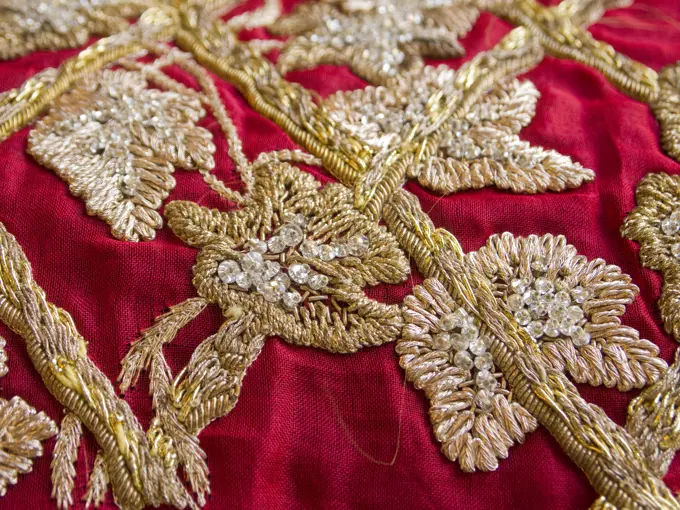
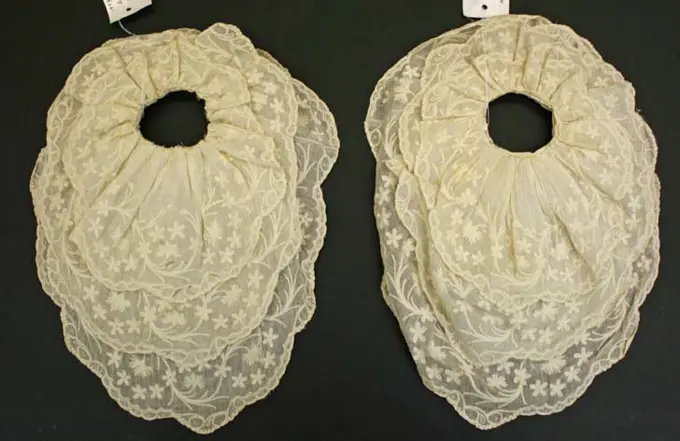
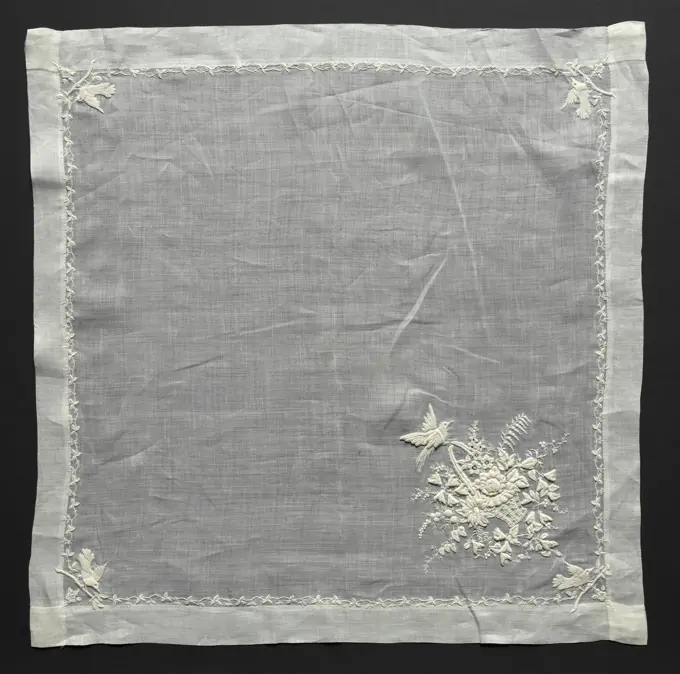
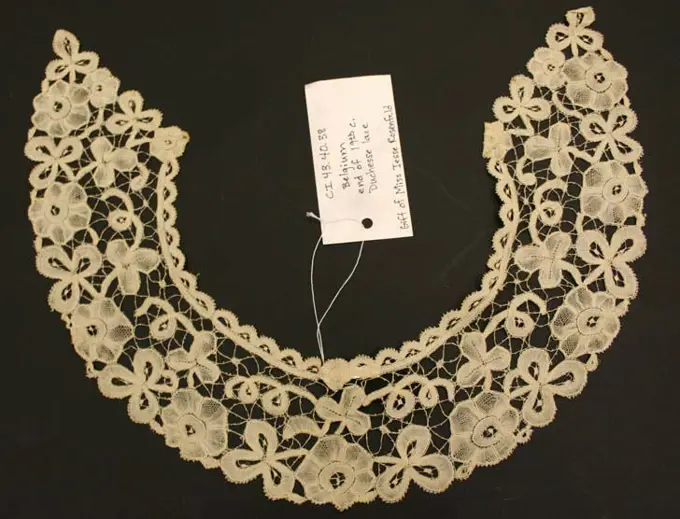
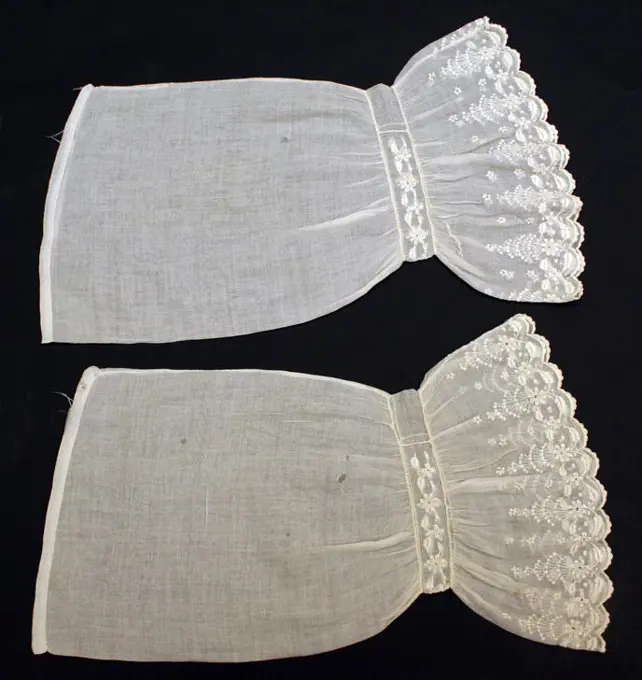
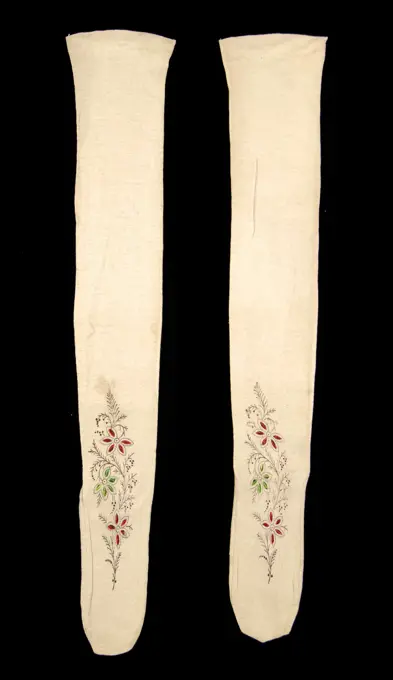
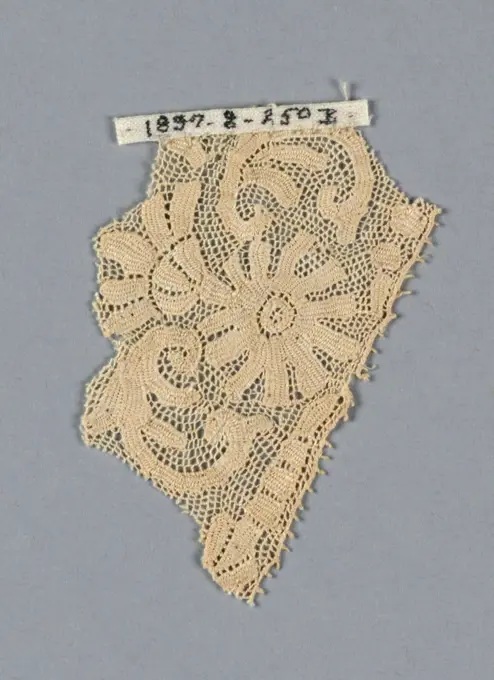
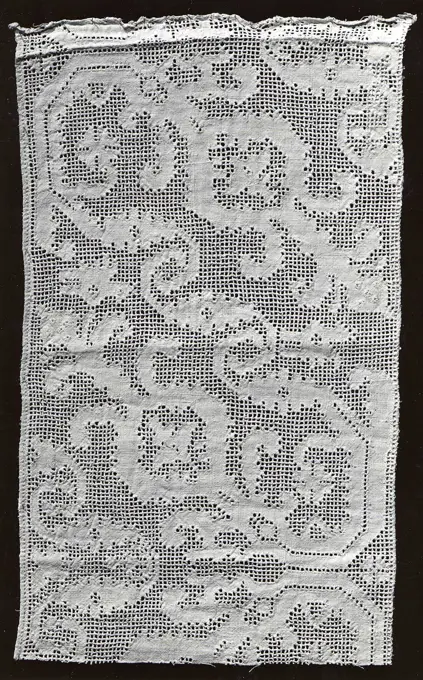
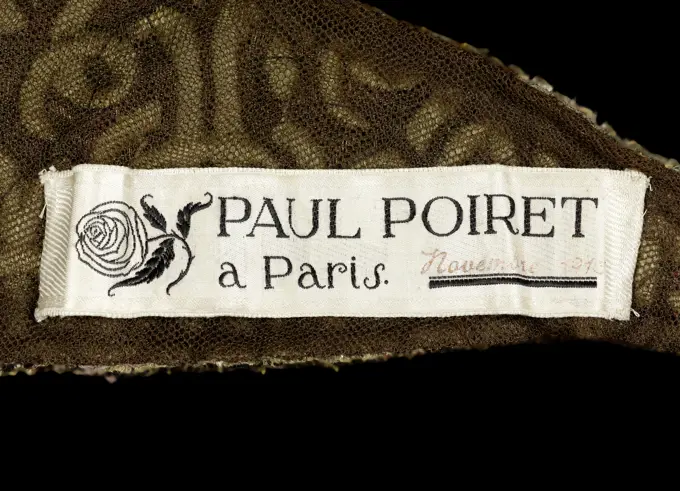
JUSTILLO DE MARIANA DE JESUS - SIGLO XVI. Location: CONVENTO DE SAN JOSE. Toledo. SPANIEN.Batist cuff with English embroidery and a strip of machine side, anonymous, c. 1880 Batist cuff with a closure of two hooks and eyes. The batist is decorated with English embroidery in the form of four -leaf flowers. A strip of machine side is attached to the cuff. Amsterdam (possibly) batists. band: Batist cuff with a closure of two hooks and eyes. The batist is decorated with English embroidery in the form of four -leaf flowers. A strip of machine side is attached to the cuff. Amsterdam (possibly) batists. band:Zardozi fabric sample in the New York City showroom/office of an Indian company that makes embroidery for the fashion industry.Engageantes ca. 1750 British. Engageantes 120004Strip of clamping side with connected circles along the bottom. Strip natural colosside, Buckingham side. Under a scattering pattern of square moes, the repeating pattern consists of connected circles with a cut-away center. The motifs are connected to each other by a Maas soil, a tulet. The circles are made in linen stroke with a cut-away center. Only the outside of each circle is accented with thick and shiny contour wires, the center is not accented with contour wires. In the center of each circle, limits have been made an ornamental soil, you see part of the grating of a rose ground. The top of the strip is straight finished. The sloping edge along the underside stems from the pattern with the circles and is finished with picots.Band Fragment; linen; Bequest of Marian Hague; 1971-50-350Collar 1700-1940 American. Collar 119139Children's hat of white batist with an ajour flower pattern on top, with fanning white -embroidered leaf vines and with a leaf vank all around and called Tulen Ruch and Kant, Anonymous Embroidered Battisten baby hat with tullekant along the edge and 6 slits in the sphere.  batiste. embroidering Embroidered Battisten baby hat with tullekant along the edge and 6 slits in the sphere.  batiste. embroideringCollar And Cuffs (Denmark); linenVENERA DE PLATA S XVIII. Location: CATEDRAL-INTERIOR. SANTIAGO DE COMPOSTELA. A CORUÑA. SPAIN.Embroidered Handkerchief, 19th century. Switzerland, 19th century. Embroidery: linen; average: 41.3 x 41.9 cm (16 1/4 x 16 1/2 in.).Towel end, Medium: cotton Technique: braided, These fringes were probably cut from towels and were originally the ornamentation made by weaving and braiding the warp ends. A lozenge design with crosses and quatrefoils in openwork., USA, 19th century, woven textiles, Towel endDetail of Wedding DressCollar 1700-1943 American. Collar 118883Half candle hood from Kloskant with sitting duck, 1900 - 1924  Half candle cover of natural -colored bobbin, Parisian side. Slightly curved rectangular model with cut curve on both short sides. In the middle of the candle cap, a sitting duck is made in a Maas soil, a Paris soil. The duck is made in linen battle with a recess as an eye and thicker shiny contour threads, which run into the linen work to form the contours of the wing. All sides of the strip are straight finished, with the underside with picots.  linen (material) bobbin lace / Paris laceCollar ca. 1807 British. Collar 85338Collar Belgian late 19th centuryCollar 1700-1943 American or European. Collar 89458Undersleeves ca. 1860 French. Undersleeves. French. ca. 1860. linenStockings ca. 1860 American. Stockings. American. ca. 1860. CottonMitts 1860s probably American. Mitts 110135Tablecloth detail Detail shot of table cloth needlework decor Copyright: xZoonar.com/Baloncicix 15072170Collar, Medium: linen Technique: needle lace, Collar in a design of flowers and leaves., Austria, late 19th century, lace, CollarFragments (Italy); linenBorder Fragment 17th century Italian. Border Fragment 461361Paul Poiret (1879-1944). Tiare headband. Black and pink white -woven claw on head tower. Lamé Mordoré, reborn with old gold threads on padded patterns of cotton wires, emerald stones, structure in brass wire lined with brown tulle, old golden braid with three pension. Paris, November 1913. Galliera, fashion museum of the city of Paris. 54690-6 Tiare banner, pressure button, double, detail, emerald, brass wire, white claw, blade, bite, braid paw, color stone, rebrode, pink, structure, black weave