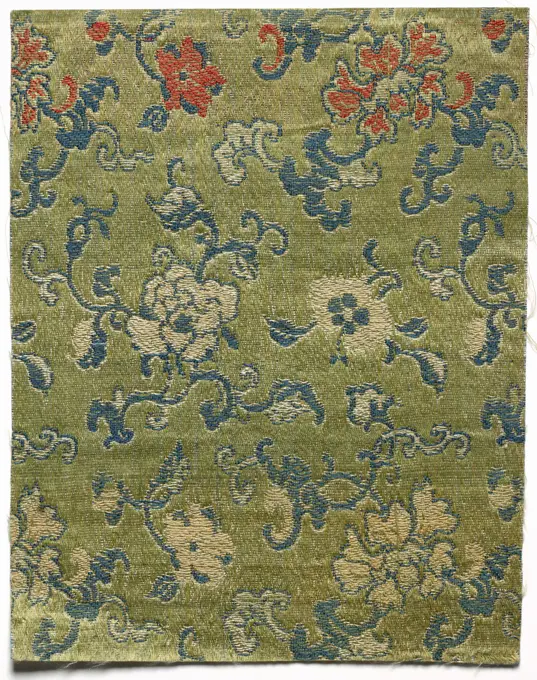
Vintage Textile Fragments

A collection of historical fabric pieces featuring floral designs, varying in colors and textures from silk to linen, evoking a sense of timeless elegance.

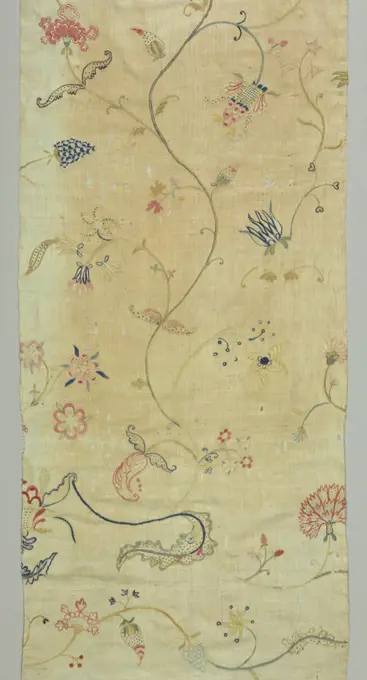
Fragment of a bedspread of Eastern textile with embroidery ,, 1690 - 1710 Fragment of a multi-colored tambourated Indo-Persian bedspread, decorated with volutes and flowers. India cotton (textile). silk embroidering Fragment of a multi-colored tambourated Indo-Persian bedspread, decorated with volutes and flowers. India cotton (textile). silk embroidering
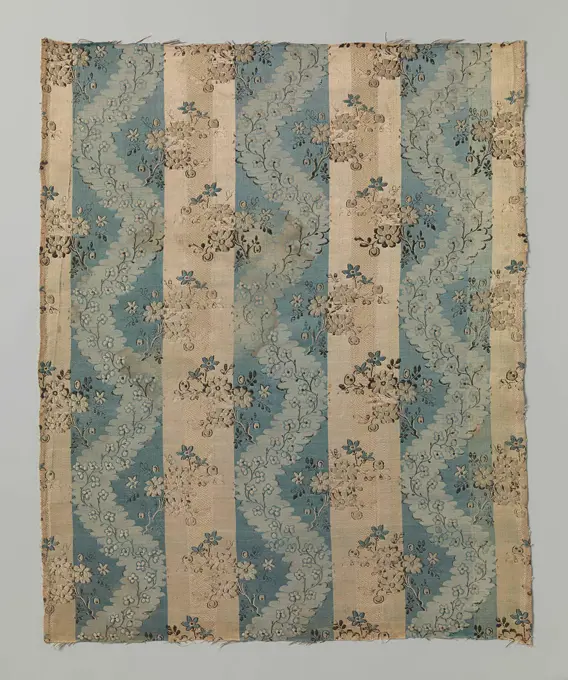
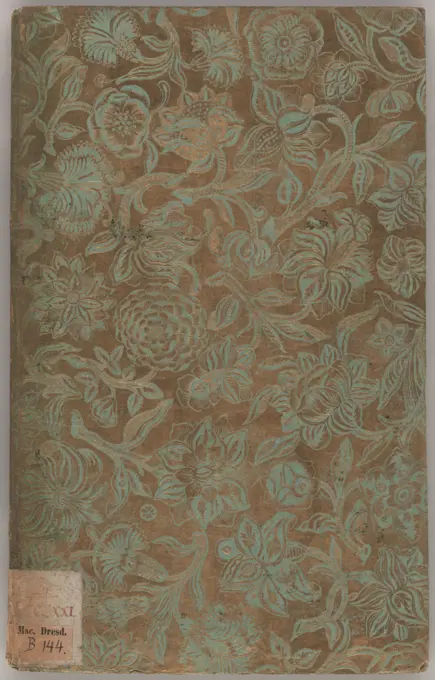
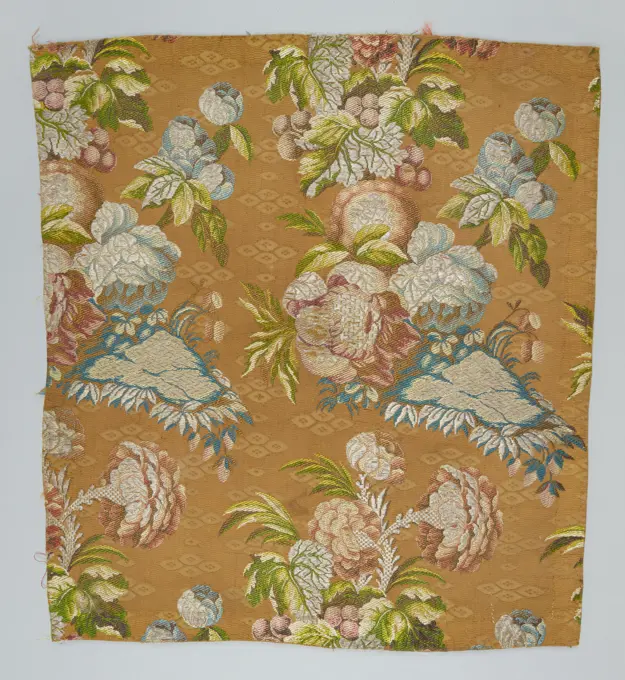
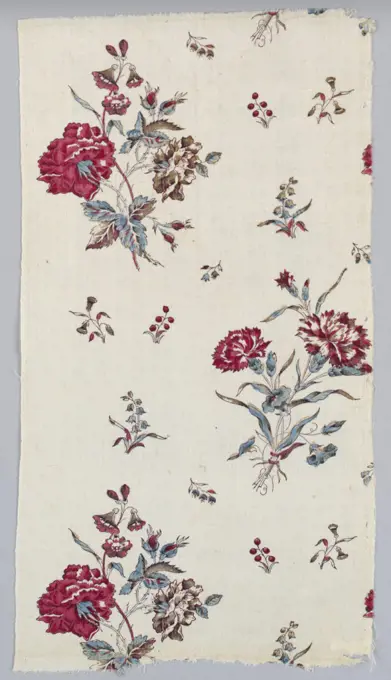
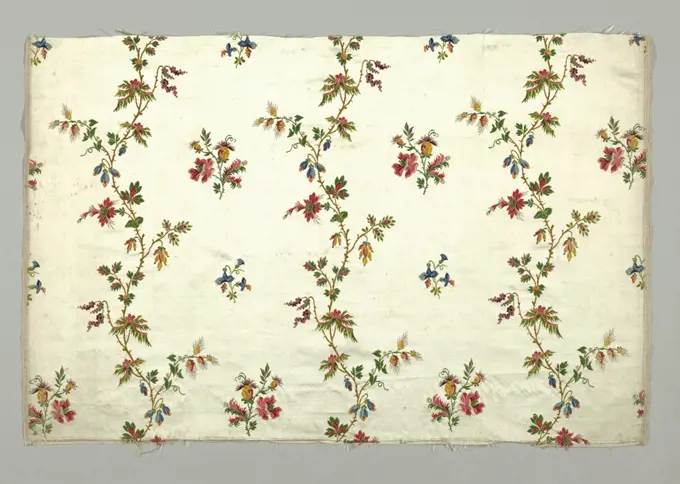
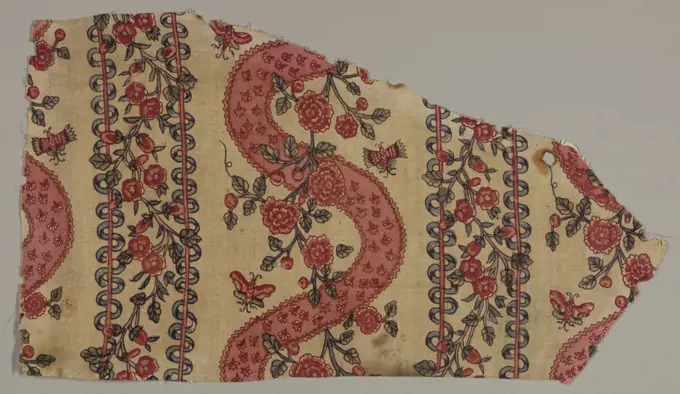
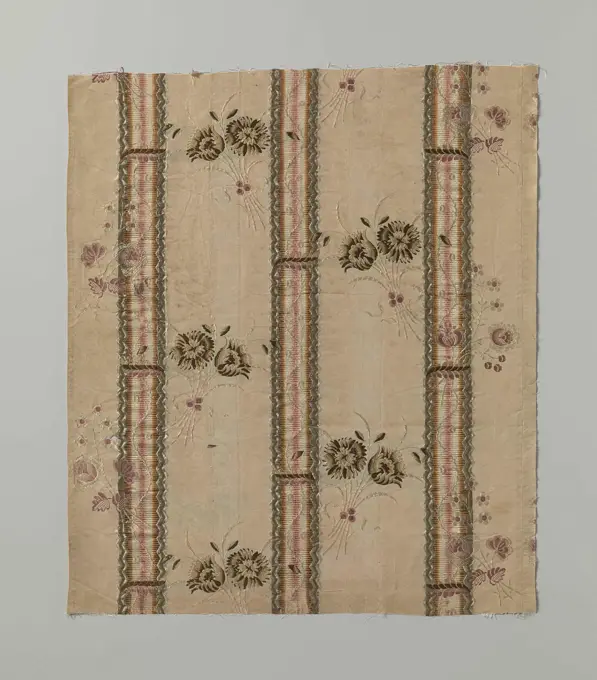
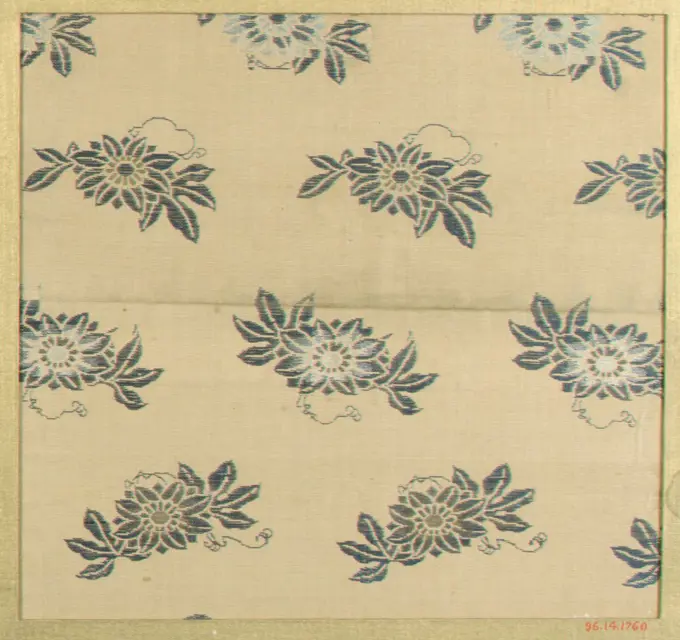
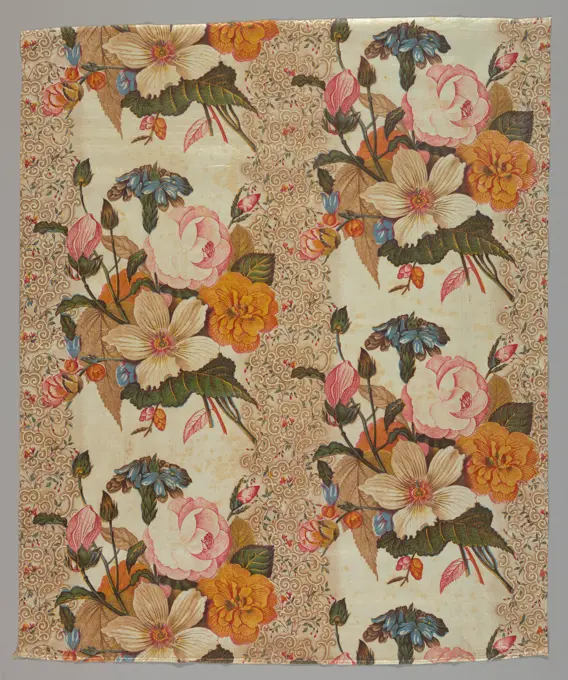
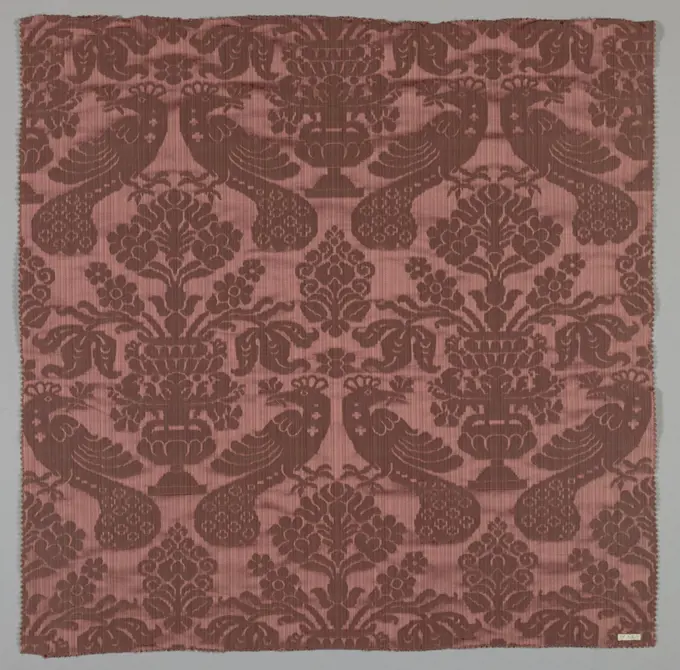
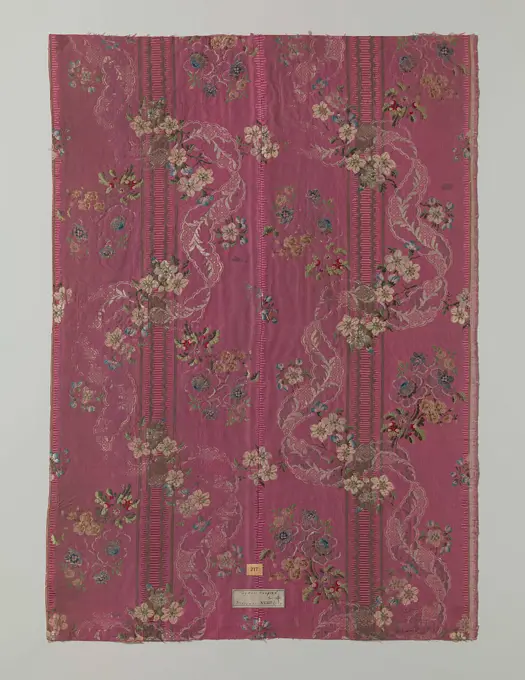
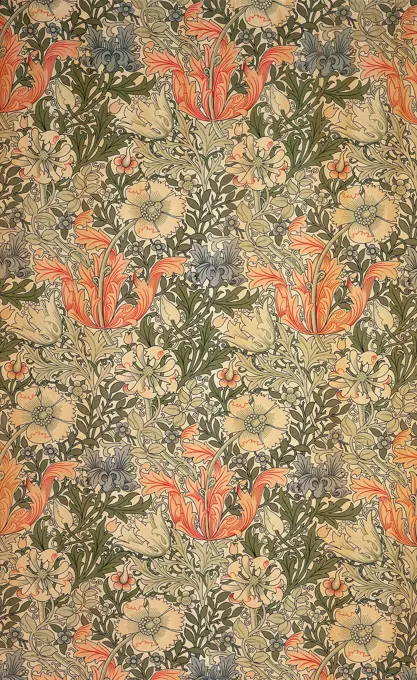
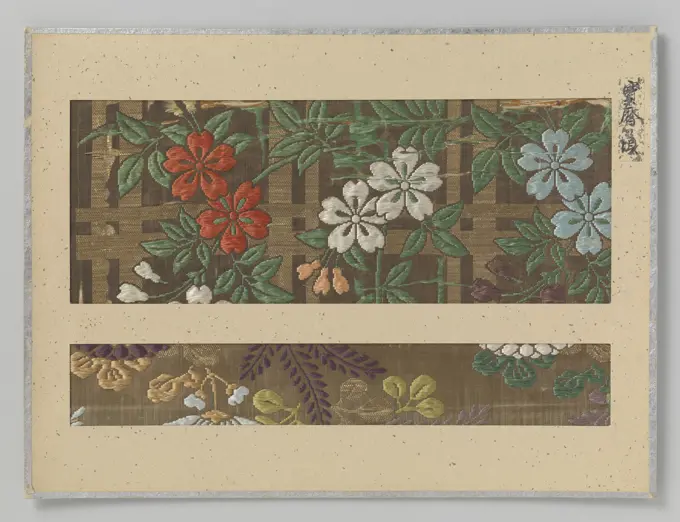
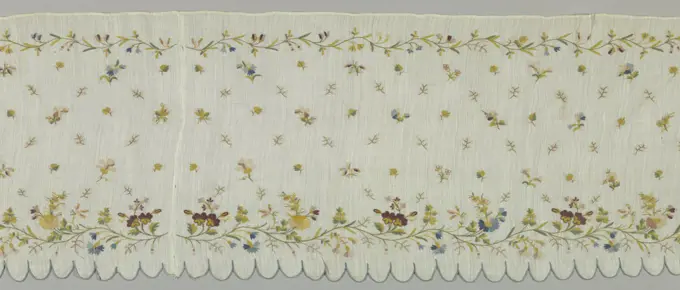
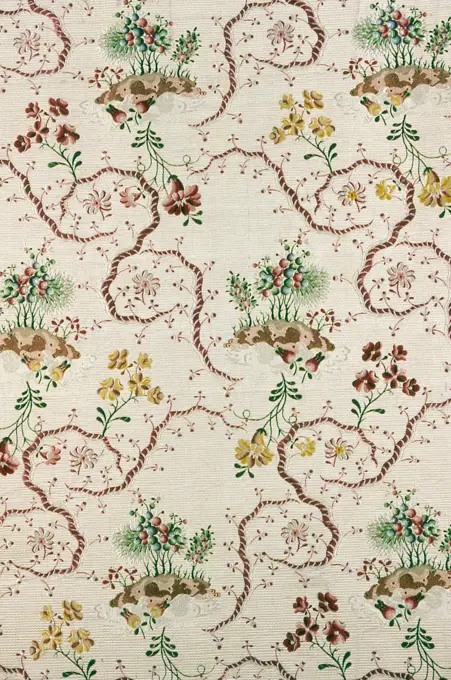
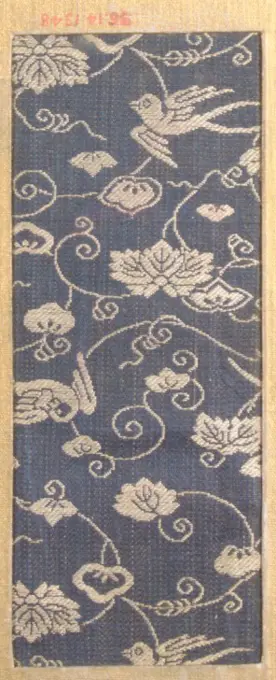
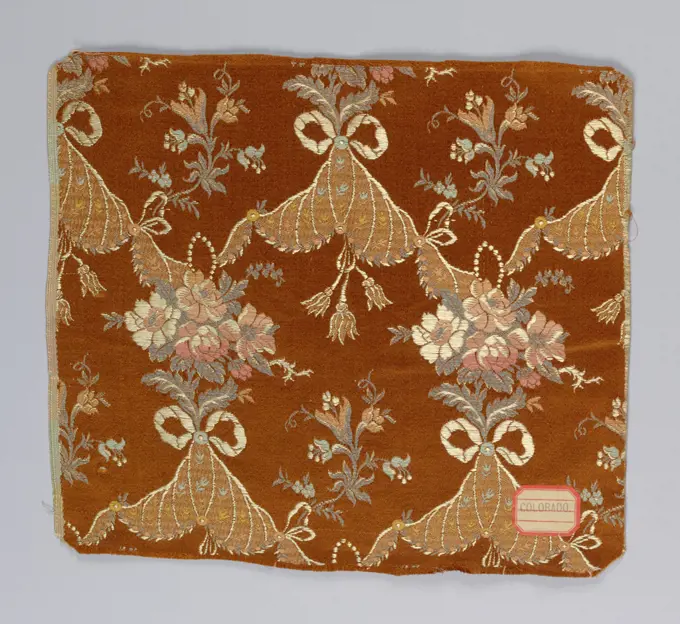
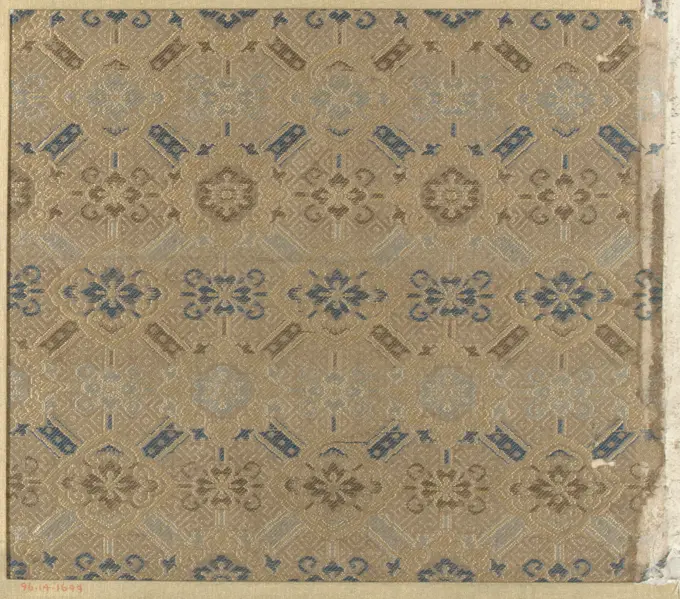
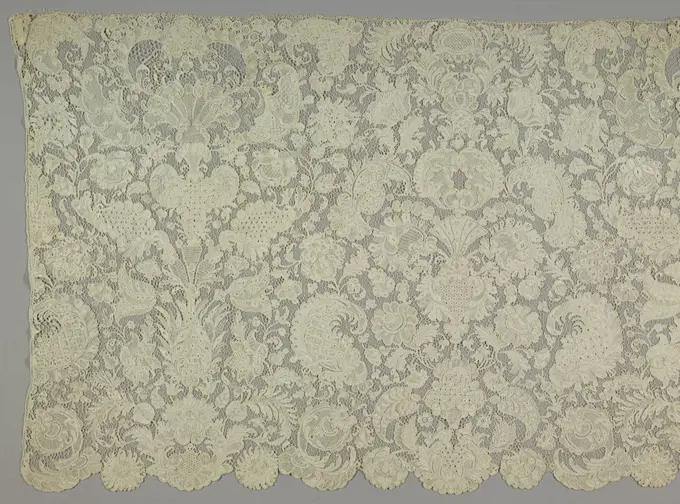
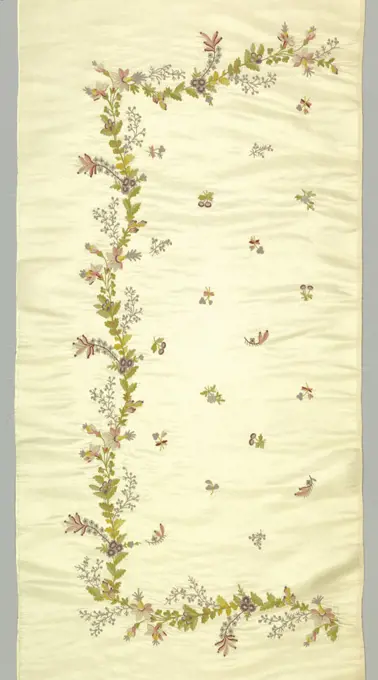
Piece 1725-30 French. Piece 217052Piece 18th century Japan. Piece 66179Fragments of silk fabric unknownFragment of a multi-colored silk satin. A silk tissue with blue and cream stripes. There is a pendulum on the blue stripes, in which a continuous rank with black stems and white flowers. Loose branches of white and blue flowers are partially woven on the blue and white stripes. Note: Selling; 0.3 cm Plain bond (multiple colors in one jump).Fragment (France); linen warp, cotton weft; Warp x Weft: 15.5 x 44 cm (6 1/8 x 17 5/16 in.)Textile (France); silk, metallicFragment, Medium: silk on cotton Technique: embroidered on plain weave, Textile fragment with embroidery of blue and yellow silk on cotton showing design of running animals with floral vines., 18th or 19th century, embroidery & stitching, FragmentFragment of a bedspread of Eastern textile with embroidery ,, 1690 - 1710 Fragment of a multi-colored tambourated Indo-Persian bedspread, decorated with volutes and flowers. India cotton (textile). silk embroidering Fragment of a multi-colored tambourated Indo-Persian bedspread, decorated with volutes and flowers. India cotton (textile). silk embroideringBook coverFragment of silk fabric  naturaIIstic flower pattern unknownPiece 18th-19th century Japan. Piece 65915Baan silk tissue with bizarre pattern. Loan silk tissue from bubblered and launched lampas liséré. Dessin: bizarre pattern of versal with geometric motifs filled leaves and fruit shapes (pomegranates) In Écru (ground tissue), green (liséré), écru (launch), écru (launch), pink (launch) and gold thread (gold colored slats around sides core ) On green ground.Piece 18th-19th century Japan. Piece 67533Fragment of silk fabric unknownFragments (India); silk, linenPiece 18th-19th century Japan. Piece. Japan. 18th-19th century. Silk. Textiles-WovenVelvet Fragment, 1700s. Italy, 18th century. Velvet; overall: 46.5 x 51 cm (18 5/16 x 20 1/16 in.).Textile, Medium: cotton Technique: block printed on plain weave, blue applied by block., Straight repeat of widely-spaced flowers on an undyed ground. Two large flower groups surrounded by tiny flowers., France, 1780-89, printed, dyed & painted textiles, TextileFragment (Italy); silk; Warp x Weft: 33.1 x 25.4 cm (13 1/16 x 10 in.)Textile (France); silk plain compound cloth, brocadedFragment 16th century Italian. Fragment 230257Makata - antependium;  1. PO. 18th century (1701-00-00-1750-00-00);Fragment Made 1750-1775 France. Silk, cut, uncut, and voided velvet against satin weave foundation .Textile, Medium: silk Technique: plain compound satin weave with supplementary weft, Off-white silk satin brocaded with multicolored floral branches and flower sprays., France or England, 18th-19th century, woven textiles, TextileSheet with blue and purple floral and dot pattern 18th century Anonymous. Sheet with blue and purple floral and dot pattern. Anonymous , Italian, 18th century. 18th century. Relief print (wood or metal). PrintsTextile (USA); cotton; Warp x Weft: 119.1 x 40.3 cm (46 7/8 x 15 7/8 in.)Fragment silk tissue. Fragment silver gray side with pattern in green, rose and light brown of vase with leafwork and with floral-filled basket.Textile, Medium: silk Technique: 5-harness satin damask, Short panel of yellow damask with symmetrical design of foliage, flowers and a crown., Italy, 16th century, woven textiles, TextileChintz fragment, Medium: cotton Technique: mordants for 2 reds, brown and black applied by pen and brush; madder dyed; blue applied over resist; yellow applied by brush; chintz on plain weave, Curving ribbons and floral stripes with butterflies among the flowers., India, 1750-1800, printed, dyed & painted textiles, Chintz fragmentTextile (Italy); silk; Warp x Weft: 84.5 x 54.3 cm (33 1/4 x 21 3/8 in.)Textile (China); silk; temperaFragment Multicolored silk Mexicainian. Fragment multicolor silk tissue. A white ground has striped jobs in brown, white and pink. The courses are limited with Zig Zag lines and a leaf drink runs in the track. Between and on the tracks the pattern has been scattered flower bouquets.Piece 18th-19th century Japan. Piece 67473Textile Fragment, 1774-1793. France, late 18th century, Period of Louis XVI (1774-1793). Velvet (cut, uncut, supplementary weft); silk; overall: 6.7 x 8.6 cm (2 5/8 x 3 3/8 in.).Textile, Medium: cotton Technique: block printing on plain weave, Allover pattern of long flowering branches which hook together to form a continuous very linear pattern on the white cotton fabric. Flowers include sweet peas, morning glories, clover, and yarrow., England, 18th century, printed, dyed & painted textiles, TextilePiece 18th-19th century Japan. Piece. Japan. 18th-19th century. Silk. Textiles-WovenChintz (India); cotton; Warp x Weft: 50.5 x 41.5 cm (19 7/8 x 16 5/16 in.)Pillowcase. Italy. Date: 1601-1700. Dimensions: 52 x 39.5 cm (20 1/2 x 15 1/2 in.). Linen, plain weave; embroidered with linen in Algerian eye, back, hem and Italian hem stitches; with attached linen tassels, wrapped and embroidered in buttonhole stitch. Origin: Italy. Museum: The Chicago Art Institute, Chicago, USA.Fragment; silkTextile, Medium: cotton Technique: block printed on plain weave, Length (ripped from a skirt) of cream colored cotton, block-printed in desgin of thin flower sprays, with pointed leaves, small wild flowers, and sprays bearing print (strawberries ()). colors red, blue, yellow, plum color, and darkbrow for stems, Both selvages present., France, 18th century, printed, dyed & painted textiles, TextileFragment multicolored brochure, anonymous, 1740 - 1760 Fragment multicolored silk tissue. A green soil has a pattern of white side garlands with flowers and fruits, between which colored flower bouquets and flower branches. Two pieces sewn together. France (possibly) silk Fragment multicolored silk tissue. A green soil has a pattern of white side garlands with flowers and fruits, between which colored flower bouquets and flower branches. Two pieces sewn together. France (possibly) silkTextile, Medium: silk, metal foil-wrapped silk-core threads Technique: 7&1 satin with discontinuous supplementary weft patterning (brocade), 'Lace style' woven silk with its design symmetical around a vertical axis. Feathery exotic foliage brocaded in white with green, blue, yellow and gold metallic threads on a deep rose background. Many open areas in the design have small diaper fillings in white., France, 1720-25, woven textiles, TextileBedcover, Medium: linen, wool Technique: embroidery, Bedcover with crewel embroidery in various shades of blue, yellow, pink and olive green on a linen ground. Design is similar to English crewel work and shows an East Indian influence. Long delicate center stem has flowers and sprays which extend to form borders., USA, mid-18th century, embroidery & stitching, BedcoverFragment multicolored brochure side. Fragment multicolor silk tissue. A white ground has white lace garlands and white branches, on which a pattern of baskets with flowers that are connected by floral drinks with flower branches.Piece 18th-19th century Japan. Piece. Japan. 18th-19th century. Silk. Edo period (1615-1868). Textiles-WovenTextile (England); cotton; Repeat H: 35.6 cm (14 in.)Children's spraw from Sits with sprinkled floral pattern. Children's spraw, cotton, painted by means of stain and recess technology; quilted and stitched; Edge and lining of white silk. Dessin: scattered flower pattern in different shades of red, blue, dark green and with white recesses on a yellow / green fond. Note: The bedspread is probably put together in India.Fragment, Medium: linen, wool Technique: float patterned plain weave, Orange and red flowers. One selvage., Spain, 17th century, woven textiles, FragmentTextile; cottonTextile, Cheney Brothers, (South Manchester, Connecticut, USA), Medium: silk Technique: compound satin weave, Reproduction fabric inspired by a sixteenth century design in the Cooper Union Museum collection. In dark purple with a pattern of flower-filled urns and pairs of peacocks., USA, ca. 1915, woven textiles, TextileFragment multicolor silk mexicainian. Two clipped fragments multicolored silk tissue. A purple ground has a pattern of purple stripes over which white lace garlands overlook and between multicolored flower garlands and flower branches.Piece 18th-19th century Japan. Piece. Japan. 18th-19th century. Silk. Textiles-WovenSidewall, Machine-printed paper, Aesthetic style design. Neo-Rococo pattern with five motifs of bunches of flowers arranged jigsaw-like; bunches alternatively tied at their base by ribbons with bow knots, hanging from a looped ribbon, or sprouting from an odd, chinoiserie horseshoe-shaped jewelry-like form; flow of growth is both upward and downward; naturalistic coloring and shading with light blue, red, and cream predominantly used on the flowers, light blue on the ribbons, and light blue, red, and tan on the jewelry forms; white ground., USA, ca. 1880, Wallcoverings, SidewallFragment, Medium: silk Technique: compound twill with discontinuous supplementary weft patterning (brocade), Coral ground with a figure in green and white; fragmentary design of parasol, streamer, rushes, and a wreath., Spain, late 18th century, woven textiles, FragmentCarpet Fragment (USA); woolFragment, Medium: wool, linen Technique: plain weave with floats, Simple floral forms in orange and white reversible fabric., Spain, 17th century, woven textiles, FragmentFragment, Medium: silk Technique: 4&1 harness satin damask, Conventionalized floral forms in cream damask, 17th century, woven textiles, FragmentPiece 18th-19th century Japan. Piece 67136Veil. unknown, authorPiece 18th-19th century Japan. Piece 66028Textile, Medium: cotton Technique: block printed and painted on plain weave, Exotic plant with long twisting flowering branches on a white background., France, mid-late 18th century, printed, dyed & painted textiles, TextileCompton, 1896, John Henry Dearle; Manufacturer: Morris & Co., Merton Abbey, British, 1860 - 1932, 87 1/2 x 30 1/4 in. (222.25 x 76.84 cm), Cotton; block printed, England, 19th century, William Morris is credited with developing the most innovative design style of the nineteenth century, often referred to as British Arts and Crafts. Using soft-toned natural dyes, hand block-printing processes and a distinctive design aesthetic; he created fabrics and wallpapers that were immediately recognizable and immensely popular. Morris's designs generally depict flowers of the English countryside, interpreted in a simplified, two-dimensional aspect that retains the essential character of the particular plant without including excess detail.Piece 1851-72 Stinton Bros.. Piece. British. 1851-72. Cotton. Textiles-PrintedDesign for a Woven Fabric, Brush and gouache on blue paper, Small flower bunches alternate with strips composed of leaves and other flower bunches running vertically. Verso: stripes of floral meanders, leaves, or simply solid colors. Alternate horizontal rows decorate the ground stripes., France, Drawing, DrawingLampas fragment with blossoms in ogival lattice, 1600s. Iran, Safavid Period. Lampas: silk and silver-metal thread; overall: 114.3 x 68.6 cm (45 x 27 in.); mounted: 123.8 x 77.5 cm (48 3/4 x 30 1/2 in.).Pieces (2) ca. 1735 Italian. Pieces (2) 227537Fragment (China); tempera on silkFragments, Medium: silk Technique: 5-harness satin damask, Large-scale design of symmetrical bouquets in ogival frames formed by broad interlacing bands, which also form heart-shaped interstices clasped with crowns; flower and leaf detail. Cloth weave on satin ground; crimson. Lined with brown linen, probably later, and edged with blue and white fringe of period., Spain or Italy, late 16th-early 17th century, woven textiles, FragmentsPiece ca. 1818 Bannister Hall The Bannister Hall print works was founded ca. 1798 by Richard Jackson and John Stephenson. Between 1809 and 1825 it was owned by Charles Swainson with varying partners. It was the leading firm for woodblock "furniture" chintzes.. Piece. British, Preston. ca. 1818. Cotton. Textiles-PrintedFragment of Brocade, c. 1750. France, 18th century, Period of Louis XV. Tabby, brocaded; silk and silver filé; overall: 49.1 x 55 cm (19 5/16 x 21 5/8 in.).Textile (France); cottonFragment Made 1625-1675 Italy. Silk and gilt-metal-strip-wrapped silk, plain weave with supplementary facing wefts and supplementary brocading wefts .Fragment multicolored brochure silk, c. 1700 - c. 1760 Fragment multicolored silk tissue. A white winding lace strip runs on a yellow ground that crosses a winding strip of multicolored flower branches. Netherlands silk Fragment multicolored silk tissue. A white winding lace strip runs on a yellow ground that crosses a winding strip of multicolored flower branches. Netherlands silkBorder, Medium: cotton Technique: printed on plain weave, Allover design of floral sprays in red, green and pink on off-white ground. Border with large and small flowers in red, green and tan., England, late 19th century, printed, dyed & painted textiles, BorderTextile Sample in Sample Book Japan 19th centurySamples (USA); Manufactured by Orinoka Mills (United States); Warp x Weft: 28 x 32 cm (11 x 12 5/8 in.) Warp x Weft: 31 cm (12 3/16 in.)Fragment ; silk, cotton ()Two fragments of a chasuble. unknown, authorFragment, Medium: silk on linen Technique: embroidered, Fragment showing a straight repeat of blossoms in multicolored silk on sheer linen., Turkey, 19th century, embroidery & stitching, FragmentFragment (Italy); silk; Warp x Weft: 76.2 x 34.3 cm (30 x 13 1/2 in.)Two excerpts textile, anonymous, 1751 - 1764 Textile fragments, two, embroidery of flowers and leaves with kirikane in brown stock. Japan silk Textile fragments, two, embroidery of flowers and leaves with kirikane in brown stock. Japan silkSample (USA); Manufactured by Orinoka Mills (United States); 1989-80-49Border, Medium: silk embroidery, cotton foundation Technique: embroidered with chain stitch on plain weave, Border of fine white cotton embroidered with multicolored silk in chain stitch showing small scattered flowers; small and large floral borders at top and bottom. Deeply scalloped edge, buttonhole stitched in blue., USA, England, 1750-1800, embroidery & stitching, BorderPanel Made 1825-1845 England. Silk, plain weave with supplementary patterning warps, supplementary brocading wefts, and self-patterned by two-color complementary ground weft floats; woven on loom with Jacquard attachment .Piece 18th-19th century Japan. Piece. Japan. 18th-19th century. Silk. Textiles-WovenFragment; silk; Warp x Weft (left selvedge present): 83.4 x 48.2 cm (32 13/16 x 19 in.)Flounce (France); linenSamples, Orinoka Mills, (Philadelphia, Pennsylvania, USA), a. rust color ground with floral bouquet, b. blue/grey ground with floral bouquet, USA, ca. 1910, woven textiles, SamplesZakdoek van batist met borduurwerk met mimosa en een strook naaldkant met strooibloempjes.Natural batist handkerchief with embroidery in the four corners and rounded around with a border needle lace: Alençon side. The embroidery is right in the four corners. The pattern consists of two sloping and openwork arches, which are overcured by mimosa branches. The arches form a definition of the other motifs in the corners. These motifs are a fantasy flower, surrounded by fine spiral drinks with a buds, leaves and flowers. A fine flower garland with forget-me-staples along the edges of the handkerchief of the pattern in one corner to the pattern in the next corner. The strip needle side has a pattern with one row of spreading flowers and a fine sloping edge with bows that are finished with picots. The motifs are made with feston stitches and equipped with relief contours.Textile; cottonFragment, Medium: tempera on silk Technique: printed and painted on plain weave, White moire with stripes of yellow, rose and black. Between the stripes are painted groups of musical trophies. Small flowering vine border., Europe, 18th century, printed, dyed & painted textiles, FragmentSquare cashmere scarf, decorated with red pink and green stunned floral muts on a beige stock, anonymous, c. 1830 - c. 1840 Square palms scarf, woven from wool, with a solid Omber-Odker-colored stock in the field and edge, decorated with sprinkled small flowers in pink, bleu, red, green and white. The center pattern consists of an infinitely running pattern of staggered rows of small Botas, turns in turns with blue-white and rose-white heart, all top-pointed top-apart from the one in one row at one end (where the keperspring is also located). Every Bota is surrounded with fine slender work in light and dark green, red and a little yellow, pink and white. Minuscule Botas stand between the main motifs. Very small corners down the midfield, which start with a strip of fine gridwork in green on white, behind which a flower stem with a carnation in the top, everything in the same colors. The edge is very narrow, with the same ocher -colored stock within red lines. The technology is keperbinTextile (probably France); woolPiece 18th-19th century Japan. Piece 67412Leaf with three tires with flowers, 1740 - 1750 brocade paper Leaf with three tires with flowers separated by narrower tires with ornamental pattern and window pattern. The outer four tires left and right mirror -image identical. Numbered below: illegible. Augsburg paper. paint (coating) relief printing ornament derived from plant forms. ornament ~ geometric motifsFlounce, Medium: linen Technique: needle lace, Point de France worked in a close, allover design of conventionalized flower and leaf forms on a ground of picoted bars. Irregularly scalloped edge formed by the foliation., France, 1720-30, lace, FlouncePiece 18th-19th century Japan. Piece. Japan. 18th-19th century. Silk. Textiles-WovenTextile, Medium: silk on silk Technique: chain stitch on satin foundation, Rectangular piece of cream-colored satin showing a continuous meandering vine and flower pattern embroidered along three sides of the panel. Inside are small, isolated flower sprigs., France, late 18th-early 19th century, embroidery & stitching, TextileFragment, 1800s. China, 19th century. Satin ground; silk diasper weave; overall: 15.9 x 12.7 cm (6 1/4 x 5 in.).Textile (probably France); silk; Warp x Weft: 135 x 56.5 cm (53 1/8 x 22 1/4 in.); Bequest of Elinor Merrell; 1995-50-333