Vintage Textile Fragments

A variety of textile artifacts including lace trims and embroidered samplers from various historical eras and cultures.

Strip bobbin with wavy feathered leaves and plume flowers, anonymous, c. 1740 - c. 1760 Strip of natural-colored bobbin: binche side. The repeating and continuous pattern consists of wavy feathered leaves, with a plume -shaped flour under each wave top with an elongated pointed pointed center and between the wave tops a thick feather -shaped flour. The motifs are connected by a decorative land, a snowflake ground. The motifs are made in linen battle and mains with openwork edges. One type of decorative land has been used around the wavy leaves. Top and bottom of the strip are straight finished, with the bottom with picots. Southern Netherlands linen (material) Bobbi Lace / Binche Lace Strip of natural-colored bobbin: binche side. The repeating and continuous pattern consists of wavy feathered leaves, with a plume -shaped flour under each wave top with an elongated pointed pointed center and between the wave tops a thick feather -shaped flour. The motifs are connected by a decorative la

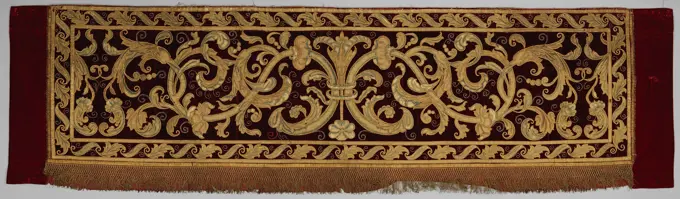
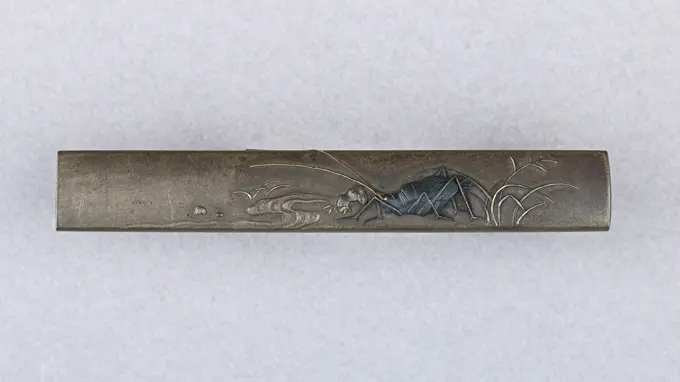
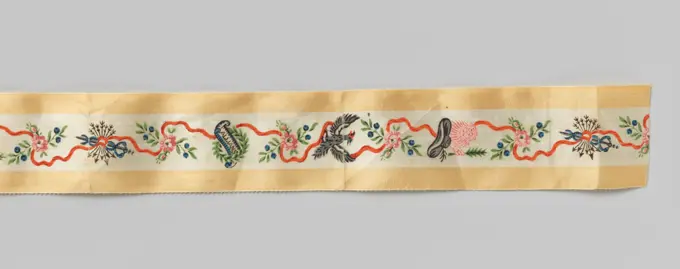
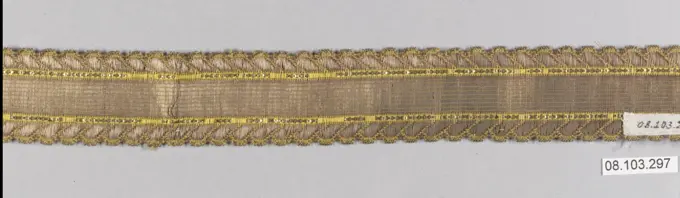
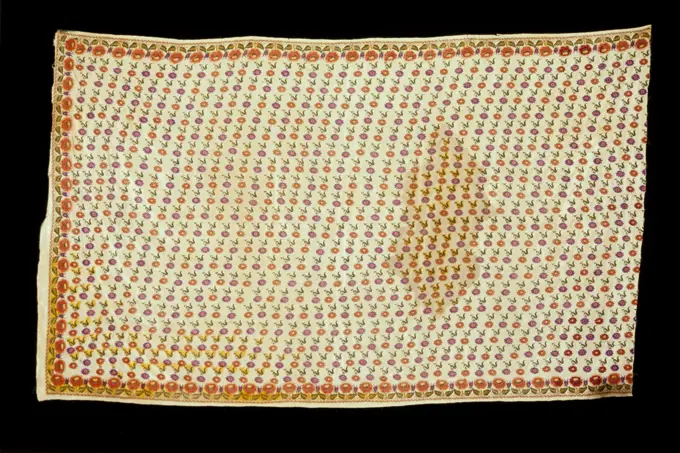
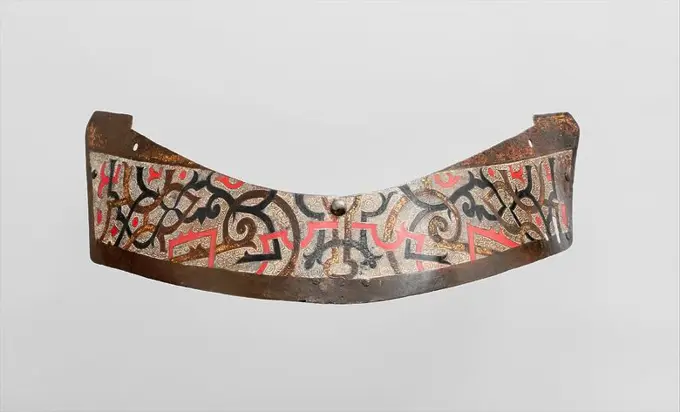
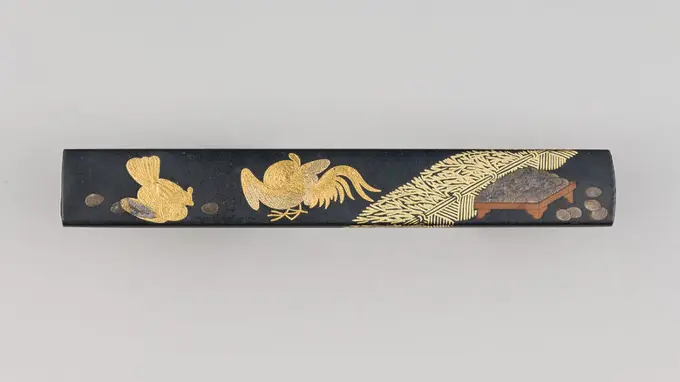
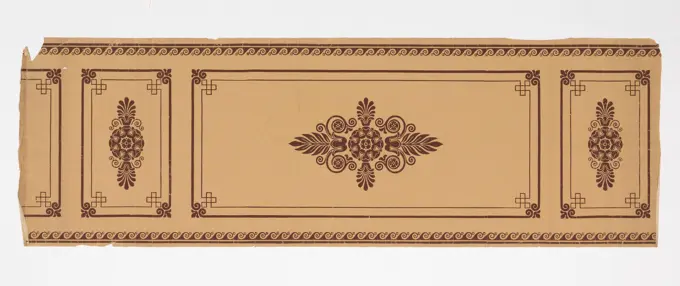
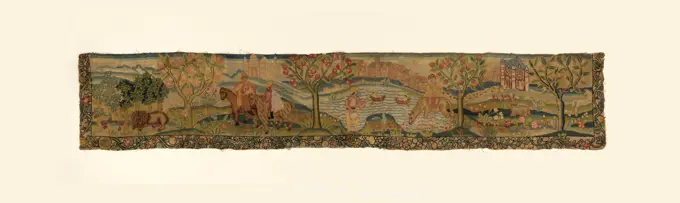
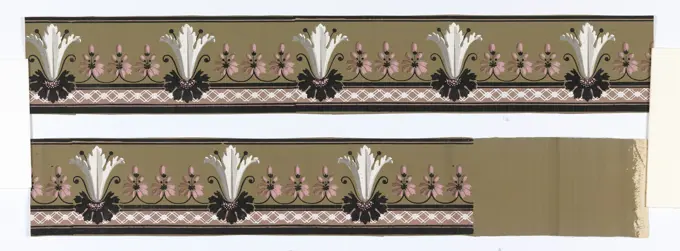
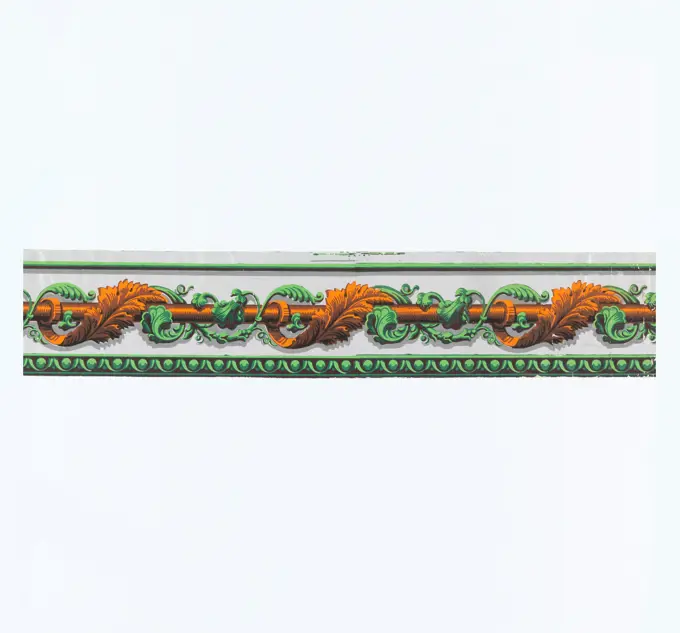
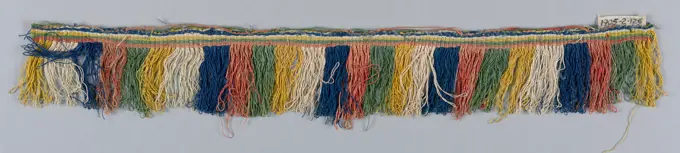
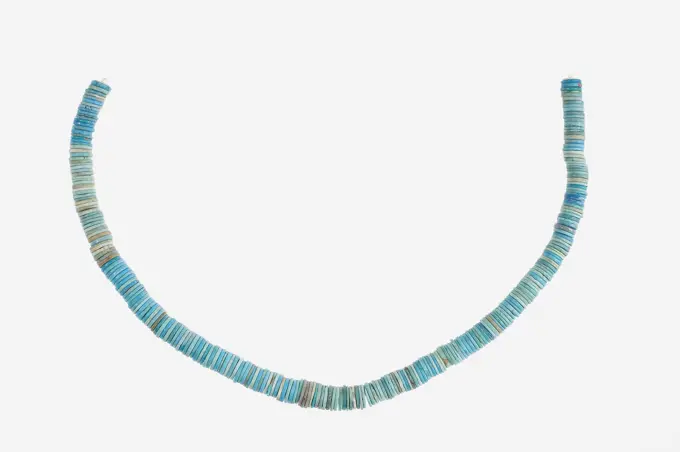
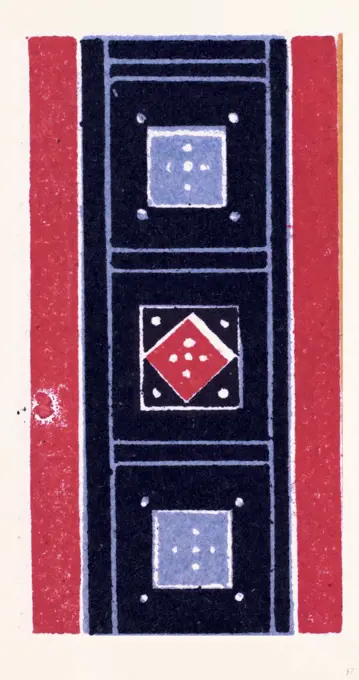
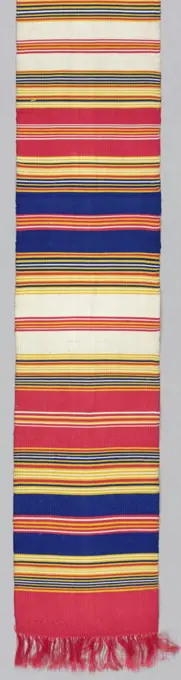
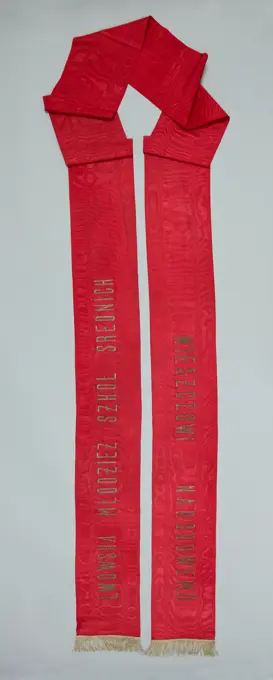
Sampler 19th century German. Sampler 228621Three fragments of lace;  2. PO. 16th century (1551-00-00-1600-00-00);Lice line or strip of embroidery application. Lice line or strip of application embroidery on a wine-red velvet fond. The pattern has symmetrical lying S-tanks, together in the middle with a lily and a rose. The rich branched rank is occupied with leaf trips and ends in volutes of Acanthus leaves and silver bonding drinks. The strip is finished with gold passement and goldfring from the bottom. The strip belongs to three strips.Fringe, Medium: silk Technique: woven, Fringe in pink, white and tan with a plain-woven heading. Skirt threads in pink, white and tan stripes with small gaps in between each color., Italy, 17th century, trimmings, FringePassement or strip bobbin with open arches, Miss Messel, c. 1925 Passement or strip of natural-colored bobbin, inspired by 17th-century Flanders side. Equal shells are symmetrically filled with each other intersecting trensjes, which are decorated with a few picots. Netherlands (possibly) linen (material) bobbin lace / Flanders lace Passement or strip of natural-colored bobbin, inspired by 17th-century Flanders side. Equal shells are symmetrically filled with each other intersecting trensjes, which are decorated with a few picots. Netherlands (possibly) linen (material) bobbin lace / Flanders laceBlanket strip -Knife Handle (Kozuka) ca. 1615-1868 Japanese A kozuka is a handle of a by-knife that is part of a sword mounting. It is kept in a slot on the reverse of a katana scabbard, often with a matching kōgai (hairdressing tool).. Knife Handle (Kozuka) 24989Trimming, Medium: silk Technique: cut supplementary warp pile in a satin foundation (velvet), Yellow trimming fragment in a design of a scrolling stem with conventionalized leaves., France, 19th century, trimmings, TrimmingLambrequin () ca. 1715-23 French. Lambrequin (). French. ca. 1715-23. Carved and painted wood. WoodworkOranjelint ,, 1775 - 1800 ribbon (material) Ribbon with white lane through which a red ribbon over the following symbols: arrow bundle with staff and two hoses, branch with orange apples and flower, freedom hat with lion with thistle in his leg, twig, eagle, twig, the word allians on banderol surrounded by laurel cross, twig. The whole is repeated three times. Netherlands silk printingSidewall (USA); Manufactured by Illinois W.P. Mills; machine-printed; 93 x 49.5 cm (36 5/8 x 19 1/2 in.)Sword holder (emushi-at) with Mongolian trade felt, early 19th century, Unknown Ainu, 28 1/2 × 18 1/2 in. (72.39 × 46.99 cm), Cloth: felted wool with resist dye; cotton appliqué and embroidery, Japan, 19th centuryManiple mid-17th century Italian, probably Venice. Maniple 229689Galloon 17th-18th century Unknown. Galloon 213794Trimming Made 1850-1900 China. White gauze, embroidered strips . Han-ChineseSleeve Band; cotton, silkFringe, Medium: silk Technique: woven, Blue, white, pink and yellow fringe with a checkboard heading and looped skirt threads supporting a tassel of the same color., Spain, 17th century, trimmings, FringePanel, 19th century, L.47-½ x W.75-3/4 in., satin; needlework, India, 19th centuryCrinet Plate Belonging to an Armor for Field and Tournament Made for Duke Nikolaus "The Black" Radziwill (1515-1565), Duke of Nesvizh and Olyka, Prince of the Empire, Grand Chancellor and Marshal of Lithuania. Armorer: Kunz Lochner (German, Nuremberg, 1510-1567). Culture: German, Nuremberg. Dimensions: L. 13 7/8 in. (35.5 cm); H. 3 7/8 in. (9.8 cm); Wt. 9 oz. (261 g). Date: ca. 1555; probably repainted later.This crinet plate, along with the matching shaffron also in the Metropolitan Museum's collection (21.42), form part of an important garniture of armor for field and tournament use made for Nikolaus "the Black" Radziwill (1515-1565), duke of Nesvizh and Olyka, prince of the empire, and grand chancellor and marshall of Lithuania--one of the wealthiest and most important nobles in Poland and Lithuania. Several elements of the garniture survive, six of which (including this one) are preserved in the Metropolitan Museum's collection. Made by the distinguished Nuremberg armorer Kunz (KoKnife Handle (Kozuka). Culture: Japanese. Dimensions: L. 3 13/16 in. (9.7 cm); W. 9/16 in. (1.4 cm); thickness 3/16 in. (0.5 cm); Wt. 1 oz. (28.3 g). Date: 18th century. Museum: Metropolitan Museum of Art, New York, USA.Dado (France); block-printed on handmade paper; Overall: 174 x 57 cm (5 ft. 8 1/2 in. x 22 7/16 in.)Purple tile pilaster, column wound with stem on which putti, on pedestal of column sleeping Amor, tile pilaster sculpture ceramic earthenware glaze wood, baked 2x glazed painted tile piller one wide twelve high. Upper tile 13 lower 23.Border Or Valence (England); linen, wool, silkA sash from the funeral of Adam Mickiewicz in Krakow on July 4, 1890Border (France); block-printed on handmade paper; 87 x 14 cm (34 1/4 x 5 1/2 in.)Belt  -Oranjelint ,, 1750 - 1800 ribbon (material) Double light -orange ribbon, forked in four points at the bottom. On the ribbon, a yellow cartouche is surrounded by silver, lace-like frills, which covers most of the ribbon. On this the Wapen van Oranje-Nassau surrounded by light blue garter and above it a golden crown. Below a cartouche with light blue scalloped edge in which inscription in black: vivat / prince / oranie. Edge writing; Garter: Honi soit QVI MAL Y PENSE. Netherlands silk. silver threadBorder (France); block-printed on handmade paper; 87 x 13 cm (34 1/4 x 5 1/8 in.)Ribbon 18th century French. Ribbon 219873Border; cotton, wool; a) H x W: 77 x 15 cm (30 5/16 x 5 7/8 in.) b) H x W: 113 x 6.5 cm (44 1/2 x 2 9/16 in.); 1969-86-12-a,bRealistic gold glitter paint brush.Border, Block printed and flocked paper, Printed architectural molding with gild edge bands at top and bottom edges, green flocked center band., H# 177 (B), H# 179 (A), H# 180 (C), H# 181 (D), France, 1850-1900, Wallcoverings, BorderFringe (Spain); silkFragment Swedish, Skane 19th centuryBrown velvet attachment. Plug of brown velvet hearing at the sky of the so-called Rosendaelbed. For the corresponding attachments, see BK-1958-20-A-4 and -5.Textile (USA); cottonFragment of mosaic glass inlay Third Intermediate Period-Late Period ca. 1070-343 B.C. View more. Fragment of mosaic glass inlay. ca. 1070-343 B.C.. Mosaic glass. Third Intermediate Period-Late Period. From Egypt, Upper Egypt, Thebes, Southern Asasif, Unfinished Temple Site, MMA excavations, 1920-22. Dynasty 21-30Drawing, Design for a Book Binding; Designed by Alice Cordelia Morse (American, 1863-1961); USA; brush and gouache, gold paint on paper; Sheet: 19.8 x 2.9 cm (7 13/16 x 1 1/8 in.); 1943-33-1-28Blanket strip -Fragment of a Bowl 100 BCE-100 CE Roman Empire. In ancient Rome, there was a high demand for colorful glass that could dazzle banquet guests alongside the expensive silver and gold serving wares meant to impress. Fragments like this one would have once been a part of larger mosaic dishes. The mosaic pattern was made by sagging molten glass into bowl-shaped molds, a technique used on many of these fragments is similar to millefiori, ìthousand flowersî in Italian, a modern glass-making method in which tiny rods of colored glass are bundled together, wrapped in a sheet of glass, fused, and then thinly sliced to reveal swirls of a flower-like patterns. They were arranged side by side, sometimes together with bits of colored glass, and fused together with heat.. Glass, mosaic glass technique . Ancient RomanHintergrund mit Band auf weiss - Background with ribbon on white background Hintergrund mit Band auf weiss - Background with ribbon on white background Copyright: xZoonar.com/lantapixx 15182654Fringe (Spain); silkA sash from the funeral of Adam Mickiewicz in Krakow on July 4, 1890String of Large Flat Disk Beads ca. 1390-1353 B.C. New Kingdom. String of Large Flat Disk Beads. ca. 1390-1353 B.C.. Faience. New Kingdom. From Egypt, Upper Egypt, Thebes, Malqata, Palace of Amenhotep III, S. magazines to W. (1910-11), MMA excavations, 1910-12. Dynasty 18Karte von Kansas auf rostigem Metall - Map of Kansas on rusty metal Karte von Kansas auf rostigem Metall - Map of Kansas on rusty metal Copyright: xZoonar.com/lantapixx 15368640Fragment 17th century Italian. Fragment 214987Set ChopsticksPompeian ornamentSash, Medium: silk, Italy, 19th century, woven textiles, SashA sash from the funeral of Adam Mickiewicz in Krakow on July 4, 1890Fragment, Medium: linen Technique: needle lace, Fragment of Argentan with buttonholed hexagonal mesh and a row of minute rosettes in relief., France, 18th century, lace, FragmentMilledBordersFragments (Border) Made 100 BCE-200 CE Peru. Cotton, plain weave; embroidered with camelid wool and cotton in stem and running stitches. . Nazca