Vintage Textile Fragments

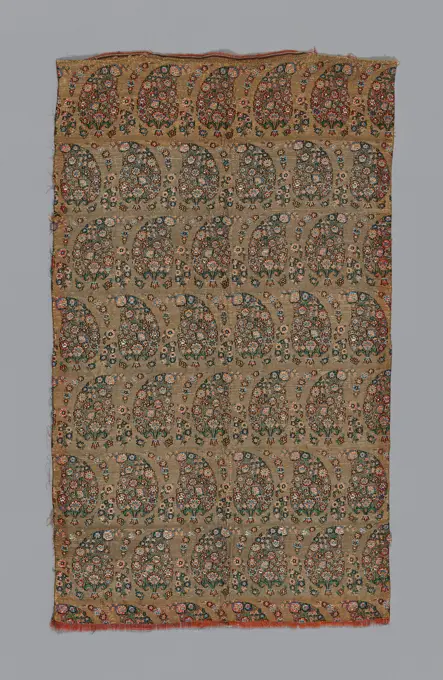
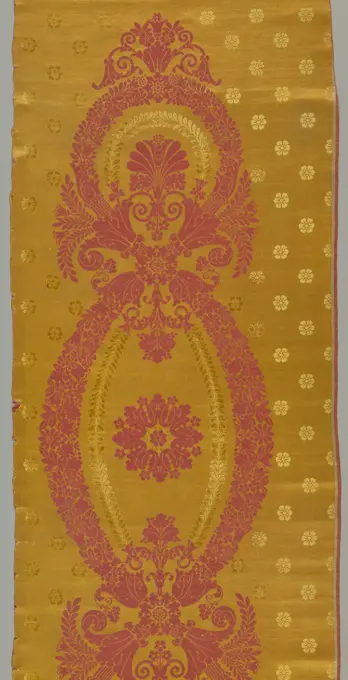
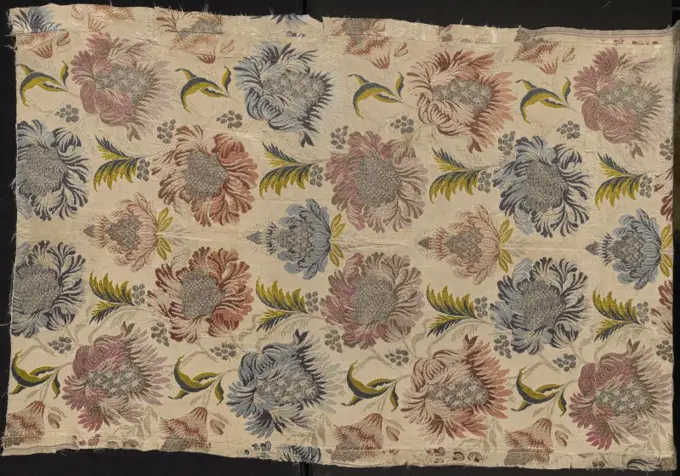
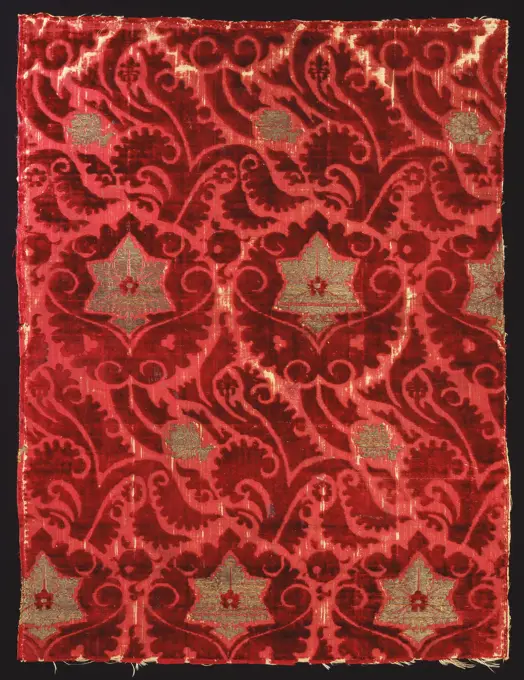
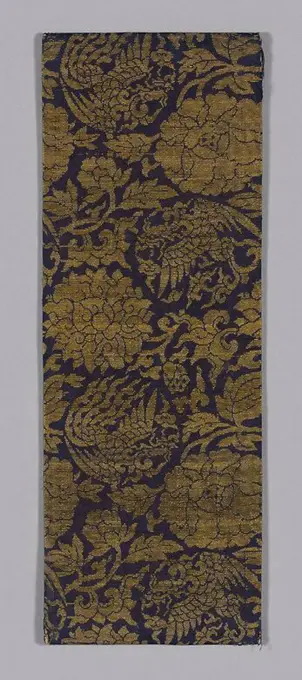
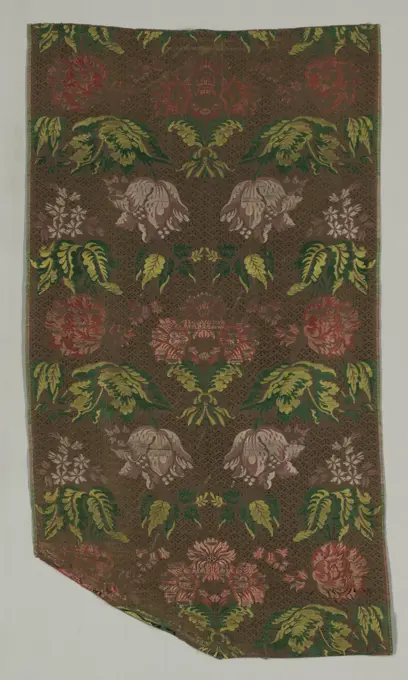
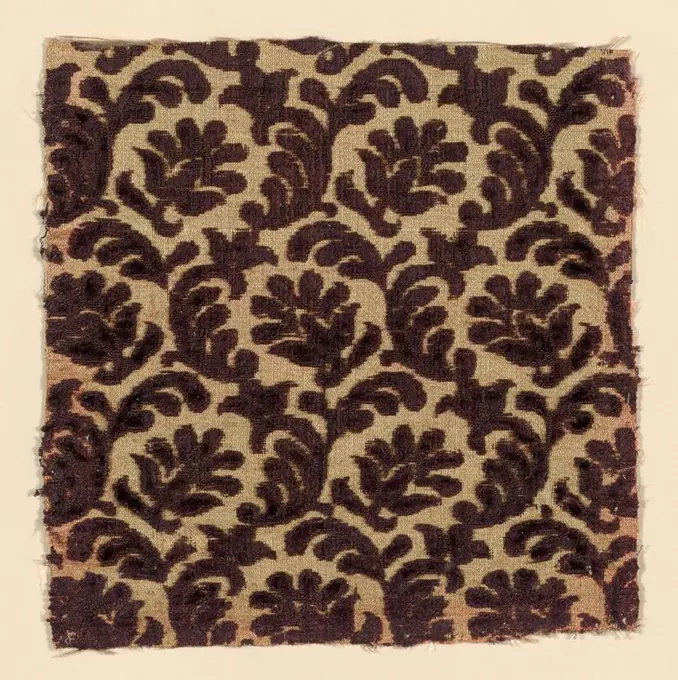
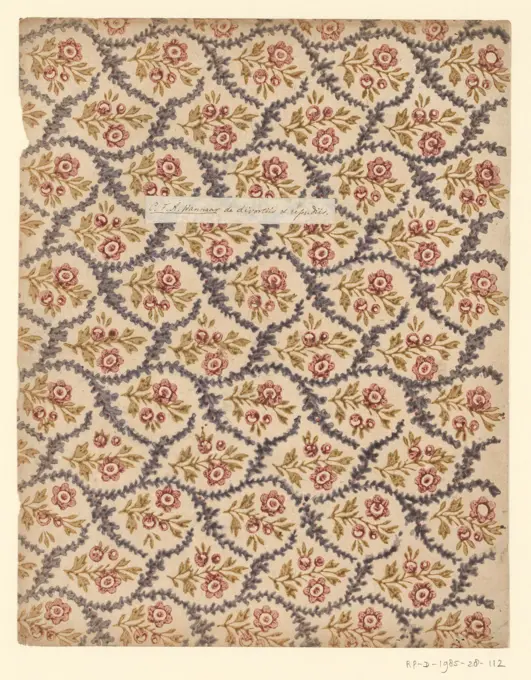
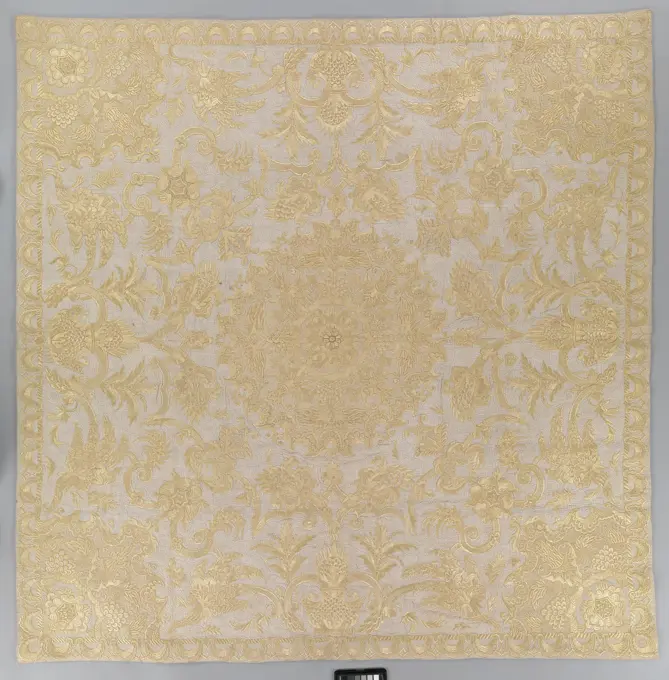
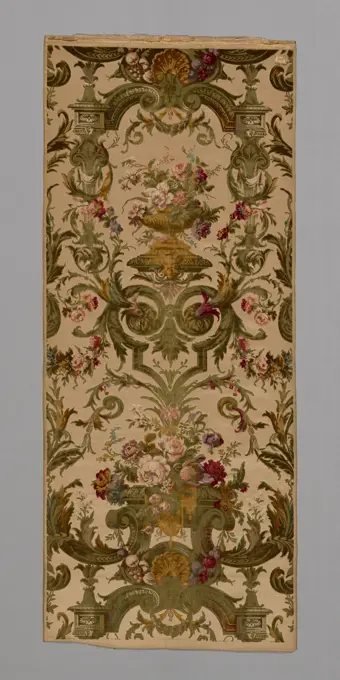
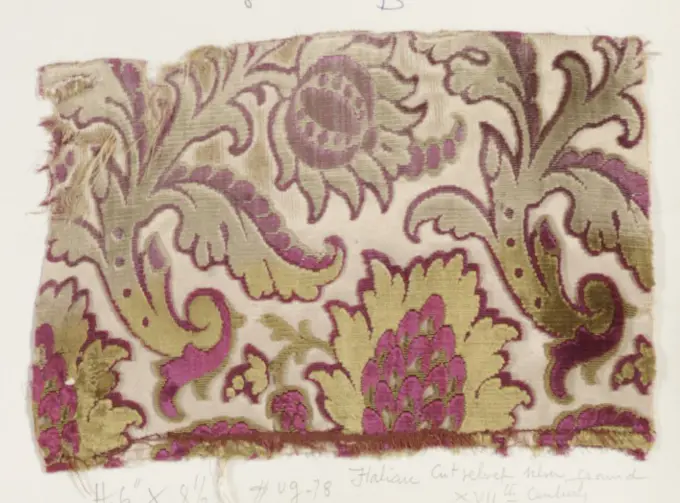
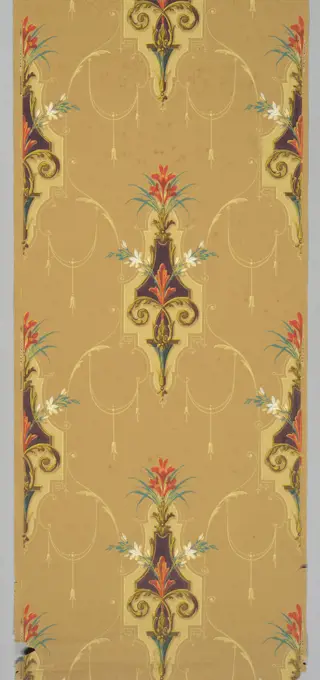
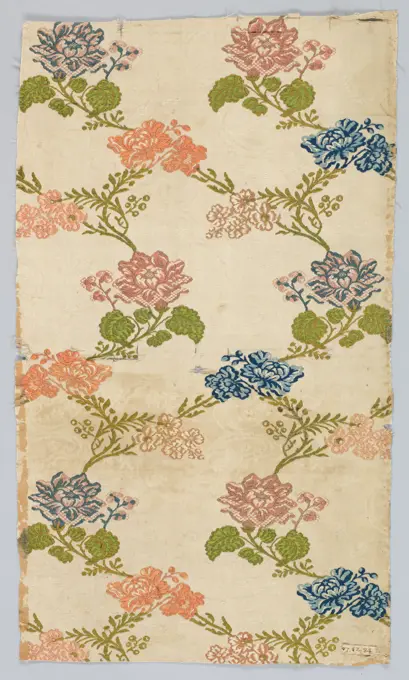
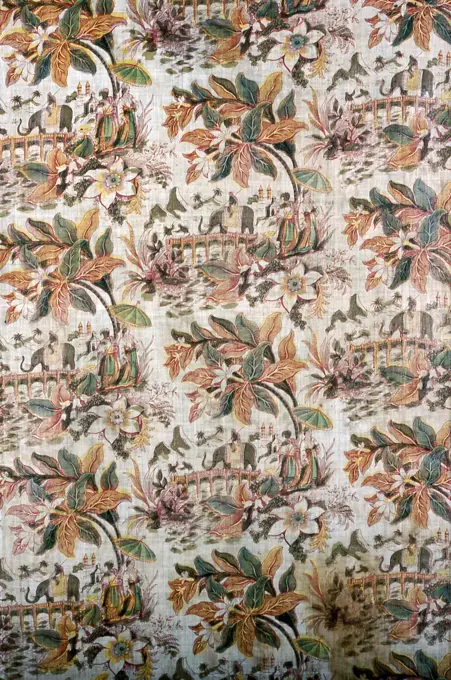
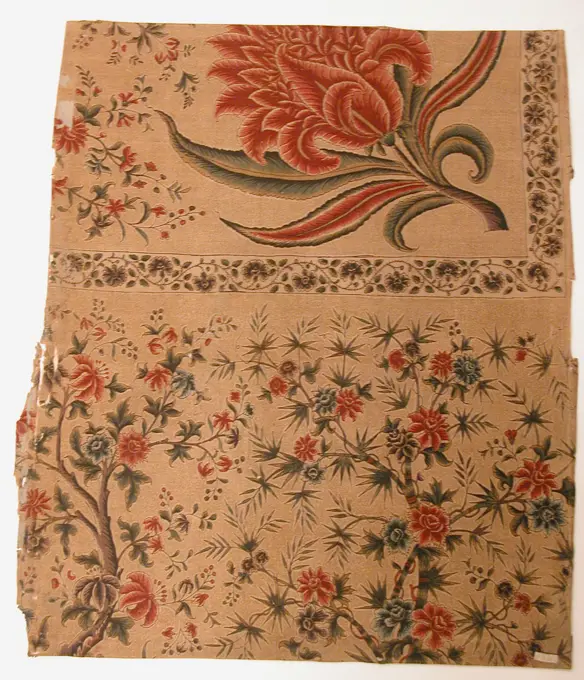
Intricate silk fabric fragments showcasing elaborate floral patterns and historic designs from various European origins, emphasizing rich colors and textures.

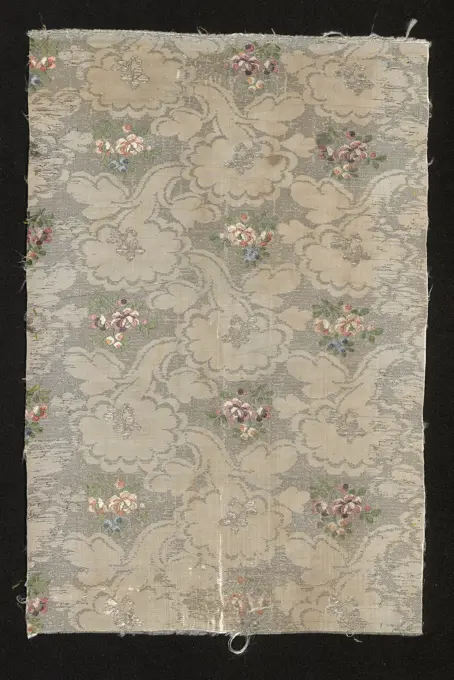
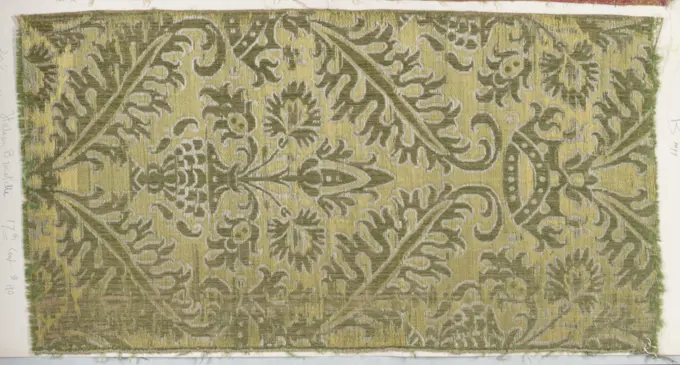
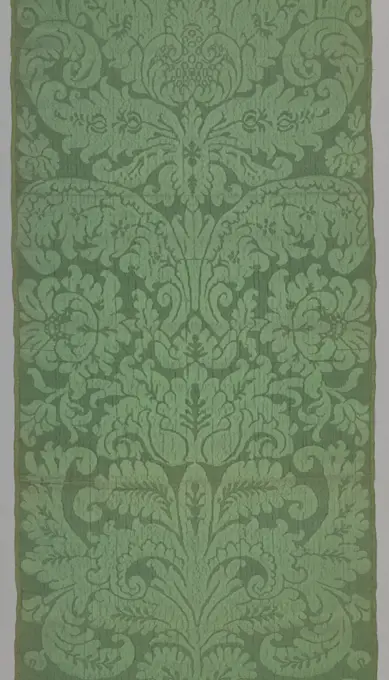
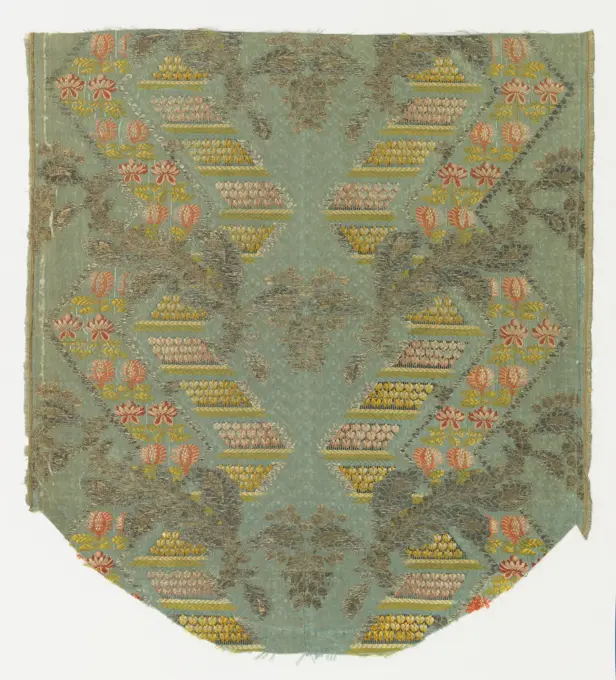
Fragment, Medium: silk Technique: 5-harness satin damask, Apple-green satin damask woven with feathery serrated leaves forming parallel serpentine trails from which spring peonies and other blossoms in lateral rows. Striped pink and yellow selvages., Italy, late 17th century, woven textiles, Fragment
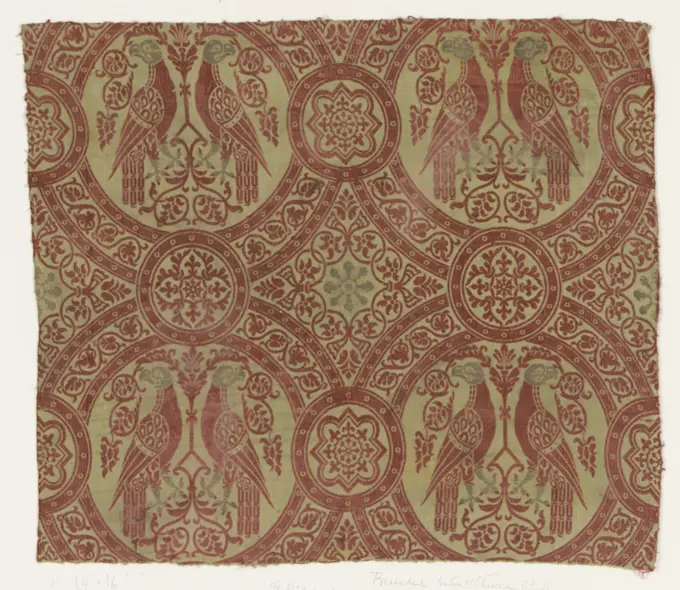
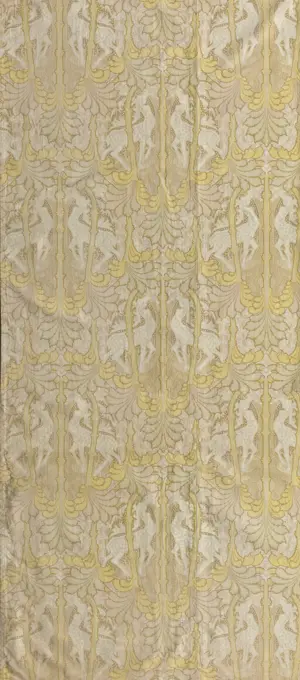
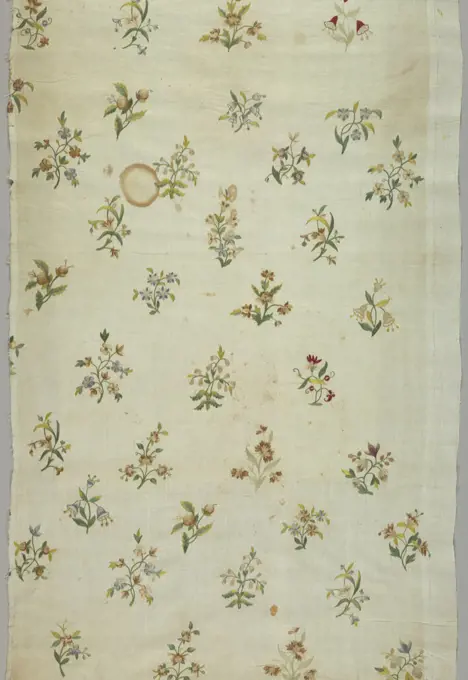
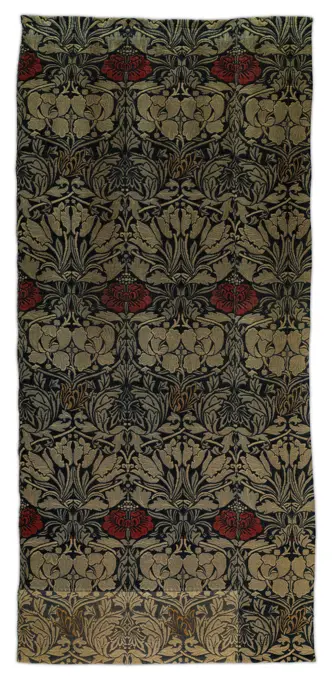
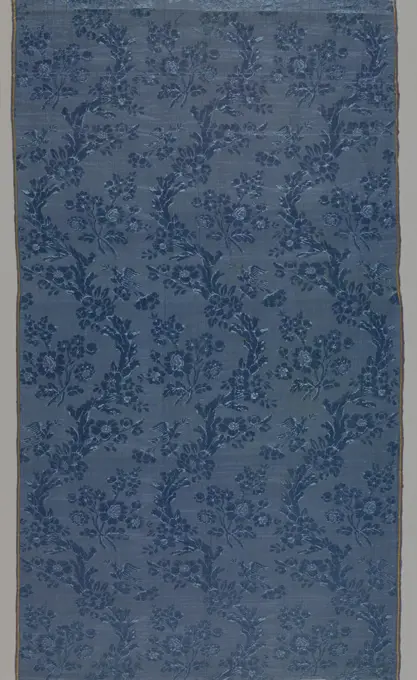
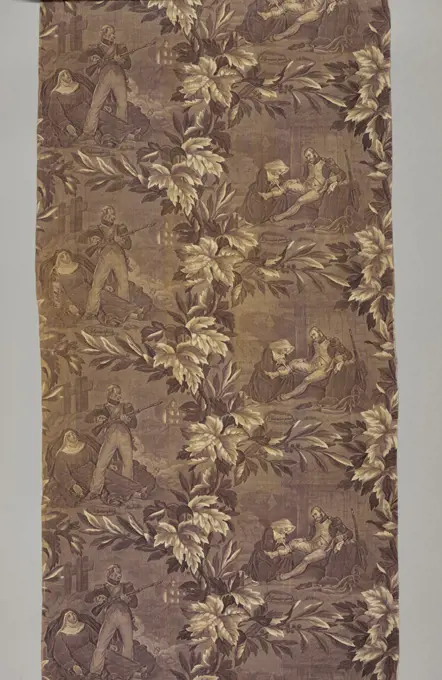
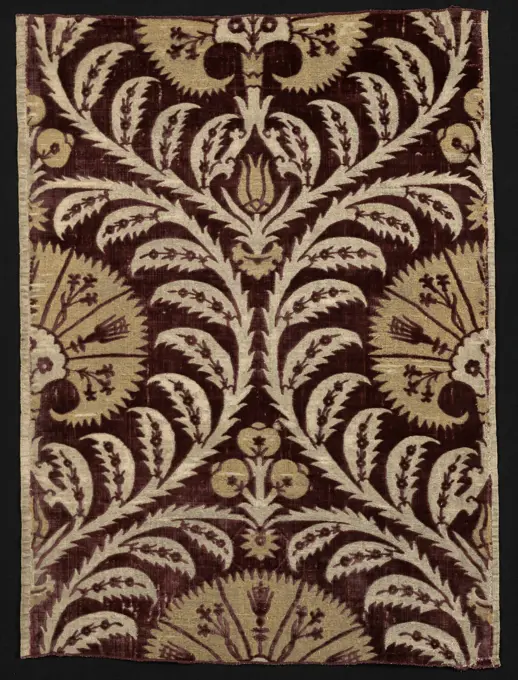
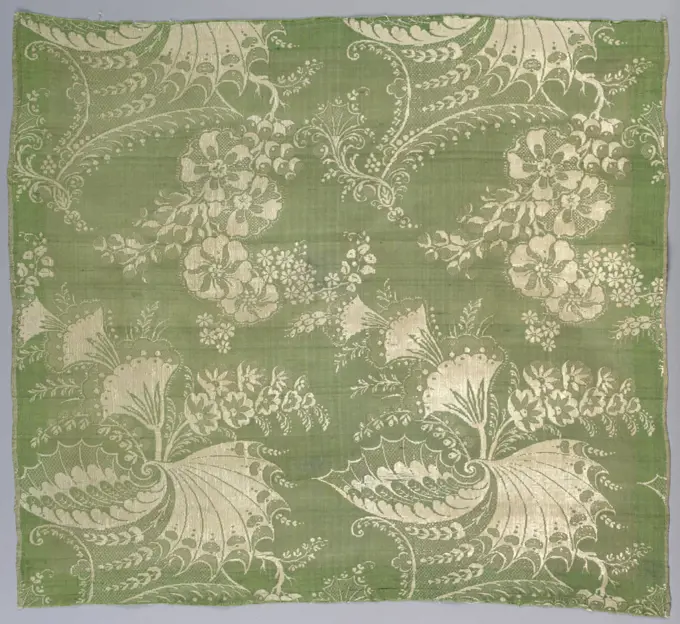
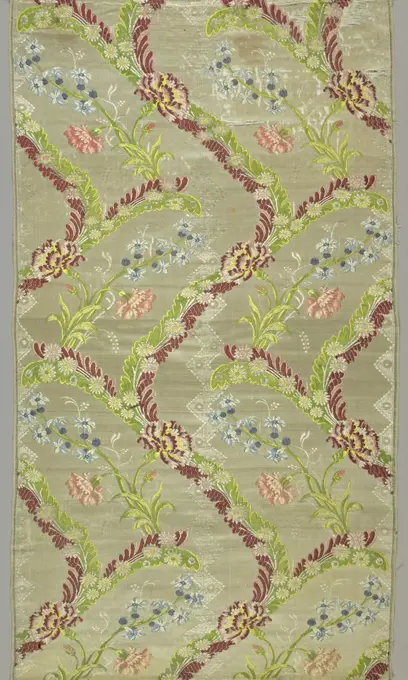
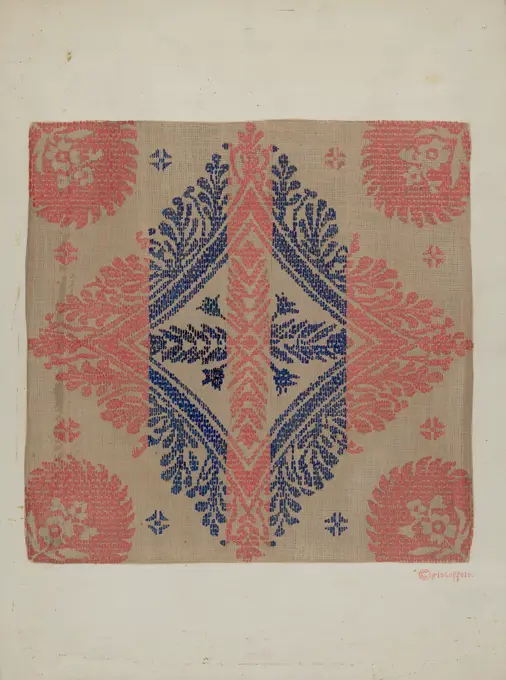
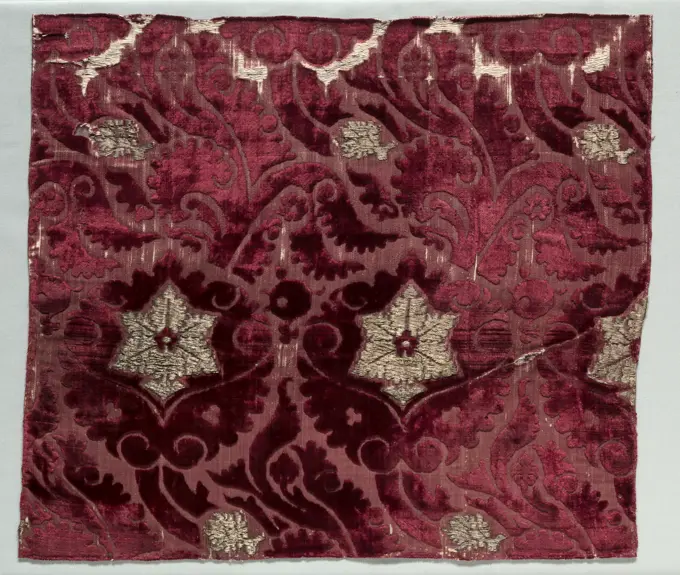
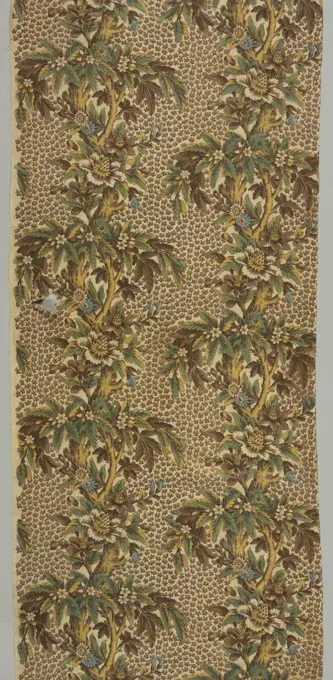
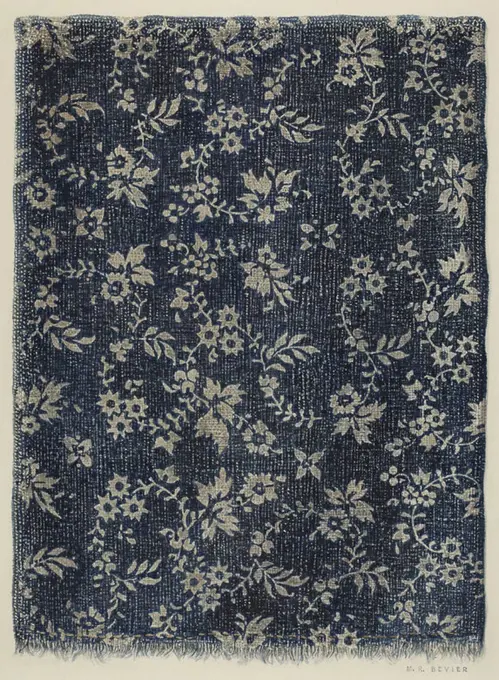
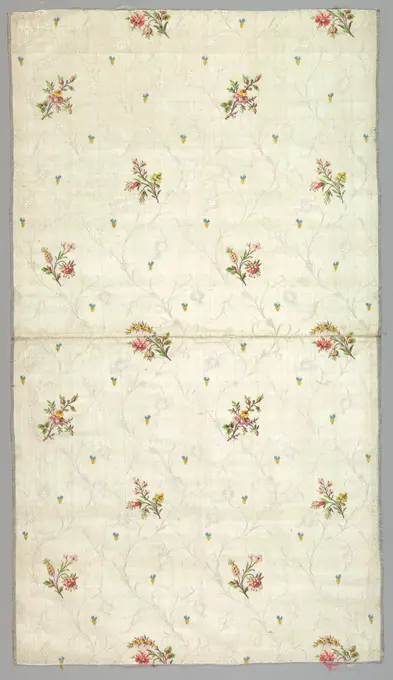
Textile (Spain); silk; Warp x Weft: 92 x 55 cm (36 1/4 x 21 5/8 in.); 1953-20-6Fragment, Medium: silk Technique: 5-harness satin damask, Apple-green satin damask woven with feathery serrated leaves forming parallel serpentine trails from which spring peonies and other blossoms in lateral rows. Striped pink and yellow selvages., Italy, late 17th century, woven textiles, FragmentFragment (France); silk; Warp x Weft: 73.5 x 144.7 cm (28 15/16 x 56 15/16 in.)Fragment, Medium: silk, cotton () Technque: 7&1 satin plus 1\7 twill, Grid of checkerboard banding with crowns at the intersections. Selvage to selvage., 17th-18th century, woven textiles, FragmentFragment 14th century () possibly Italian. Fragment 230505Fragment of the fabric;  2. PO. 18th century (1751-00-00-1800-00-00);Varia, purchase (provenance)Fragment, Medium: silk Technique: 5-harness satin damask, Symmetrical vertical repeat of large stylized decorated palmette head flanked above and below by pairs of ogival shapes formed by long, lobed leaves with flowers curving from either side of the base. Straight flower spray rises from the top. Two broad white warp twill selvages with narrow outer edges of plain weave., Italy or China, 17th century, woven textiles, FragmentFragment; silk, linenFragment, Medium: silk, metallic thread Technique: compound cloth with supplementary weft, Peach and metallic silver fabric in a design of a large-scale central spray of roses flanked by scalloped ribbon serpentines meeting in the center. Large roses in high relief. Metallic brocading in several kinds of gold thread., France, mid-18th century, woven textiles, FragmentBovering of printed cretonne with deer, Michiel Duco Crop, c. 1900 Redging of printed cretonne with deer in yellow and soft brown tones on natural stock. Passed on the inside with a passement and with metal rings. Helmond linen (material). metal printing Redging of printed cretonne with deer in yellow and soft brown tones on natural stock. Passed on the inside with a passement and with metal rings. Helmond linen (material). metal printingEmbroidery, Medium: silk on cotton Technique: chain stitch embroidery, Cream-colored cotton (possibly from a curtain or skirt) with detached floral motives worked in chain stitch. Flowers small garden varieties in clusters 3' to 4' long; arranged in staggered rows. Shading used in some blossoms. Right selvage present., late 18th century, embroidery & stitching, EmbroideryFragment 17th century Italian. Fragment 230293Woven Fabric - Tulip and Rose, 1890. Designer: William Morris. Manufacturer: Morris & CoTextile, Medium: silk Technique: plain weave with supplementary warp and weft, Continuous blue-on-blue pattern of three naturalistic curving floral vines with a bird perched on a flower placed side by side. Branches of flowers nestled on each curve of the vines., France, late 18th century, woven textiles, TextileFragment Made 1775-1800 France. silk .The Grenadier and the Nun, Medium: cotton Technique: printed by engraved roller on plain weave, Two scenes, captioned in french, showing a nun and a grenadier within a grid of branches, leaves and berries. In brown on white., Alsace, France, 1849, printed, dyed & painted textiles, Textile, TextileFragments, second half of 15th century. Spain, second half of 15th century. Brocaded silk with metal thread; average: 45.8 x 20.4 cm (18 1/16 x 8 1/16 in.).Panel Made 1575-1600 Turkey. Silk; ìgoldî and ìsilverî metal-wrapped silk, satin weave with ìgoldî and ìsilverî supplementary metal-wrapped silk brocading wefts, supplementary binding wefts, and supplementary warps forming cut and voided velvet .Textile, Medium: silk Technique: compound weave, Large scale pattern of serpentine of fantastic flowers rising from rocaille forms, in white on a green ground., France, early 18th century, woven textiles, TextilePiece 18th century Japan. Piece 71647Carpet, Campion; Designed by Morris & Company, Decorators Ltd.; England; woolTextile, Medium: silk Technique: 4-harness satin damask, Green damask patterned by a symmetrical arrangement of elaborate flowers, leaves and brackets., Italy, 17th century, woven textiles, TextileTextile, Medium: cotton Technique: printed by engraved roller on plain weave, Pattern of scrolling stems and leaves in red on a brown milled background., England, 1855-75, printed, dyed & painted textiles, TextileTextile, Medium: silk Technique: plain compound satin, brocaded, Scrolls of flowers in an allover design of carnations and hyacinths in rose, blue and green on an off-white ground., France, 1700-1775, woven textiles, TextileCornelius Christoffels, Coverlet, c 1940 CoverletTextile Fragment, 1800s. Japan, 19th century. Silk; average: 19.1 x 15.9 cm (7 1/2 x 6 1/4 in.).Velvet Fragment, c. 1400. Italy, Florence, early 15th Century. Velvet (cut, voided, and brocaded): silk and gold thread; overall: 43.8 x 50.2 cm (17 1/4 x 19 3/4 in.).Russian sash Mironow, Gerasim , Manufacturing: Mironow G.. Formal occasions required lace accessories for men as well as for women. These cravat ends would have been attached to a long rectangle of plain linen that was tied around the neck and knotted in the front to display the decorative lace ends. Only these ends have survived.. Linen, needle laceVelvet Fragment, 15th century. Spain, 15th century. Velvet (cut, uncut and brocaded); silk and gold thread; average: 21.3 x 27.7 cm (8 3/8 x 10 7/8 in.).Textile, Technique: plain weave foundation with block printing for the two browns; yellow and blue applied by brush; blue and yellow used together for green. Note brown block marks at left edge. The blue dots are spilled indigo., Tree trunk with leaves and flowers in brown., England, 1805-10, printed, dyed & painted textiles, TextilePanel ca. 1820s British. Panel. British. ca. 1820s. Cotton. Textiles-PrintedResist Fabric. Dated: c. 1939. Dimensions: overall: 45.8 x 36 cm (18 1/16 x 14 3/16 in.) Original IAD Object: 68" long; 14" wide. Medium: watercolor and graphite on paperboard. Museum: National Gallery of Art, Washington DC. Author: Milton Bevier.Fragment (Dress Fabric) Made 1801-1850 Iran. Silk and gold wound on yellow silk core, plain compound twill .Panel (France); silk, wool; Warp x Weft: 163 x 48.5 cm (5 ft. 4 3/16 in. x 19 1/8 in.); Bequest of Elinor Merrell; 1995-50-3Piece 18th-19th century Japan. Piece 66755Piece 18th century Japan. Piece 71968Piece of fabric. unknown, authorFragment 17th century Italian. Fragment 230679Panel Made 1401-1450 Italy. Silk and gilt-metal-strip-wrapped silk, warp-float faced 4 1 satin weave with supplementary brocading wefts bound by main warps in weft-float faced 1 2 'Z' twill interlacings and with supplementary pile warps forming cut voided velvet .Fragment; silkFragment 18th century Italian. Fragment 230245Fragment, Medium: silk Technique: 8-harness satin weave with weft floar patterning and discontinuous supplementary weft patterning (brocade), Silk fragment showing design of ivory curving ribbon wrapped around a bouquet of flowers on a deep red background. A flowering branch connects the two ribbons side by side., 19th century, woven textiles, FragmentFragment (France); silk, metallic yarns; Warp x Weft: 32.4 x 9.7 cm (12 3/4 x 3 13/16 in.)Linnamast napkin with lace pattern ,, 1775 - 1800 Linen Damas napkin with 'lace pattern'. Flanders (Possible) linen (material) damask Linen Damas napkin with 'lace pattern'. Flanders (Possible) linen (material) damaskTribute of mixed side with field flowers. Spread from natural mixed side - climbing side in combination with needle lace - Brussels Duchesse. A substrate of braids is strewn with buttercups and four-leaf clovers, which is a substantial pattern that is symmetrical with respect to two axes. The middle carries a large oval medallion with toothed circumference, on which there is an in turn a poppy and a corner. Among other things, the heart shows two rifles with bow tied cornflowers, ears of corn and an edge of C-Volutes. Breakdowns are a large reserve of a lobed four pass, surrounded by C-Volutes, to which flesh of corners and cornflowers. Large circular arches, formed by folding boom racing to a stem, cut into the four-pass. Two cornflower teeth and four ovals have been crossed in between.Fragment. Italy or Spain. Date: 1601-1700. Dimensions: 26..3 x 26 cm (10 3/8 x 10 1/4 in.). Silk, warp-float faced satin weave self-patterned by areas of twill interlacing. Origin: Spain. Museum: The Chicago Art Institute, Chicago, USA.Textile (France); silk, metallic yarnsTextile, Medium: cotton Technique: block printed on plain weave, White cotton, design of horizontal rows of evenly spaced, life-sized bunches of cherries enframed by string of beads, alternating with rows of bouquets. colors; red, blue, and taupe. One selvage present., France, 18th century, printed, dyed & painted textiles, TextileSutra Cover. China. Date: 1590-1599. Dimensions: 34.8 × 12 cm (13 3/8 × 4 3/4 in.)Warp repeat: 20 cm (7 7/8 in.). Silk, warp-float faced 4:1 satin weave with supplementary patterning wefts bound in weft-float faced 1:4 satin interlacings. Origin: China. Museum: The Chicago Art Institute, Chicago, USA.Textile; silkFragment, Medium: silk Technique: cut and uncut supplementary warp pile (velvet) in a plain weave foundation, Grey-blue velvet fragment, cut and uncut, on a yellow ground in a symmetrical small-scale pattern of four leafy scrolls alternately enclosing fleur-de-lys and plant forms., Italy, 16th-17th century, woven textiles, FragmentLeaf with tendrils with flowers and fruits, anonymous, 1750 - 1800 brocade paper Leaf with tibaries with flowers and fruits. Used as a cover, in the middle of a glued label.  paper. paint (coating) relief printing ornament derived from plant formsSample 1883-1900 Associated Artists. Sample. American. 1883-1900. Silk, woven. Made in South Manchester, Connecticut, United StatesTable cover 16th century Italian. Table cover. Italian. 16th century. Linen, embroidered net. Textiles-LacesLength of Silk Textile, 1700s. Italy, 18th century. Lampas weave, brocaded; silk; average: 106.7 x 55.9 cm (42 x 22 in.).Fragment; silkFragment. Italy. Date: 1601-1625. Dimensions: 19.7 x 19.3 cm (7 3/4 x 7 5/8 in.). Silk, cut, uncut, and voided velvet against satin weave foundation. Origin: Italy. Museum: The Chicago Art Institute, Chicago, USA.Fragment (Russia); silk, cotton, metal strips; Warp x Weft: 80 x 52 cm (31 1/2 x 20 1/2 in.)Piece 18th century Japan. Piece 71370Textile (France); cotton; Warp x Weft: 127 x 64 cm (50 x 25 3/16 in.); Bequest of Elinor Merrell; 1995-50-237Fragment yellow and blue weather -shining silk, on which blue and white tendrils and flowers, c. 1750 - c. 1800  Netherlands silk  Netherlands silkFragment 16th century Spanish. Fragment 215020Samples (USA); Manufactured by Orinoka Mills (United States); Warp x Weft (a): 20 × 63.5 cm (7 7/8 in. × 25 in.) Warp x Weft (b): 19 × 63.5 cm (7 1/2 in. × 25 in.)Fragment (France); Company: Oberkampf & Cie. (France); linen warp, cotton weft; Warp x Weft: 12 x 40 cm (4 3/4 x 15 3/4 in.)Fragment (China); silk on silkLeaf with flowers and fruits, anonymous, 1700 - 1850 brocade paper Leaf with flowers and fruits. With label with inscription: 'D.L. The Brakell ... fructibus'. Half of a cover.  paper. paint (coating) relief printing ornament derived from plant formsNapkin from white Linnamast, 1680 - 1690 White Linnamasten napkin with a pattern of flower wreaths and smells. Northern Netherlands (Possible) linen (material) damask White Linnamasten napkin with a pattern of flower wreaths and smells. Northern Netherlands (Possible) linen (material) damaskFragment (Japan)Leaf with spreading pattern of flowers between branches, anonymous, 1750 - 1900  Leaf with spreading pattern of flowers between winding branches. With label with inscription: 'C.F.A. Wanner ... repudiis'. Half of a cover.  paper. block printing (relief printing process) ornament derived from plant formsFragment multicolor silk satin. A fragment of blue ground, on which flowers, sheets and branches of green, yellow and purple. Note: Selling; 0.6 cm, solid bond (6 edge wires), satin (2 color).Leather (Holland); leather, silvered, varnished and painted; 127 x 57 cm (50 x 22 7/16 in.); 1913-34-10Textile fragment with scattered flowers and elliptical medallions, some with dragons 18th-19th century Japan. Textile fragment with scattered flowers and elliptical medallions, some with dragons 65883Ceiling Paper (USA); Manufactured by Henry Gledhill & Co.; machine-printed paper, liquid mica; 93.5 x 49.5 cm (36 13/16 x 19 1/2 in.)Bedspread late 17th century British While the Portuguese were undoubtedly the first importers and consumers of the Indian embroideries made for the western European market, at least a few examples of these textiles did appear in England by the late sixteenth century. The 1601 inventory of Bess of Hardwick, Countess of Shrewsbury (1527-1608), included two quilts that were almost certainly products of this trade: a quilt of yellow India stuff embroidered with birds and beasts” and a quilt of India stuff embroidered with beastes."¹ Indian quilts of the type produced for the Portuguese market appeared with increasing frequency in London sales into the 1620s, when their value began to decline, perhaps because of diminishing novelty.²The taste for Indian-style embroidery remained, however, and it is interesting to note that the English maker of this textile used not only the Indian palette of golden yellow on white but also an imported Indian cotton as the foundation. The cover has rare seTextile; Manufactured by Schwartz-Huguenin; cottonPurse (France); silk, gold and silver-wrapped silk, horsehairFragment late 17th century Italian. Fragment 230170Piece 16th century Italian or Spanish. Piece 216439Textile, Medium: linen warp, cotton weft Technique: block printed (two reds, two purples, blue and yellow) on 1/2 twill, Directional allover pattern of flowers surrounded by small dotted shapes on a deep purple background., Europe, 1750-99, printed, dyed & painted textiles, TextilePanel Made 1860-1880 Lyon. This 19th-century velvet demonstrates the fashion for historical furnishings. The silk textile firm of Mathevon and Bouvard produced these velvets using designs and patterns from earlier eras. In comparing this particular design to the smaller and earlier example to the right, similarities in color palette as well as pattern become apparent. Anxieties about the inferiority of modern manufacturing contributed to the popularity of textiles such as these, in which works from the past seem to have been replicated.óModern Velvet A Sense of Luxury in the Age of Industry, Oct 21, 2016-Mar 19, 2017, Galleries 57-59. Silk and cotton, satin weave with multi-color supplementary pile warps forming cut and uncut voided velvet . Mathevon et Bouvard (Producer)Piece 16th-17th century Italian. Piece 223398Fragments of semi famous fabric unknownFragment 17th century Italian. Fragment 230639Textile Fragment 17th-18th century. Textile Fragment 454471Textile 1700-1899 Russian. Textile 173397Sample (USA); Manufactured by Cheney Brothers (United States); silkPiece 1705-15 French. Piece 216230Piece 18th century Japan. Piece 71955Bobbin Lace (Blonde Lace) Edging, early 19th century. Spain, early 19th century. Lace, bobbin; average: 59.1 x 46.4 cm (23 1/4 x 18 1/4 in.).Sample, Medium: silk, metallic thread Technique: twill weave with supplementary weft, Sample of material woven for the Russian church. Gold ground with symmetrical design of central group of roses surrounded by serpentines of horns of plenty, wheat, roses and other flowers. Design brocaded in rose, green, and purple silk; purple and rose chenille; gold and silver., Lyon, France, 1815-20, woven textiles, SampleFragment 16th century Italian. Fragment 230455Fragment; silk, linenFragment (Dress Fabric) Near East. Silk and gilt strip wound around a silk fiber core, plain weave with multiple ground wefts and inner or filler warps .Coverlet. United States. Date: 1820-1825. Dimensions: 249 x 202.4 cm (98 x 79 5/8 in.)Repeat: 25.3 x 24.6 cm (10 x 9 5/8 in.). Cotton and wool, plain weave with supplementary patterning wefts ("summer and winter"); two loom widths joined. Origin: United States. Museum: The Chicago Art Institute, Chicago, USA.Sidewall, Machine-printed paper, Conventionalized vase form with flower clusters, in drop repeating arrangement. Beads with pendants are looped in the intervening spaces. Eleven colors on brown ground., France, 1850-60, Wallcoverings, SidewallPiece 19th century Japan. Piece. Japan. 19th century. Silk. Edo (1615-1868) or Meiji period (1868-1912). Textiles-VelvetsPiece ca. 1740 possibly British. Piece. possibly British. ca. 1740. Silk. Textiles-WovenPanel (Furnishing Fabric) Made 1820-1830 England. Cotton, plain weave; roller printed, glazed .Textile Fragment ca. 1760. Textile Fragment 446278