Vintage Textile Fragments

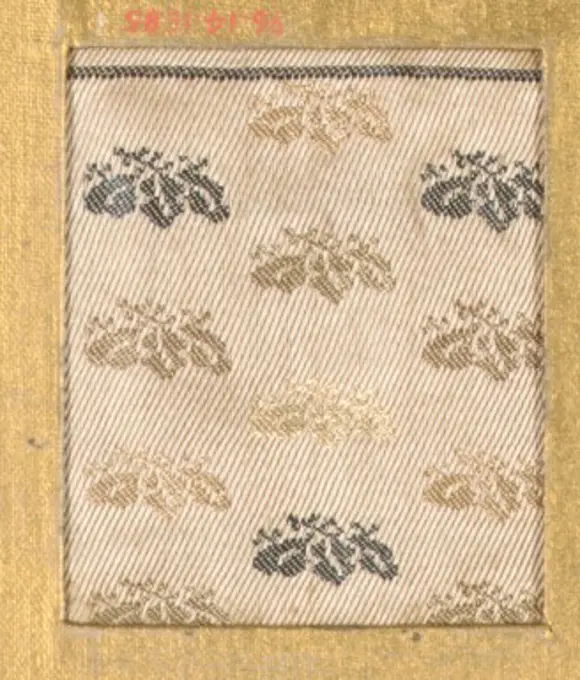
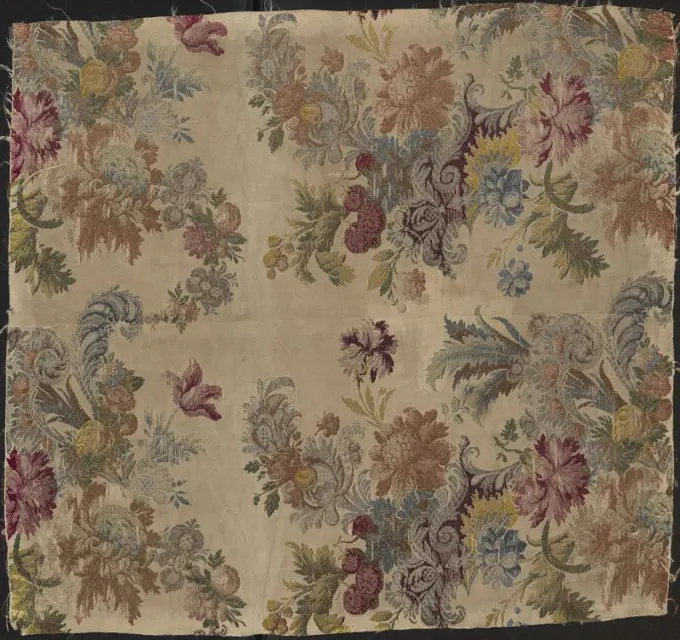
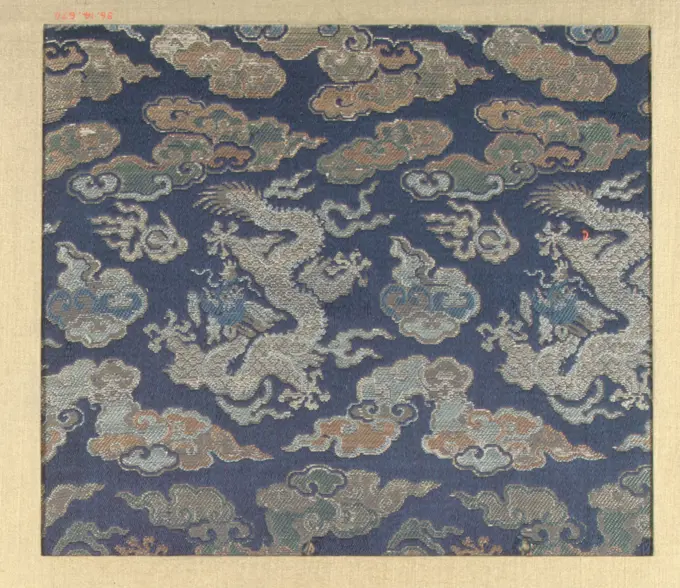
Intricate silk fabric fragments showcasing elaborate floral patterns and historic designs from various European origins, emphasizing rich colors and textures.

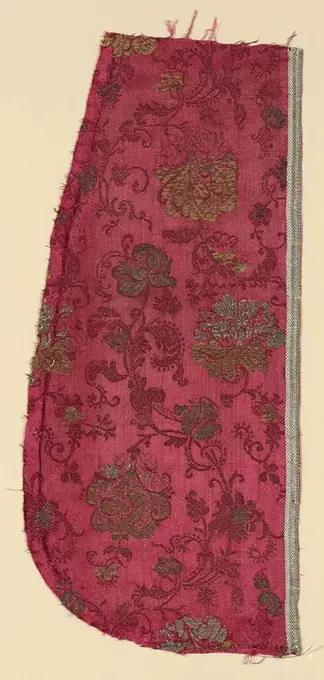
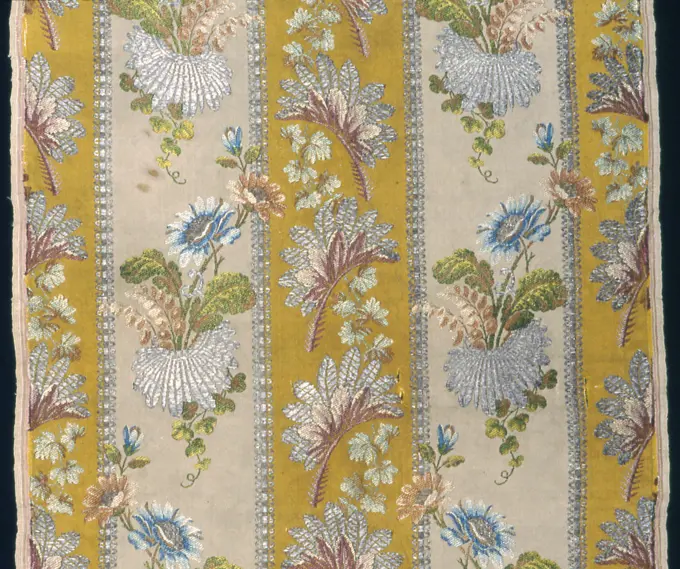
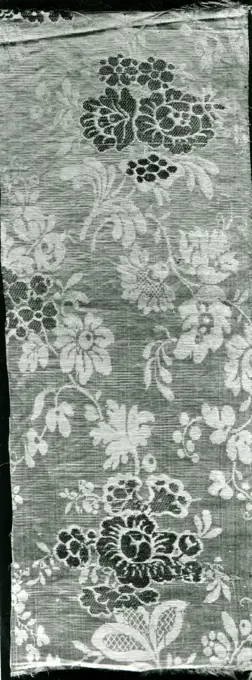
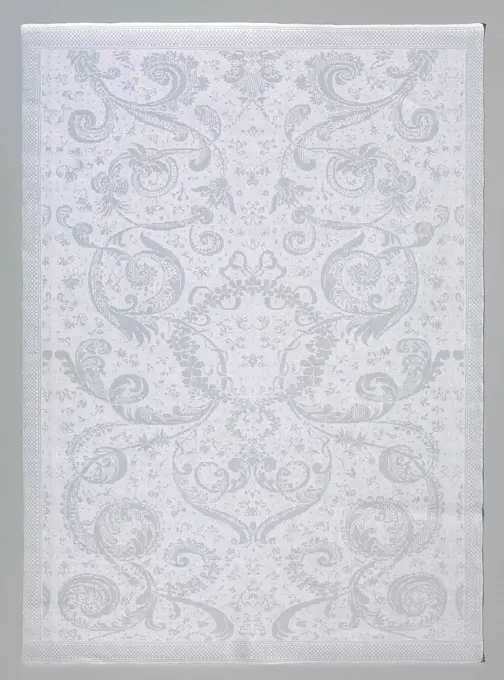
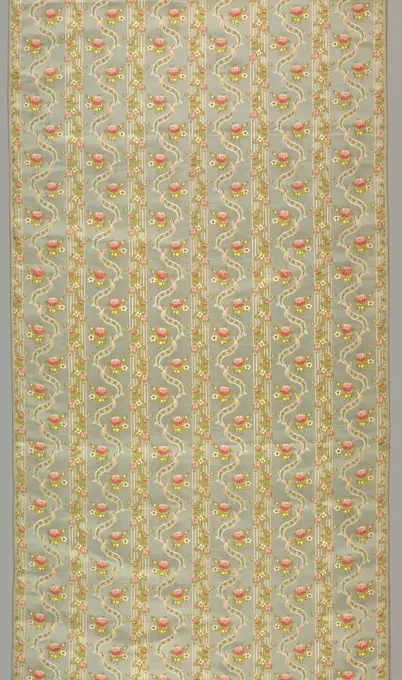
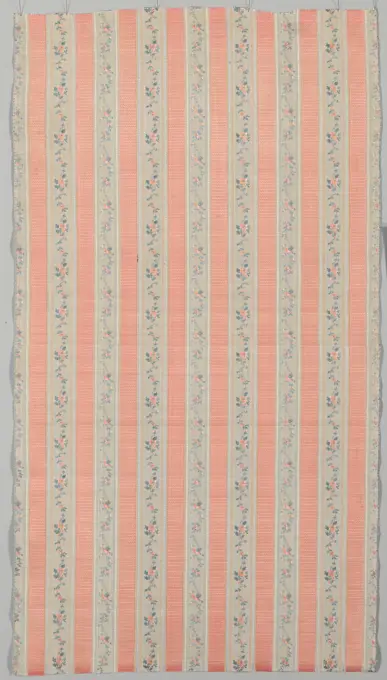
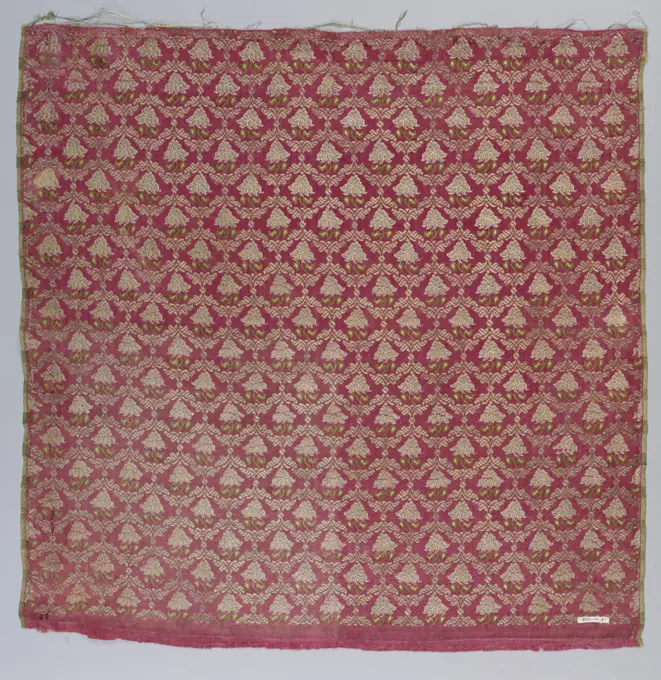
Fragment, Medium: silk Technique: 5-harness satin damask, Apple-green satin damask woven with feathery serrated leaves forming parallel serpentine trails from which spring peonies and other blossoms in lateral rows. Striped pink and yellow selvages., Italy, late 17th century, woven textiles, Fragment
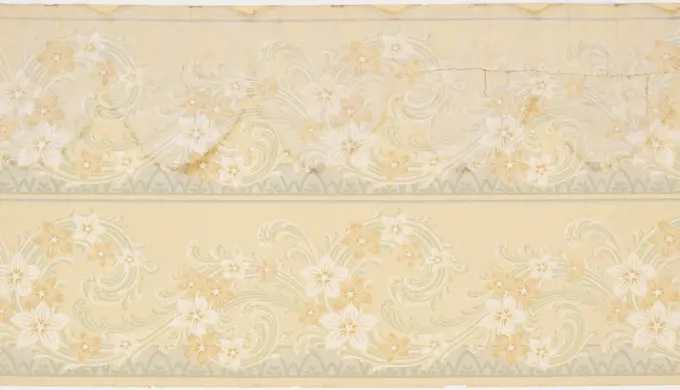
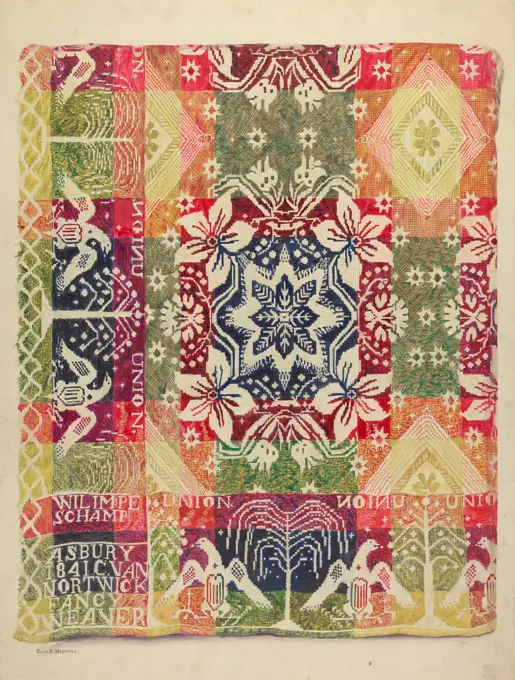
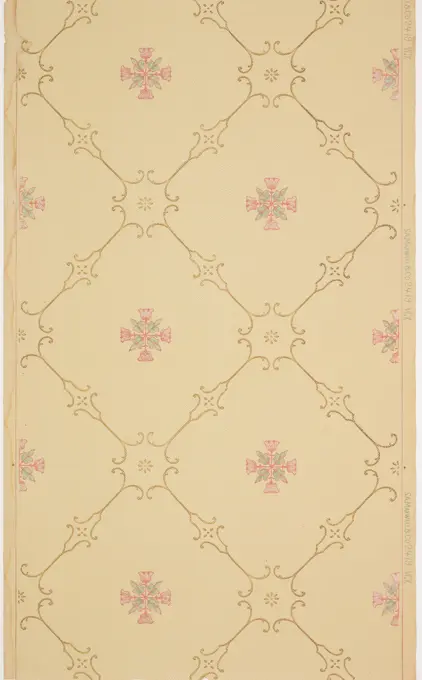
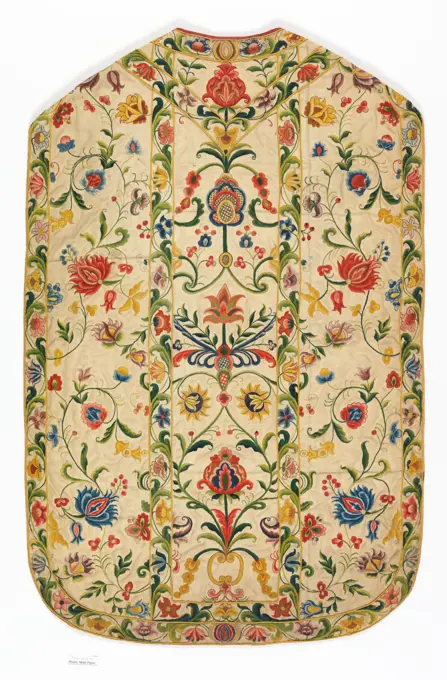
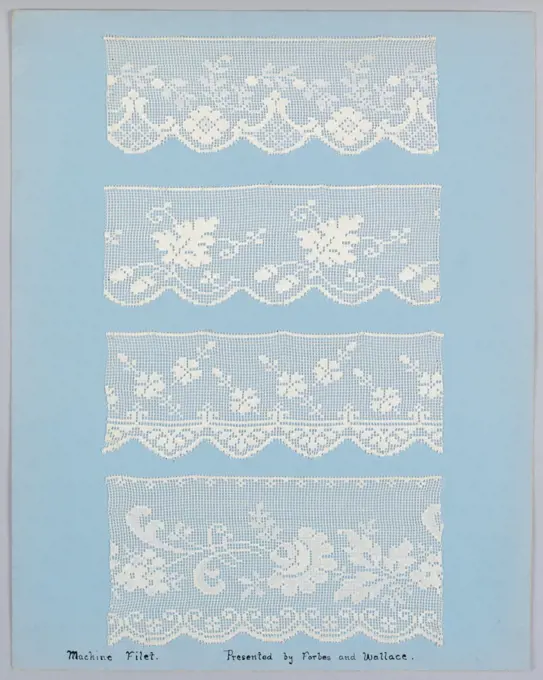
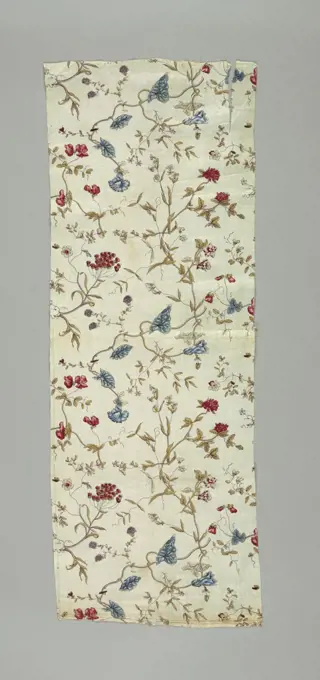
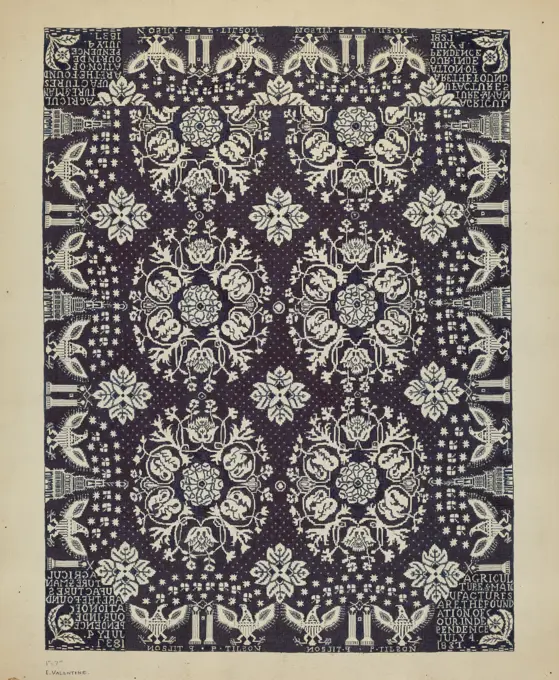
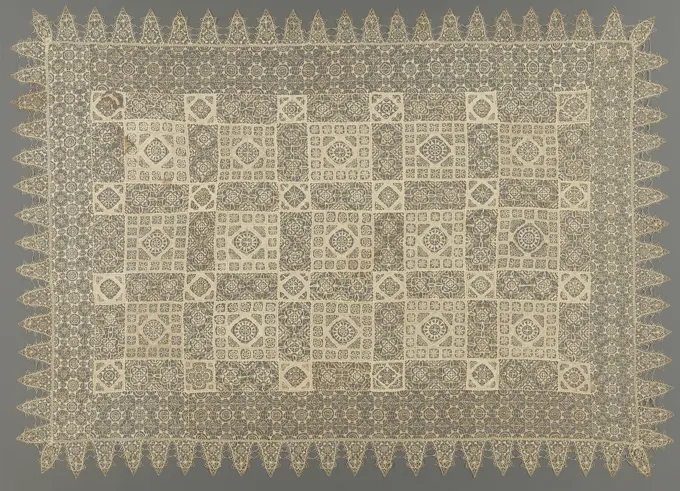
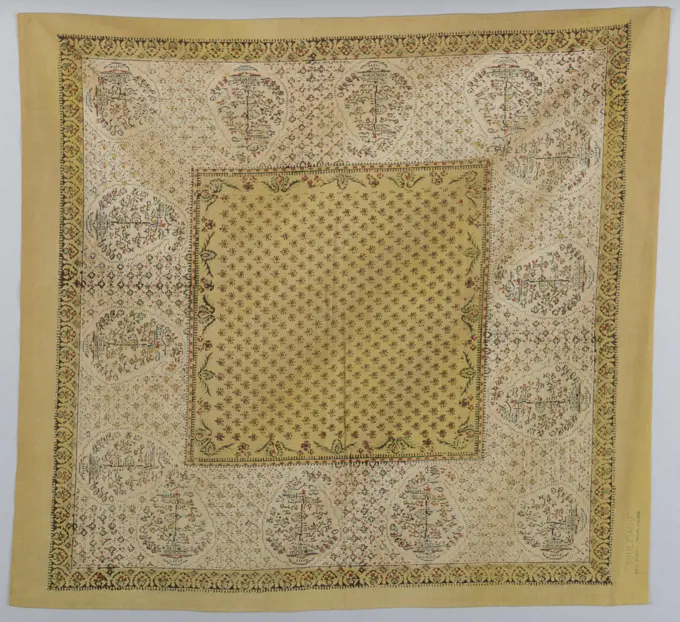
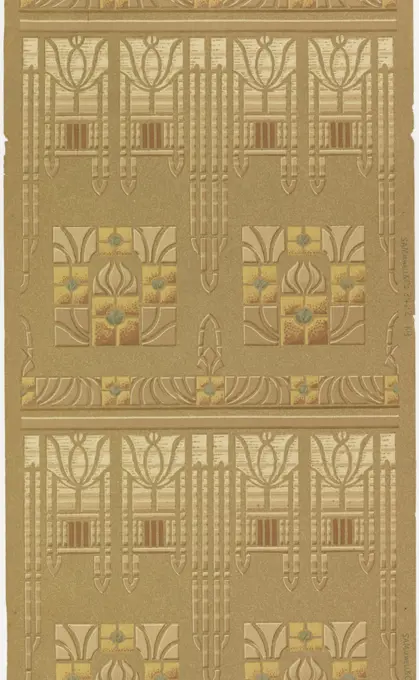
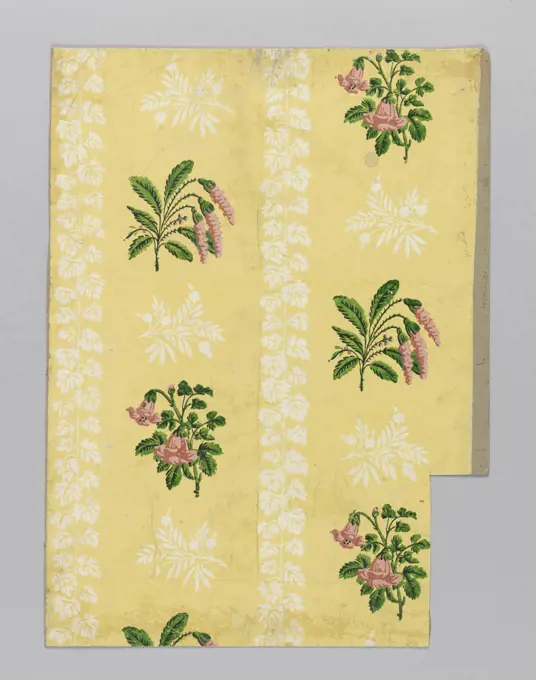
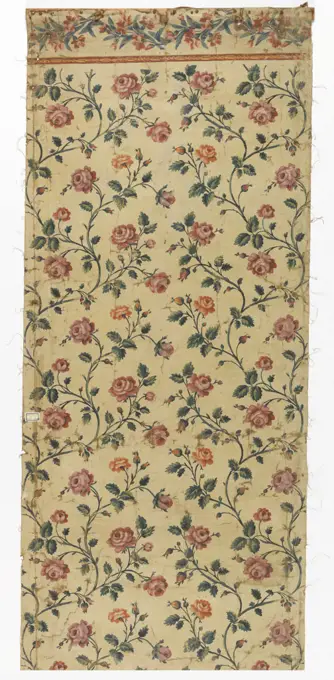
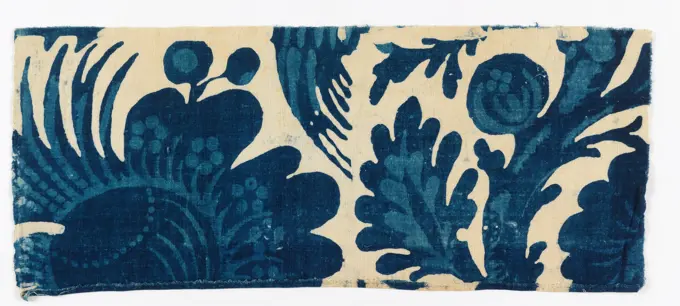
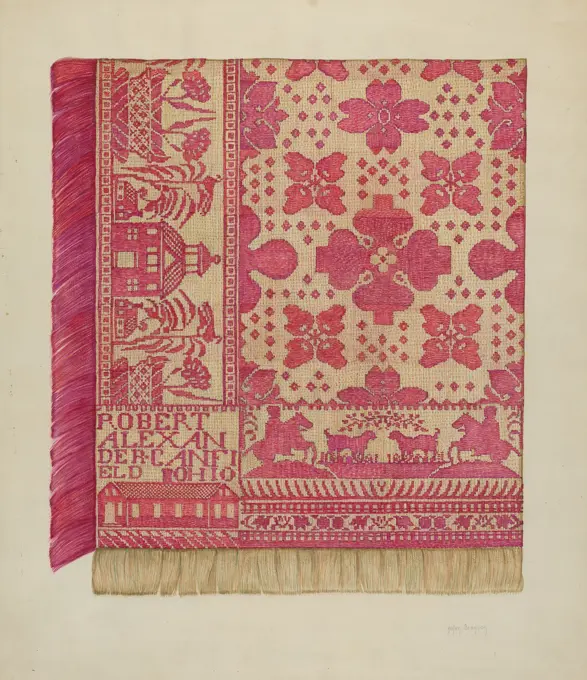
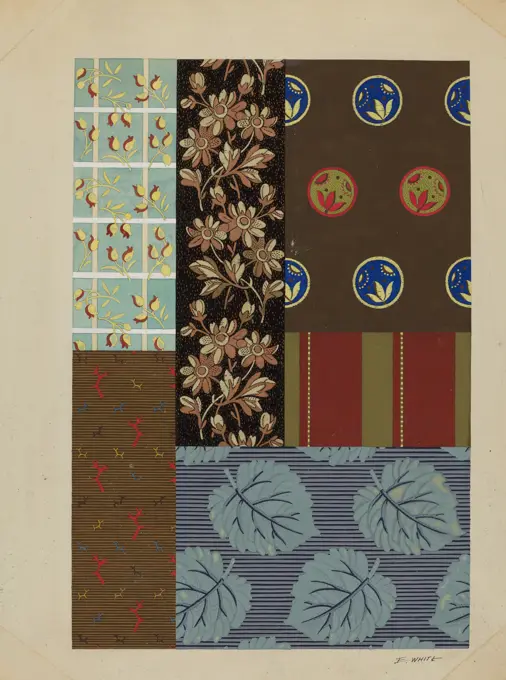
Ceiling Paper (USA); Manufactured by Maxwell & Co., S.A. (United States); machine-printed paper, liquid mica; 78 x 49 cm (30 11/16 x 19 5/16 in.)Textile, Medium: cotton Technique: roller printed (in blue) on plain weave, Pillar print fragments showing a single vertical fluted column with elaborate Corinthian-style capitals. Flower garland sweeps across the front of the column while other sprigs, branches and blossoms fill the ground on both sides., England, early 19th century, printed, dyed & painted textiles, TextileSidewall, Machine-printed paper, On gray ground, lyre-shaped motifs containing pink blossom with green leaves and hanging rinceaux., USA, 1905-1915, Wallcoverings, SidewallPanel Made 1770-1780 France. Silk and silk chenille, plain weave with supplementary patterning warps tied in plain and satin interlacings, supplementary pattening wefts, and supplementary brocading wefts .Border, Cresswell & Washburn Ltd, Philadelphia, Pennsylvania, 1880 - 1900, Machine-printed paper, Two bands of continuous swirling vine and flower pattern, each bordered on the bottom by a repeating pattern of alternately large and small inverted curved v's with the large ones containing a simple flower design on a solid ground bordered and separated by thin horizontal bands. Printed in yellow, mica, gray, brown and tan., Philadelphia, Pennsylvania, USA, 1905-1915, Wallcoverings, BorderEdith Magnette, Double Faced Blanket, 1935 1942 Double Faced BlanketTextile (France); cotton; 1951-133-3Fragment; silkCeiling Paper (USA); Manufactured by Cresswell & Washburn Ltd; machine-printed paper, textured, liquid mica; 92.5 x 49.5 cm (36 7/16 x 19 1/2 in.)Fragment (From Noh Costume) Made 1601-1800 Japan. Brocaded plain simple twill, silk. .Ceiling Paper (USA); Manufactured by Maxwell & Co., S.A. (United States); machine-printed paper, liquid mica; 91 x 49.5 cm (35 13/16 x 19 1/2 in.)Piece 17th century Italian. Piece 221497Fragment blue silk damask with huge flower pattern.fragment Blue Silk Damask with Huge Flower Pattern. 18th centuryTaffeta Fragment, 1774-1793. France, 18th century, Period of Louis XVI (1774-1793). Taffeta, warp-patterned and brocaded; silk; overall: 52.7 x 40 cm (20 3/4 x 15 3/4 in.).Vestments (Spain); wool on wool; lined with glazed linenPiece 18th-19th century Japan. Piece 66119Chasuble, 18th century, 39 3/8 x 26 1/4 in. (100.01 x 66.68 cm), Silk, metallic threads; needlework, France, 18th centuryFragment. Italy. Date: 1675-1700. Dimensions: 51.8 x 23.5 cm (20 3/8 x 9 1/4 in.). Silk and gilt- and silvered-metal strip-wrapped silk, warp-float faced satin weave self-patterned by areas of weft-float twill weave with supplementary brocading wefts. Origin: Italy. Museum: The Chicago Art Institute, Chicago, USA.Runner (France); silk, metallic threadCeiling Paper (USA); Manufactured by Imperial Wallcoverings Inc. (United States), Imperial Wall Paper Co.; machine-printed paper, applied mica flakes; 92.5 x 49 cm (36 7/16 x 19 5/16 in.)Machine-made openwork samples, Medium: cardboard, linen, silk, metallic Technique: linen embroidery with ground cloth dissolved Examples of embroidery on net produced by the Schiffli machine Metallic embroidery on net Machine-made openwork in imitation of hand-embroidered net Mostly floral and a few geometric patterns, some designs described as 'Spanish' Imitation hand-made filet Machine filet Imitation filet crochet Ploven (burnt-out lace) Fancy curtain lace made on the Levers machines Real filet (handmade) next to Machine-made filet Spotted curtain nets, made chiefly at Nottingham, England and Caudry, France., Samples of machine-made openwork and several examples of hand made lace mounted on boards. They imitate hand-embroidered net, crochet, or needlepoint. All are floral patterns plus a few of early 1920's geometric style., 'Embroidered net' produced by the Schiffli Machine., USA, ca. 1910, lace, Machine-made openwork samplesFragment Made 1801-1900 Netherlands. Cotton, plain weave; printed .Baptismal veil decorated with an embroidered palmet edge, anonymous, c. 1805 - c. 1815 A baptism of batist, decorated with an embroidered palmet edge. Empire. Netherlands (possibly) batiste A baptism of batist, decorated with an embroidered palmet edge. Empire. Netherlands (possibly) batisteTextile, Medium: cotton Technique: block printed on plain weave, Allover pattern of long flowering branches which hook together to form a continuous very linear pattern on the white cotton fabric. Flowers include sweeat peas, morning glories, clover, and yarrow., England, 18th century, printed, dyed & painted textiles, TextileTextile, Strawberry Thief; Made by Morris & Co. (United Kingdom); England; cottonTextile (France); silk, metallic thread; Anonymous bequest in memory of Albert and Rebecca Elsberg; 1938-82-126-fElizabeth Valentine, Woven Bedspread, c 1936 Woven BedspreadENCUADERNACION. Location: PRIVATE COLLECTION. MADRID. SPANIEN.Piece 18th-19th century Japan. Piece. Japan. 18th-19th century. Silk. Textiles-WovenSilk batik - sample Kogutówna, Maria, Krakow workshops, Batiki studio under the direction of Antoni BuszkaFragment silk tissue with gold and silver thread on a yellow soil. Pattern of palmets, acanthus leaves, stylized flowers and pomegranates, anonymous, c. 1675 - c. 1685 A Frgament silk tissue with a symmetrical pattern in gold and silver thread on a yellow soil. The pattern has palmets and acanthus leaves that swing around stylized flowers and pomegranates. Italy (possibly)maker: Netherlands (possibly) silk. A Frgament silk tissue with a symmetrical pattern in gold and silver thread on a yellow soil. The pattern has palmets and acanthus leaves that swing around stylized flowers and pomegranates. Italy (possibly)maker: Netherlands (possibly) silk.Piece 18th-19th century Japan. Piece. Japan. 18th-19th century. Silk. Textiles-WovenTextile, Borage; Made by Morris & Co. (United Kingdom); England; cottonTextile, Medium: silk Technique: damask, Blue-green silk with a symmetrical arrangement of pattern with heavy fruits and flowers in white plain weave., France, 18th century, woven textiles, TextileBorder, Medium: silk Technique: bobbin lace made in Lille style with heavy outlining thread, Border of Lille-style lace with stylized floral sprays in a repeat pattern., Spain, 1750-99, lace, BorderNapkin with a flower pattern and the weapon of Adriaen Nicolaesz Boogaert, Anonymous, c. 1665 - c. 1675 Linnamast napkin with stripped flowers (fritillaria imperialis), including tulips, roses, sunflowers and irises. In the corners the shared weapon of Mr Adriaen Nicolaesz Boogaert, lord of Beloys (3-11-1634-28-1-1708), member of the Vro Gereedschap and mayor of Delft, administrator of the East Indian Company, Heemraad, Baljuw and Dijkgraaf of Delfland, X (1656) Anna Briel said Welhoek (6-7-1639-21-8-1688). Edges with festons. Haarlem linen (material) damask Linnamast napkin with stripped flowers (fritillaria imperialis), including tulips, roses, sunflowers and irises. In the corners the shared weapon of Mr Adriaen Nicolaesz Boogaert, lord of Beloys (3-11-1634-28-1-1708), member of the Vro Gereedschap and mayor of Delft, administrator of the East Indian Company, Heemraad, Baljuw and Dijkgraaf of Delfland, X (1656) Anna Briel said Welhoek (6-7-1639-21-8-1688). Edges with festons. HaarleTextile, Medium: cotton Technique: blue resist on plain weave, Alternating rows of flowers in flowerpots enclosed within a framework of twisting sprigs and ribbons., France, ca. 1770, printed, dyed & painted textiles, TextileFragment ; silk, linenFragment Made 1575-1600 Spain. silk .Needlepoint Lace Cloth, late 16th century. Italy, late 16th century. Linen; lace, needlepoint (Reticella and Cutwork); overall: 131.4 x 184.2 cm (51 3/4 x 72 1/2 in.); mounted: 148.9 x 202.2 cm (58 5/8 x 79 5/8 in.). Consisting of more than 80 squares of cutwork (a cut and embellished linen ground) and rectangles of reticella (needle lace), this luxurious cover could have been made by a single person or several people who divided the work. Close looking reveals that the cloth is made with threads of two very slightly different colors: bleached and unbleached linen. Together the sections resemble snowflakes, which are of similar shape and size but vary subtly from one another. The perplexing dark stitches in the upper left corner do not repair damage, and might be the makers signature.Handkerchief, Souleiado, (Tarascon, France, founded 1806), Medium: cotton Technique: block printed on plain weave, Handkerchief with a central yellow square and yellow border has a design of large paisleys in the off-white field. Paisleys are surrounded by small geometric pattern of squares, crosses, dots and dashes. Central yellow square has small red squares outlined in black and a border of a trailing flower and vine pattern., Tarascon, France, late 19th century, printed, dyed & painted textiles, HandkerchiefHeadcloth (Iket Kepala) Made 1875-1900 Java. Here is another variant of the semen design favored at the central Javanese courts. The bodies of large-winged birds, referring to Garuda, along with smaller birds, fruit, and flowers, are arranged radially against a ground of finely dotted foliage and vines. The palette is dominated by the characteristic reddish-brown soga dye, made from the bark of the soga tree.. Cotton, plain weave; hand-drawn wax resist dyed (batik tulis) .Example of Ottoman art patterns applied on metalsFragment. Italy. Date: 1650-1700. Dimensions: 17cm × 20.9 cm (6 11/16 × 8 1/4 in.). Silk, plain compound cloth. Origin: Italy. Museum: The Chicago Art Institute, USA.Border, Maxwell & Co., S.A., Chicago, Illinois, USA, Machine-printed paper, On light gray and tan vertical striped ground; staggered bouquets in gold scrolls and white and tan bouquets, rinceaux linking them all., USA, 1905-1915, Wallcoverings, BorderTextile Swatches Onondaga Silk Company, Inc. (1925-1981). , 1948-1959. Silk, metal, a: 23 3/4 x 17 1/2 in. (60.3 x 44.5 cm).    1948-1959Lexington, Block-printed, Floral stripe, with two different pink floral sprigs alternating. The rows are separated by foliate sprays, while the columns are separated by a foliate stripe. Printed on white, pink and varnished green on yellow ground., possibly USA, ca. 1825, Wallcoverings, Sidewall, SidewallPiece of fabric. unknown, authorTextile, Herman A. Elsberg, (American, 1869-1938), Medium: silk Technique: complex woven, Silk textile with crepe woven green ground has a staggered repeat of satin woven, large yellow roses., Lyon, France, ca. 1915, woven textiles, TextileSidewall, Painted, stencilled , canvas, Repeating design of flowering rose branches, pink and orange, with green stems and leaves. The design terminates abruptly near top above which is a horizontal border. Painted canvas is attached to a wood strip at the top edge., France, 1770-90, Wallcoverings, SidewallChair Cover Made 1800-1825 France. Silk, warp-float faced 7 1 satin weave with plain interlacings of secondary binding warps and supplementary patterning wefts .Border (Switzerland); cotton on linen foundationPiece 18th century Japan. Piece 71860Fragments; cottonFragment (Spain); silk, metallicPiece 17th century Japan. Piece 71632Panel Made 1760-1770 Lyon. Silk and silvered-metal-strip-wrapped silk, plain weave with patterning warps and brocading wefts .Piece 18th-19th century Japan. Piece 67551Altar frontal, Medium: linen Technique: needlework on knotted net, Altar frontal with central design of a sunburst containing the letters 'IHS' with a cross extending upward. Stylized geometric pattern surrounds with central motif., Italy, 18th century, lace, Altar frontalBorder, S.A. Maxwell & Co., Machine-printed paper, Floral border, grouping of three pink poppies connected by vining arch. Beneath, fill of stylized floral motif. Printed on white ground., USA, ca. 1915, Wallcoverings, BorderFragment of reproduction of 15-16th century design 19th century Spanish. Fragment of reproduction of 15-16th century design 216283Indian ornamentNapkin from white Linnamast ,, 1634 White linen dams napkin with thrown flowers and woven weapon and the inscription "Aeltien Brovwers H.W.B. Anno 1634". Holland (possibly) linen (material) damask White linen dams napkin with thrown flowers and woven weapon and the inscription "Aeltien Brovwers H.W.B. Anno 1634". Holland (possibly) linen (material) damaskFragments (Italy); silk; a) Warp x Weft: 142 x 54 cm (55 7/8 x 21 1/4 in.) b) Warp x Weft: 202 x 40 cm (6 ft. 7 1/2 in. x 15 3/4 in.); 1961-152-1-a,bHelen Bronson, Woven Coverlet, c 1937 Woven CoverletFragment (England); Designed by Anna Maria Garthwaite (English, 1688-1763); silk, metallic threadCoverlet Made 1844 Indiana. Cotton and wool, plain weave double cloth; woven on loom with Jacquard attachment; two loom widths joined; fringed . William Craig, Sr. (Weaver)Fragment of velvet unknownCushion cover Made 1601-1650 Turkey. Silk, velvet .Britain of fabric;  II PO .Xixw. (1850-00-00-1900-00-00);Carpet Made 1870-1900 United States. Wool, plain weave, tied and free double cloth; plain weave with plain interlacings of secondary binding warps and three-color complementary ground wefts; two loom widths joined .Fragment Made 1701-1800 France. .Textile Sample from Sample Book 19th century Japan. Textile Sample from Sample Book. Japan. 19th century. Silk / Tapestry. Textiles-WovenFragment second half 16th century probably Italian. Fragment 222896Piece 18th-19th century Japan. Piece 67182Sample (France); silkEmbroidered pillow covering unknownTextile, Schwartz-Huguenin, Medium: cotton Technique: printed by engraved roller and block printed; highly glazed, mid-19th century, printed, dyed & painted textiles, TextileCurtain Designed by Ida F. Clark Associated Artists American 1883-85 This fabric featuring scallop shells interlaced with seaweed is among the few patterns produced by textile designer Candace Wheelers firm, Associated Artists, that can be attributed to a specific artist. Ida F. Clark began her career as an embroiderer for Wheelers earlier partnership with Louis C. Tiffany but soon became one of the chief designers at Associated Artists. According to the press, she created "the more conventional designing done by the house." Clark reused the motif seen here, which was printed on both cotton velveteen and ribbed cotton, from the border of her 1881 prizewinning wallpaper design. View more. Curtain. American. 1883-85. Cotton velveteen. Made in New York, New York, United StatesPiece. Culture: Italian. Dimensions: L. 11 1/2 x W. 8 1/4 inches (29.2 x 21.0 cm). Date: 16th-17th century. Museum: Metropolitan Museum of Art, New York, USA.Medieval ornamentSidewall And Border (USA); machine-printed; 86.5 x 47 cm (34 1/16 x 18 1/2 in.)Napkin of Linnendamast with a flower pattern. Napkin of Linnendamast with volutes and scattered flowers. Satin 5 binding. The napkin belongs to seven napkins (BK-1973-162-A to BK-1973-162-H) and a tablecloth (BK-1973-161).Ceiling paper, Carey Bros. W.P. Mfg. Co., Philadelphia, Pennsylvania, founded 1882, Machine-printed paper, Alternating small floral wreaths and small floral bouquets, with beige ground. Background has four-dot pattern. Printed in pinks, greens, and tan., Philadelphia, Pennsylvania, USA, 1905-1915, Wallcoverings, Ceiling paperUpholstery Textile (France); silkLength of Silk, 1774-1793. France, 18th century, Period of Louis XVI (1774-1793). Taffeta, warp-patterned; silk; overall: 101.6 x 54.6 cm (40 x 21 1/2 in.).Valentine - Love OfferingPiece ca. 1750 French. Piece. French. ca. 1750. Silk and metal thread. Textiles-WovenTextile (India); cottonPart of a Curtain (Two Widths), 19th century. Uzbekistan, Bukhara, 19th century. Silk embroidery on cotton; average: 231.1 x 73.7 cm (91 x 29 in.).Fragment Made 1601-1700 Spain. Silk, plain weave with plain interlacings of secondary binding warps and patterning wefts .Fragment silk dam mast in red and white; Damast, c. 1740 - c. 1760 A fragment red damask on which in white a symmetrical pattern of leaves and flower branches between which pagoda-like motifs and irregularly striped forms. Germany silk. cotton (textile) damask A fragment red damask on which in white a symmetrical pattern of leaves and flower branches between which pagoda-like motifs and irregularly striped forms. Germany silk. cotton (textile) damaskEdging Italian, probably Burano late 19th centuryEdward White, Materials from Quilt, c 1936 Materials from QuiltTextile, Schwartz-Huguenin, Medium: cotton Technique: printed by engraved roller on plain weave, Three pieces, same ground design but different floral patterns. Ground printed , probably by Molette, in two wide stripes in grey, one in very narrow pin stripe, one in horizontal bars of minute dots with moire effect in white. A) Floral pattern in one stripe of rose cluster, small detached roses in other. B) Different rose cluster. C) Long spray of roses and cream-colored flowers and smaller clusters., 1851-63, printed, dyed & painted textiles, TextilePiece late 17th century Italian. Piece 222364Blanket, 57 1/2 x 38 1/2 in. (146.05 x 97.79 cm), Cotton; needlework, ChinaFragment, Medium: silk, metallic Technique: brocaded satin, Small blossoms on rose satin ground. Both selvages present., India, 19th century, woven textiles, FragmentPiece 18th-19th century China (). Piece 66394Excerpt red sides damask with pattern of vase -shaped stylized flower surrounded by bent, heart -shaped leaves, anonymous, c. 1740 - c. 1760 Fragment red sides damask with pattern of vase -shaped stylized flower surrounded by bent, heart -shaped leaves. Spain Ketting an element: Silk damask Fragment red sides damask with pattern of vase -shaped stylized flower surrounded by bent, heart -shaped leaves. Spain Ketting an element: Silk damask