Vintage Textile Fragments

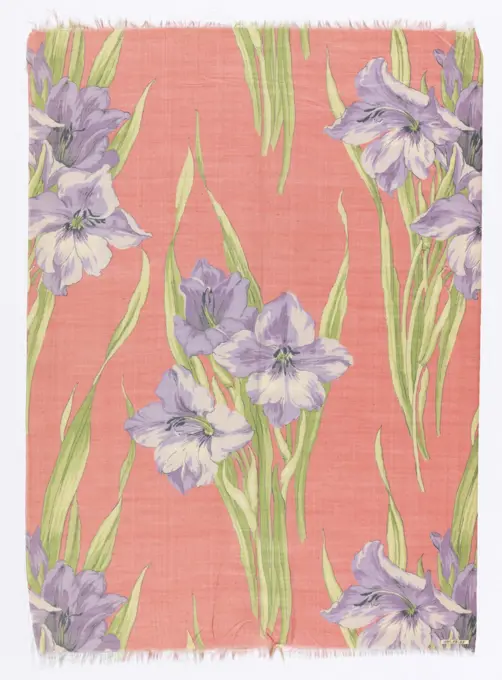
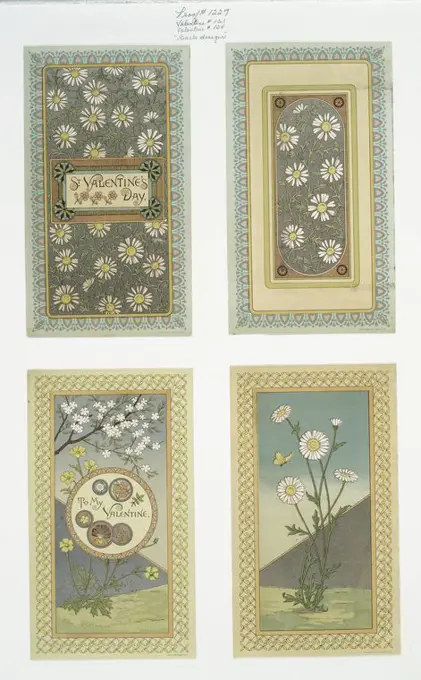
Intricate silk fabric fragments showcasing elaborate floral patterns and historic designs from various European origins, emphasizing rich colors and textures.

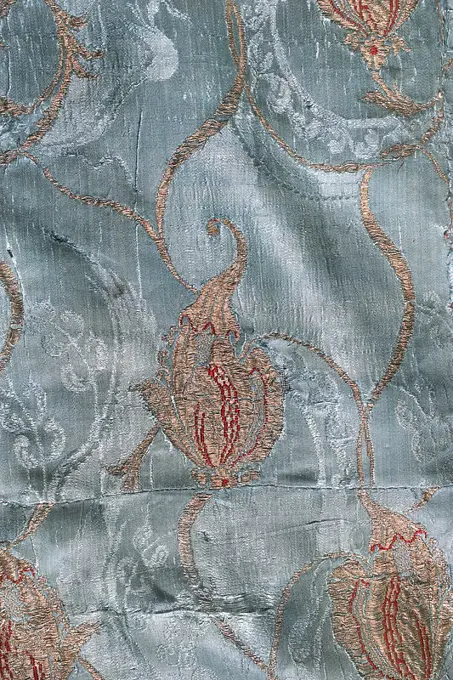
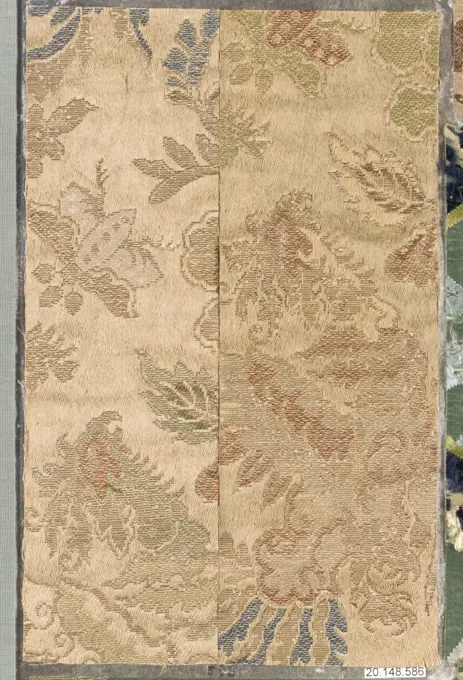
Fragment, Medium: silk Technique: 5-harness satin damask, Apple-green satin damask woven with feathery serrated leaves forming parallel serpentine trails from which spring peonies and other blossoms in lateral rows. Striped pink and yellow selvages., Italy, late 17th century, woven textiles, Fragment
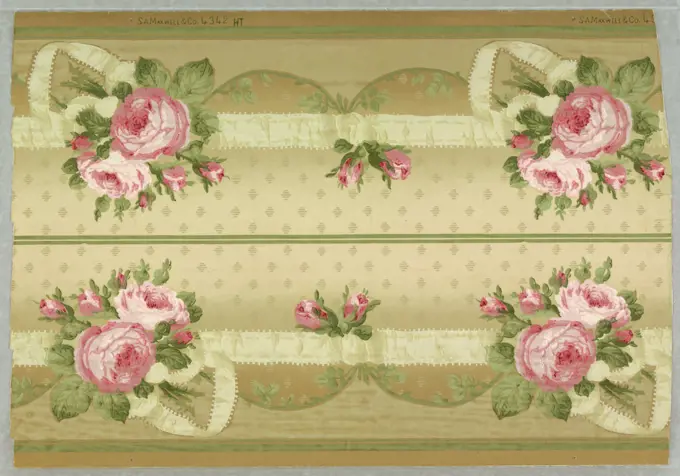
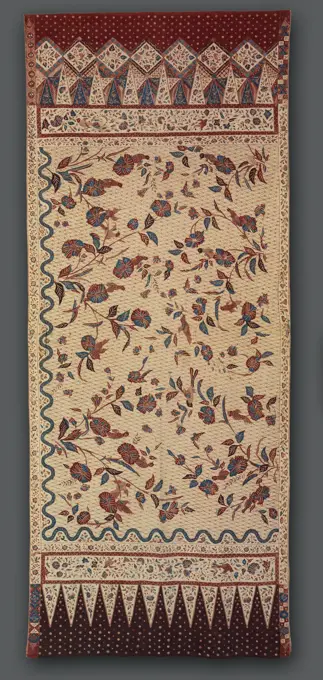
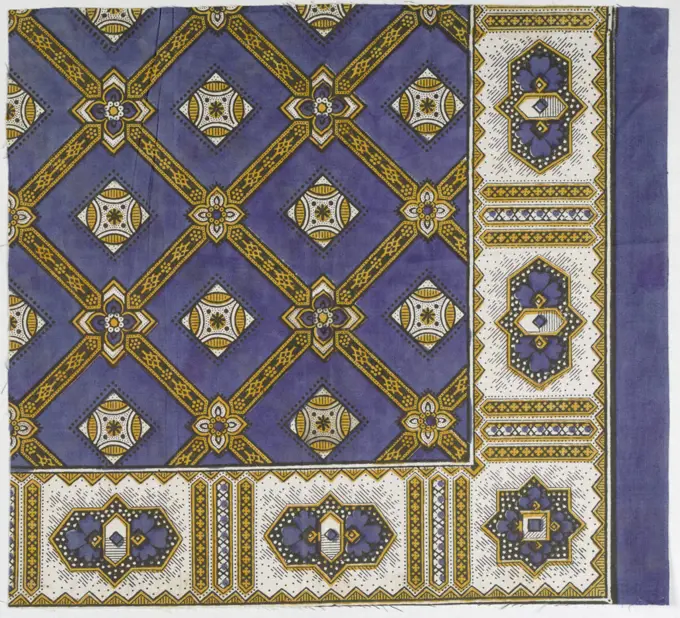
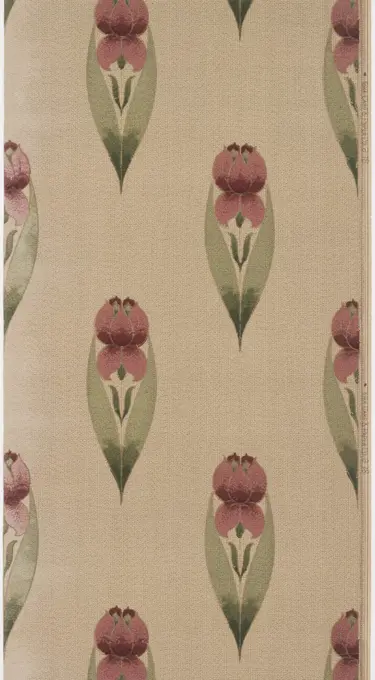
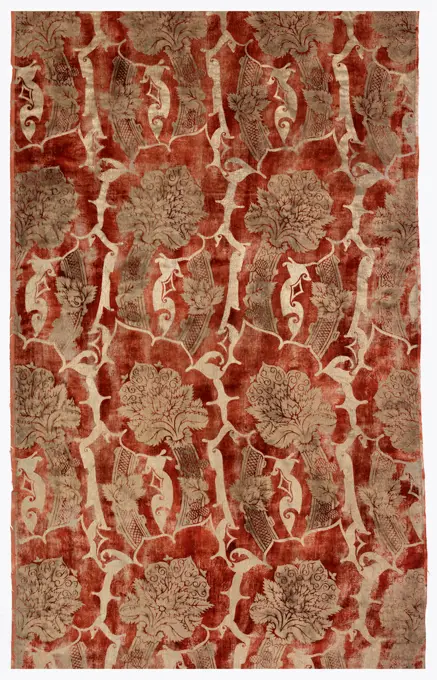
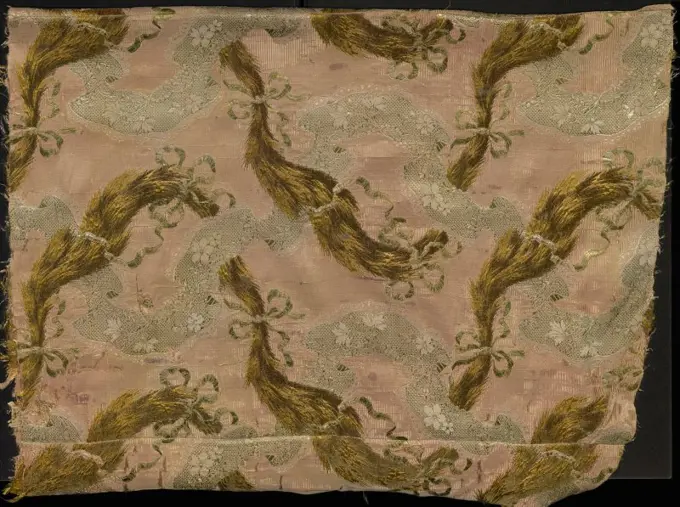
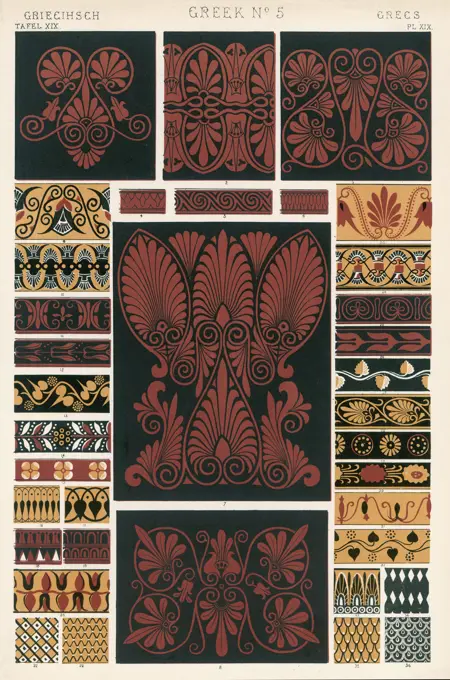
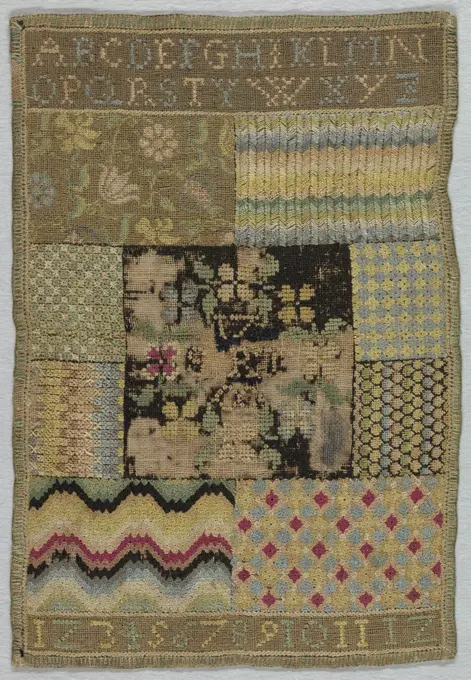
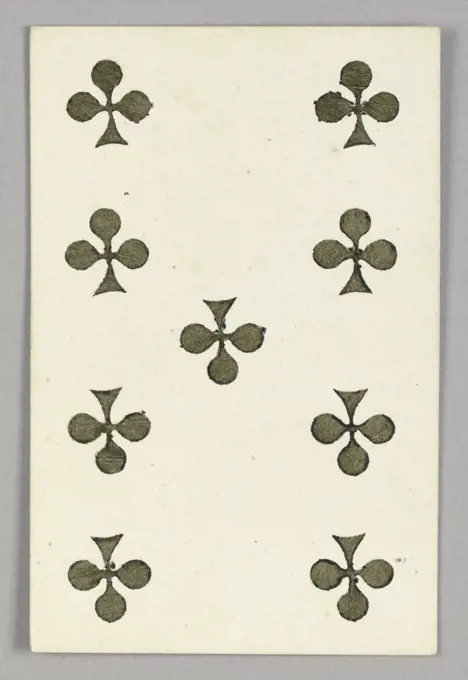
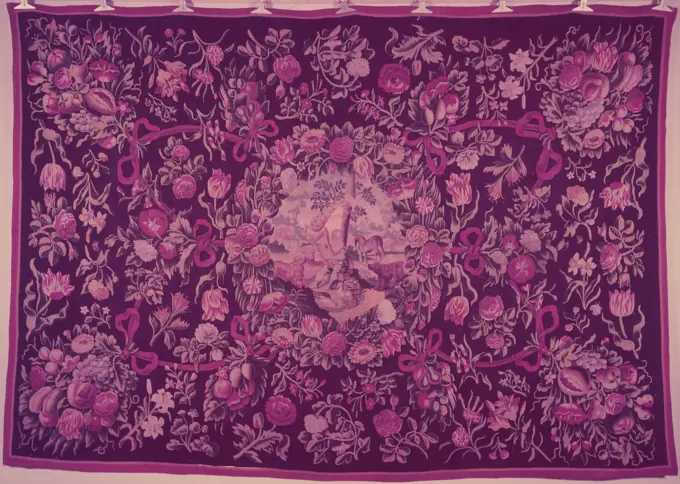
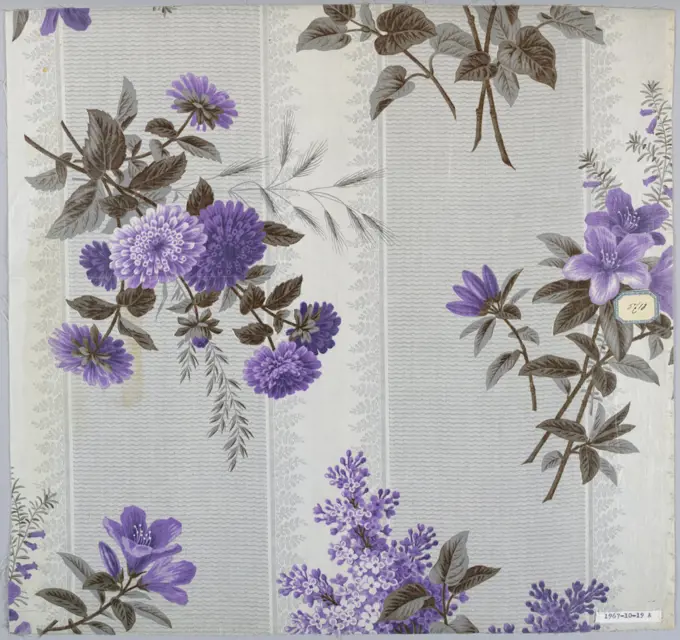
Wish letter with a flower wreath and a bow, 1770 print   paper  flowersBand, Medium: silk embroidery on linen foundation Technique: embroidered in counted back and stem stitches on plain weave foundation; bobbin lace edging Label: linen embroidered with silk in counted back and stem stitches, Border of natural linen, embroidered with red silk; the red outlines the details of the pattern but also fills in the background entirely. Central trunk entwined with wildly curving branches; flowers, birds and butterflies throughout. Trimmed on one long side with gold bobbin lace., Italy, late 16th-early 17th century, embroidery & stitching, BandBorder, Maxwell & Co., S.A., Chicago, Illinois, USA, Machine-printed, Horizontal cream ribbon connects bunch of pink roses with smaller motifs of two pink rose buds. Ground has staggered rows of striped horizontal figures; printed on graded cream and tan ground. Two identical borders to the width., USA, 1889-92, Wallcoverings, BorderPiece of fabric. unknown, authorRibbon (France); silkCover Made 1808-1814 France. Silk, warp-float faced 4 1 satin weave with weft-float faced 3 1 twill interlacings of secondary binding warps and supplementary patterning wefts; edged with silk covered linen cord .Stole Made 1860-1869 England. Silk, Pusher machine lace .Cover Made 1601-1625 Italy. Linen, plain weave; embroidered with silk in back, hem and double running stitches; edged with silk, bobbin straight lace .Miniature Tunic 12th-13th century Ica. Miniature Tunic 312880Piece 18th-19th century Japan. Piece. Japan. 18th-19th century. Silk. Textiles-WovenPiece 18th-19th century Japan. Piece 67701Tablecloth or Bedcover Made 1790-1810 United States. Cotton and linen, plain weaves; pieced; embroidered with cotton and linen in buttonhole, stem, and tied herringbone stitches .Textile Fragment 14th century. Textile Fragment. 14th century. Silk. Attributed to Italy. Textiles-WovenSamples (USA); Manufactured by Orinoka Mills (United States); Warp x Weft (a): 35.5 × 26 cm (14 in. × 10 1/4 in.) Warp x Weft (b): 25.5 × 25.5 cm (10 1/16 × 10 1/16 in.) Warp x Weft (c): 27 × 24.5 cm (10 5/8 × 9 5/8 in.) Warp x Weft (d): 26 × 24 cm (10 1/4 × 9 7/16 in.)Piece 17th century China or Japan. Piece 71580Piece 18th-19th century Japan. Piece 65816Fragment (USA)Napkin from white Linnamast ,, c. 1600 - c. 1650 White Linnamasten Napkin with the Spieders in the Promised Land (Numeri 13), brand PTGB 14. Netherlands (possibly) linen (material) damask White Linnamasten Napkin with the Spieders in the Promised Land (Numeri 13), brand PTGB 14. Netherlands (possibly) linen (material) damaskPiece. Culture: British, London. Dimensions: L. 34 x W. 40 inches (loom)86.4 x 101.6 cm. Manufactory: Bromley Hall. Date: 18th century.The design of this unusual printed cotton is actually recorded in a series of impressions on paper in a pattern book inscribed Fosters and Co., Bromley Hall, Middlesex, about 1780. The technique and width of this version suggest a date in the 1830s, after discharge printing had been invented. Museum: Metropolitan Museum of Art, New York, USA.Textile (France); cottonCover, Medium: silk on linen Technique: counted embroidery stitches using silk: double running, back, overcast long-armed cross on plain weave, Square cover in a diamond lattice pattern enclosing geometric flowers in red, green, blue and yellow silk on a linen ground., Italy, 17th century, embroidery & stitching, CoverFragment sites with a pattern of a branch with large fruit and flowers.MOTIF or Large Pomegranates, Flowers and Leaves in Different Shades of Red, Purple, Blue, Yellow and Green on White Fond. Oriental Textile.Sarong, early 1900s. Indonesia, Java, early 20th century. Plain weave cotton; resist dyed; overall: 104.8 x 253.6 cm (41 1/4 x 99 13/16 in.).Textile; cottonGenevieve Sherlock, Hitchcock Chair, c 1940 Hitchcock ChairSeat covering of batikte silk, with a flower pattern in yellow and brown, Theo Nieuwenhuis (Possible), c. 1910 Seat covering of batikte silk, with a flower pattern in yellow and brown. Printed textile. Netherlands silk printing Seat covering of batikte silk, with a flower pattern in yellow and brown. Printed textile. Netherlands silk printingScarf sample, Medium: silk Technique: block printed on plain weave, Quarter of a printed scarf in purple, yellow, and black. Border of compartmentalized geometric pattern and field showing diamond grid., France, mid-19th century, printed, dyed & painted textiles, Scarf sampleBliżej Kultury unknownTextile Fragment. Italy, 1475-1500. Textiles; textile lengths. Silk cut and voided velvetSidewall, York Card & Paper Co., 1891, Machine-printed paper, Repeating motif of a very stylized flower, perhaps a tulip. A large red flower is almost enclosed within two scissor-like leaves. Printed on background simulating textile., York, Pennsylvania, USA, 1905-1915, Wallcoverings, SidewallTextile (Italy); Designed by Mariano Fortuny (Spanish, active Italy, 1871 - 1949); foundation warp and weft: cotton; pile warp: silkPiece of fabric. unknown, authorHandkerchief. France, possibly Alsace. Date: 1701-1750. Dimensions: 92.8 × 98.2 cm (36 1/2 × 38 5/8 in.). Cotton, plain weave; block printed. Origin: France. Museum: The Chicago Art Institute, Chicago, USA.Piece 19th century Japan. Piece 72075Textile, Medium: silk Technique: brocaded, Spitalfields, England, 1740, woven textiles, TextileFrieze, William H. Mairs and Company, Brooklyn, New York, Machine-printed paper, Floral bouquets, enclosed in foliate scrolls, are joined by floral swags., Brooklyn, New York, USA, 1905-1915, Wallcoverings, FriezeSampler, Frances Rae, English, Medium: silk embroidery, wool foundation Technique: cross, eyelet and stem stitches on plain weave, Detached motifs, including a swan, flowers, and birds, mostly framed or in wreaths. Letters, numerals, and initials are scattered over the sampler. In the center, the signature 'Frances Rae', 'Ackworth School 1797'., Yorkshire, England, 1797, embroidery & stitching, SamplerLength of Silk Brocade, 1774-1793. France, 18th century, Period of Louis XVI (1774-1793). Brocade, silk; overall: 18.4 x 54 cm (7 1/4 x 21 1/4 in.).Ceiling Paper (USA); Manufactured by Maxwell & Co., S.A. (United States); machine-printed paper, liquid mica; 92 x 49 cm (36 1/4 x 19 5/16 in.)Ornaments from Greek and  Etruscan vases in the British  Museum and the Louvre        Date: 1868Hanging. Dimensions: 80.5 in. high 55.00 in. wide (204.5 cm high 139.7 cm wide). Date: 17th-18th century. Museum: Metropolitan Museum of Art, New York, USA.Frieze (USA); Distributed by Maxwell & Co., S.A. (United States); machine-printed paper; 234.5 x 49.5 cm (92 5/16 x 19 1/2 in.)Howard H Sherman, Woven Coverlet, 1937 Woven CoverletSteel silk in album, Wiener Werkstätte, c. 1910 - c. 1932 Steel printed silk, purple, green and yellow on a lilac background, with stylized flower plant inside parallelepipedum-shaped frame (designer 7134 1/137). Vienna silk block printing (relief printing process) Steel printed silk, purple, green and yellow on a lilac background, with stylized flower plant inside parallelepipedum-shaped frame (designer 7134 1/137). Vienna silk block printing (relief printing process)Batik cloth drying in the sun, after being dyed with natural dyes at Sarwidi's Batik workshop, Banyuripan-Bayat, Central Java, IndonesiaFragment of silk fabric unknownFragment, c. 1750 Fragment sits with a decor of flower branches and here and there springy leaves. A seam and a piece of different sits sewn. India cotton (textile). chintz printing / chintz Fragment sits with a decor of flower branches and here and there springy leaves. A seam and a piece of different sits sewn. India cotton (textile). chintz printing / chintzSampler, Medium: silk embroidery, linen foundation Technique: tent, cross, eyelet, rococo and satin stitches on plain weave, Alphabet and numerals arranged as cross borders at top and bottom; central panel with initials, date and flowers arranged by compartments with geometric and floral design., Germany, 1700, embroidery & stitching, SamplerNine of Clubs from Set of 'Jeu Imperial-Second Empire-Napoleon III' Playing Cards, F. Chardon, French, active 19th c., Lithograph on glazed paper, Nine of Clubs from Set of 'Jeu Imperial-Second Empire-Napoleon III' Playing Cards., Paris, France, 1858, Playing Card, Playing CardLice line is made of velvet velvet, wine red, salmon color and fletschel on a white satin fond. Lice line for a four-poster bed (foot end below). The lambrequin is made of velvet velvet, wine red, salmon color and fletschel on a white satin fond. The pattern has large symmetrical acanthus leaves, ending in volutes, and with dotted contours and small carried fields. This label belongs to the so-called Rosendaelbed.Vector Colorful Pen Drawing Doodle Design ElementsFloral with Orpheus in central wreath. unknown c. 1650-1700 Tapestry Dimensions: H 5'9" x W 8'4" Tapestry Materials/Techniques: unknown Culture: Dutch Weaving Center: unknown Ownership History: French & Co. Floral with fruits & ribbons surrounds central wreath containing Orpheus playing lyre, beasts & birds are enchanted Borders possibly missing. French & Co. stock sheet missing from archive, 19105/7 Amsterdam (Rijks.), Geweven boeket (1971), 31, 84, no. 56Frieze (USA); Manufactured by Carey Bros. W.P. Mfg. Co.; machine-printed paper; 91.5 x 49.5 cm (36 x 19 1/2 in.)Length of Silk Fabric. UnknownTextile, Schwartz-Huguenin, Madium: cotton Technique: printed by engraved roller and block printed; glazed, Two samples with same ground design, printed in different color patterns. Ground, broad grey stripe of minute wavy lines alternating with white stripe with foliage edge. A) Sprays of lilac, azalea and asters in violet. B) Same flowers in grey. Glazed., mid-19th century, printed, dyed & painted textiles, TextileTextile (England); cottonTextile (USA); Designed by Sophia L. Crownfield (American, 1862-1929); silkSleeve Bands (China); silkA mirrored rug patternDress border early 19th century French. Dress border 223149Valentine cards utilizing decorative design, depicting flowers, hearts, butterflies and a tree.. Proofs, Greeting cards. 1882. The Miriam and Ira D. Wallach Division of Art, Prints and Photographs: Print Collection. Decoration and ornament, FlowersFragment 16th century Italian. Fragment 230153Textile, Medium: silk Technique: satin patterned by continuous supplementary weft, Length of woven silk satin in bright green with repeating symmetrical sheild-shaped ornament in pale yellow down the center., ca. 1840, woven textiles, TextileWall Hanging - Baker Lake, Nunavut Art by Elizabeth AngrnaqquaqGrunge flag Creuse France Flag of the French Departement Creuse created in grunge style Copyright: xZoonar.com/ChristianxMueringerx 15343112