Vintage Textile Fragments Collection

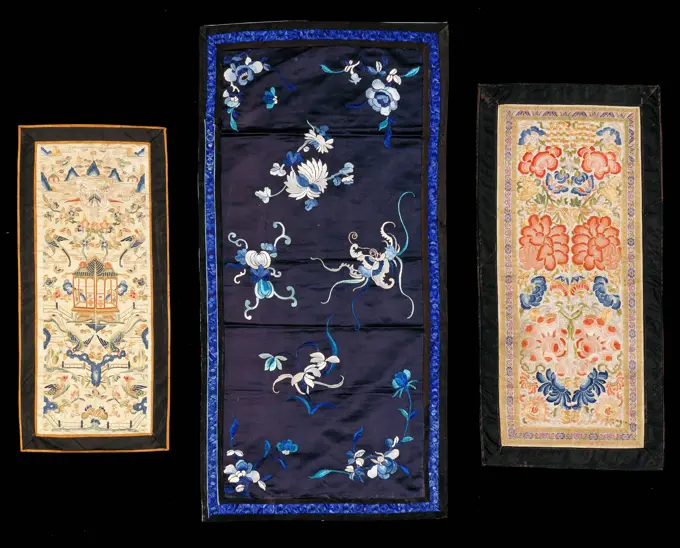
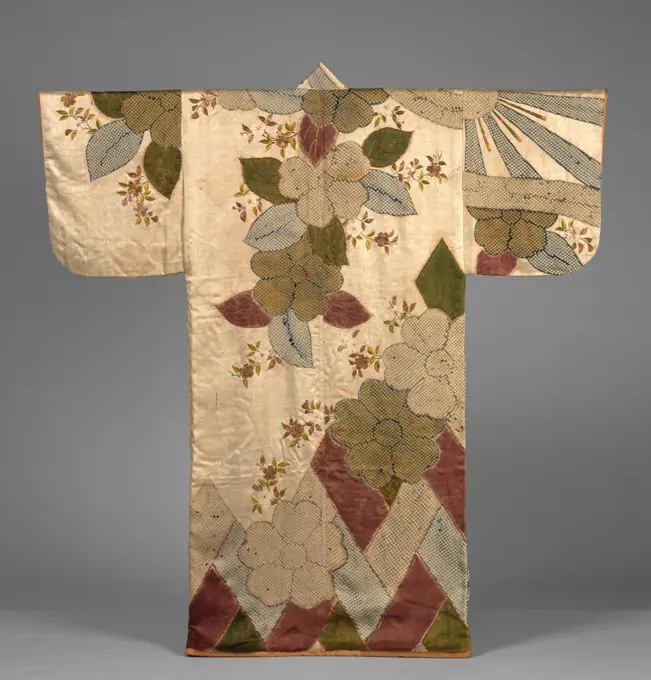
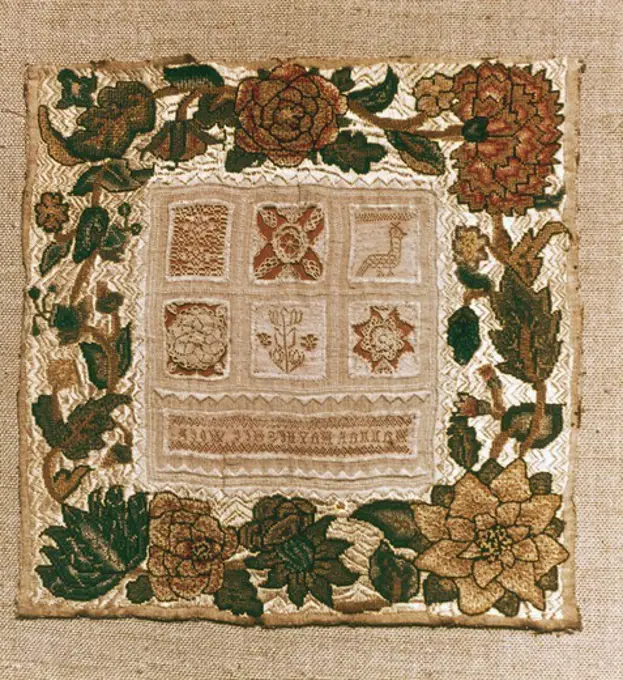
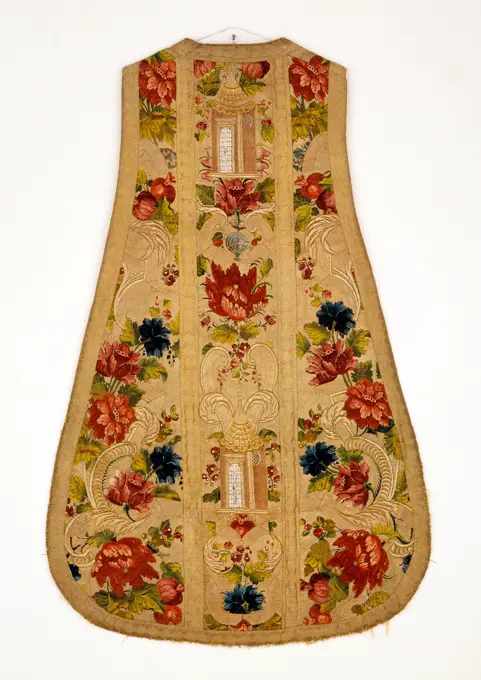
A variety of ornate textile fragments featuring floral patterns, intricate designs, and rich colors, showcasing craftsmanship from Italy and France in the 17th and 18th centuries.
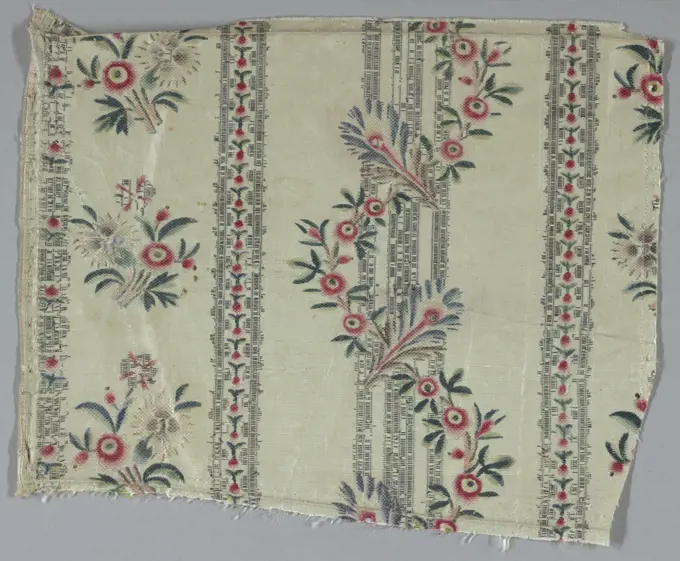
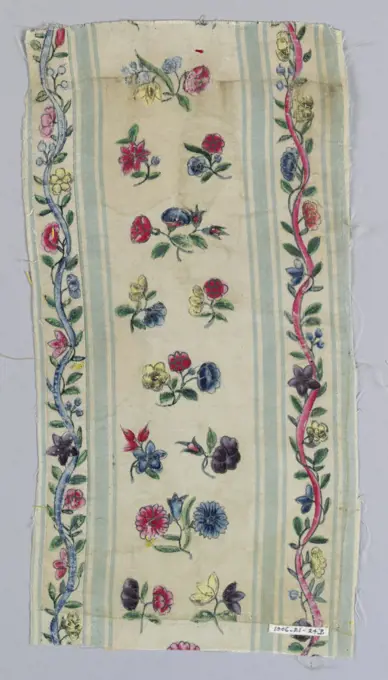
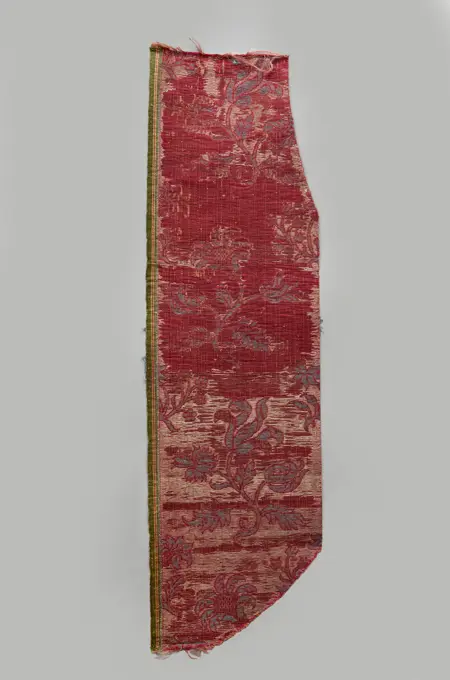
Fragment, Medium: silk, metal threads, some paint Technique: plain weave with discontinuous supplementary weft patterning (brocade), White taffeta ground with vertical stripes of flat silver brocade. Meandering stripes of floral designs both painted and woven., France, late 18th century, woven textiles, Fragment
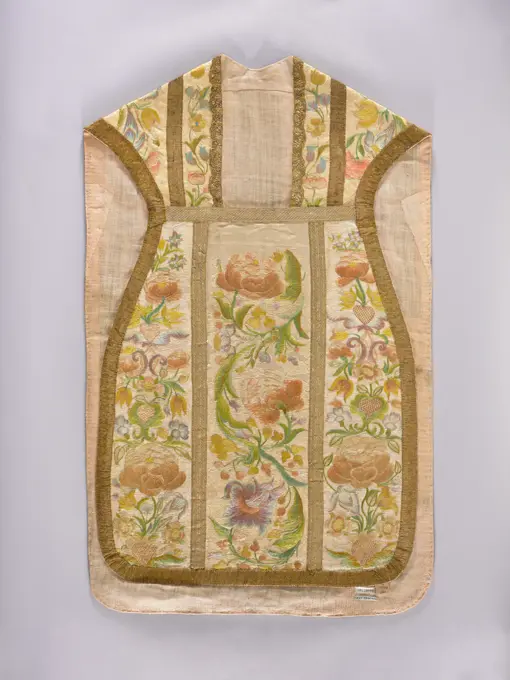
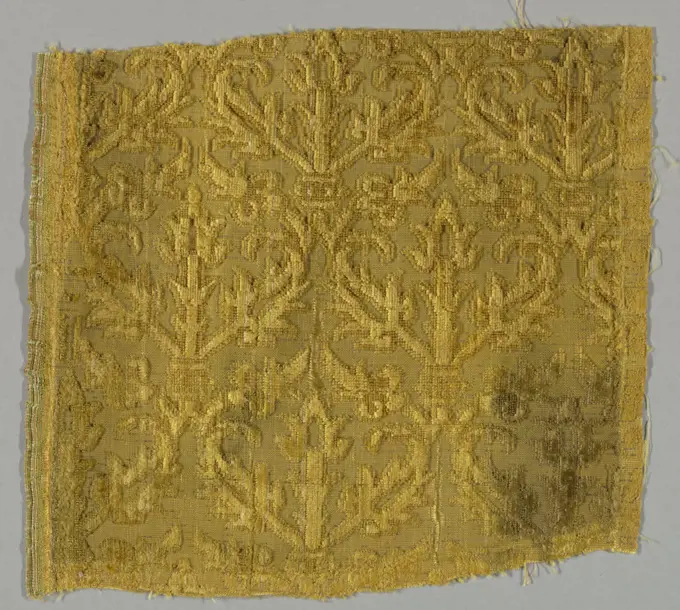
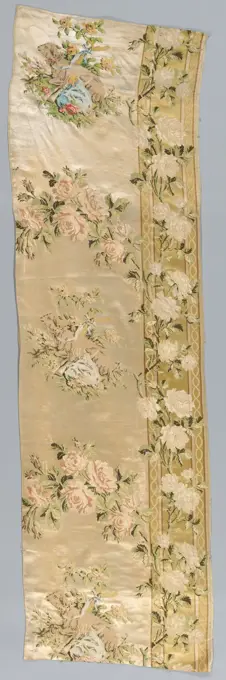
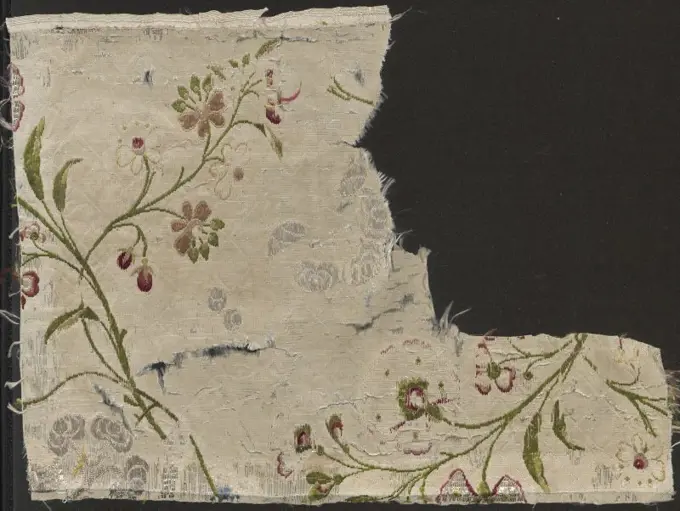
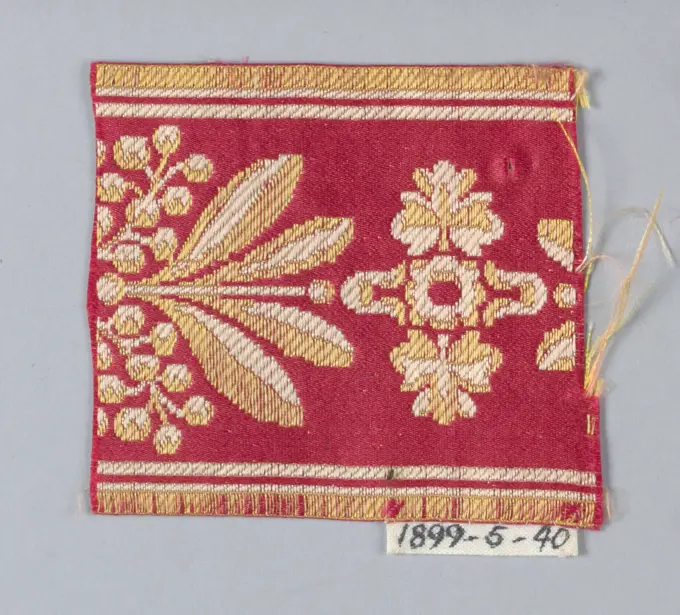
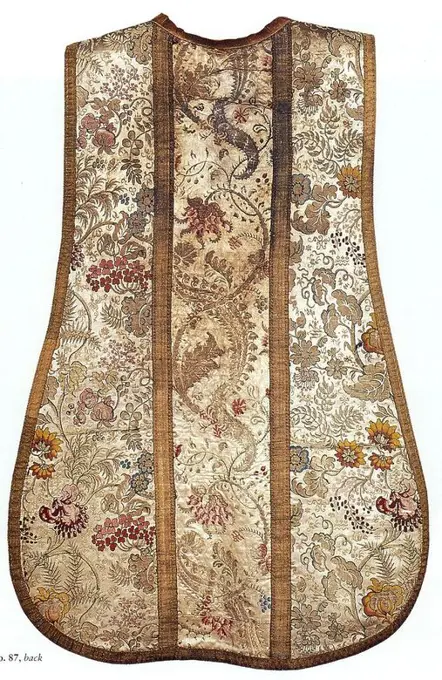
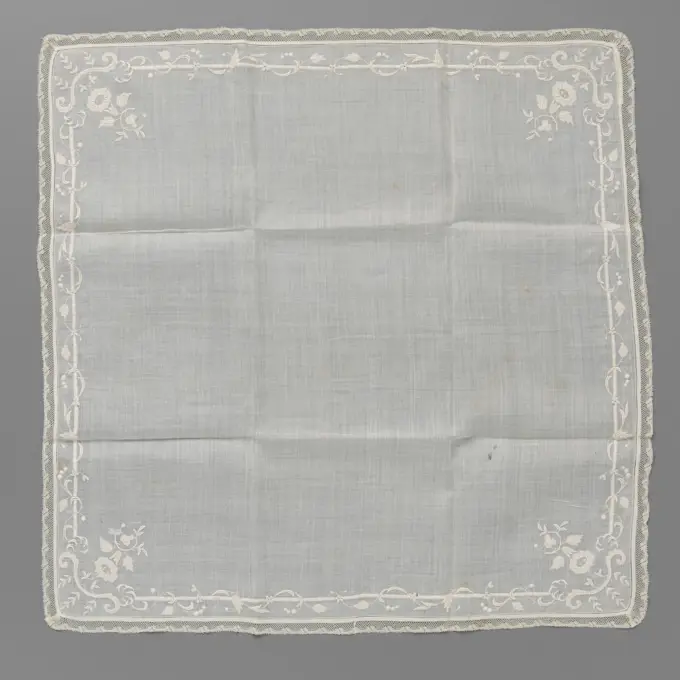
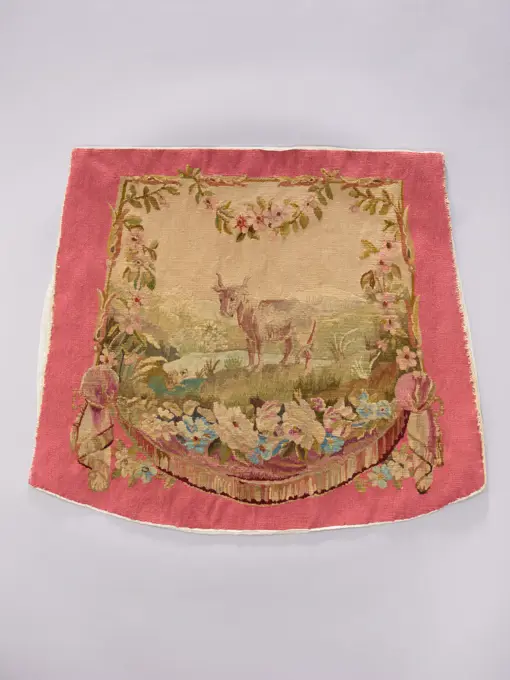
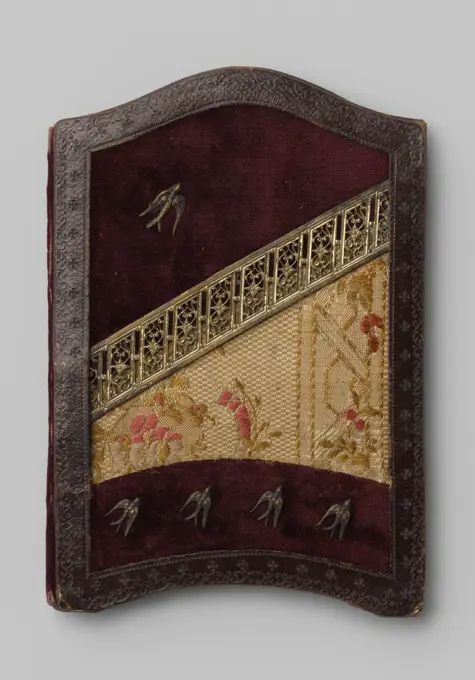
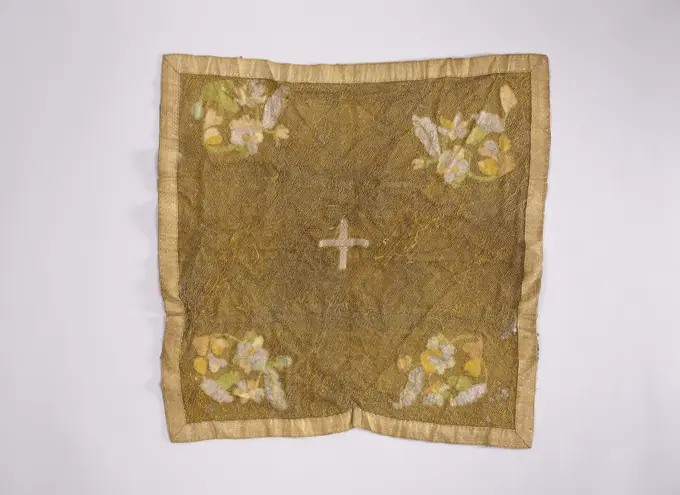
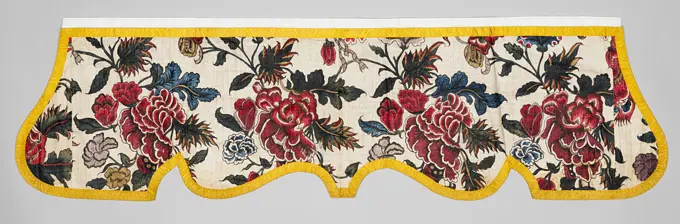
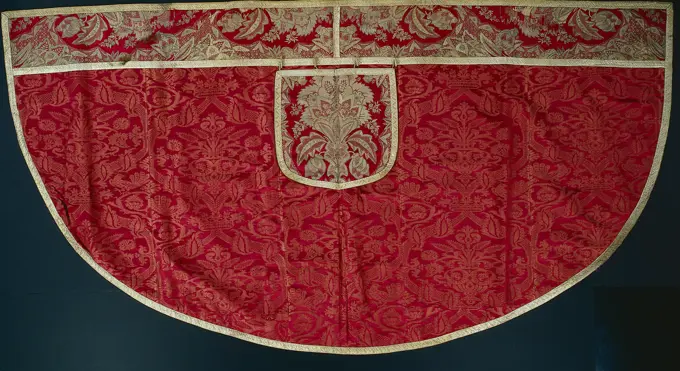
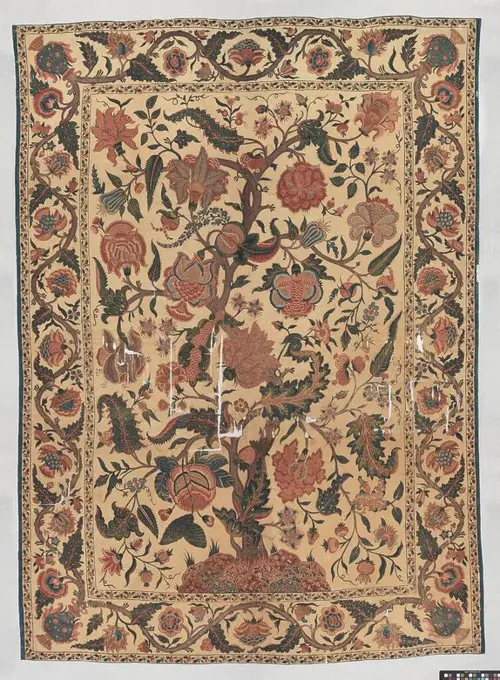
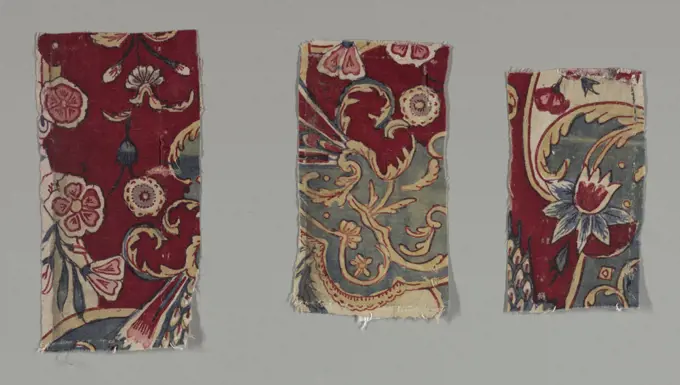
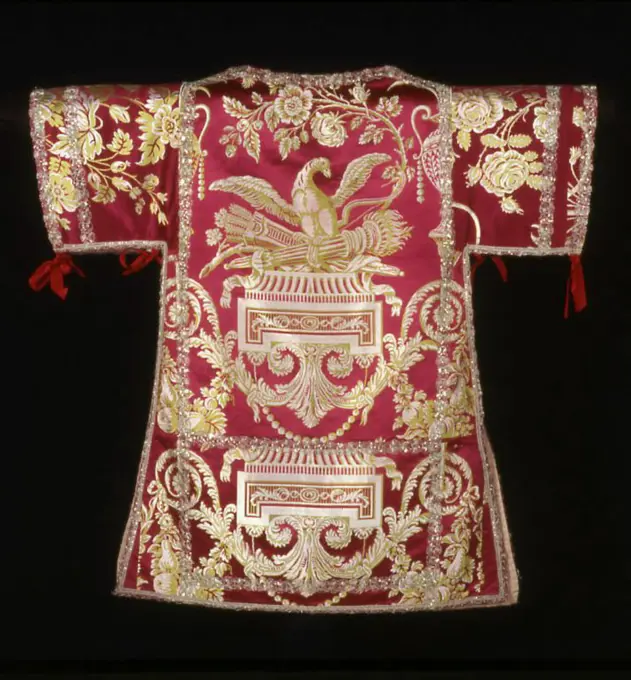
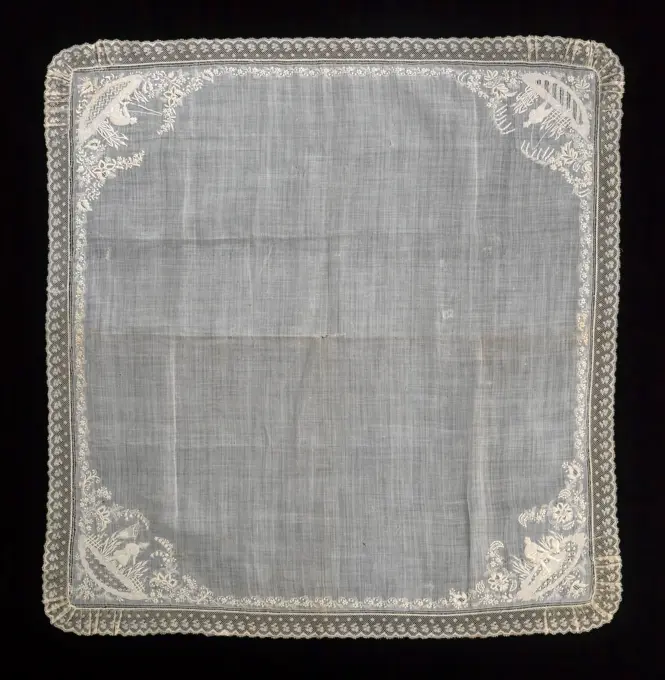
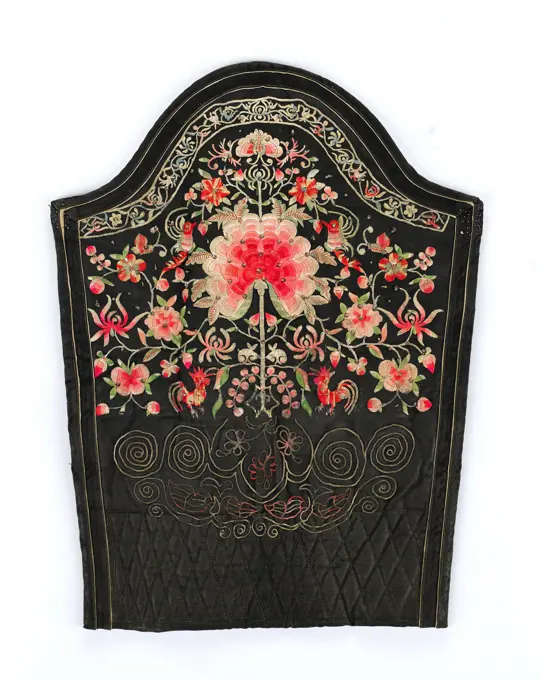
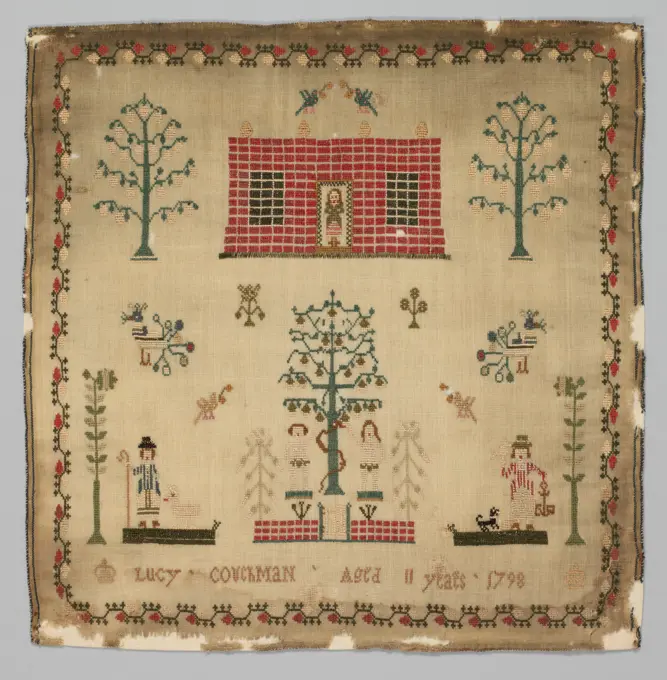
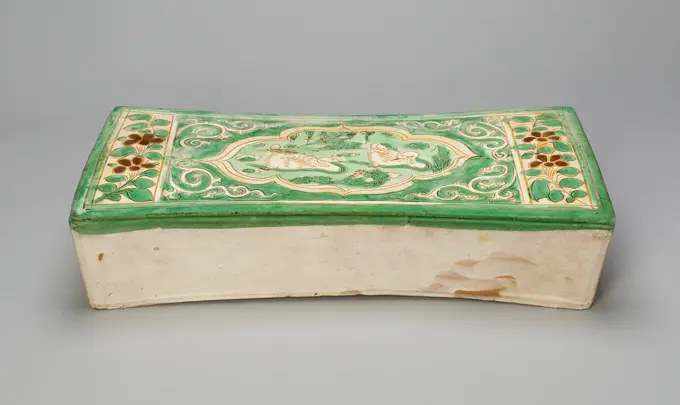
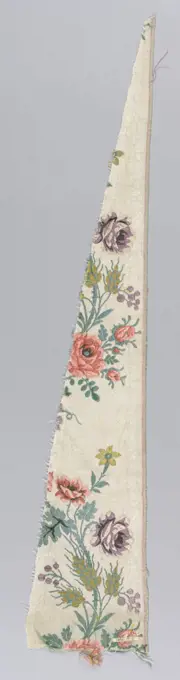
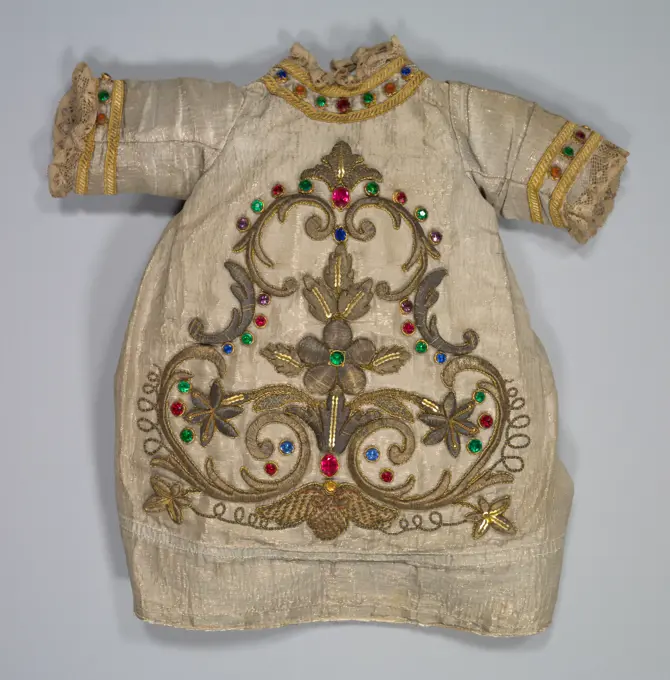
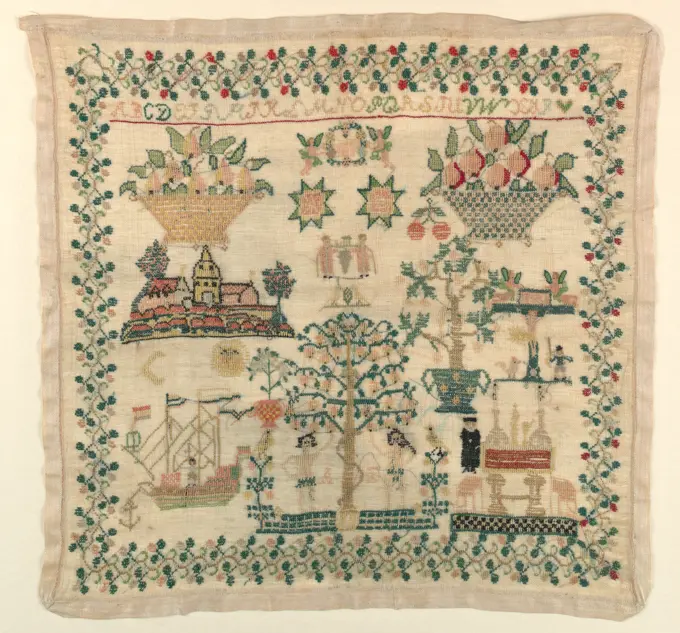
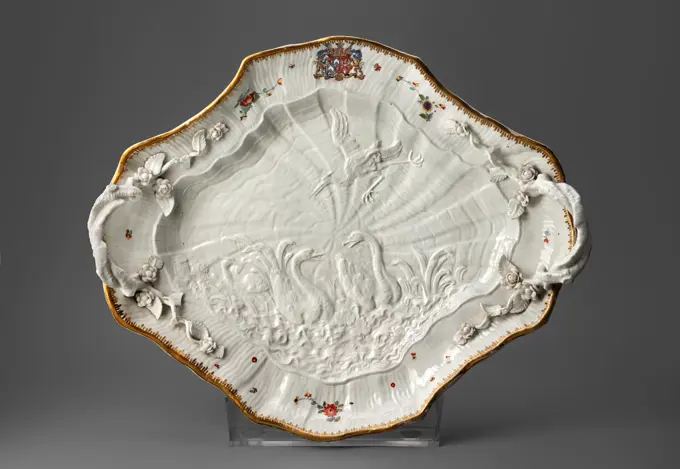
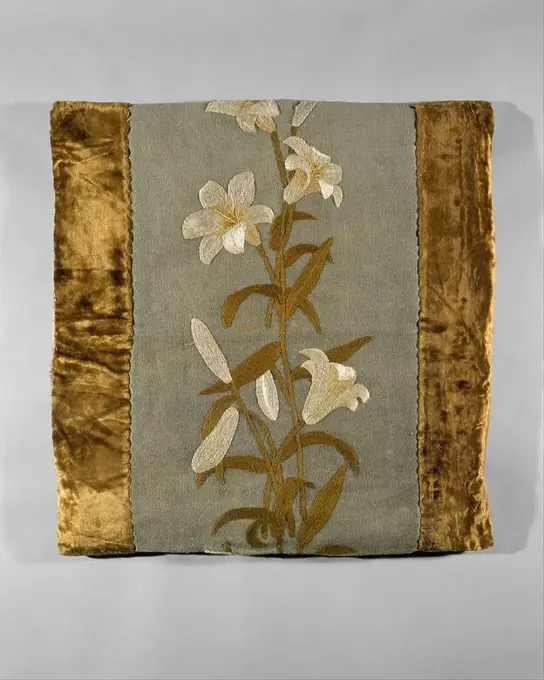
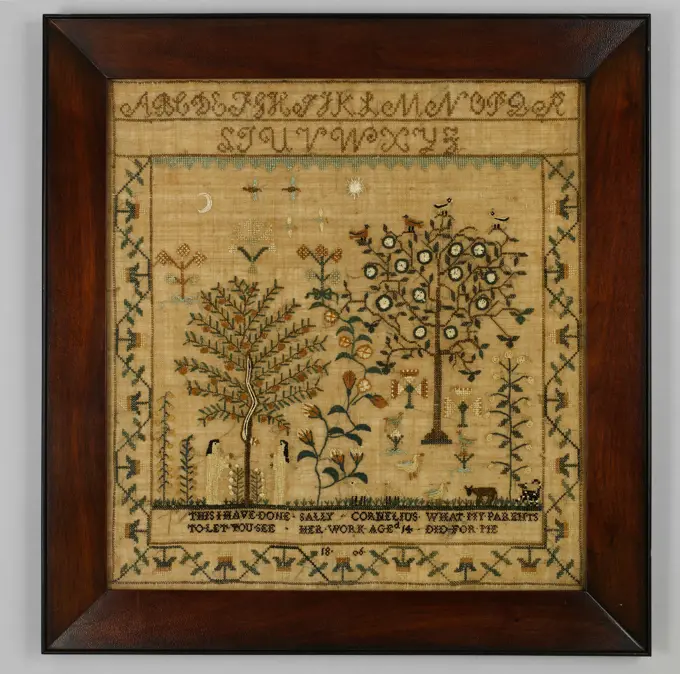
Textile; cottonScarf or Cover Made 1701-1725 Turkey. Kerchief, embroidered in rose spray pattern . AnonymousChasuble. unknown, authorPurse, Medium: silk, metal thread, straw Technique: embroidered in stem, running and chain stitches on plain weave; trimmed with bobbin lace, Silk bag with embroidered flowers in blue, green, purple and yellow; backed with brocade in blue, green and cream color; lined with blue and trimmed with narrow metal lace and salmon colored straw., France, 18th century, costume & accessories, PurseFragment, Medium: silk, metallic Technique: supplementary warp forming cut and uncut raised pile in plain weave foundation with supplementary wefts (velvet), Trellis pattern formed by leaves and stems in dark tan velvet., 17th century, woven textiles, FragmentCope. unknown, manufactureBedcover (Spain); linen, silk, silver metallic threadTextile; wool on wool; linenFragment Made 1201-1300 Egypt. Linen and silk, compound weave .Length of Brocaded Satin, c. 1780. Philippe de Lasalle (French, 1723-1805). Satin, brocaded; silk with areas of chenille; overall: 243.8 x 54.6 cm (96 x 21 1/2 in.).Piece of fabric. unknown, authorRug;  2. PO. 18th century (1761-00-00-1800-00-00);Kilimy, equipment and home equipment, interior furnishings, purchase (provenance)Trimming Fragment (France); silkChasuble. Culture: Italian. Dimensions: From center back neck: 41 5/8 x 29 in. (106.2 x 73.7 cm). Date: early 18th century. Museum: Metropolitan Museum of Art, New York, USA.Four tiles with flowers. Four tiles field (2 x 2) each with a threefold flower inside a square cushion with a lily in the corners.Zakdoek van batist met rank rond rechte lijn en bloemtak in de hoeken en afgezet met een rand Valenciennes-kant.Natural batist's handkerchief with embroidery - whiteware - and rounded around with a border of the climbing: Valenciennes-side. Square model. A embroidered rank writhes along a narrow straight line along the edges of the handkerchief. In the corners, the straight line is interrupted by a sloping loaded voluntary with a flower branch. The strip lace has a pattern that consists of connected narrow lines along the edge on the underside and above it consists of a square valenciennes ground. The handkerchief is saved with a different handkerchief in a sachet.Piece early 19th century French. Piece 223766Fragments, Medium: tempera on silk Technique: printed and painted on plain weave, Ground of light blue and white vertical stripes. Narrow white stripes have a flowering vine twining around red and blue ribbons. Broad white stripes are powdered with minute blossoms in red, blue, green and yellow., China, 18th century, printed, dyed & painted textiles, FragmentsChasuble. unknown, authorFragment of silk fabric  golden pattern made of asymmetrical floral twigs unknownArras cover. unknown, authorBobbin Lace Edging, 18th century. Belgium, Mechelen, 18th century. Lace, bobbin: linen; average: 23.5 x 23.2 cm (9 1/4 x 9 1/8 in.).Handkerchief; linenSampler (possibly Italy); silk embroidery on wool foundationPanel (Half of a Bed Curtain). Greece, Dodecanese Islands, Patmos. Date: 1601-1700. Dimensions: 278.8 x 111.4 cm (109 3/4 x 43 3/4 in.). Linen, plain weave; embroidered with silk in chain, double running, running (pattern darning), satin, and stem stitches; two loom widths joined. Origin: Pátmos. Museum: The Chicago Art Institute, Chicago, USA.Fragment, Medium: cotton Technique: printed on velvet, Fragment with a mustard-colored ground showing a pinkish-tan pattern of highly formalized flowers, urns, and vines in vertical stripes., USA, late 19th century, printed, dyed & painted textiles, Fragment, Fragment, Medium: cotton Technique: printed on velvet, Fragment with a mustard-colored ground showing a pinkish-tan pattern of highly formalized flowers, urns, and vines in vertical stripes., USA, late 19th century, printed, dyed & painted textiles, FragmentFragment of a shirt. Culture: Ukrainian. Dimensions: 52 1/2 x 16 1/2 in. (133.4 x 41.9 cm). Date: fourth quarter 18th century.This object is from the collection of Natalia de Shabelsky (1841-1905), a Russian noblewoman compelled to preserve what she perceived as the vanishing folk art traditions of her native country. Traveling extensively throughout Great Russia, she collected many fine examples of textile art of the wealthy peasant class. From the 1870s until moving to France in 1902, Shabelsky amassed a large collection of intricately embroidered hand-woven household textiles and opulent festival garments with rich decoration and elaborate motifs. The Brooklyn Museum holdings include many fine examples including the majority of the garments. Portions of Shabelsky's collection are also housed at the Museum of Fine Arts, Boston, the Cleveland Art Museum, and the Russian Museum of Ethnography in St. Petersburg. Museum: Metropolitan Museum of Art, New York, USA.Gobelin cover;  1. PO. 20th century (1901-00-00-1950-00-00);Sampler (England); Embroidered by Dinah Phillips; linen, silkTwo portraits of an unknown military and two unknown girls, 1880 - 1900 photograph. frame   textile materials. leather. metal. paper. cardboard albumen print girl (child between toddler and youth). the soldier; the soldier's lifeVeil. unknown, authorStick;  1940s (1840-00-00-1849-00-00);Fabric fragment. unknown, authorFragment Made 1800-1900 Japan. Printed plain simple twill, silk. .Four Embroidered Pieces, 19th century, L.13-½ x W.6-½ in., silk; needlework, China, 19th centuryLambrequin van veelkleurige sits.Cotton lambrequin in multicolor sites with a painted design of large and smaller red flowers and smaller flowers in ecru and gel and with leaves in blue and green on a white fond; Lined with light brown coarse linen and blue-white checkered cotton, ommered with yellow silk passion.Textile; undyed linen warp (z2s), z-spun wool weft with s-spun undyed linenHandkerchief with a border of mixed side with rail rails and pearl necklace. Handkerchief with an edge of natural mixed side: Brussels climbing side in combination with needle side and with a coniferous lace ground, a fine mesh side ground. This type of side is also called Point d'Angleterre. A batters middle piece is trimmed with a lace edge with eight deep slots, formed by 'rail rails', a pearl celerie and a chain of daisies. In the tubes, rifles of three daisies are between fine willow branches. The arches of the slopes are crossed in the middle by a large relief soring, in the corners by three roses.Mantle for a Statue of the Virgin with Lotus Blossoms and Medallions, c. 1430. Egypt and Spain. Silk and gilt-metal thread: lampas weave; overall: 70.5 x 111.2 cm (27 3/4 x 43 3/4 in.); mounted: 78.1 x 119.4 cm (30 3/4 x 47 in.).Handkerchief, 1800s. France or Flanders, 19th century. Embroidery on linen ground; lace edging; overall: 45.1 x 45.7 cm (17 3/4 x 18 in.).Textile, Medium: silk Technique: satin weave, twill weave, Continuous stripe pattern in yellow, tan and red on red ground showing symmetrical leaf clusters and rosettes in the Empire style. Compound weave of two structures: 5-harness satin weave foundation with 3/1 twill pattern. The twist is interconnected with the foundation satin in plain weave. Floats of the foundation weft to pattern are bound in 3/1 twill, by the twill warp. Cut from a larger fabric to be used as a trimming band., France, 1800-1825, woven textiles, TextilePriest's Red Cope, Orphrey and Hood, late 1500s - early 1600s. France and Italy, Orphrey and hood: France, Lyon, Regency period, 1715-1725; Cope: Italy, late 16th - early 17th century. Cope: damask weave, silk; Orphrey and hood: brocade, silk and silver; overall: 124.5 x 276.9 cm (49 x 109 in.). Liturgical copes are used for processions especially by those who assist the celebrant. They evolved from a secular outer garment with a hood to protect the wearer from wind and rain. Hoods remained although they became decorative and nonfunctional. This Italian silk damask features large symmetrical bouquets in urns within curved lattices bearing crowns flanked by birds. The French orphrey band, or ornamental border, along the front edges and hood incorporates small ornament associated with prestigious lace amid the formal foliate design.Bed Cover (Palampore). Dimensions: Textile: H. 107 in. (271.8 cm) W. 77 3/4 in. (197.5 cm)Mount: H. 117 1/2 in. (298.5 cm) W. 86 5/8 in. (220 cm) D. 2in. (5.1 cm). Date: 18th century.This type of dyed cloth, known as a palampore from the Hindi term for a bed cover, palangposh, was made in abundance in India for the European market in the late seventeenth and eighteenth centuries. The size of the palampores conformed to bed sizes in Europe, and their decoration, often with a central tree laden with fruits and birds, combined elements from English embroideries, Chinese decorative objects, and Indian textiles. Lengths of such fabric also hung on the walls of the bedrooms, which were often decorated with Chinese porcelains and other Eastern exotica. Museum: Metropolitan Museum of Art, New York, USA.Kontusz sash/belt. unknown, authorChintz fragments, Medium: cotton Technique: mordants for 2 reds and purple applied by brush or pen; chintz on plain weave, Three fragments of the same fabric showing parts of a cartouche on a red background., India, 18th century, printed, dyed & painted textiles, Chintz fragmentsSmall pouch of beige-colored tulle, with gold-colored beads in the front and back. Small pouch of beige-colored tulle with gold colored beads on the front and back. The pattern is equal to both sides: a diamond shape around which eight geometric motifs. Along the edge of the pouch, a continuous row of beads. At the three points two gold-colored bulbs. The pouch can be closed with a rotated silk cord. The lining is made of beige side.Sampler, Medium: linen, silk Technique: embroidery in cross, eyelet, and satin stitch with some looping stitches and detached needle looping, Long sampler embroidered in brown, blue, green, yellow and red silks on a natural linen ground. Alphabets in cross and eyelet stitch; birds, flowers, animals, and boxing figures in cross stitch with some satin stitch and detached needle looping; floral bands in cross stitch and satin stitch. The ground fabric is pieced across the middle., England, 1734, embroidery & stitching, SamplerPart of a silk body, anonymous, c. 1775 - c. 1785 Fragment of a body of polychrome side. Back and left front building of a Robe à l'Anglaise. The front and backs show a deep SNEB termination that has been cut square. Fabric with cream fond with browned pattern; Fine green tifles with bouquets, blossom branches and flowers. FranceEurope silk. linen (material) Fragment of a body of polychrome side. Back and left front building of a Robe à l'Anglaise. The front and backs show a deep SNEB termination that has been cut square. Fabric with cream fond with browned pattern; Fine green tifles with bouquets, blossom branches and flowers. FranceEurope silk. linen (material)Purse (France); silk, metalEmbroidered Handkerchief, early 20th century. Switzerland, early 20th century. Embroidery: linen; average: 30.5 x 31.1 cm (12 x 12 1/4 in.).Dalmatic Made 1780-1790 France. Silk, warp-float faced 7 1 satin weave with weft-float faced 1 3 'S' twill interlacings of secondary binding warps and self-patterning ground wefts; braid and edge tape of silvered-metal strip and silvered-metal-strip-wrapped silk and cotton, bobbin straight lace; ribbons of silk, plain weave; lined with cotton, plain weave; glazed .Chalice Veil, cloth with covers the chalice. 18th century. Diocesan Museum. Tarragona. Catalonia. Spain.Textile; cotton on linen foundationChintz Fragment (India); cottonFrivolitétas in a flat, rectangular model, fully knitted with multicolored beads, in the middle a bouquet of flowers on cream -colored stock along the edges surrounded by ornamental edge, anonymous, c. 1725 - c. 1750 Bag in a flat, rectangular model, fully knitted with multicolored beads, against an ivory stock of beads. The front and back have an identical image, consisting of a colored bouquet of flowers and branches that rise from a horn. The bouquet is surrounded by a yellow-gold list of S-Voluten and C-Voluten interspersed with small blue and red flowers. Against the top edge on the inside of the bag through a tunnel a green -blue rip ribbon, which is tied at the beginning and end. The inside of the bag is lined with unadorned green -blue side. France (possibly) whole: Glass. Lining: Silk. Lint: Silk knitting Bag in a flat, rectangular model, fully knitted with multicolored beads, against an ivory stock of beads. The front and back have an identical image, consisting of a colored Handkerchief fourth quarter 18th century French A combination of different embroidery techniques are expertly used to produce the narrative imagery of an amusing mythological story on this women's handkerchief.. Handkerchief 157751Square tray with floral decoration 18th century Japan (Ryūkyū Islands). Square tray with floral decoration 40545Marian Curtis Foster, Sewed Caterpillar Rug, c 1937 Sewed Caterpillar RugPin cushion, Medium: silk embroidery, silk foundation Technique: embroidered on satin weave, Pin cushion of cream colored silk satin embroidered with silk showing design of thorny flowers bound with ribbon., Europe, England, mid- 18th century, embroidery & stitching, Pin cushionFragment brochure silk with a flower in yellow and green ,, 1730 A fragment of white silk with a pattern of a flower branch in yellow, green and white. Netherlands silk A fragment of white silk with a pattern of a flower branch in yellow, green and white. Netherlands silkBaby carrier back panel, c. 1970s-1980s, 22 5/16 x 17 1/4 in. (56.67 x 43.82 cm), Cotton, silk, sequins; needlework, China, 20th centurySleeve (China); silk, metallic threadFragment Made 1701-1750 Japan. .Sampler 19th century Mexican. Sampler. Mexican. 19th century. Silk on cotton. Made in MexicoChair Seat Made 1701-1800 France. Linen, plain weave; embroidered with wool yarns in tent, petit point and cross stitches .Sampler 1798 British. Sampler. British. 1798. Silk on wool canvas. Textiles-EmbroideredAlvin Shiren, Smoking Cap, 1935 1942 Smoking CapPiece Yugoslavian 19th centuryPiece 17th century Japan. Piece 71312Rectangular Pillow with Mandarin Ducks in a Lily Pond 1150-1234 China. Cizhou ware; earthenware, slip-coated with green and amber-yellow glazes and carved and incised decoration .Fragment, silk, metallic woven, triangular fragement with polychrome sprays of leaves and branches, 18th century, woven textiles, FragmentTent Panel (India); cottonSampler (England); Embroidered by Sarah Pike (English); Student at Milton School; silk embroidery on wool foundationPiece 17th century Italian. Piece 224072Pin Cushion (France); silk, glass beadsBaby's Robe, 17th century. Spain, 17th century. Plain weave silk with silver metal thread weft; embroidered with gold and silver metal thread, spangles, and colored glass stones; overall: 35.6 x 33.7 cm (14 x 13 1/4 in.).Needlepoint (Drawnwork) and Bobbin Lace Cloth, 16th century. Italy, 16th century. Lace, needlepoint and bobbin: linen; average: 80.7 x 115 cm (31 3/4 x 45 1/4 in.).Needlecase Sampler. England. Date: 1775-1800. Dimensions: . Origin: England. Museum: The Chicago Art Institute, Chicago, USA.Lukasa (Memory Board), Second quarter of the 20th century, 13 1/2 x 5 7/8 x 1 1/2 in. (excluding attached base), Wood, metal, beads, string, Democratic Republic of the Congo, 20th centurySampler (Germany); silk embroidery on linen foundationTalia kart National Card Factory J.C. du PortaRhomboid platter; Koenigliche Porcellain Fabrique, Meissen (1710-1763), Eberlein, Johann Friedrich (1695-1749); 1737-1740 (1737-00-00-1740-00-00);Bruehl, Henryk (1700-1763), swan service, coats of arms, platters, purchase (provenance)Pillow cover. Artist: Candace Wheeler (American, Delhi, New York 1827-1923 New York). Culture: American. Dimensions: 22 x 22 1/2 in. (55.9 x 57.2 cm). Date: ca. 1876-77.Designed by Wheeler soon after her return from the 1876 Centennial Exhibition in Philadelphia, this pillow cover is embroidered with Madonna lilies nearly identical to those on a curtain border exhibited there by London's Royal School of Needlework. English precedents supplied not only patterns but also the stitches and fabrics that Wheeler adopted early in her career. Made of a rough wool twill (bordered with silk velvet), this cover is embroidered mainly with wool yarn in a traditional crewel stitch. In its studied simplicity it echoes the early embroidery work of English designer William Morris. A proponent of the Arts and Crafts movement, Morris experimented with natural dyes and a variety of stitches to create works that evoked those of the seventeenth and eighteenth centuries, the golden age of English embroideryEmbroidered sampler 1806 Sally Cornelius. Embroidered sampler 17980Embroidered Cover, 19th century, W.16-1/2 x L.33-1/4 in., satin, embroidery, China, 19th centuryCap. France. Date: 1775-1800. Dimensions: 21 × 30.8 cm (8 1/4 × 12 in.). Silk, satin weave; embroidered with silk threads in stem, long and short, and satin stitches; French knots. Origin: France. Museum: The Chicago Art Institute, Chicago, USA.Robe (Kosode) with Cherry Blossoms and Cypress Fence second half of the 17th century Japan The design on this rare kosode (garment with small sleeve openings), with its pattern of cherry blossoms, a fence, and carriage wheels, is an example of the bold, largely diagonal compositions that appeared beginning in the mid-seventeenth century. The donation of precious garments to Buddhist temples has been a common practice throughout much of Japanese history, and these gifts of clothing were often transformed into Buddhist altar cloths (uchishiki) and vestments (kesa). This kosodes past is unknown, but it has been remade, and its slightly incomplete form suggests that it may once have been an altar cloth.. Robe (Kosode) with Cherry Blossoms and Cypress Fence. Japan. second half of the 17th century. Silk and metallic thread embroidery with resist dyeing on satin damask. Edo period (1615-1868). Textiles-CostumesRoundel Fragment: Speckled-Breasted Bird, c. 740 - 760. Egypt , 8th century. Tapestry weave: wool; overall: 14.5 x 15.7 cm (5 11/16 x 6 3/16 in.).Handkerchief (England); cottonBed Cover with Chinoiserie, anonymous, c. 1700 - c. 1750 Sitsen bedspread. A flower edge is sewn on a linen surface along the edge. The midfield carries a multicolored flower wreath through bows, within which an image of a distinguished Chinese, sitting on a rest bed with heaven. There are musicians and a monkey around the Chinese. All contours are deposited with colorful cord. There are four fragments, possibly Lambrekijns () BK-16441-B to BK-16441-E. Europe linen (material) chintz / printing Sitsen bedspread. A flower edge is sewn on a linen surface along the edge. The midfield carries a multicolored flower wreath through bows, within which an image of a distinguished Chinese, sitting on a rest bed with heaven. There are musicians and a monkey around the Chinese. All contours are deposited with colorful cord. There are four fragments, possibly Lambrekijns () BK-16441-B to BK-16441-E. Europe linen (material) chintz / printingApron Made 1760-1780 France.Embroidery, England 18th century. Sampler with floral hem, embroidered with silk threads, in which there are stitch tests, made by Hannh Haynes, 1725-1730.Chasuble. France, first quarter of the 18th century. Costumes; ecclesiastical. Silk satin with silk supplementary-weft patterning bound in twill (lampas) with metallic-thread embroidery and silk and metallic-thread passementerieSampler (Austria); silk and metal thread embroidery on silk foundationSingle leaf of a pouch of ivory satin, on which in watercolor green branches and pink flowers, Anonymous, c. 1880 - c. 1890Dalmatic from 1743, goldsmithing and textile art from the 16th to the 20th century, St., Sankt, SaintSleeve; silk, lined with linenDecorated Border Fragments. UnknownSample (France)Band 17th century Italian or Greek. Band 213094