Vintage Textile Fragments

A collection of historical fabric pieces featuring floral designs, varying in colors and textures from silk to linen, evoking a sense of timeless elegance.

Fragment of a bedspread of Eastern textile with embroidery ,, 1690 - 1710 Fragment of a multi-colored tambourated Indo-Persian bedspread, decorated with volutes and flowers. India cotton (textile). silk embroidering Fragment of a multi-colored tambourated Indo-Persian bedspread, decorated with volutes and flowers. India cotton (textile). silk embroidering
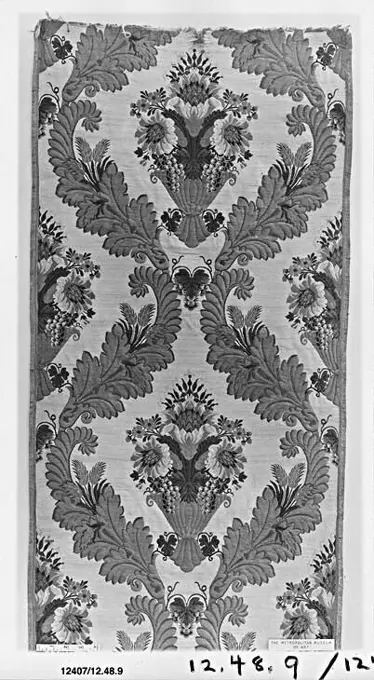
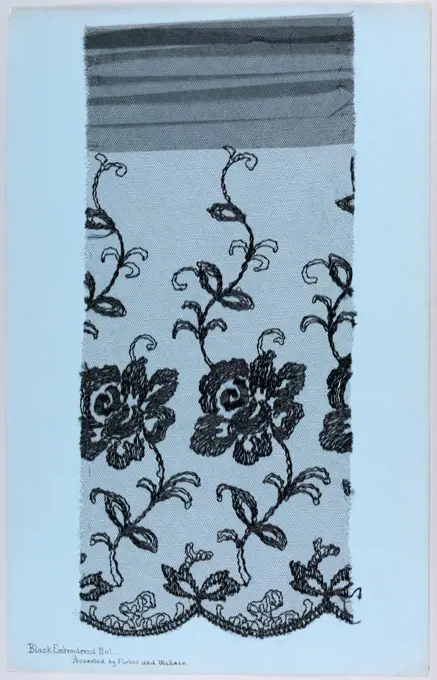
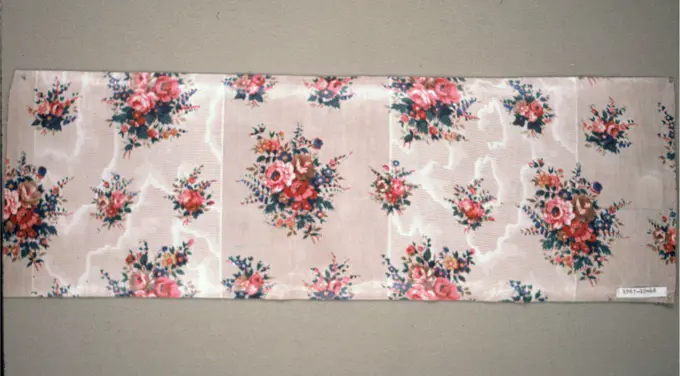
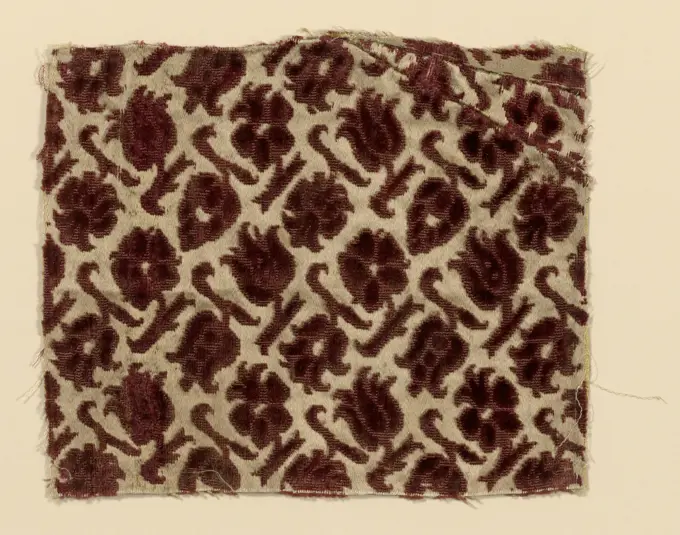
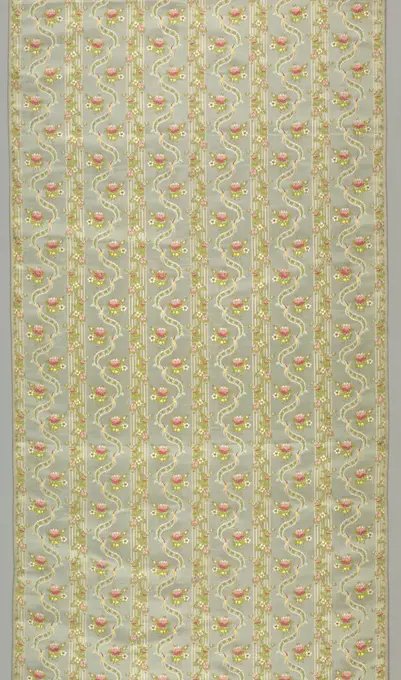
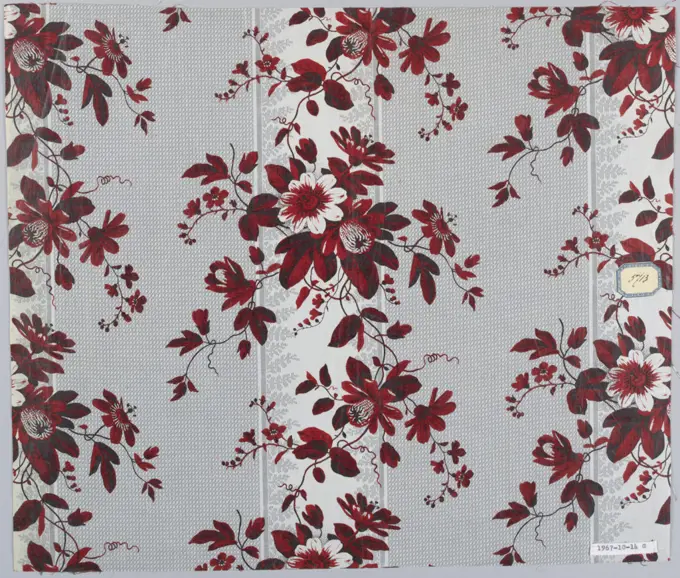
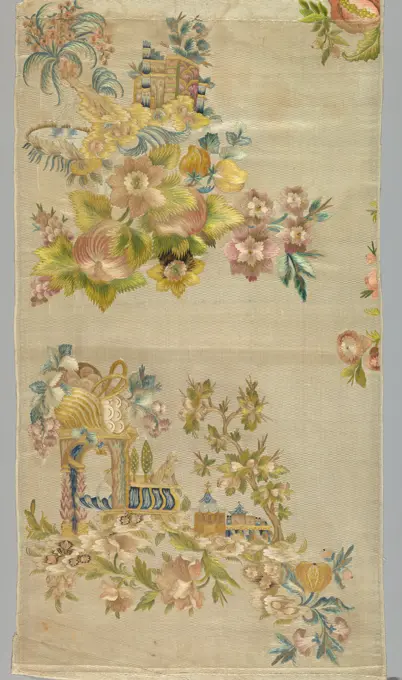
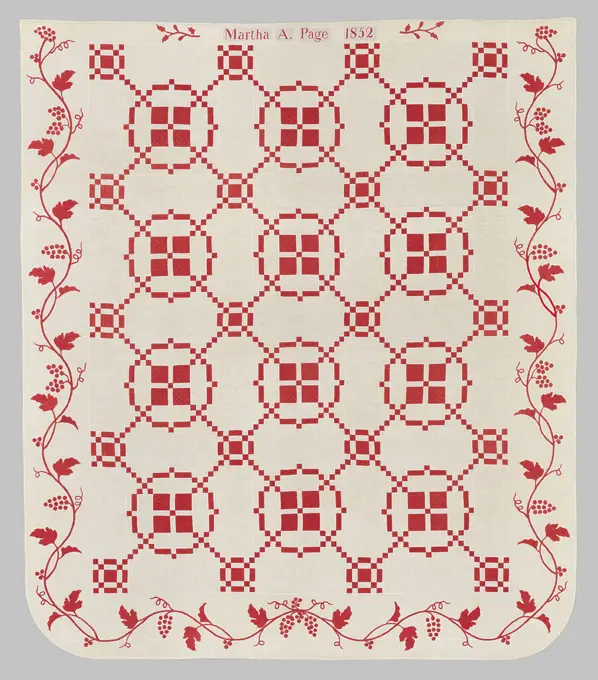
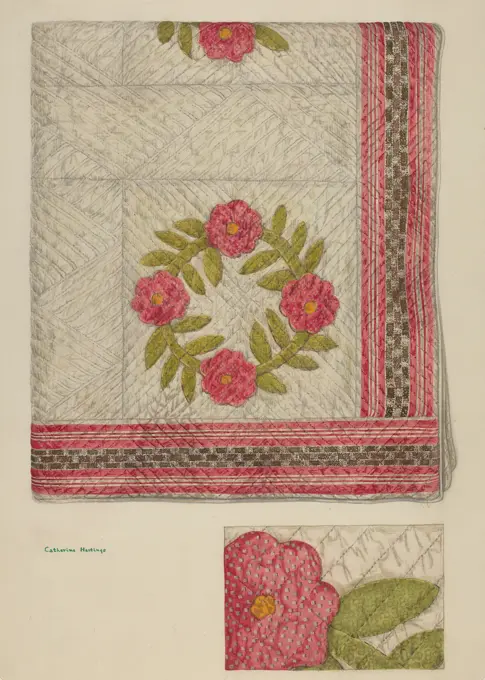
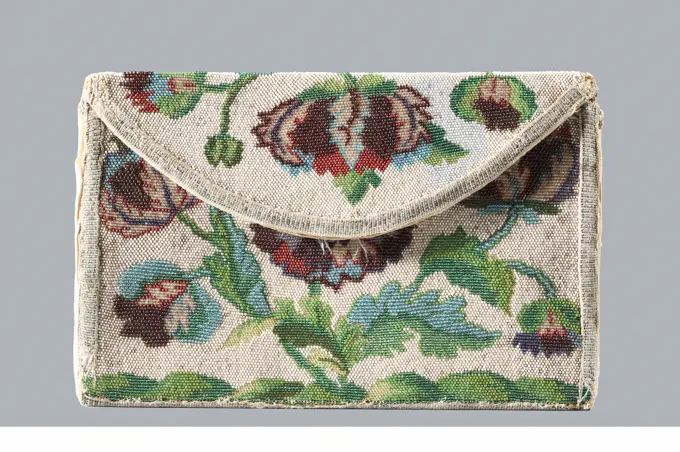
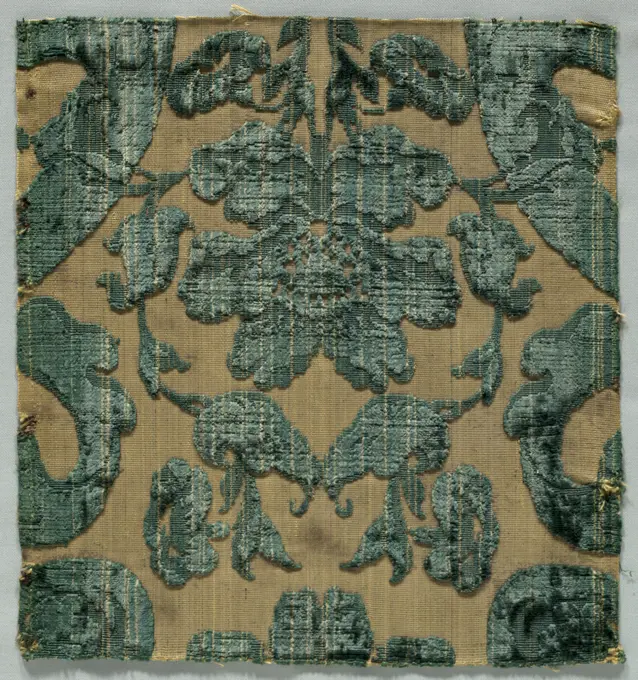
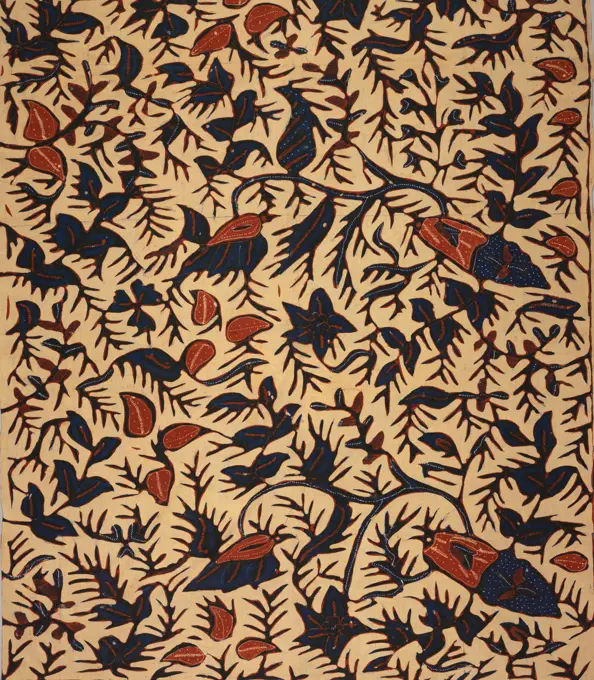
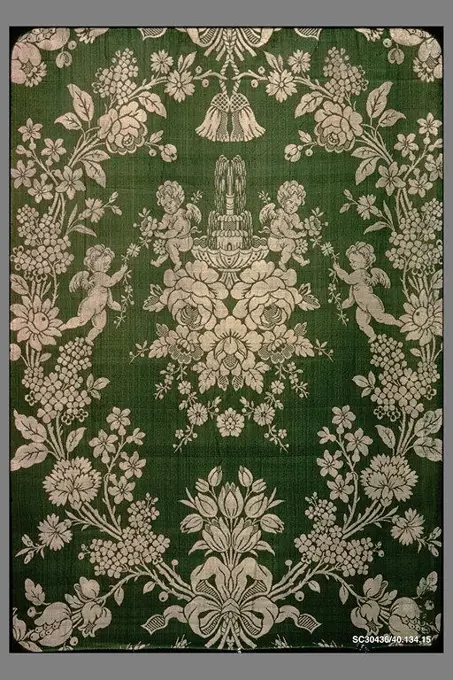
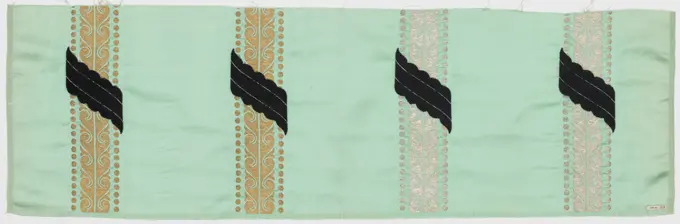
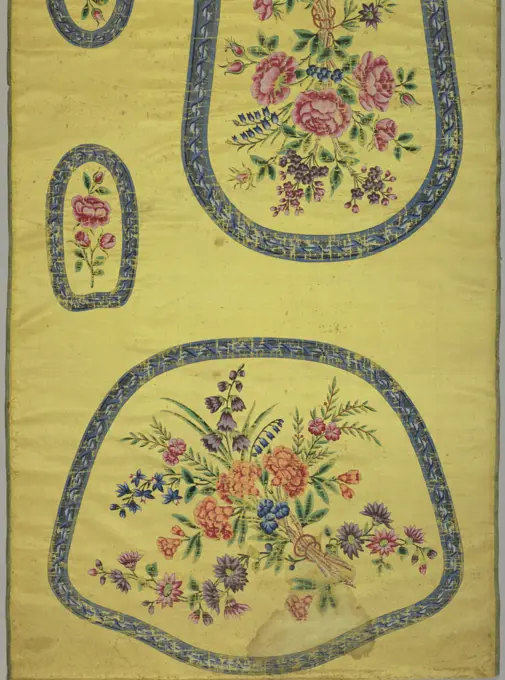
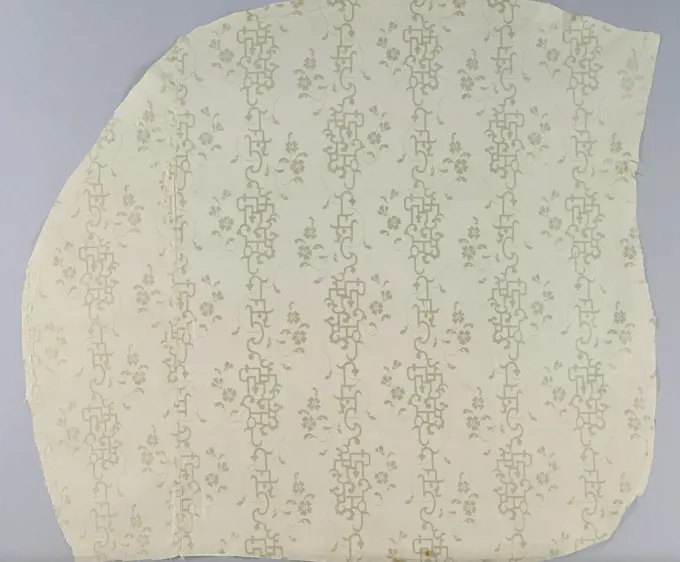
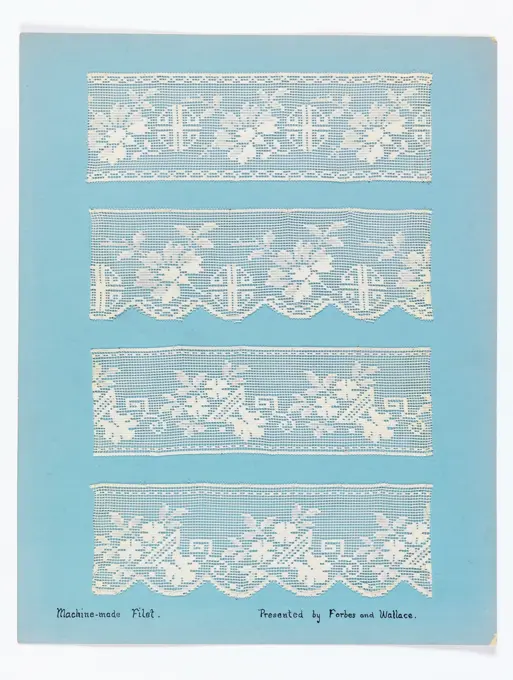
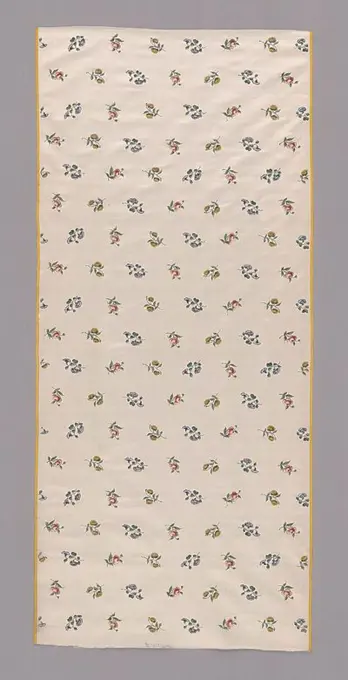
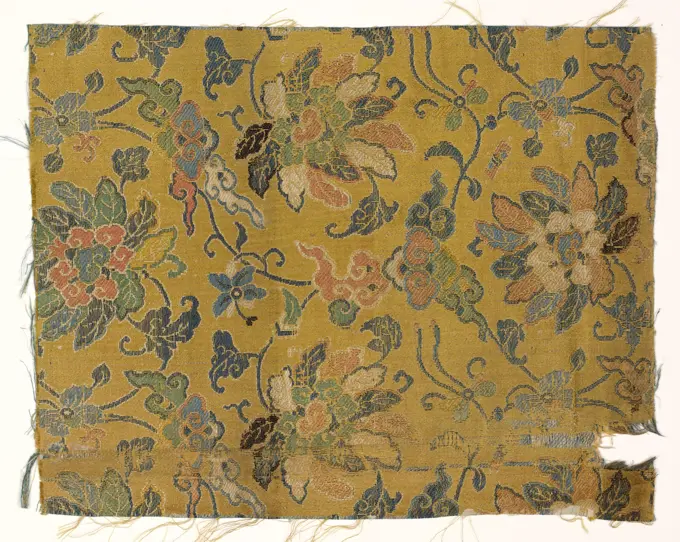
Textile (France); wool on cottonValance (Germany); cotton, linen, silk; 17 x 31 cm (6 11/16 x 12 3/16 in.)Textile (France); linen, cottonPiece early 19th century Russian. Piece 219392Machine-made openwork samples, Medium: cardboard, linen, silk, metallic Technique: linen embroidery with ground cloth dissolved Examples of embroidery on net produced by the Schiffli machine Metallic embroidery on net Machine-made openwork in imitation of hand-embroidered net Mostly floral and a few geometric patterns, some designs described as 'Spanish' Imitation hand-made filet Machine filet Imitation filet crochet Ploven (burnt-out lace) Fancy curtain lace made on the Levers machines Real filet (handmade) next to Machine-made filet Spotted curtain nets, made chiefly at Nottingham, England and Caudry, France., Samples of machine-made openwork and several examples of hand made lace mounted on boards. They imitate hand-embroidered net, crochet, or needlepoint. All are floral patterns plus a few of early 1920's geometric style., 'Embroidered net' produced by the Schiffli Machine., USA, ca. 1910, lace, Machine-made openwork samplesTextile, Medium: silk Technique: plain compound weave, Design of conventional flower forms in supplementary gold-colored silk wefts on navy blue, ribbed, plain cloth ground. Ribbing formed by bundled black silk wefts covered by the navy blue warps., Japan, 19th century, woven textiles, TextileFragment brocheted yellow silk with multicolor pattern of bouquets from, among other things, poppies, hyacinthen, asters. Fragment yellow silk with multicolor pattern in silver, white, red, purple, brown and blue of bouquets of poppies, hyacinthen, asters etc., surrounded by leafwork. Object is composed of two fragments sewn together.Piece 18th-19th century Japan. Piece 67538Textile (France); cottonSampler (Netherlands); silk embroidery on linen foundationTextile (England); cottonBand (Italy); silk and cottonFragment of silk fabric  lace pattern unknownFragment (France); silkTextile (France); silk; Warp x Weft: 194 x 49 cm (6 ft. 4 3/8 in. x 19 5/16 in.) Repeat H: 54.5 cm (21 7/16 in.)Costume sample, late 18th century, 6 5/8 x 8 5/8 in. (16.83 x 21.91 cm), Ribbed lavender silk, embroidered in color, France, 18th centurySample, Orinoka Mills, (Philadelphia, Pennsylvania, USA), red/brown warp and two shades of gold color weft making a floral arabesque pattern, USA, ca. 1910, woven textiles, SampleFragment; silk; Warp x Weft (both selvedges present): 63.8 x 73.7 cm (25 1/8 x 29 in.)Fragment Made 1501-1700 Italy. cisele voided satin velvet .Upholstery textile, Medium: silk Technique: compound plain weave, Alternately broad and narrow stripes produced by various colors and different textures of weave. On the narrow stripes are serpentine vines with flowers. On the wider bands are ribbon-like serpentines with bouquets on either side. Pattern produced by extra warp and weft of colored silks., France, 19th century, woven textiles, Upholstery textileHandkerchief or neck nose cloth from Batist and completed around with a strip of dick with a wavy rank and curling side branches with a peony. Handkerchief or nostlich of Batist around finished with a strip of natural colosside: Flanders side. Square model. In one of the corners, the batist has been marked with the crowned text: 'MW 6'. Side: The repetitive and continuous pattern consists of a wavy rank with curling leaves and under every wave top and in each golf valley a curling side branch with a peony. The motifs are made in linen stroke with openwork edges and a few recesses. The motifs are connected by a five-grown soil. Upper and bottom of the strip are straight finished, with the underside (outside) provided with picots.Length early 20th century China for Western market. Length 69575Frieze (USA); Manufactured by Maxwell & Co., S.A. (United States); machine-printed paper; 92 x 49.5 cm (36 1/4 x 19 1/2 in.)Wrapping cloth. Culture: China. Dimensions: 43 1/2 x 44 1/2 in. (110.49 x 113.03 cm). Date: 19th century.Wrapping cloth was used to bundle material for carrying and was popular in East Asia before the introduction of the modern backpack. Resist- and stencil-dyed patterns of two pairs of stylized badgers hugging each other appear on opposite corners. The Chinese word for "badger" (huan) is pronounced the same as the word for "happiness." Two badgers, therefore, symbolize double happiness, a common pun in Chinese art. Museum: Metropolitan Museum of Art, New York, USA.Textile, Schwartz-Huguenin, Medium: cotton Technique: printed by engraved roller and possibly block printed on plain weave; highly glazed, Group having same ground, roller-printed, of a broad grey stripe formed of minute white dots alternating with white stripe edged with fancy foliage pattern. Different floral patterns printed over this ground, probably by block. A) Large Iris pattern, purple and green.B) Garden flowers. C) Sprays of blue flowers with grey-green foliage D) Small flower sprays, brown and green. E) Lillies of the Valley , pansies and roses in violet. F) Bright pink, all-over floral sprays. G) Same flower sprays as F in reds and browns. All highly glazed., 1851-63, printed, dyed & painted textiles, TextilePiece late 18th century French. Piece 219621Preserved Birds.. H. Ropes & CompanyFragmentCover first half 18th century French. Cover 227651Chasuble Made 1710-1730 Italy. Silk, warp-faced weft-ribbed plain weave; underlaid with linen, plain weave; appliquÈd with gilt- and silvered-metal strips and metal-strip-wrapped silk, bobbin part lace; embroidered with silk, gilt- and silvered-metal strips and wire coils, and metal-strip-wrapped silk in laid work, couching, and padded couching; edged with silvered-metal-strip-wrapped silk, warp-faced weft-ribbed plain weave with extended weft uncut fringe, and bobbin straight lace; lined with silk, plain weave .Panel, 17th century, 70 x 47 3/4in. (177.8 x 121.3cm), Silk, linen; counted thread embroidery, Spain, 17th century, Although woven and embroidered in Christian Spain, this wall hanging exhibits a strong Islamic influence. During more than seven centuries of Islamic rule (711-1492), highly skilled Moorish craftsmen formed the basis of textile production throughout the Iberian peninsula, which endured long after their expulsion. Islamic ornamentation is commonly characterized by repetitive geometric patterns, in which stylized plant and animal motifs are evenly distributed over the entire surface. Here, symmetric bands of rosettes frame the field of rampant griffins.Leaf with large flowers with fruits, anonymous, 1700 - 1850 brocade paper Leaf with large flowers with fruits. With label with inscription: 'J.A. Room ... positis'. Used as a cover.  paper. relief printing ornament derived from plant formsVintage Christmas FramesApplique and Patchwork Quilt. Dated: c. 1939. Dimensions: overall: 57 x 54.9 cm (22 7/16 x 21 5/8 in.). Medium: watercolor and graphite on paper. Museum: National Gallery of Art, Washington DC. Author: A. Zimet.Textile (France); silk on silkPiece 18th-19th century Japan. Piece. Japan. 18th-19th century. Silk. Textiles-WovenSample (France); silk, metallic threadPiece of fabric. unknown, authorFragment. Italy. Date: 1575-1600. Dimensions: 37.5 x 12.4 cm (14 3/4 x 4 7/8 in.). Silk, warp-float faced satin weave with supplementary pile warps forming uncut and voided velvet; outlined by gilt-metal-strip-wrapped silk in running and couching stitches. Origin: Italy. Museum: The Chicago Art Institute, Chicago, USA.Textile (USA); Manufactured by Orinoka Mills (United States); wool, cottonTextile (France); silk, cotton; Anonymous bequest in memory of Albert and Rebecca Elsberg; 1938-82-48-cFragment. Italy. Date: 1650-1700. Dimensions: 38 x 27 cm (15 x 10 5/8 in.). Silk, gold gilt strips, and gold gilt strips wound around silk fiber core, plain weave with supplementary brocading wefts. Origin: Italy. Museum: The Chicago Art Institute, Chicago, USA.Coverlet Fragment (USA); wool, cottonPiece 1760-70 French. Piece 219641Table round, Medium: cotton, rayon Technique: stem and knot stitches embroidered on plain weave, machine-made trim, Light brown table round with an embroidered border of yellow flowers and dark green leaves. Yellow flowers are made from knot stitches while leaves and stems are embroidered using stem stitches in dark green. Matching light brown border trim., USA, ca. 1908, embroidery & stitching, Table roundBurgoyne Surrenders or Burgoyne Surrounded Quilt. Culture: American. Dimensions: 80 3/4 × 93 1/2 in. (205.1 × 237.5 cm). Maker: Martha A. Page. Date: 1852.The geometric pattern of this quilt--commonly known as Burgoyne Surrenders or Burgoyne Surrounded--is said to refer to one of the most pivotal events in the American Revolution. In 1777, the British failed in their attempt to take control of the strategic Hudson River, and in the end British General Burgoyne with nearly six thousand of his men were surrounded by American troops and forced to surrender near Albany, New York. In this quilt, Burgoyne's army is represented by the squares at the center of the blocks, encircled by the American troops. Yet, this design could have also been inspired by the simple, grid-like patterns seen in handwoven linens and woolen coverlets of the first half of the nineteenth century. Museum: Metropolitan Museum of Art, New York, USA.Hanging late 17th-early 18th century probably Italian. Hanging 229412Cushion Cover Made 1689 England. Linen and cotton, weft-float faced twill weave; embroidered with wool yarns in arrowhead, back, buttonhole, herringbone, running, satin, sheaf filling, and stem stitches; wool tassels at corners .Piece of dress silk 1745-50 French or British. Piece of dress silk 223175Piece 1750-60 French. Piece 223226Napkin from white Linnamast ,, 1764 White Linnamasten napkin with so -called edge pattern, brand Kroon G 12. Northern Netherlands (Possible) linen (material) damask White Linnamasten napkin with so -called edge pattern, brand Kroon G 12. Northern Netherlands (Possible) linen (material) damaskPiece 16th century Spanish. Piece 223490Fragment; silkFragment, medium: linen Ttechnique: supplementary warp forming raised pile in plain weave foundation (velvet), Allover repeat of flower with two flanking leaves., 17th century, woven textiles, FragmentKatherine Hastings, Quilt  Garden Wreath, c 1939 Quilt - Garden WreathBedcover Made 1801-1825 United States. Cotton, plain weave; embroidered in wool and cotton; appliquÈd with edges turned in, couching with large slanting stitches, encroaching satin stitch, black shading, fishbone, satin .Panel, Medium: silk on silk, metallic thread Technique: embroidered on satin weave, Long, narrow shaped panel of white satin decorated with ribbon embroidery and silk thread. Designs of delicate festoons of flowers and ribbons extend almost entirely across the panel, primarily in narrow ribbons instead of silk thread. Some festoons of dots outlined in metallic thread., France, late 18th century, embroidery & stitching, PanelHandkerchief 1850-60 French. Handkerchief 16843918th grade cover, front GAL2008.9.2_1Sample early 19th century French. Sample 224752Velvet Fragment, early 1600s. Italy, early 17th century. Velvet; overall: 31.5 x 29.3 cm (12 3/8 x 11 9/16 in.).Textile (France); silk, metallic threadSidewall (USA); machine-printed on paper; 39 x 31 cm (15 3/8 x 12 3/16 in.)Sarong (Indonesia); cottonPiece late 18th century French, Lyons. Piece 226510Textile (France); silk, metallic thread; Anonymous bequest in memory of Albert and Rebecca Elsberg; 1938-82-58-bTrimming (France); silkFragment, Medium: silk Technique: painted, Chair covering, yellow., China, 19th century, printed, dyed & painted textiles, FragmentTextile, Medium: silk Technique: fancy twill weave, Cream silk with delicate vertical frets intertwined with flowers., France, 1839, woven textiles, TextileFragment Made 1675-1800 Japan. .Sample Book Page (USA); cardboard, linen, silk, metallic; 1971-26-2-6Fragment; silk, metallicEmbroidery (Near East); wool and silkFragment; silkEmbroidered kerchief trimming unknownPrinted Textile. Dated: 1935/1942. Dimensions: overall: 52.5 x 68.7 cm (20 11/16 x 27 1/16 in.). Medium: watercolor and graphite on paperboard. Museum: National Gallery of Art, Washington DC. Author: Edward Kibbee.Fragment, 17th century; silk; Warp x Weft: 12.5 x 15.3 cm (4 15/16 x 6 in.)Textile (France); cottonScarf Sample (France); silkSleeve Cuff (China); silkPiece of fabric. unknown, authorTextile (Japan); cottonTextile Swatches Onondaga Silk Company, Inc. (1925-1981). , 1948-1959. 35 wool, 33 silk, 32 metal, 22 x 14 1/2 in. (55.9 x 36.8 cm).    1948-1959Napkin from white Linnamast with thrown flowers and in the corners the shared weapon of Rijckaert-Bartolotti, Anonymous, c. 1660 - c. 1670 Napkin from white Linnamast with pattern of stripped flowers, edges with decorative trusses, in the corners the shared weapon of Rijckaert-Bartolotti; for Jacobus Rijkckaert (1610-1671) and Constantia Bartolotti (1615-1679), who married in 1638. See also BK-1988-17: completely equal napkin, except for horrent and probably made for Constantia Rijckaert itself. Northern NetherlandsHaarlem (possibly) linen (material) damask Napkin from white Linnamast with pattern of stripped flowers, edges with decorative trusses, in the corners the shared weapon of Rijckaert-Bartolotti; for Jacobus Rijkckaert (1610-1671) and Constantia Bartolotti (1615-1679), who married in 1638. See also BK-1988-17: completely equal napkin, except for horrent and probably made for Constantia Rijckaert itself. Northern NetherlandsHaarlem (possibly) linen (material) damaskTextile, Schwartz-Huguenin, Medium: cotton Technique: printed by engraved roller and possibly block printed on plain weave; highly glazed, Group having same ground, roller-printed, of a broad grey stripe formed of minute white dots alternating with white stripe edged with fancy foliage pattern. Different floral patterns printed over this ground, probably by block. A) Large Iris pattern, purple and green.B) Garden flowers. C) Sprays of blue flowers with grey-green foliage D) Small flower sprays, brown and green. E) Lillies of the Valley , pansies and roses in violet. F) Bright pink, all-over floral sprays. G) Same flower sprays as F in reds and browns. All highly glazed., 1851-63, printed, dyed & painted textiles, TextileSidewall - Sample (USA); Manufactured by Becker, Smith & Page, Inc.; machine-printedFragment, Medium: silk, metallic thread Technique: embroidered, Fragment with a design of large flowers, leaves and stems embroidered in shades of red, purple, blue, and green with metallic thread on a ground of cream-colored silk woven in a horizontal chevron pattern., France, 18th century, embroidery & stitching, FragmentFragment; medium; silk, metallicSitsen bedspread with white stock with large serpentine tree trunk with medium -sized flowers, anonymous, 1700 - 1800 Sitsen bedspread with a large serpentine tree trunk with medium -sized flowers, butterflies, squirrels, lizards and birds in pink and blue. Unsurbed, washed and faded. In the cotton (textile) chintz Sitsen bedspread with a large serpentine tree trunk with medium -sized flowers, butterflies, squirrels, lizards and birds in pink and blue. Unsurbed, washed and faded. In the cotton (textile) chintzTextile Swatches Onondaga Silk Company, Inc. (1925-1981). , 1948-1959. 71 wool, 15 acrylic, 14 silk, 50 3/4 x 18 in. (128.9 x 45.7 cm).    1948-1959Ribbon ca. 1830 French. Ribbon 213217Piece 18th-19th century Japan. Piece. Japan. 18th-19th century. Silk. Textiles-VelvetsFragment, Medium: silk Technique: compound cloth with supplementary warp pile (velvet), warp-printed, Velvet fragment. White ground with horizontal stripes and sawtooth lines in supplementary yellow warp. Vertical blue stripes of cut pile showing design of floral vines, and a large central band showing a partial portrait medallion with florals., France, late 18th century, printed, dyed & painted textiles, FragmentFrieze, F. E. James Co., New York, New York, Machine-printed paper, liquid mica, Alternating large and small rounded arabesques or medallions, with scrolls. Printed in dark and light pink and white on woven-like ground. Two borders printed across the width., New York, New York, USA, 1905-1915, Wallcoverings, FriezeFragment Made 1701-1800 France. Cotton, plain weave; block printed .Valance Made 1801-1900 France. Silk, warp-float faced satin weave; painted appliquÈd with linen, gauze weave; embroidered with silk chenilled and yarns in darning stitches, chain, and satin stitches; French knots .Cover, 19th century, L.40 x W.37 in., linen, silk, metal threads; needlework, Turkey, 19th centuryPanel (Dress Fabric). Made in China for the European/American market. Date: 1776-1800. Dimensions: 167.7 × 75 cm (66 × 29 1/2 in.)Warp repeat: 52 cm (29 1/2 in.). Silk, satin weave; painted. Origin: China. Museum: The Chicago Art Institute, Chicago, USA.Fragment, 1700s. China, 18th century. Satin ground; silk diasper weave; overall: 19.1 x 16 cm (7 1/2 x 6 5/16 in.).Textile (England); cotton