Woven Textile Artifacts

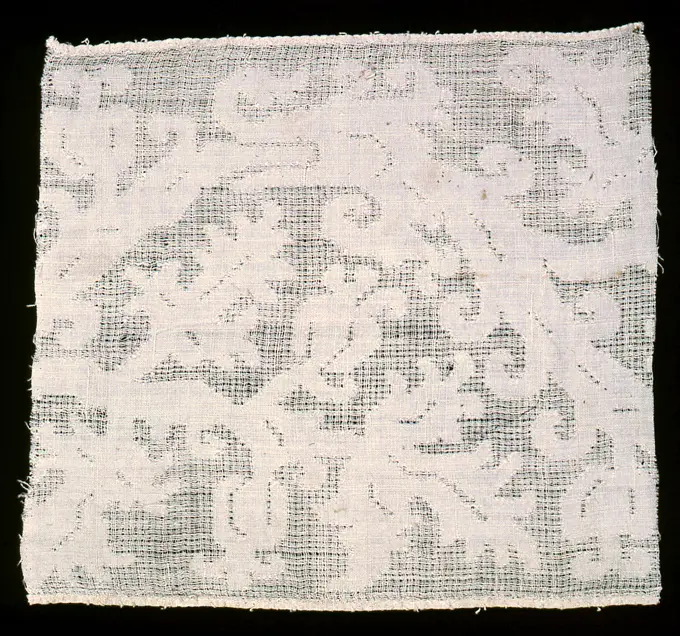
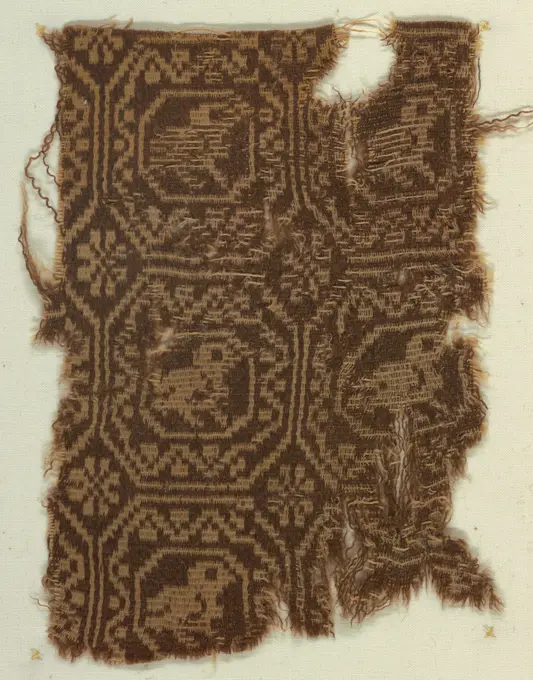
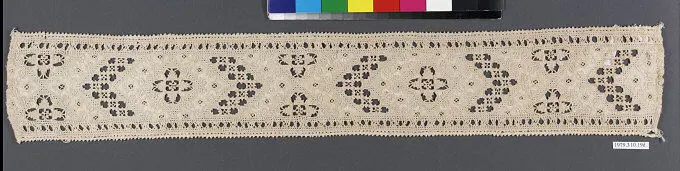
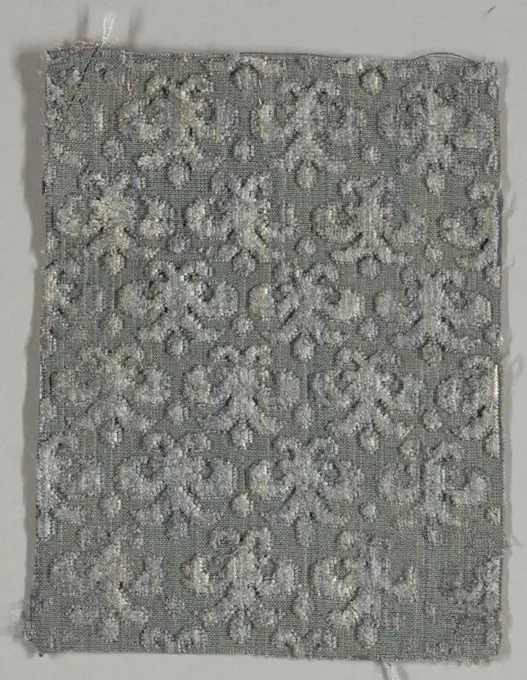
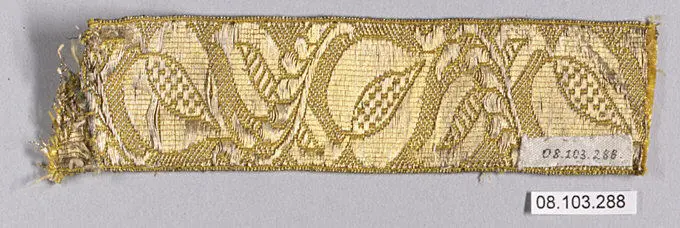
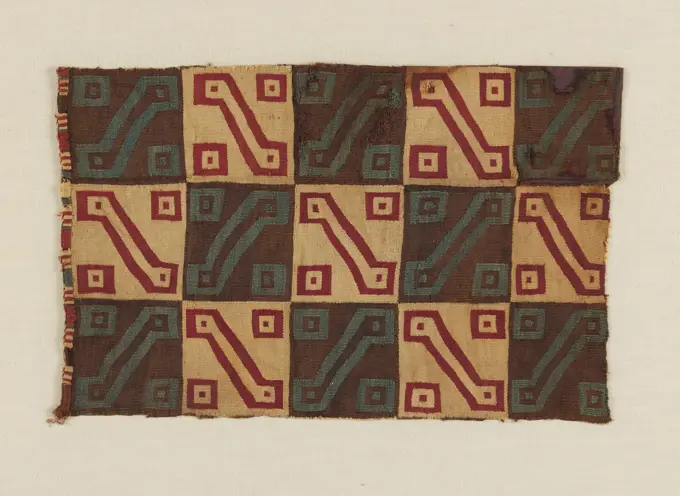
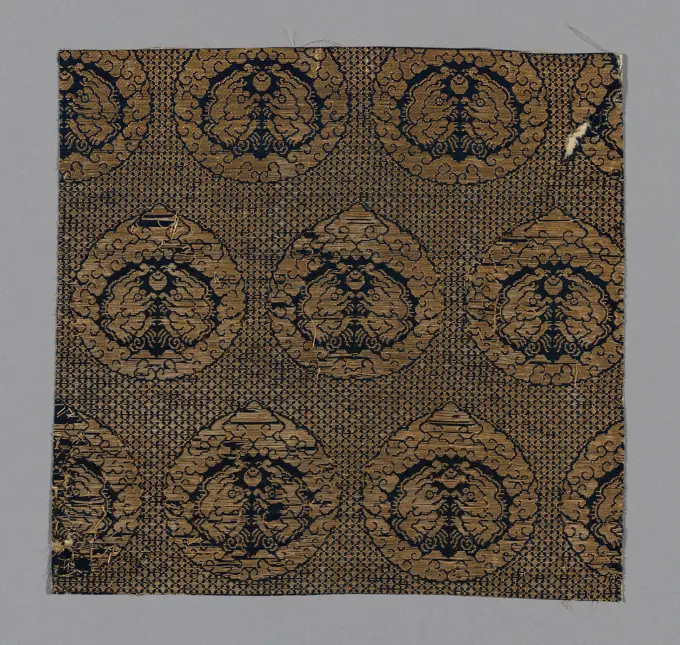
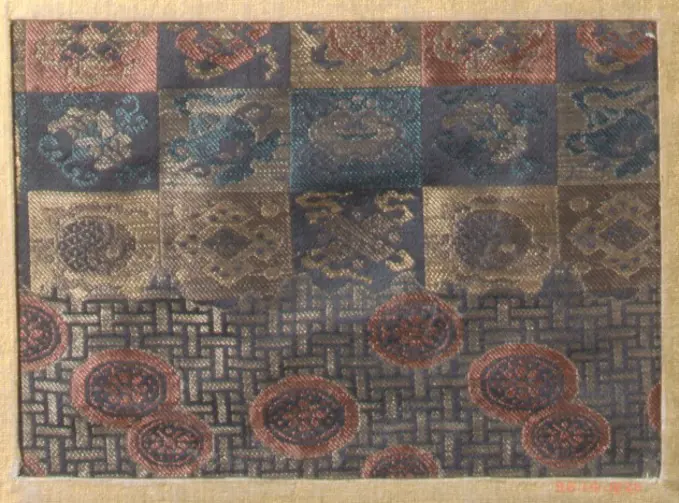
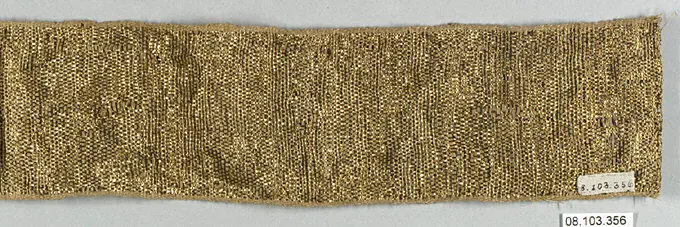
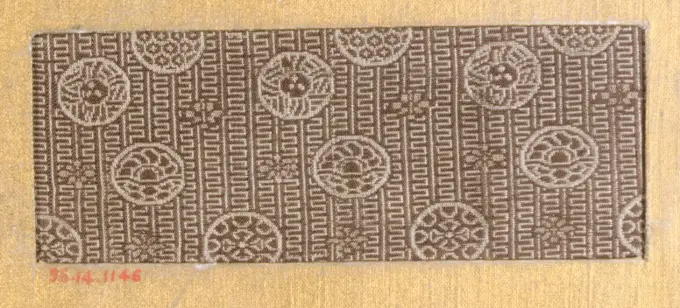
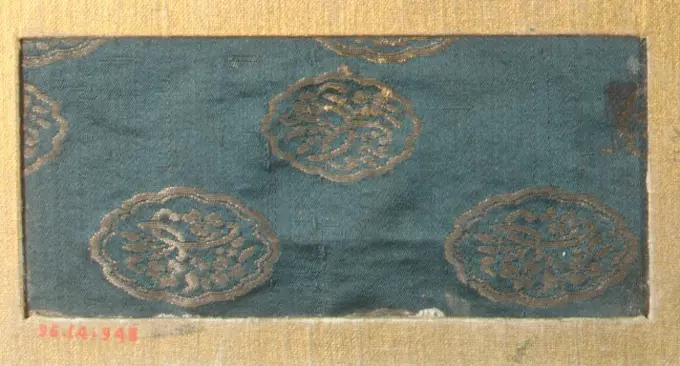
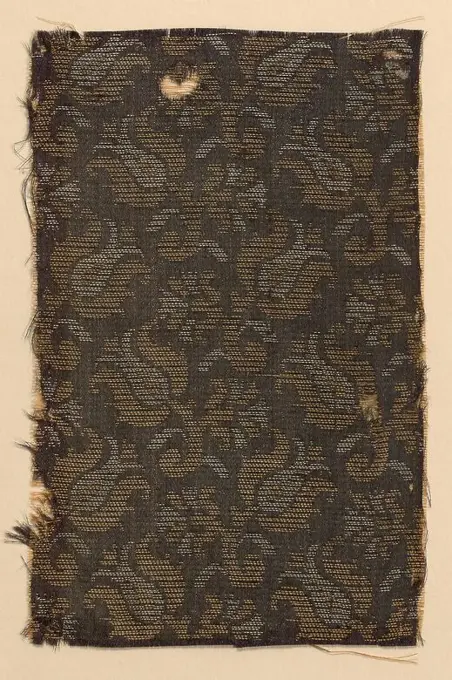
A selection of woven textile fragments from different periods, highlighting intricate designs in silk and metallic threads, showcasing textile artistry.

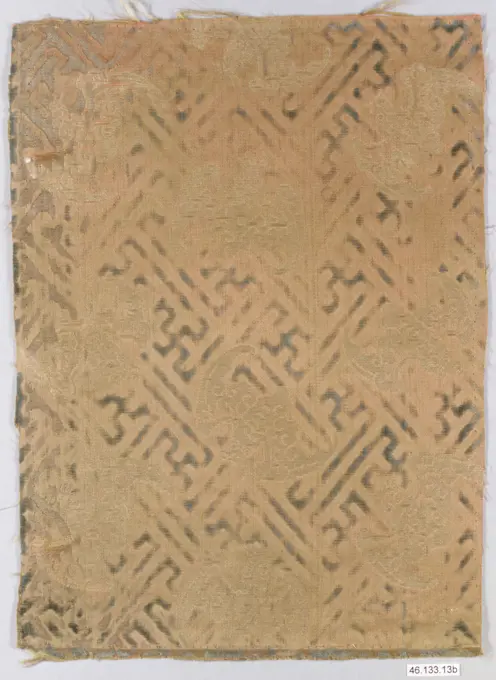
Textile, China, 18th-19th century, woven textiles, Textile
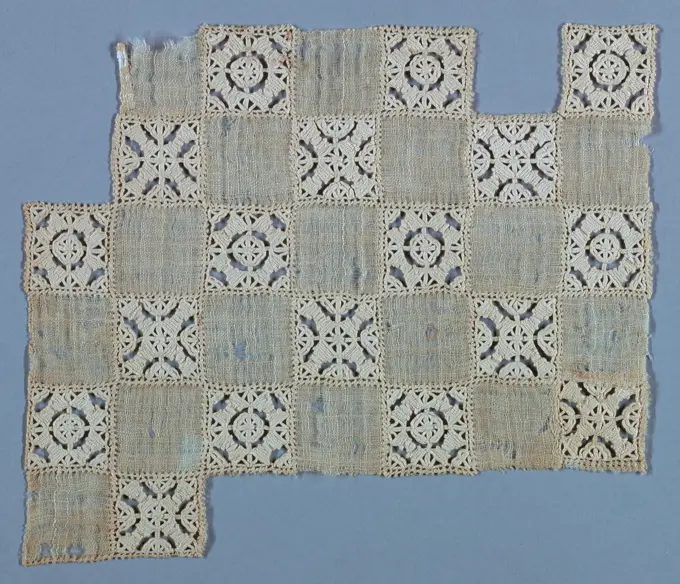
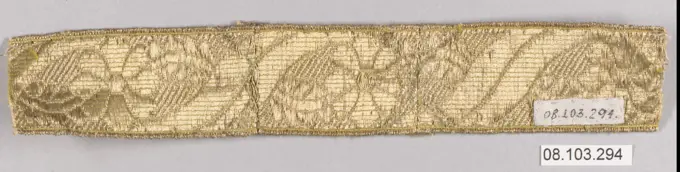
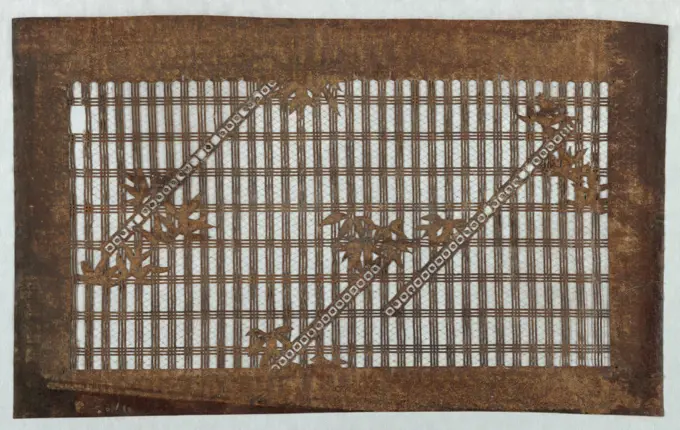
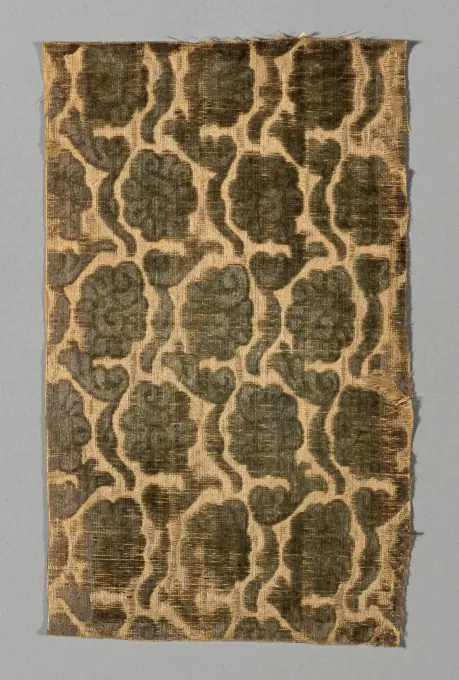
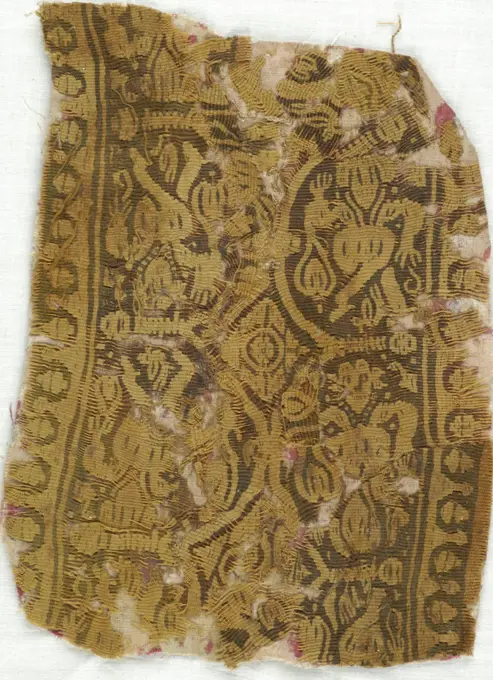
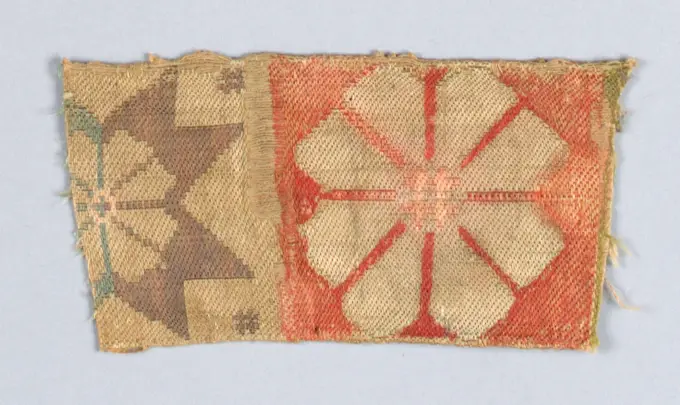
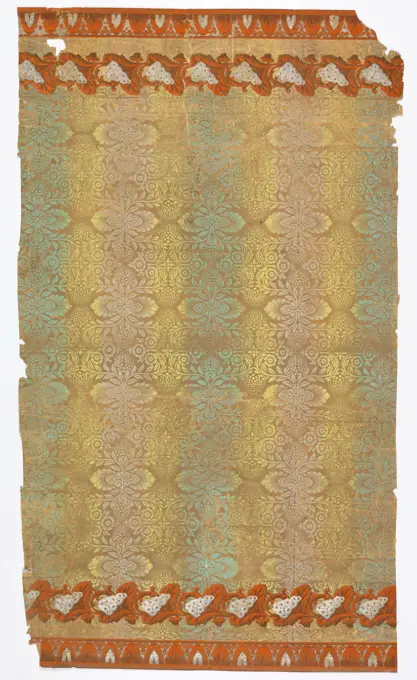
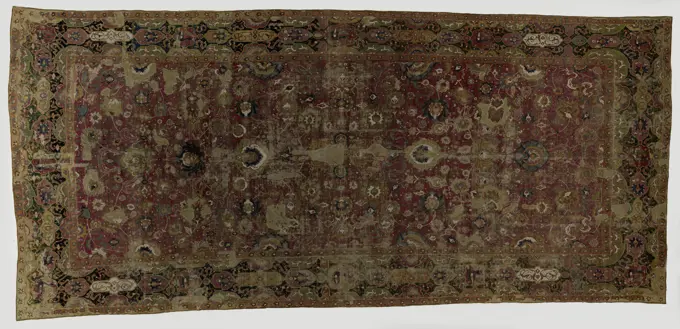
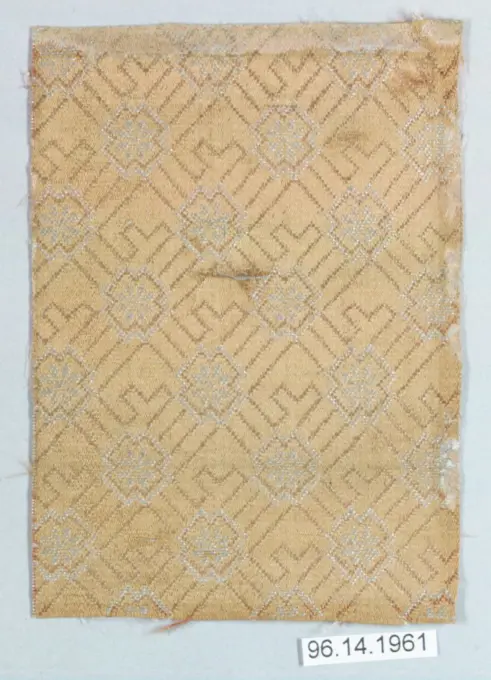
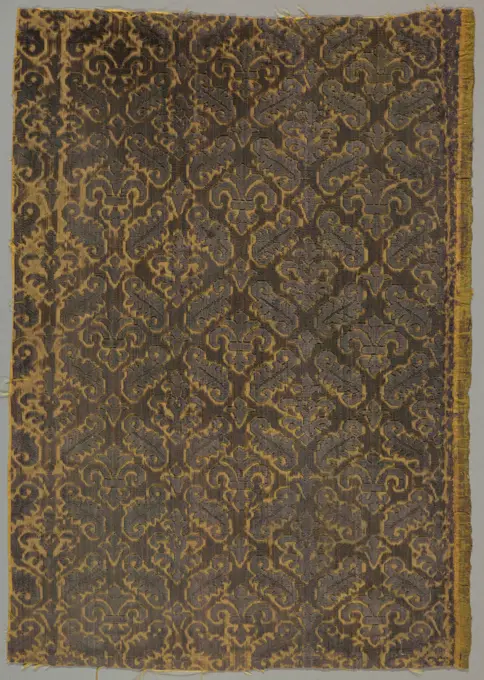
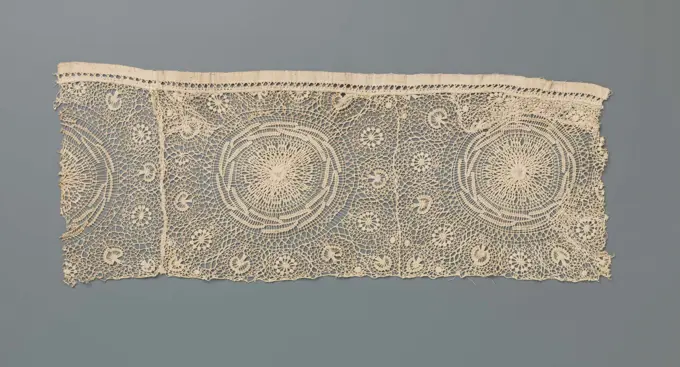
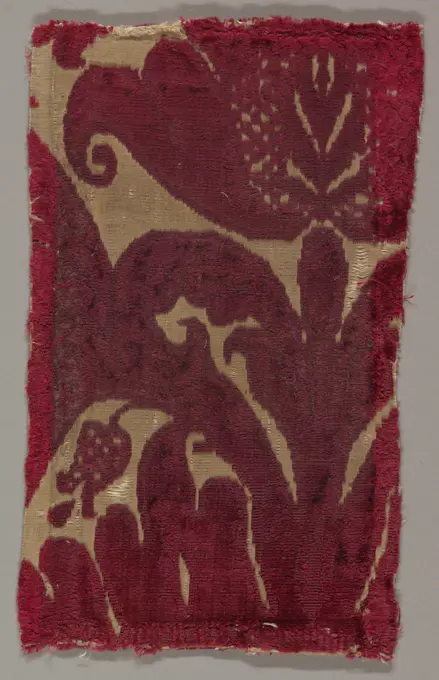
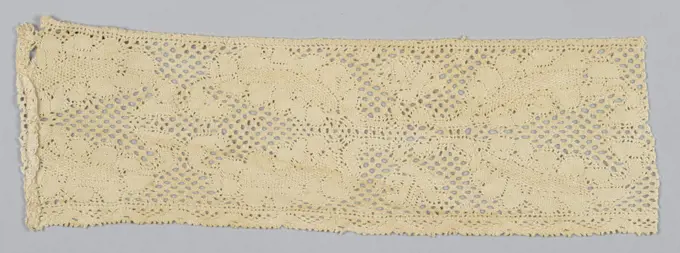
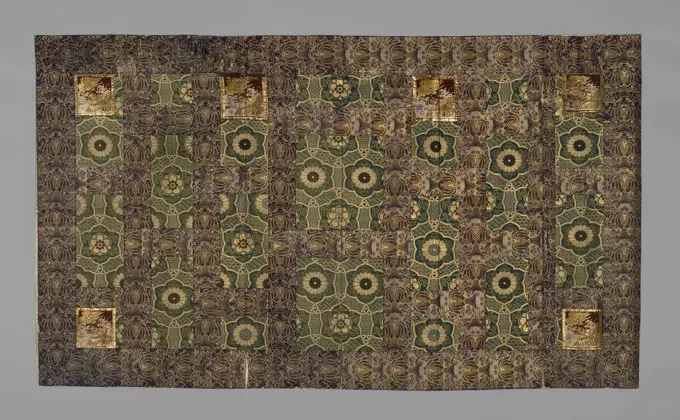
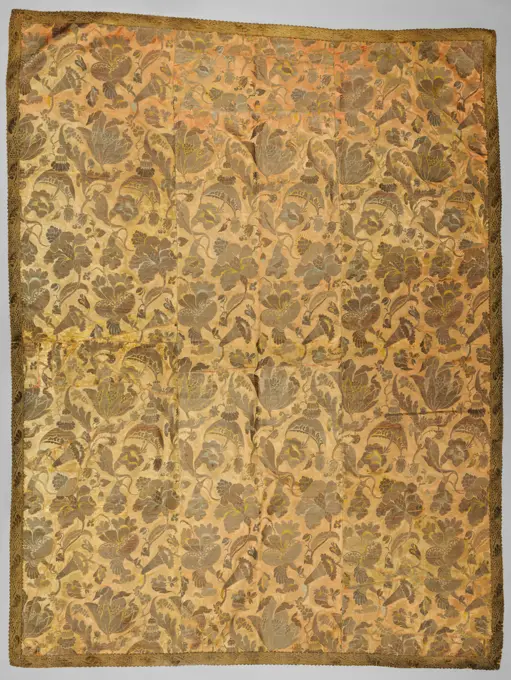
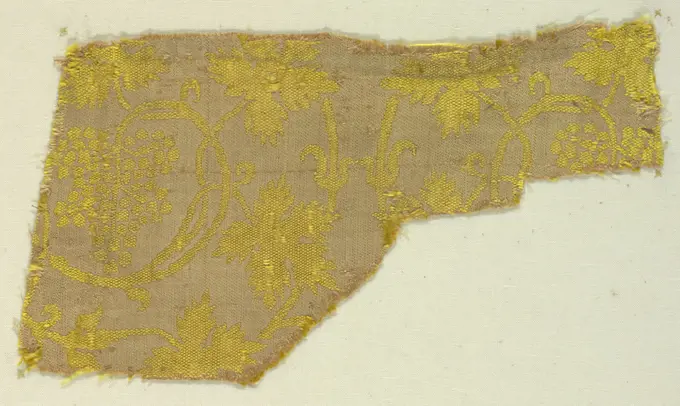
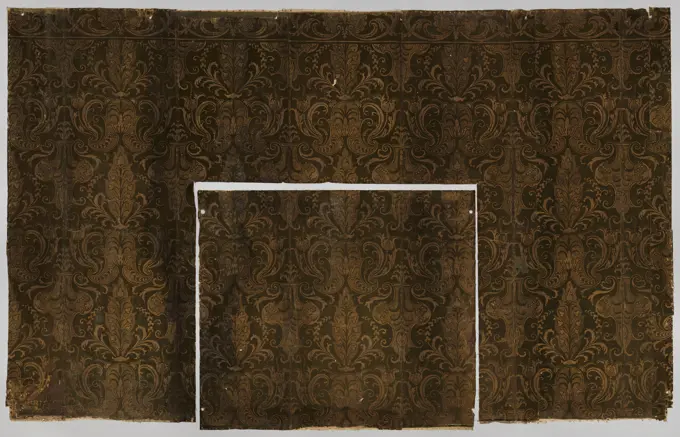
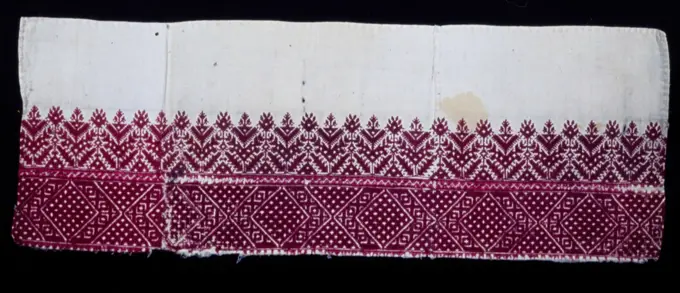
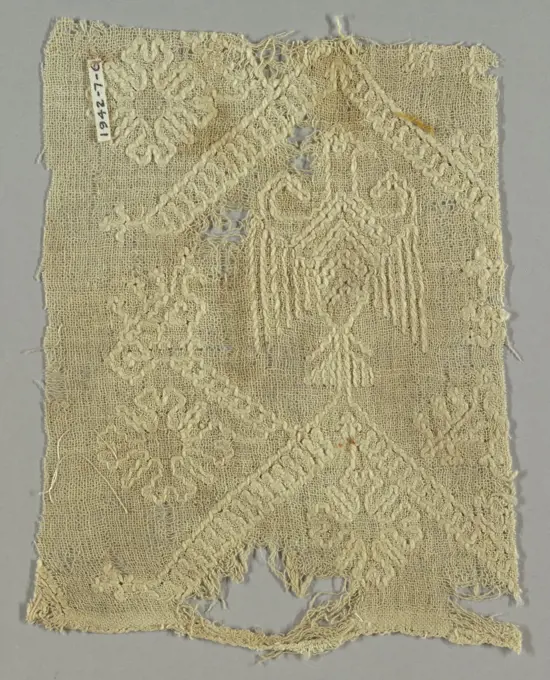
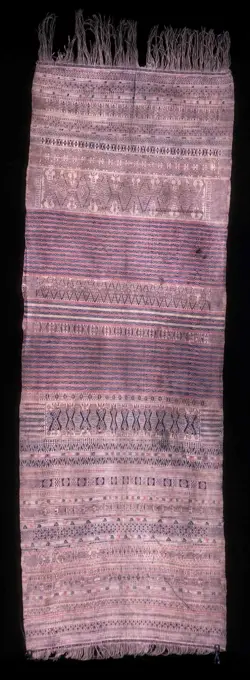
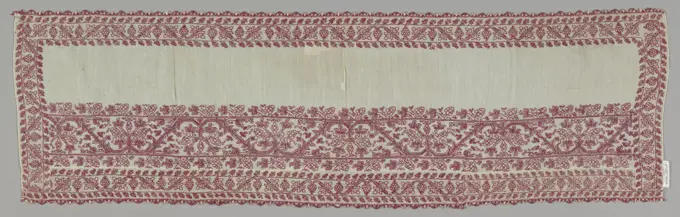
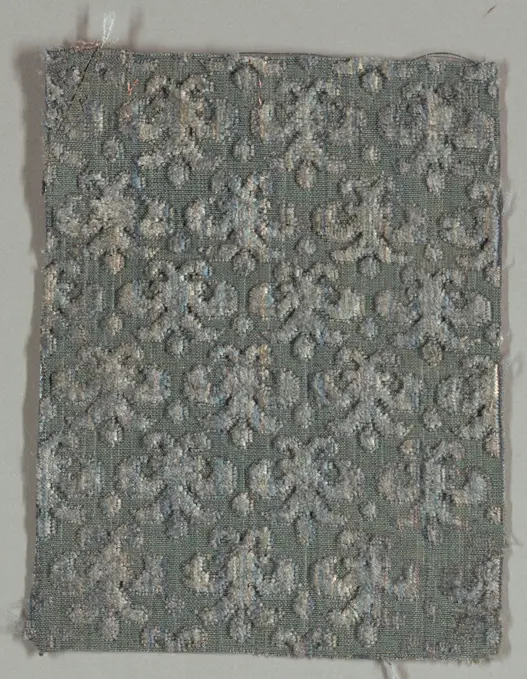
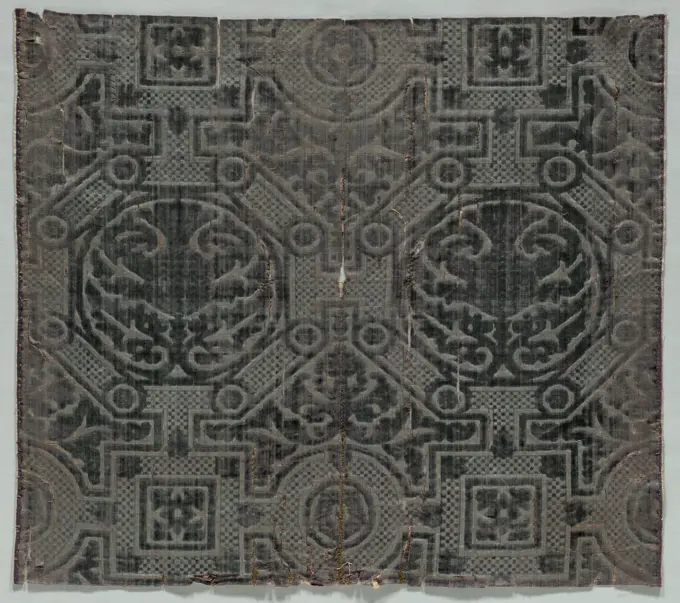
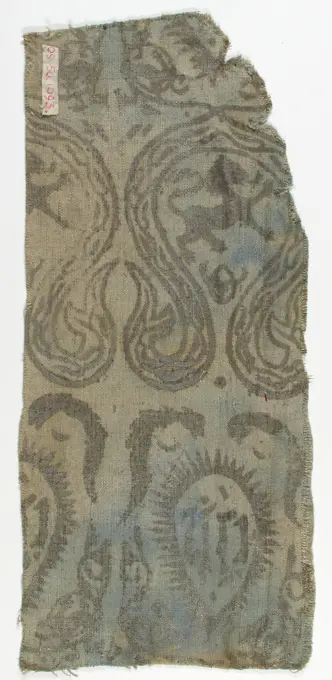
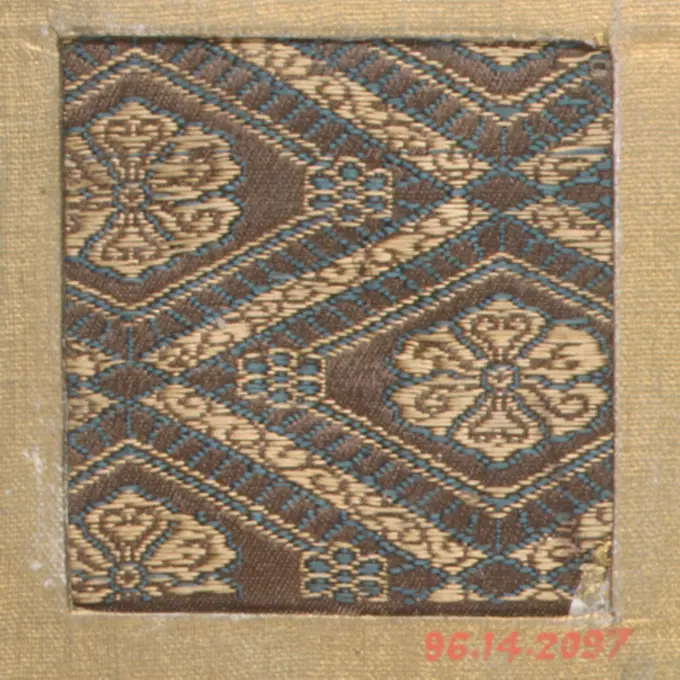
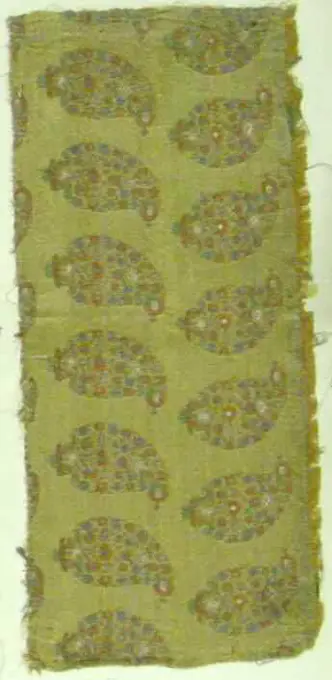
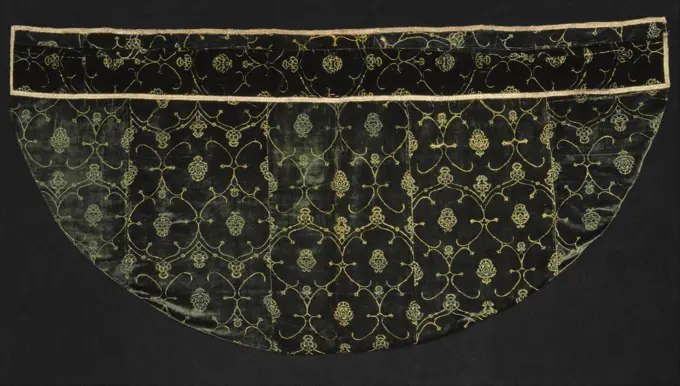
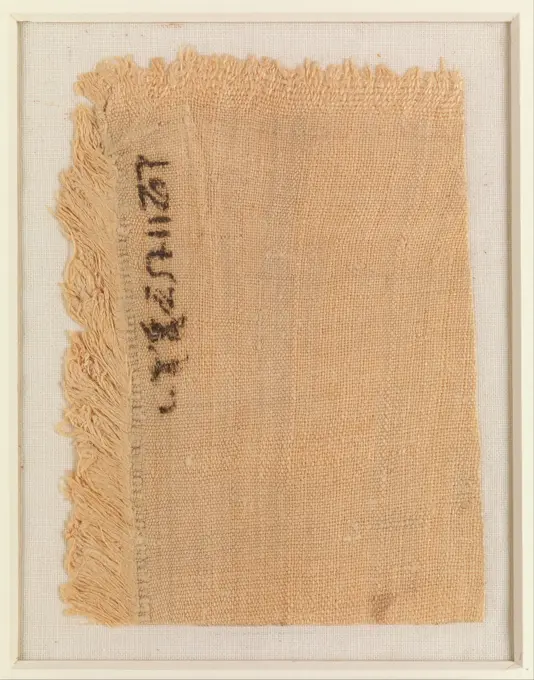
Fragment, Medium: silk and metallic thread, Ground divided into modified lozenges enclosing abstract floral forms. In white, gold and silver., 17th century, woven textiles, FragmentFragments, Medium: silk Technique: supplementary warp forming cut and uncut raised pile in satin faoundation (velvet), Imbricated or fish-scale pattern in brownish yellow, possibly 17th century, woven textiles, FragmentsTextile, China, 18th-19th century, woven textiles, TextileFragment; silkFragment (Italy); linenFragment (Spain); silkGallon;  18th century (1701-00-00-1800-00-00);Galloon 17th-18th century Unknown. Galloon 213791Textile Sample from Sample Book 19th century Japan. Textile Sample from Sample Book 68267Fragment 15th-16th century Italian. Fragment 230648Bamboo on lattice motif, Mulberry paper (kozo washi) treated with fermented persimmon tannin (kakishibu), and silk threads (itoire), Sprigs of bamboo leaves on a tri-lattice weave also contains traces of thread links (kanoko) Silk threads have been added to support the stencil structure., Japan, mid 18th - early 19th century, textile designs, Katagami, KatagamiFragment Made 1600-1625 Italy. cisele voided satin velvet .Band Fragment with Figural and Geometric Decoration Coptic. Band Fragment with Figural and Geometric Decoration, 5th-7th century C.E. Wool, 6 x 8 1/4 in. (15.2 x 21 cm).   Egyptian, Classical, Ancient Near Eastern Art 5th-7th century C.E.Band Fragment; silk, linenFragment late 16th century Italian. Fragment 230049Sidewall And Border (France); block-printed and flocked on handmade paper; 19.5 x 10.5 cm (7 11/16 x 4 1/8 in.)Oriental carpet ,, 1500 - 1700 Eastern carpet, arabesken and flower carpet, knotted wool () With herati pattern; Ranks, Lotussen, Palmetten in different colors against a carmine red foundation. Herat wool Eastern carpet, arabesken and flower carpet, knotted wool () With herati pattern; Ranks, Lotussen, Palmetten in different colors against a carmine red foundation. Herat woolFragment silk tissue. Fragment of two patterned pieces of green silk on pattern. In the Spitsovals alternately donated styled birds and leaf ornaments. Pattern is signed here and there.Textile; cottonPiece 19th century Japan. Piece 67673Fragment; silk; Bequest of Richard Cranch Greenleaf in memory of his mother, Adeline Emma Greenleaf; 1962-56-94Piece 17th century China. Piece. China. 17th century. Silk. Textiles-VelvetsBorder (England); linenTextile Sample from Sample Book 19th century Japan. Textile Sample from Sample Book 68238Strook naaldkant met zonnen en korenschoven.Strip natural-colored sunny side (needle side): Tenerife. The repeating pattern consists of a square field with a 'sun' in it: a circular center from which bundled wires form the sun's rays. There are concentric decorative moldings around the center. Halfway a thickened line stands up, then narrow elongated motifs bow, who reminiscent of ears of corn. With the elongated narrow motifs, crossed by each side. The outer decorative frame consists of a concretion of circles in which alternately a sun with a dot at the end of each sunburst and a semicircular motif on a stem, possibly a corn sheaf. This corn sheaf motif also stands in every corner of the square field, in the residual space around the circle. The top of the strip is finished with a linen band, with a cut-away edge. The outer decorative frame with circles is at the top of this linen band, partly disturbed (truncated). The strip shows two-and-one-half sun.Textile Sample from Sample Book 19th century Japan. Textile Sample from Sample Book 68257Fragment wine red satin with gold thread, with pattern of large and small flowers on branches with leaves, anonymous, c. 1640 - c. 1700 Fragment wine red satin with gold thread, with a pattern of large and small flowers of branches with leaves. Eastern textile. Germany (possibly) silk. linen (material). Fragment wine red satin with gold thread, with a pattern of large and small flowers of branches with leaves. Eastern textile. Germany (possibly) silk. linen (material).Fragment Made 1650-1700 Italy. silk .Fragment (Italy); silkWelum;  XVIII/19th century (1890-00-00-1910-00-00);Piece 18th-19th century Japan. Piece. Japan. 18th-19th century. Silk. Textiles-WovenFragment, Medium: linen Technique: bobbin lace, peasant style, Band with mirror reverse of leaves., Abruzzi, Italy, 18th century, lace, FragmentKesa Made 1800-1850 Japan. Heri, yÙ, shiten silk and gold-leaf-over-lacquered-paper strip, warp-float faced 2 1 ëZí twill weave with weft-float faced 1 2 ëZí twill interlacings of secondary binding warps and supplementary patterning wefts; jÙ silk and gold-leaf-over-lacquered-paper strip, warp-float faced 4 1 satin weave with supplementary patterning wefts and complementary self-patterning ground wefts bound in weft-float faced 1 9 satin interlacings; lining silk, plain weave .Band (from Woman's Trousers or Robe) Made 1875-1900 China. .Dress from silk, composed of three courses that have been rebuilt from twenty fragments. Dress from silk, composed of three courses that have been rebuilt from twenty fragments. The rug is trimmed with gold thread brocheted strap and is lined with yellow silk in plain bond. Dessin rug: horizontal rows, changing left and right tending large flowers with chinoiserie-like shapes in between, in a variety of three rows repetitive in yellow, light blue and silver thread on a pink fond with woven, independently vegetative design. On label: number and price tag with text "Louis XIII Brocade hanging 3 widthseach 79"; "L and J 235x"; "19" and "965". Potted paper on which the letters ae.Fragment of a border, Medium: silk, metallic Technique: brocaded satin, silver scrolling shapes on white with a bluish cast, 17th century, woven textiles, Fragment of a borderPiece 18th century Japan. Piece 67112Fragment, Medium: silk Technique: two integrated fabric structures, plain weave plus plain weave, Yellow grape vine on tan ground., Italy, 14th century, woven textiles, FragmentFragment, 1400s . India, 15th century (). Stamped resist, dyed; cotton; overall: 10.2 x 15 cm (4 x 5 7/8 in.).Textile, Medium: cotton Technique: embroidered on plain weave, Headcloth, tabby (imitating netting), with embroidery. In shape of square, except for a section on one corner. Pieced. Very open weave resembling netting with large square meshes; in fine what creped cotton. Design: stylized cat heads projecting from long double diagonals embroidered on to the meshes in the same white cotton, with a thicker cotton bunched and knotted here and there to indicate eyes and mouth. Warps and wefts both used double, with one of the wefts in each pair looping itself around each interlacing, then continuing in the same direction as before. This weft-action gives the look of netting., Peru, 1400-1550, woven textiles, TextileVak veloutébehang, anonymous, c. 1700 - c. 1715 A velouté wallpaper that shows a pattern of bronze-green Louis XIV motifs, volutes, acanthus, flower and leaf work on a gilded stock. Northern Netherlands (possibly)Netherlands (possibly) linen (material). wool A velouté wallpaper that shows a pattern of bronze-green Louis XIV motifs, volutes, acanthus, flower and leaf work on a gilded stock. Northern Netherlands (possibly)Netherlands (possibly) linen (material). woolPillow border, 19th century, 8 1/2 x 24 in. (21.6 x 61.0 cm), Embroidered silk on linen, Morocco, 19th centuryFragment, Medium: cotton Technique: double running embroidery stitch, Fragment of white-on-white embroidery showing an eagle, diagonal bands and flowers., Italy, 15th century, embroidery & stitching, FragmentStrip side embroidery with colored flowers. Strip embroidered side, Burato side. Pattern with colored flowers, blue, green, yellow, beige and pink, with penetration on a ground of chain wires with a regular twisted weft.Towel Fragment (Italy); linen, cotton; Warp x Weft: 20.2 x 65.6 cm (7 15/16 x 25 13/16 in.)Piece 18th-19th century Japan. Piece 67405Two examples of lace, c. 1890 photograph   paper cyanotype laceBrideweath Cloth(Ulos)Piece 18th-19th century Japan. Piece 67634Band, Medium: silk on linen Technique: embroidered in double running stitch on plain weave, with needle lace edging, Panel made by piecing together two ends of an embroidered towel. The smaller pattern is of a curving vine and pomegranate; the larger pattern has a curving vine and fruiting plant. Embroidered in red on an off-white ground, with red and white lace edging at top and bottom., Italy, 17th century, embroidery & stitching, BandFragment of Coptic fabric unknownFragment of a stoppipe () From silk on cotton muslin. Fragment of a stoppipe () Of blue-green silk on cotton. The fragment is lined with a feston stitch and has two square bets.Piece 18th-19th century Japan. Piece 67186Fragment; velvet; Bequest of Richard Cranch Greenleaf in memory of his mother, Adeline Emma Greenleaf; 1962-56-98Velvet Textile, 1500s. Italy, 16th century. Velvet; overall: 50.1 x 57.1 cm (19 3/4 x 22 1/2 in.).Textile Swatches Onondaga Silk Company, Inc. (1925-1981). , 1948-1959. Silk, 48 x 17 3/4 in. (121.9 x 45.1 cm).    1948-1959Piece 16th-17th century Italian. Piece. Italian. 16th-17th century. Silk and metal thread. Textiles-VelvetsÔhi (Stole) Made 1801-1900 Japan. brocaded .Textile 13th-14th century German. Textile 463240Piece 18th-19th century Japan. Piece. Japan. 18th-19th century. Silk. Textiles-WovenFragment (Italy); linen; Bequest of Marian Hague; 1971-50-210Fragments, Technique: counted stitch embroidery, Three fragments of embroidered carpet in an allover diagonal lattice field with knotted cord borders., Spain, 16th-17th century, embroidery & stitching, FragmentsIndian Trade Textile(Leluhur)Fragment (USA); Manufactured by A .G. Jennings & Sons; cottonFragment zijdeweefsel, anonymous, c. 1650 - c. 1670 Silk tissue consisting of a green warp with silver impact for the stock and a green warp with a white impact for the pattern: checkered and floral horizontal stripes, between which Rinceaux with large flowers and leaves. Spain (possibly) Ketting an element: Silk. twill Silk tissue consisting of a green warp with silver impact for the stock and a green warp with a white impact for the pattern: checkered and floral horizontal stripes, between which Rinceaux with large flowers and leaves. Spain (possibly) Ketting an element: Silk. twillFragment (Egypt); woolBands 15th-16th century Italian The Metropolitan Museum's great lace collection was started when the Museum became the first among American museums to organize a permanent collection of lace with the acceptance of the McCallum Collection in 1879 and the bequests of Mrs. John Jacob Astor, Mrs. Robert L. Stuart, Mrs. Augustus Cleveland, and Mrs. A. W. Winters shortly thereafter. In 1893 a loan collection of antique laces shown at the World's Columbian Exposition in Chicago was assembled by a committee of New York women headed by Catharine Augusta Newbold. About 1900 Miss Newbold arranged and labeled an exhibition of laces and linenworks lent to the Metropolitan Museum by Mrs. James Boorman Johnstone and the Misses Johnstone. "Her scholarly knowledge of lace technique enabled the Museum for the first time to offer a comprehensive display of lace illustrating its historical development," wrote Miss Frances Morris, then curator of the textile department. Miss Newbold's name occurs again in Piece 18th-19th century Japan. Piece. Japan. 18th-19th century. Silk. Textiles-WovenFragment, Velvet, Italy, 16th-17th century, woven textiles, FragmentPiece 18th-19th century Japan. Piece 65989Galloon 17th-18th century Unknown. Galloon 213785Textile Fragment, undetermined , 1000-1400. Cotton, camelid fiber, 9 1/16 x 8 7/16in. (23 x 21.5cm).   Arts of the Americas 1000-1400Textile Swatches Onondaga Silk Company, Inc. (1925-1981). , 1948-1959. 72 silk 28 metal, largest component (a): 36 x 14 in. (91.4 x 35.6 cm).    1948-1959Tunic FragmentSilk Veil, 1800s - early 1900s. India, 19th - 20th century. Tritik (stitch resist); silk; overall: 196.2 x 47 cm (77 1/4 x 18 1/2 in.).Fragment Made 1775-1825 Japan. Silk and gilded paper strip, twill weave with supplementary patterning wefts bound by secondary binding warps in twill interlacings .Fragment; linen; 1897-8-324Fragment Made 1625-1675 Italy. Silk, plain weave with self-patterning ground wefts .Piece 18th-19th century Japan. Piece 66751American 20th Century, Shaker Material, 1935 1942 Shaker MaterialFragment. Italy. Date: 1601-1700. Dimensions: . Brocaded silk. Origin: Italy. Museum: The Chicago Art Institute, Chicago, USA.Band Fragment with Botanical Decoration Coptic. Band Fragment with Botanical Decoration, 5th-7th century C.E. Wool, 1 3/8 x 5 1/2 in. (3.5 x 14 cm).   Egyptian, Classical, Ancient Near Eastern Art 5th-7th century C.E.Galloon 17th-18th century Unknown. Galloon 213853Piece 18th-19th century Japan. Piece 66865Piece 18th-19th century Japan. Piece 66671Textile Fragment, 1800s. Japan , 19th century. Silk, metallic thread; average: 20.3 x 8.9 cm (8 x 3 1/2 in.).Fragment. Italy. Date: 1601-1625. Dimensions: 23.8 x 15.1 cm (9 3/8 x 6 in.). Silk and silver gilt strips, warp-float faced satin weave with self-patterning ground wefts. Origin: Italy. Museum: The Chicago Art Institute, Chicago, USA.Foot clank from Flanel with edge and medallion in Richelieu embroidery. Foot clank from flannel (wool) with edge and medallion in the middle in Richelieu embroidery. In the medallion is a monogram of the letters e.v.n. Embroidered. The blue silk lining is visible under the openwork drawing.Upper outer proper left valence. UnknownKontusz sash/belt. Madżarski, Jan (tkacz ; Słuck, -ca 1800), manager, Manufaktura Karola Stanisława Radziwiłła (Słuck ; wytwórnia pasów ; ca 1767-1790), manufacturePanel (Italy); linenTextile Fragment. Egypt, Mamluk Dynasty, 1250-1517, 14th century. Textiles; fragments. Wool and linen plain weave with substitution-warp patterningTextile Fragment 17th century. Textile Fragment 454452Fragment; silk, linenStrip 16th century Italian. Strip 222080Piece 18th-19th century Japan. Piece 66147Woven Fragment 14th-15th century Peru; central coast (). Woven Fragment 307812Cope mid-15th century Italian or Spanish This cope with a self-orphery is pieced from dark green silk cut voided velvet patterned in an allover stepped repeat of a five-lobed shape enclosing a symmetrically placed stylized plant reminiscent of a pomegranate. The lobed shape is surmounted by smaller plant devices on a branch that echoes its outline. Two fragments, a chasuble, and a cope in cut voided velvet in a similar pattern are in the Musées Royaux d'Art et d'Histoire, Brussels.. Cope 460289Linen mark, Wah ca. 1981-1975 B.C. Middle Kingdom. Linen mark, Wah 564897Textile Fragment 5th century. Textile Fragment 443670