Woven Textile Fragments

Historical textile fragments showcasing intricate designs with floral patterns and colors, representing various weaving techniques from different eras.
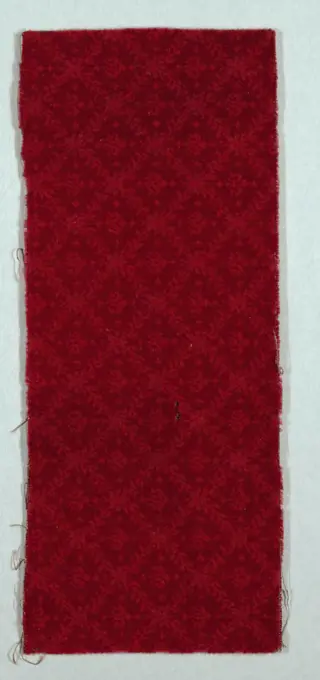
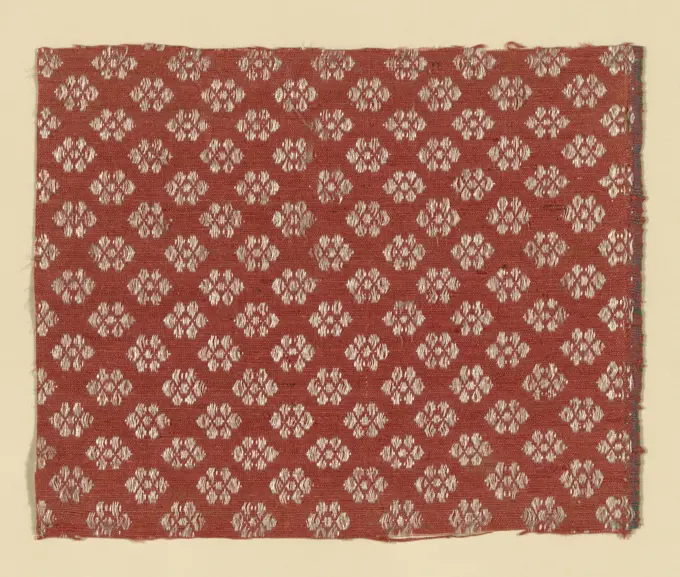
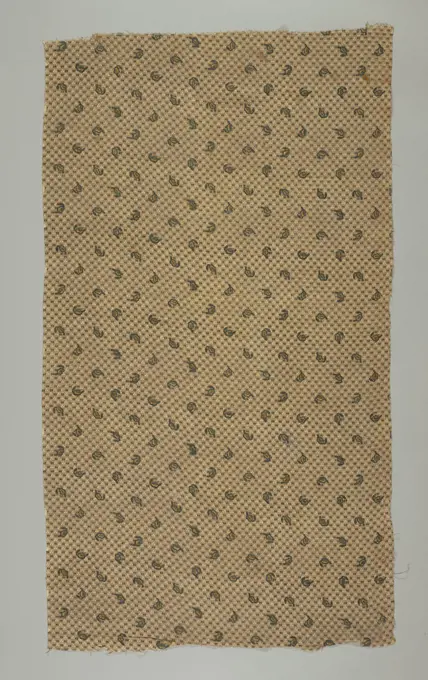
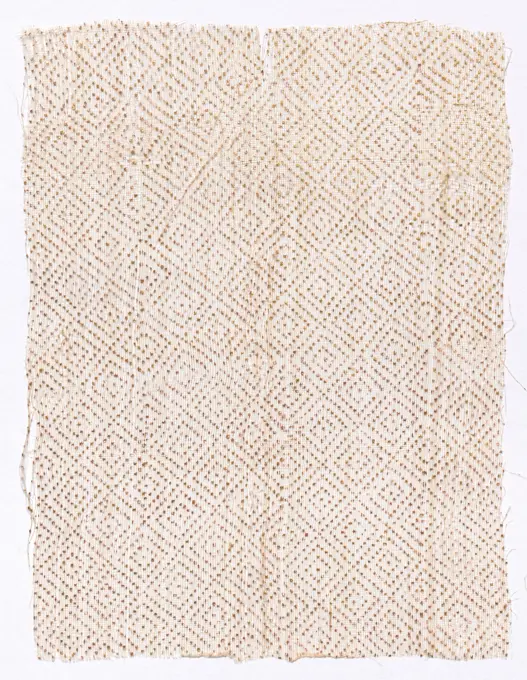
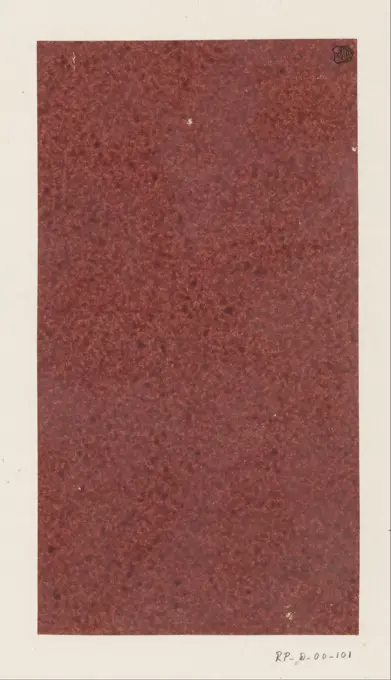
Carpet fragment, Medium: wool, bast fiber Technique: cut pile, Sample of red carpet with small scale diamond lattice enclosing a floral form. The pattern is in light red on a dark red background and entirely in cut pile of one height., USA, ca. 1870, woven textiles, Carpet fragment
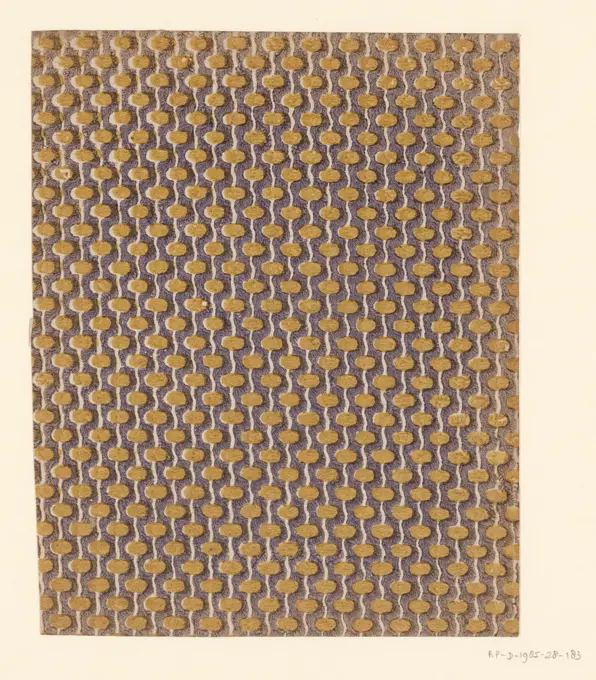
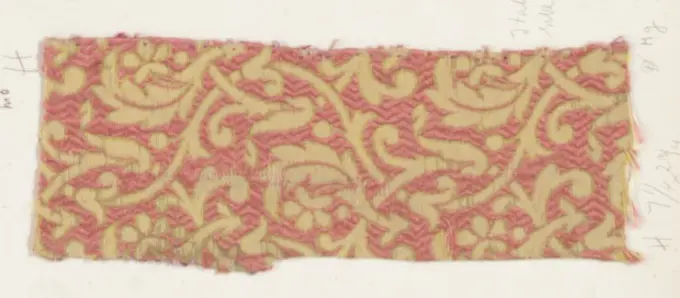
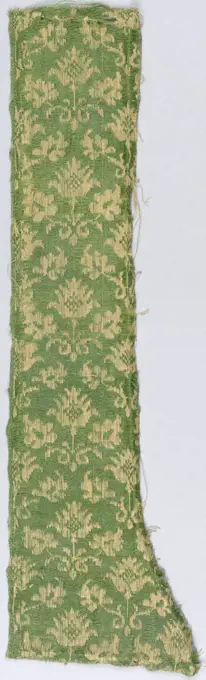
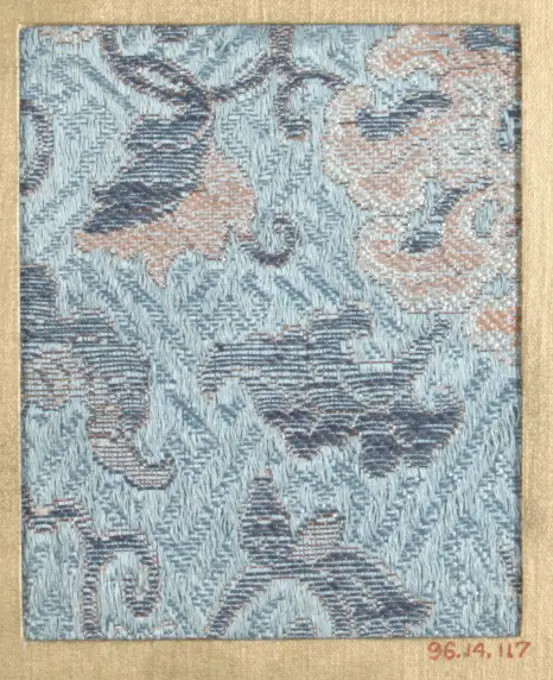
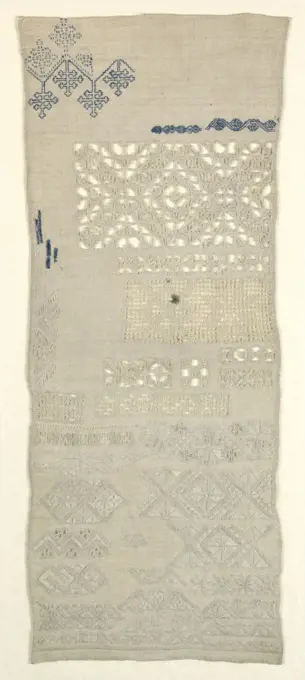
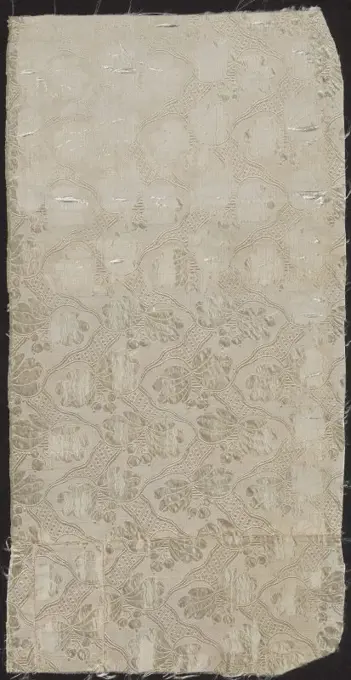
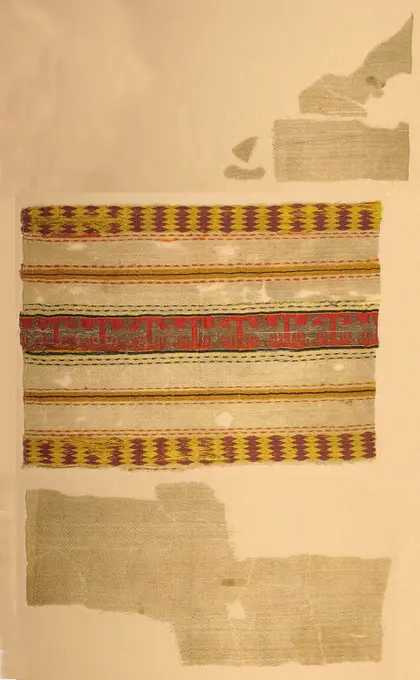
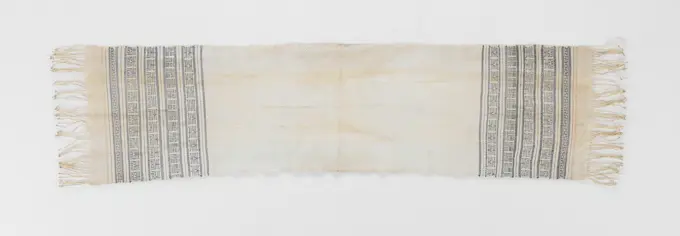
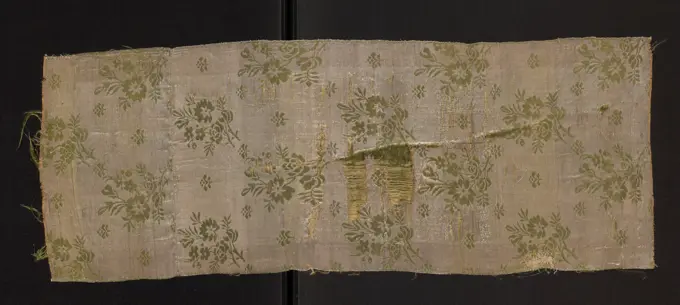
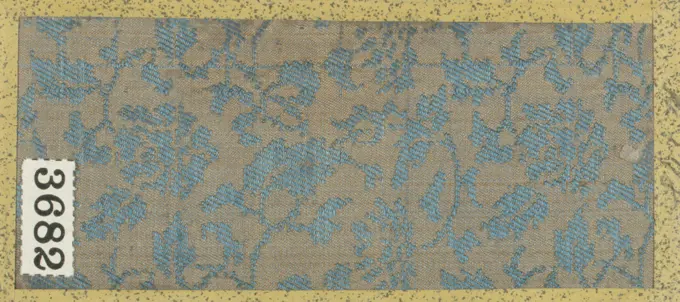
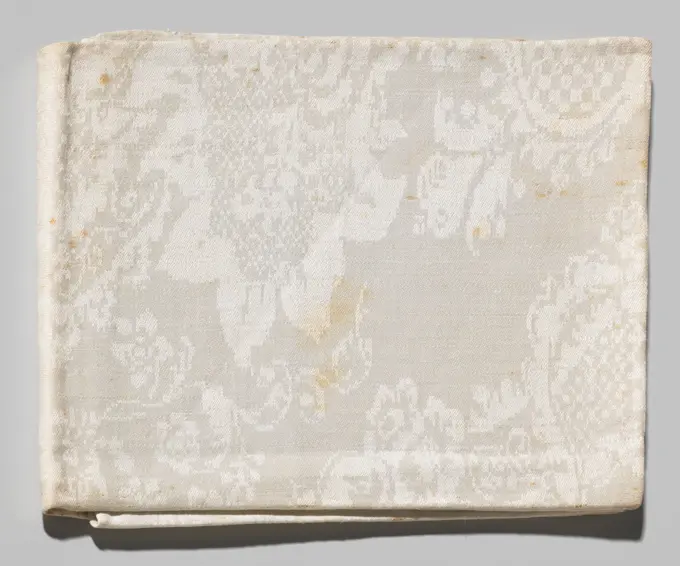
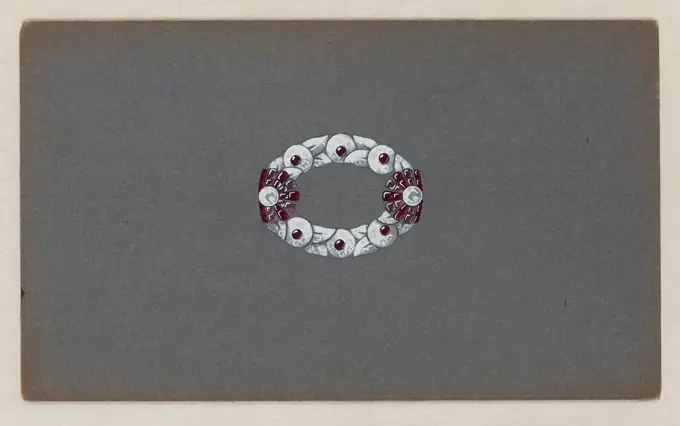
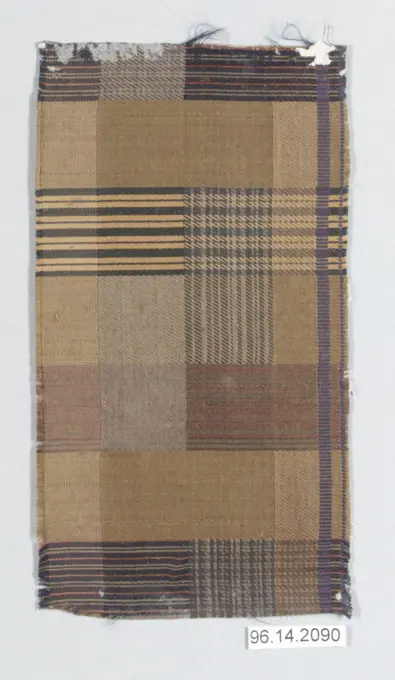
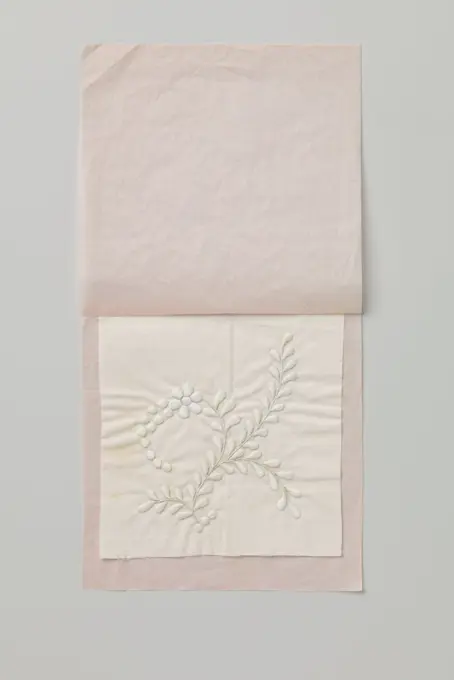
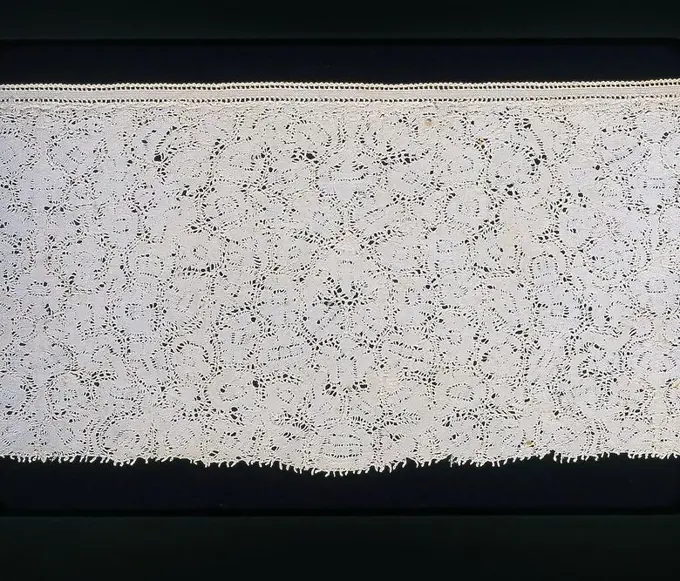
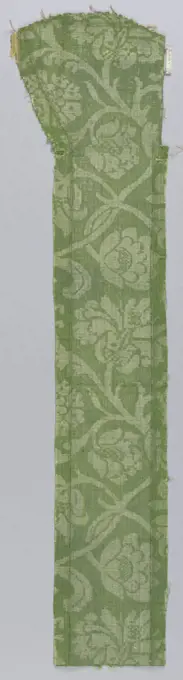
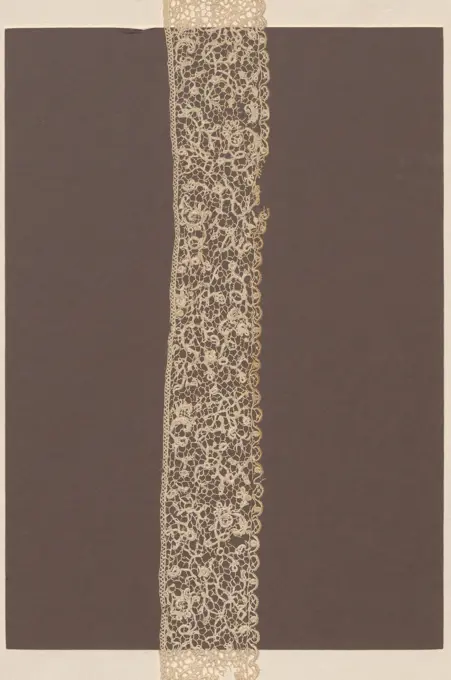
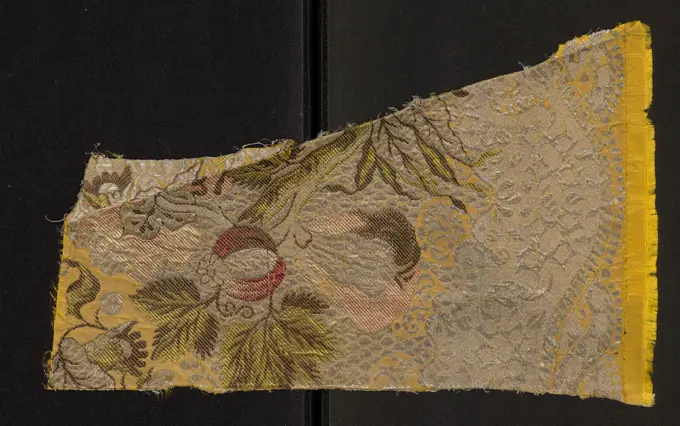
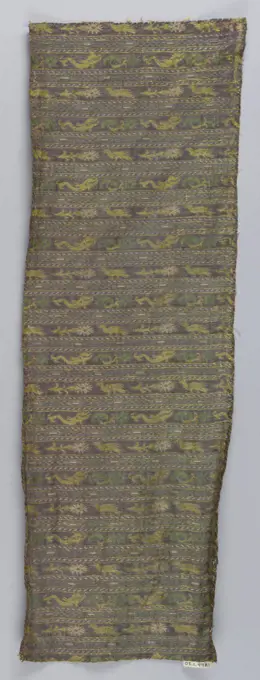
Fragments, Medium: silk, metallic yarns Technique: compound twill weave, Bands of dolphins, flowers and birds on grey background., Italy, 17th century, woven textiles, FragmentsCarpet fragment, Medium: wool, bast fiber Technique: cut pile, Sample of red carpet with small scale diamond lattice enclosing a floral form. The pattern is in light red on a dark red background and entirely in cut pile of one height., USA, ca. 1870, woven textiles, Carpet fragmentFragment of two pieces of red silk sewn together, c. 1590 - c. 1610 Fragment of two pieces of red silk sewn together repeating pattern of flower and leaf work. Italy Ketting an element: Silk damask Fragment of two pieces of red silk sewn together repeating pattern of flower and leaf work. Italy Ketting an element: Silk damaskAnonymous Individual British camouflage scarf that belonged to Daniel Cordier, companion of the Liberation (attributed title), 1940. Fabric. Museum of the Liberation of Paris - General Leclerc Museum - Jean Moulin Museum.Blade with job pattern of saved oval motif, anonymous, 1750 - 1900  Leaf with job pattern of saved oval motif. Half of a cover.  paper. block printing (relief printing process) fantasy ornamentFragment, Medium: linen Technique: bobbin lace (Lille style with heavy outlining thread), Fragment of Lille-style lace with open-centered rosettes and eyelets clustered near the bottom. Border is scalloped., France, 19th century, lace, FragmentFragment red silk satin with pattern of snail housing figures with curled leaf and flower work. Fragment of red silk damask, with an asymmetrical pattern of curled leaves and flowers that seem to come out of snail houses.Ceremonial Textile Made 1801-1900 Bali. Cotton, silk, and gold-leaf-over-lacquered-paper-strip-wrapped bast fiber (probably ramie), bands of plain weave, main warp fringe .Needlepoint Lace Edging, 19th century. France, Alençon, 19th century. Lace, needlepoint: linen; average: 15.9 x 50.8 cm (6 1/4 x 20 in.).Textile 1700-1899 Russian. Textile 173406Fragment Italian 17th-19th centuryFragment, Medium: linen, silk, wool Technique;, Blossom and leaves in green and tan., 17th century, woven textiles, FragmentPiece 18th-19th century Japan. Piece 65849Sampler, Medium: silk and linen embroidery on linen Technique: double running, long-armed cross, eyelet, satin, buttonhole, marking cross, cross, herringbone and back stitches, withdrawn element work with needle lace fillings, Cross borders of geometrical patterns., England or Italy, 17th century, embroidery & stitching, SamplerPiece of fabric. unknown, authorFragment brown silk brokaat velvet, anonymous, 1500 - 1599 Fragment with pattern of round or oval medallions filled with a shield -shaped figure such as hyacin tenses. Turkey silk. velvet (fabric weave) Fragment with pattern of round or oval medallions filled with a shield -shaped figure such as hyacin tenses. Turkey silk. velvet (fabric weave)Fragment of silk fabric unknownNapkin, c. 1675. Flanders, 17th century. Damask: linen; overall: 111.8 x 89 cm (44 x 35 1/16 in.).Two court ladies with a caged bird, 1825, Woodcuts, SurimonoLiturgical Towel. Culture: Italian. Dimensions: Framed: 38 × 28 1/2 × 1 1/4 in. (96.5 × 72.4 × 3.2 cm)a-primary section: 10 7/8 × 14 7/8 in. (27.6 × 37.8 cm)b-bottom fragment: 7 1/2 × 15 1/4 in. (19.1 × 38.7 cm)c: 2 3/8 × 5 3/4 in. (6 × 14.6 cm)d: 4 3/4 × 4 1/4 in. (12.1 × 10.8 cm)e: 1 3/4 in. (4.4 cm)f: 1 1/8 in. (2.9 cm). Date: ca. 1300. Museum: Metropolitan Museum of Art, New York, USA.Lumbar, 1650 - 1660 Lende run of linen with an Entre-Deux van Kloskant. A messing around at the closing end. Northern Netherlands linen (material). bobbin lace Lende run of linen with an Entre-Deux van Kloskant. A messing around at the closing end. Northern Netherlands linen (material). bobbin laceFragments, Medium: silk Technique: velvet, Bands of red cut and uncut pile alternate with yellow., possibly late 16th century, woven textiles, FragmentsHead Scarf, 33 1/2 x 8 3/4 in. (85.09 x 22.23 cm) (including fringe), Silk, ChinaPillowcase ,, 1731 Pillowcase of linen with Valenciennes bobbin on one end. Marked crown wg 12 and 1731. North Netherlands linen (material). Bobbi Lace / Valenciennes Lace Pillowcase of linen with Valenciennes bobbin on one end. Marked crown wg 12 and 1731. North Netherlands linen (material). Bobbi Lace / Valenciennes LacePiece 18th-19th century Japan. Piece 66670Fragment of solid fabric;  XVII century (1601-00-00-1700-00-00);gift (provenance), fabricsFragment Made 1650-1700 Italy. Silk, plain compound cloth .Piece 18th century Japan. Piece. Japan. 18th century. Silk. Edo period (1615-1868). Textiles-WovenTextile Swatches Onondaga Silk Company, Inc. (1925-1981). , 1948-1959. Silk, possibly synthetic fiber, 11 1/2 x 7 1/2 in. (29.2 x 19.1 cm).    1948-1959Piece 18th-19th century Japan. Piece 66376Fragment Made 1601-1625 Italy. Silk and silver gilt strips, warp-float faced satin weave with self-patterning ground wefts .Stencil 19th century Japan. Stencil 70705Textile, Medium: piña (pineapple) fiber, silk Technique: plain weave, Sheer cream-colored ground with fine vertical stripes of pale blue silk., Philippines, 19th century, woven textiles, TextileTextile, Medium: piña (pineapple) fiber, cotton Technique: plain weave, Cream pineapple fiber ground with a plaid of blue cotton., Philippines, 19th century, woven textiles, TextileTablecover, Medium: linen Technique: cutwork, needle lace and needlework on knotted net, Checkerboard arrangement of squares of punto in aria with geometric motifs alternating with squares of fabric which have rosettes cutouts filled in with needlelace. Border of punto in aria. Scalloped needlelace edging., Europe, 19th century, lace, TablecoverBatists cover for a pin cushion with embroidered initials CG, Anonymous, c. 1840 Cover of Batist with embroidery - Whitework - for a pin cushion. Rectangular model. The pattern has two two letters C and G. Netherlands batiste embroidering Cover of Batist with embroidery - Whitework - for a pin cushion. Rectangular model. The pattern has two two letters C and G. Netherlands batiste embroideringTextile Sample from Sample Book 19th century Japan. Textile Sample from Sample Book 68159Linnamast napkin, Anonymous, c. 1850 - c. 1899 Linnamast napkin with falling leaves, in a double list of short stripes and and the middle a wrapped rod. Along the edge board pattern.  linen (material) damask Linnamast napkin with falling leaves, in a double list of short stripes and and the middle a wrapped rod. Along the edge board pattern.  linen (material) damaskNapkin with the coat of arms of Cornelis Hop, Anonymous, c. 1700 - c. 1724 Napkin van Linnamast with the coat of arms of Cornelis Hop. Midfield: Symmetrical pattern of multifaceted volutes with blocked thickenings at the junctions. In between a lying oval shield with a weapon of Cornelis Hop (1685-1762), ambassador at the court of King Louis XV of France: celebrated, 1 and 4 header standing on Bol (the bird of 1, that of 4 surrounding); 2 and three two lined wings. Heart shield shared: 1 a crossbar, 2 on the right a five -pointed star, on the left a desired Wassenaar. The shield covered with five -sized crown. Shield holders: On the right an eagle, on the left an aligned lion. Edges: weapon trophies. Corners: a round axle. All around blocks. Southern Netherlands linen (material) damask Napkin van Linnamast with the coat of arms of Cornelis Hop. Midfield: Symmetrical pattern of multifaceted volutes with blocked thickenings at the junctions. In between a lying oval shield with a weapon oCarpet, Bigelow Carpet Company, American, Medium: wool, hemp Technique: cut pile on plain weave ground, Section of field with Louis XVI wreath repeat and section of border. In shades of light brown on pinkish-orange pile., USA, 1849-1900, woven textiles, Carpetunknown artist, Album of Drawings Once in Posession of Florence Gray. Graphite.Cape 1650-1700 Flemish. Cape 212571Napkin with flower pattern, anonymous, c. 1700 Linnamast napkin with large flower pattern. On a rush -hour field that covers the full width, there is a symmetrical flower rosette with grid filling, made up of a fruit, a sunflower, a pumpkin and a crowning leaf rosette. The field is bordered by two intertwined tires, wounded by a scalloped lace strip. The first couple comes from a palmet and closes above the mid -motif; The lower tires do not touch each other but are connected by a pomegranate. Varied leaf palm with. A wide variety of network fillings. Edges with flower pots and palmets inside scalloped edge. A rosette in the corners. Marked in Red Cross stitch with the letter S. West-Europa linen (material) damask Linnamast napkin with large flower pattern. On a rush -hour field that covers the full width, there is a symmetrical flower rosette with grid filling, made up of a fruit, a sunflower, a pumpkin and a crowning leaf rosette. The field is bordered by two intertwined tires, woundAnonymous, brooch (main title), 1925. Graphite and gouache on gray carton B. Petit Palais, Museum of Fine Arts of the City of Paris.Fragment 16th century Northern Italian. Fragment 230516Fragment late 17th century Italian, Venice. Fragment 212498Eva Wilson, Linen Towel  Brown Border, c 1937 Linen Towel - Brown BorderPiece 18th-19th century Japan. Piece 67802Military tarpaulinTextile Swatches Onondaga Silk Company, Inc. (1925-1981). , 1948-1959. Silk, 47 1/2 x 16 in. (120.7 x 40.6 cm).    1948-1959Textile Fragment 17th-18th century. Textile Fragment. 17th-18th century. Silk. Made in Iran. TextilesPiece 16th century Italian. Piece 213057Workpiece for diploma beautiful crafts, Geesje Smid, c. 1890 - c. 1900 Piece of batist with a flower branch in Plumetis embroidery. Netherlands  embroidering Piece of batist with a flower branch in Plumetis embroidery. Netherlands  embroideringPiece 19th century Japan. Piece 72228Fragment; silkStrikdas van machinale tule met geborduurde letter M J en een boeketje en rondom een rand machinale kant met gestileerde takken met knoop en blad.Stricb dash of natural-colored machining with embroidery - whiteware with plush - and around a border machine side: machine valenciennes side. Elongated rectangular model. At both short ends a bouquet with forget-me-staples is embroidered with the letters M J. The tie has a smoothly switched edge along the long sides and along the short side a double-crowded edge machine valenciennes side. The side has a pattern of stylized branches with a knot and a leaf. The slip edge along the underside is finished with picots.Retro Style Paper With Red Clips Retro Style Paper With Red Clips Isolated On White Background. Ready for your message. Copyright: xZoonar.com/KristinaxAfanasyevax 1752111Rugs and Carpets: Mongolia - 19th century - CarpetSide pledger strip on machine tulle with hanging flower, anonymous, c. 1820 - c. 1830 Strip of natural -colored lace -ups, breath work on mechanical tulle. A repeating pattern of a hanging flower under two rows of heart -shaped open mosjes. Along the lower edge a straight picot edge. The top is not finished. Northern Netherlands (possibly) linen (material) embroidering Strip of natural -colored lace -ups, breath work on mechanical tulle. A repeating pattern of a hanging flower under two rows of heart -shaped open mosjes. Along the lower edge a straight picot edge. The top is not finished. Northern Netherlands (possibly) linen (material) embroideringFragment 18th century Italian. Fragment 230389Bedcover (Unfinished in Three Sections) Made 1701-1800 France. Cotton, plain weave, quilted in parts, design stamped in ink, lined with cotton, plain weave .Textile (England); cottonSample early 19th century French. Sample 219332Cope. Dimensions: Textile: L. 57 in. (144.8 cm) W. 123 1/2 in. (313.7 cm)With fringe: L. 60 in. (152.4 cm)W. 126 1/2 in. (321.3 cm). Date: early 17th century.This garment exemplifies the use of Iranian textiles throughout Europe. Worn in Christian liturgical services, it is made of several lengths of Safavid luxury silk adorned with metal-wrapped threads. The lattice framework of the design houses a symmetrical bouquet of poppies and tulips around a centrally placed iris in a vase. Additional flowers wind their way on a foliate vine throughout the lattice on a golden yellow ground. The cope is lined with red silk and would have been draped over the shoulders along the straight edge, with the golden fringe fluttering as the wearer walked through the processional. The garment most likely had a detachable hood that would have been fastened where the triangular areas are located. Museum: Metropolitan Museum of Art, New York, USA.Cap crown, Medium: linen Technique: needle lace, Point plat de Venise of flat Venecian point in design of scrolling stems and flowers joined by ornamental brides., Venice, Italy, 17th century, lace, Cap crownHandkerchief 1840-60 American. Handkerchief 168786Demolition of white linen, 1762 White linen demolished with a bobbin edge. Northern Netherlands (Possible) linen (material). bobbin lace White linen demolished with a bobbin edge. Northern Netherlands (Possible) linen (material). bobbin lacePlain Weave Fragment, Basket Weave Fragment Coptic. Plain Weave Fragment, Basket Weave Fragment, 5th-7th century C.E. Linen, 64.114.241a: 3 1/4 × 4 1/4 in. (8.3 × 10.8 cm).   Egyptian, Classical, Ancient Near Eastern Art 5th-7th century C.E.Textile Swatch Textile Swatch, 1950s to 1960s. Silk, 20 x 7 in. (50.8 x 17.8 cm).    1950s to 1960sBouyei (Buyi) fabric, 19th-20th century, 46 x 31 in. (116.84 x 78.7 cm), Cotton, China, 19th-20th centuryFragment 16th-17th century Italian. Fragment 230615Textile Swatches Onondaga Silk Company, Inc. (1925-1981). Textile Swatches, 1948-1959. Possibly metal; acetate; nylon, (a) - (c): 6 x 4 1/2 in. (15.2 x 11.4 cm).    1948-1959Fragment of bobbin lace unknown, folk productBorder. Blegium, Flanders. Date: 1650-1660. Dimensions: 10.8 × 161.6 cm (4 1/4 × 63 5/8 in.)Width repeat: 16.4 cm (6 3/8 in.). Linen, bobbin part lace. Origin: Flanders. Museum: The Chicago Art Institute, Chicago, USA.Fragment, Medium: silk, metallic Technique: woven, Conventionalized vine design with palmettes., 17th century, woven textiles, FragmentShawl (Spain ); vegetable fiber (aloe)Textile Swatches Onondaga Silk Company, Inc. (1925-1981). , 1948-1959. Silk, 23 3/4 x 8 1/2 in. (60.3 x 21.6 cm).    1948-1959Piece 18th-19th century Japan. Piece 67040Fragment of the lace;  1690-1710 (1690-00-00-1710-00-00);Piotr -Klblicki, Alfred (1861-) - collections, Taczanowska, Maria (Fl. Ca 1950) - collection, Venetian lace, flower ornaments, purchase (provenance)Curtain ca. 1760-70 American. Curtain 13655Lumbar, 1650 - 1700 Lendloop of linen with open homen, brand Ig. Northern Netherlands linen (material) Lendloop of linen with open homen, brand Ig. Northern Netherlands linen (material)Piece 19th century Japan. Piece 72231Ingrid Selmer Larsen, Woven Covering for Chair Back, 1935 1942 Woven Covering for Chair BackNeedlepoint (Reticella) and Bobbin Lace Cloth, 16th century. Italy, Venice, 16th century. Lace, needlepoint and bobbin: linen; average: 76.2 x 125.1 cm (30 x 49 1/4 in.).Piece 18th century Japan. Piece 71816Textile, Medium: cotton Technique: relief printed, Loosely-woven gray ground with minute clusters of white dots in groups of three, and minute brown egg-shaped dots in groups of two. Block printed in small detached leaf pattern in green (blue with yellow) which is veined in brown. This leaf pattern about one inch long is in a diagonal and horizontal arrangement, but in random position., England, early 19th century, printed, dyed & painted textiles, TextileBamboo place mat on wooden deck table.Fragment silk tissue of a chair covering, c. 1805 Fragment yellow silk tissue, from a seat cover. The pattern has pink palmets and arabesks on a yellow ground. The fragment is part of thirteen fragments with invnr. BK-1992-18-A to BK-1992-18-M. France silk Fragment yellow silk tissue, from a seat cover. The pattern has pink palmets and arabesks on a yellow ground. The fragment is part of thirteen fragments with invnr. BK-1992-18-A to BK-1992-18-M. France silkFragment, 1800s. India, Rajasthan , 19th century. Block printed with gold leaf on cotton muslin; overall: 39.2 x 11.5 cm (15 7/16 x 4 1/2 in.).Renty Paint Paper In Red, Anonymous, 1700 - 1900 paste paper   paper.Fragment of the fabric;  18th century (1701-00-00-1800-00-00);Wereszczakowa, Karolina (1861-1925) - collection, gift (provenance), fabricsMitts 1850 Italian. Mitts 98368Tablecloth, 18th century, 69 x 54 in. (175.26 x 137.16 cm), Linen; needlework, United States, 18th centurySample early 19th century French. Sample 219341Woman's Shawl, c. 1983, 24 1/4 x 53 in. (61.6 x 134.62 cm), Cotton, acrylic; needlework, Mexico, 20th centuryCapslip of application side with thin S-shaped leaf vines, anonymous, c. 1775 - c. 1799 Capslip of natural -colored application side, Brussels bobbin attached to drochel soil. The symmetrical pattern consists of a succession of thin C-shaped leaf virks, which spring from small oval cartouches along the top and top of the strip. From this, S-shaped leaf vines that, alternately from top and bottom, fill the midfield. Two mirrored S-shaped leaf vines meet in the middle of the hat-slip. A few small flowers are incorporated in the leaf vines and different twigs with berries. The sparse fullwork is made in linen battle with some recesses and openwork edges and burst relief contours. Decorative lands are used in the oval cartouches and in the few flower hearts. The pattern continues in the short rounded sides. The faintly scalloped sides are finished with picots. Brussels linen (material) Brussels Applied Capslip of natural -colored application side, Brussels bobbin attached to drochel soil. Blanket, 97 x 56 5/16 in. (246.38 x 143.03 cm), Cotton, NigeriaPiece 18th-19th century Japan. Piece 66867Towel, 17th century, 73 1/2 x 19 3/4 in. (186.69 x 50.17 cm), Linen; weft patterning, Italy, 17th centuryPatch with edge embroidery with symmetrical angular motif. Batist patch of which consists of overhangs placed edge embroidery: work with pulled out wires and cut work. Square model. The symmetrical pattern consists of a cartouche with a straight bottom of which goes up a raised S-shaped motif on each side, the mirrored S-shapes come together at the top of the cartouche. Two sides are finished with a soil.