Woven Textile Fragments

A variety of textile fragments showcasing intricate patterns and colors, highlighting historical fabric techniques from various cultures.

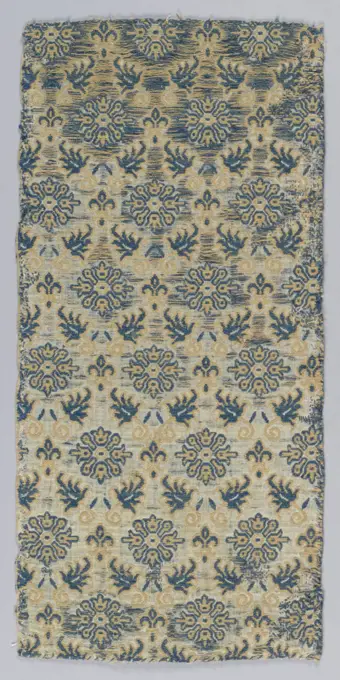
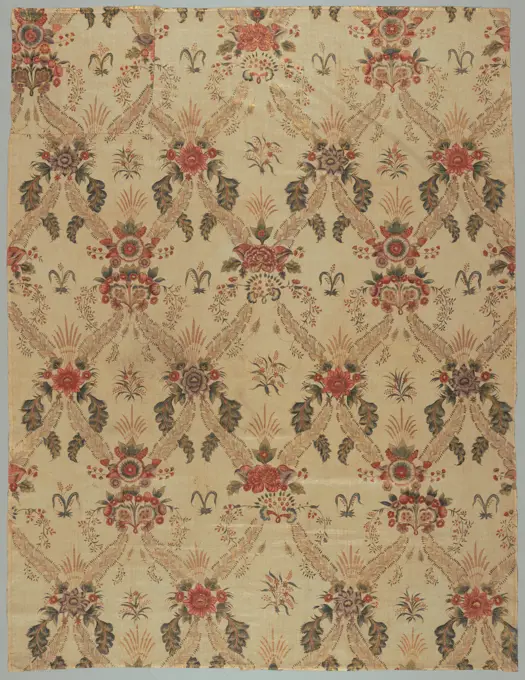
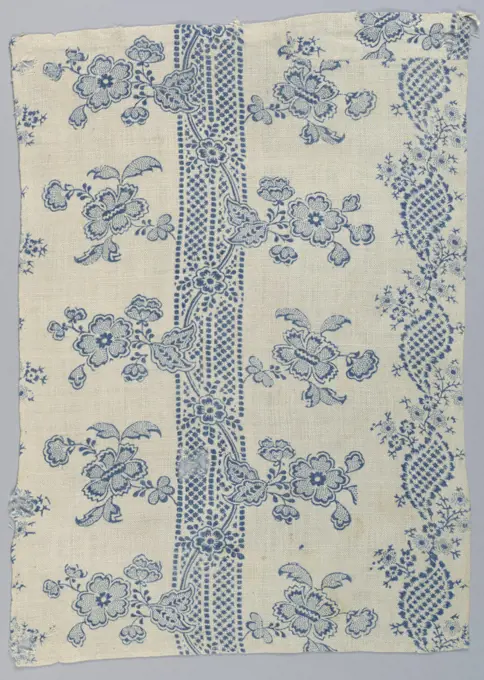
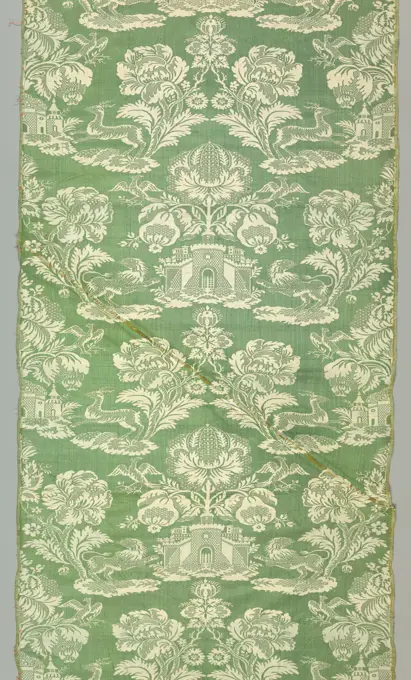
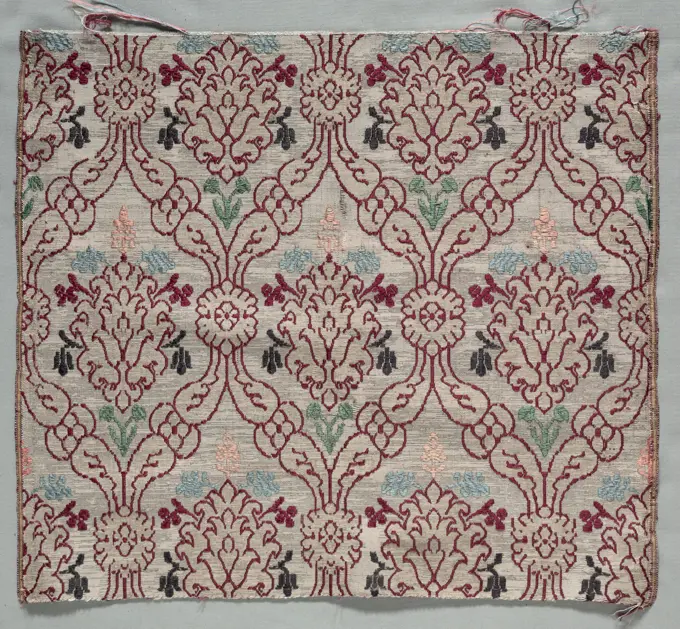
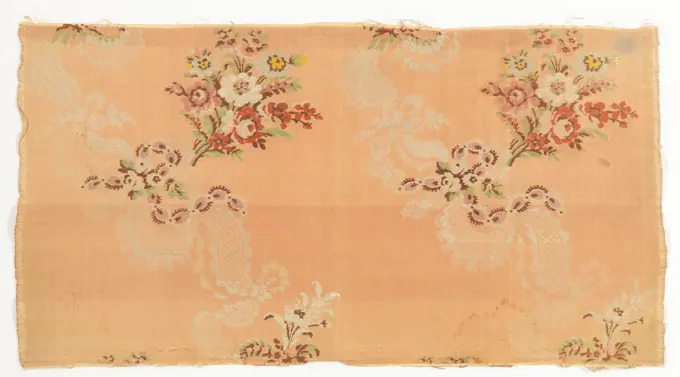
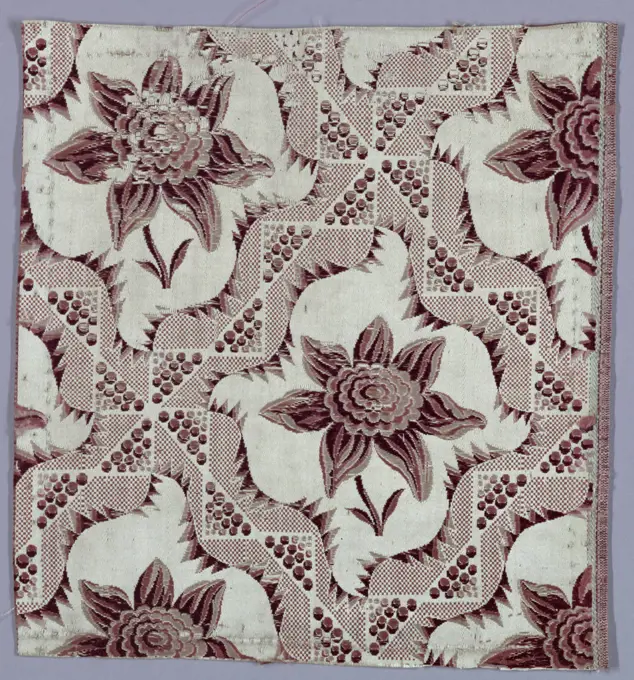
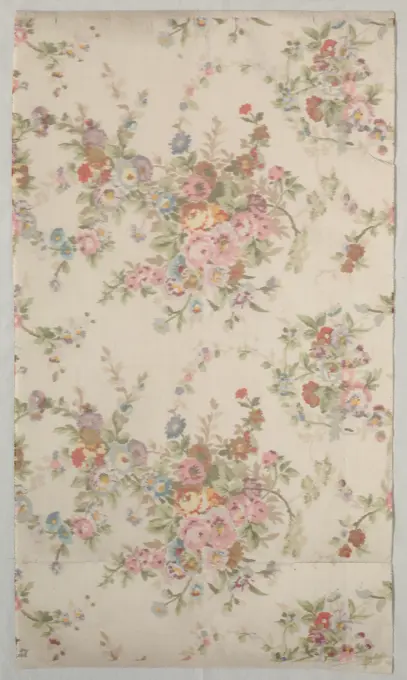
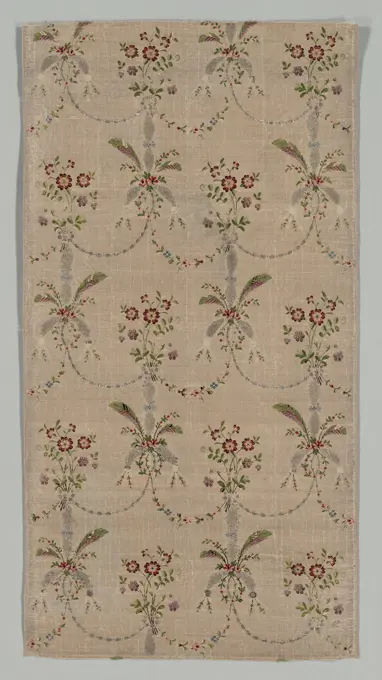
Fragment (France); cotton; Warp: 78cm (30 3/4in.). Weft: 68cm (26 3/4in.) Seamed in the middle. Height of repeat: 29cm (11 1/2in.) Width of repeat: 22cm (8 3/4in.); Bequest of Elinor Merrell; 1995-50-216
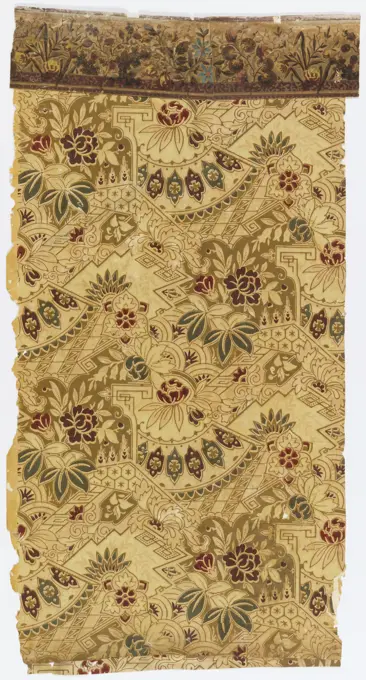
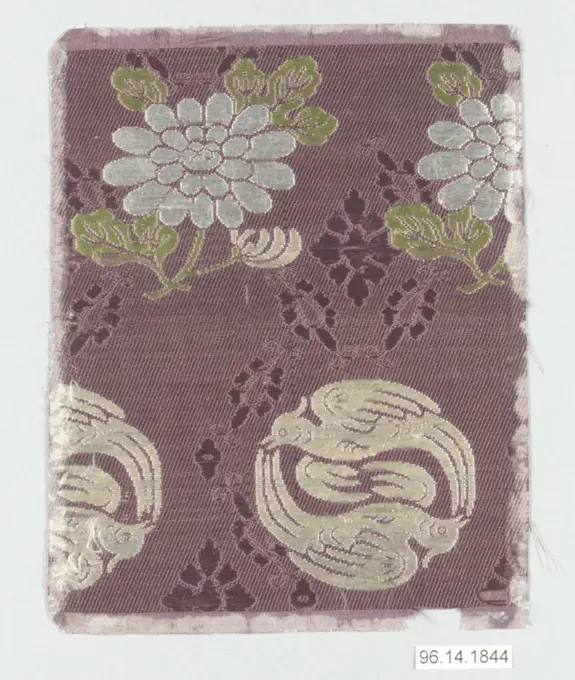
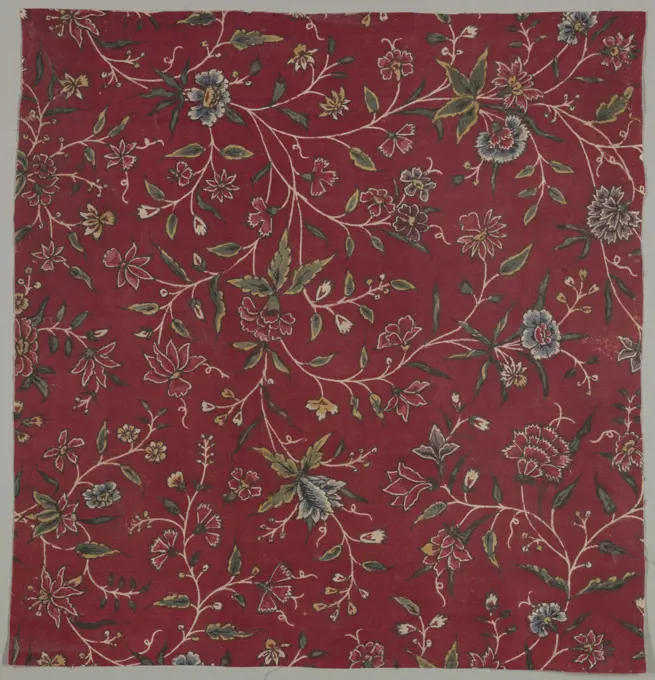
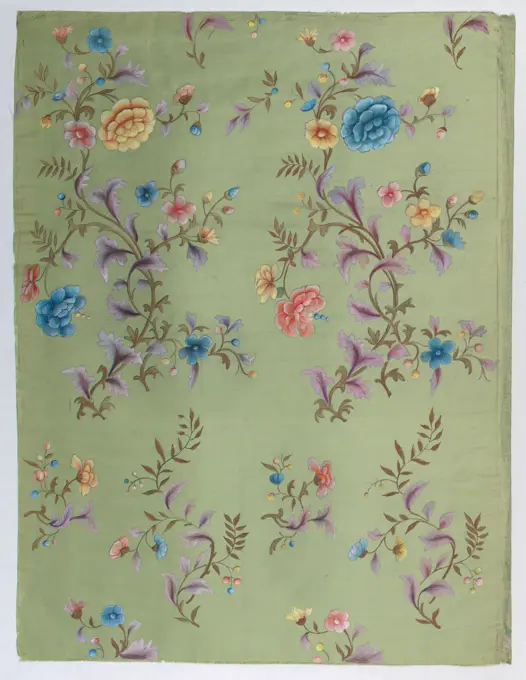
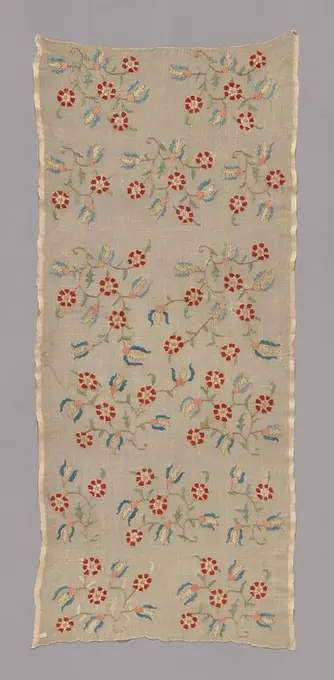
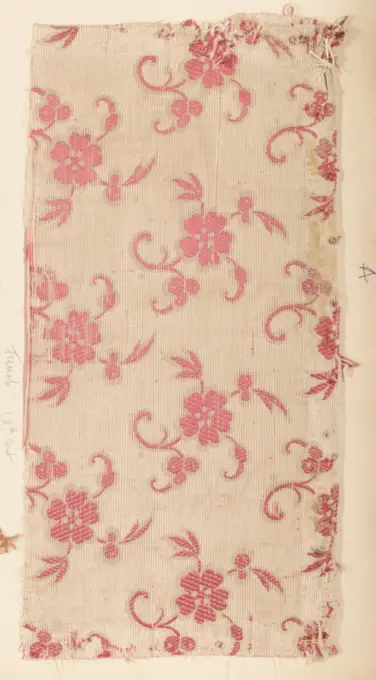
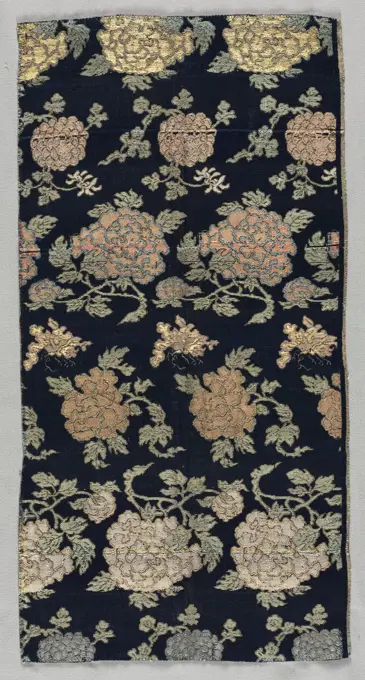
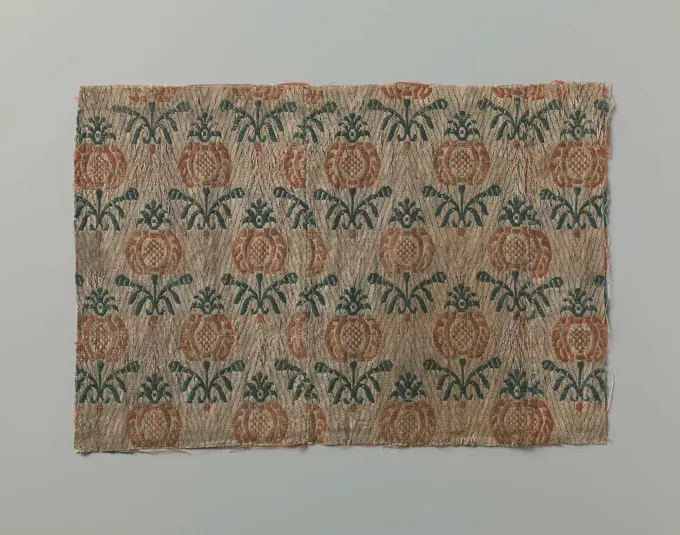
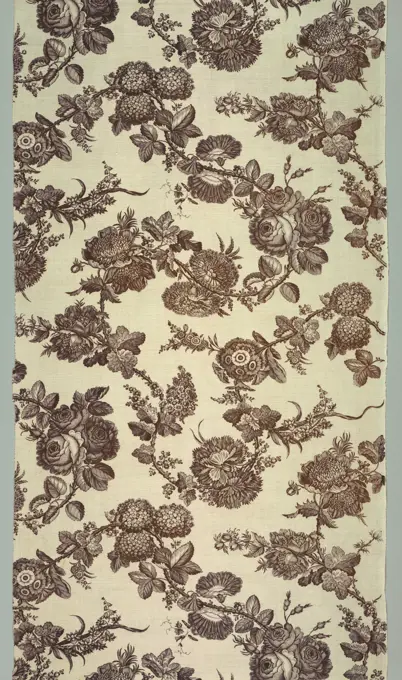
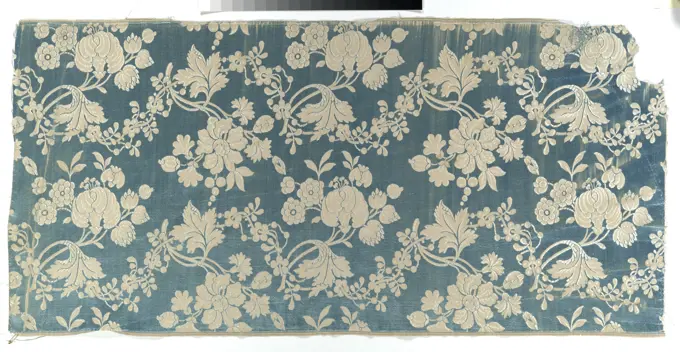
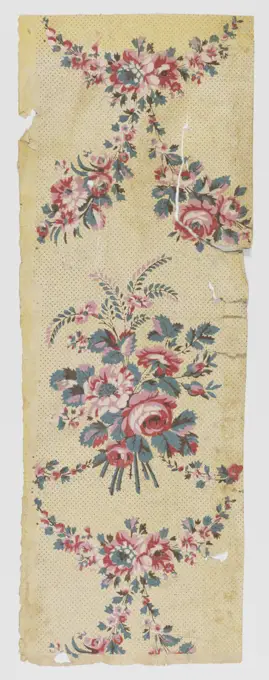
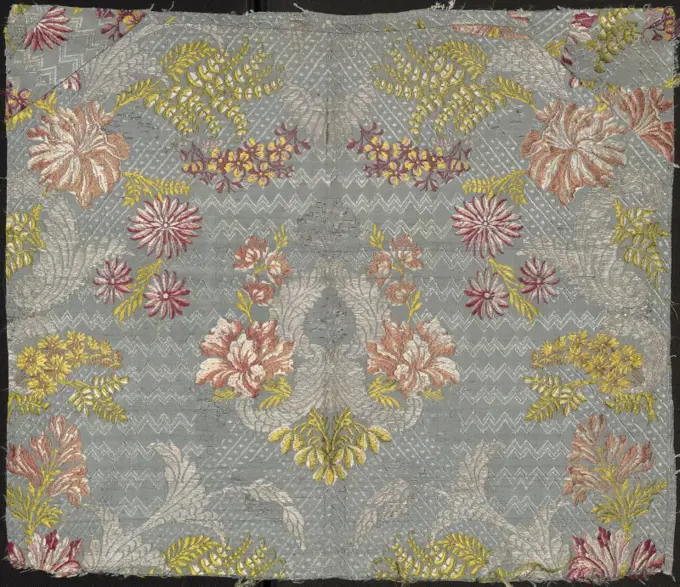
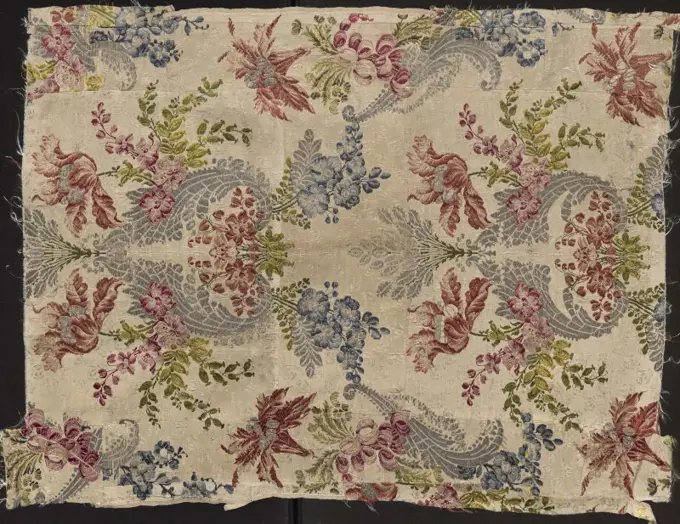
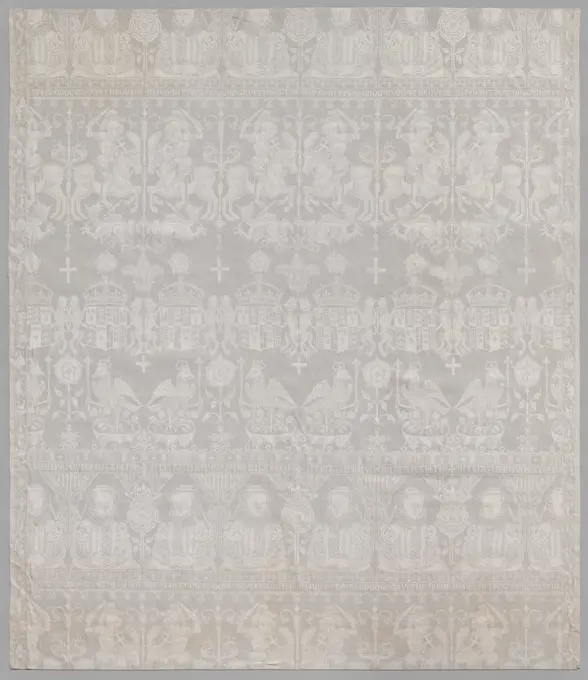
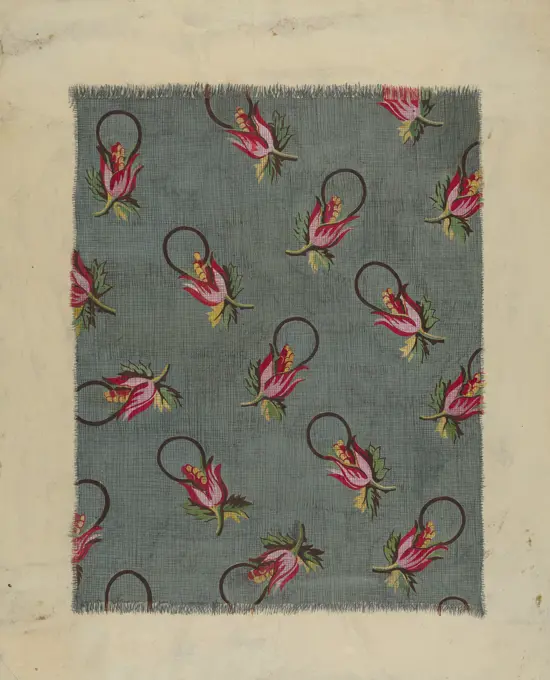
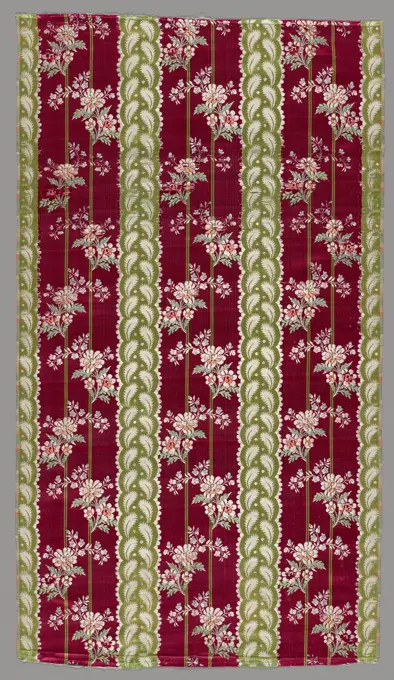
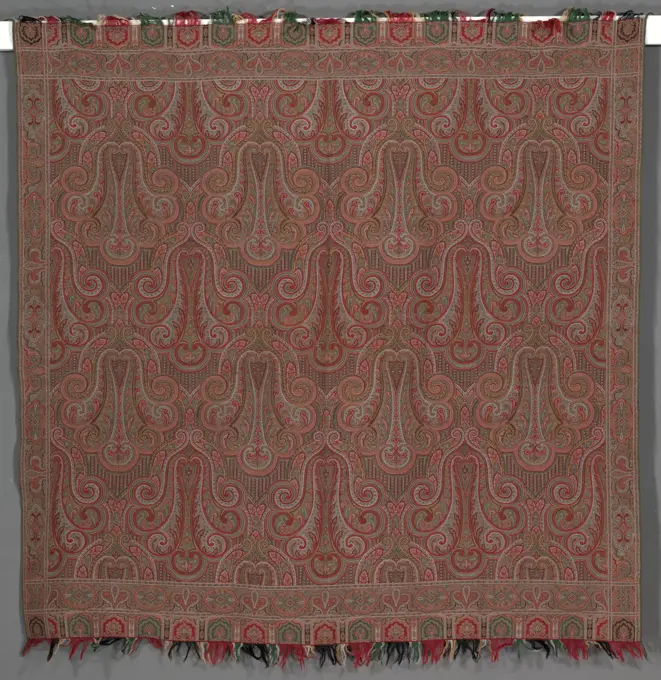
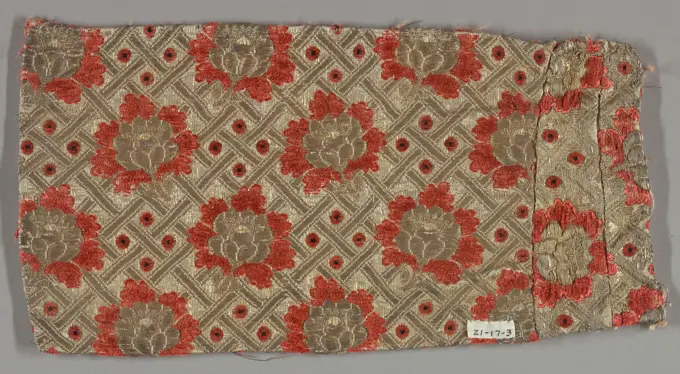
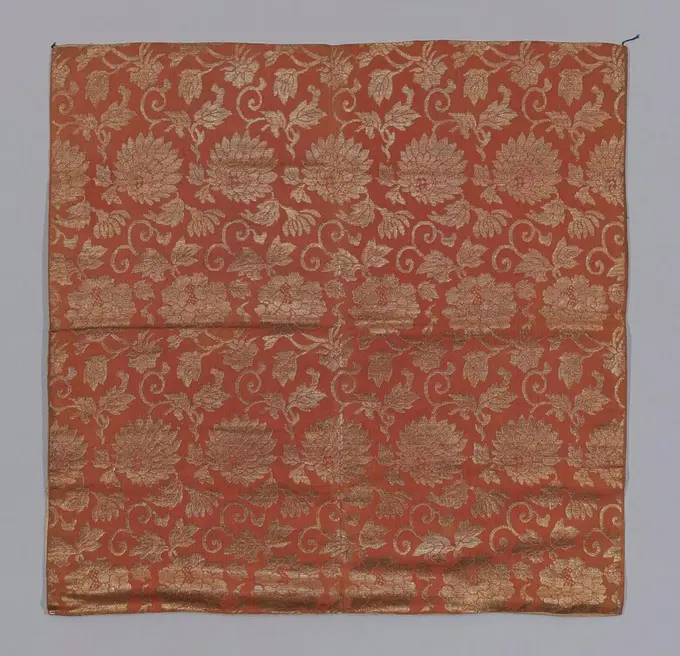
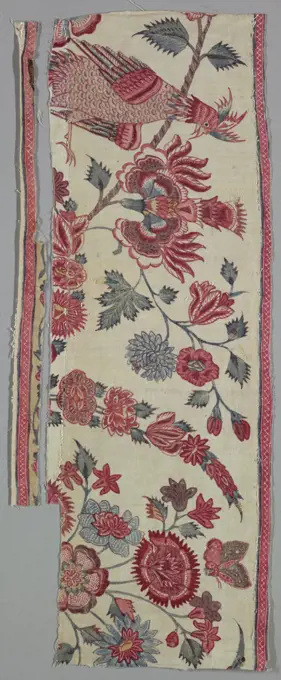
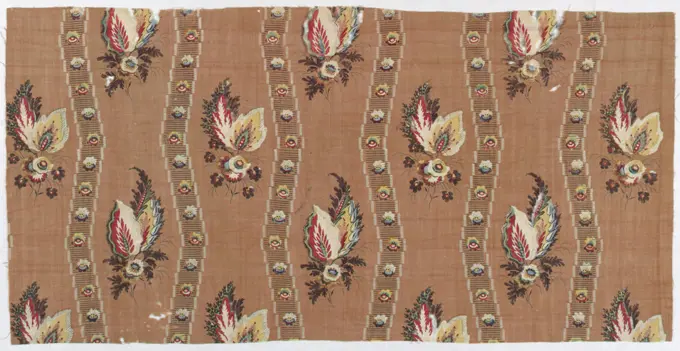
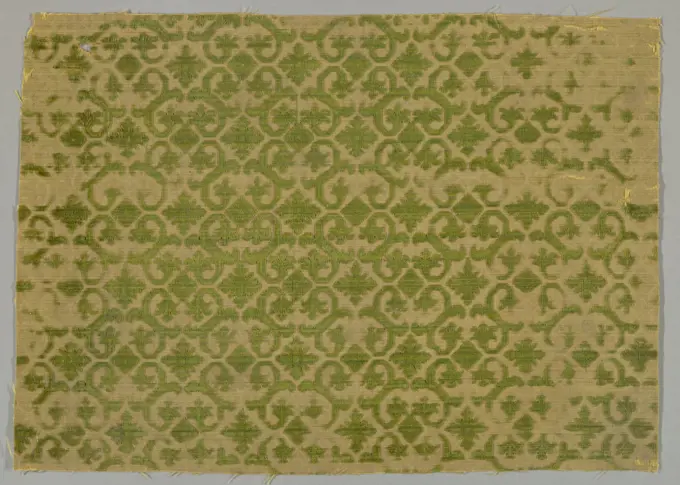
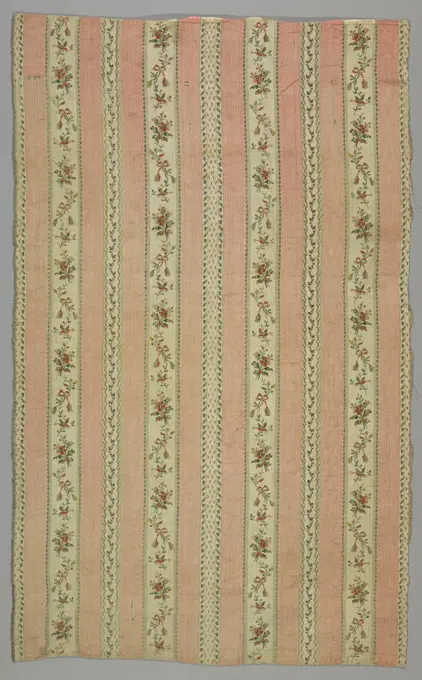
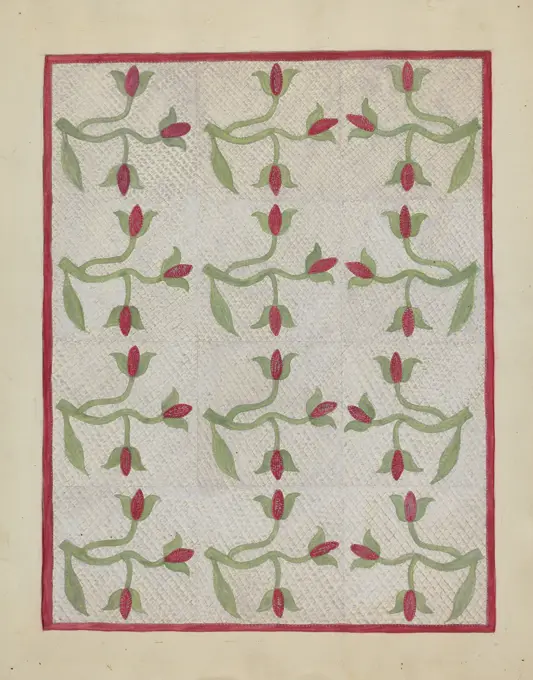
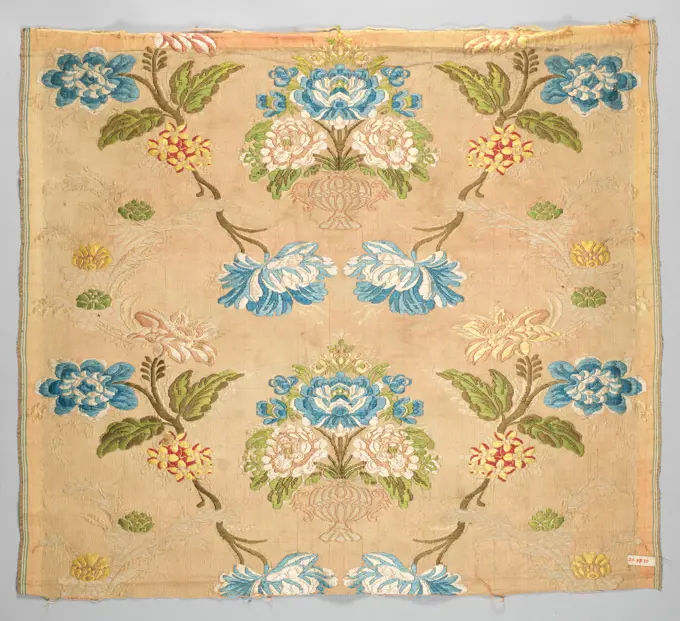
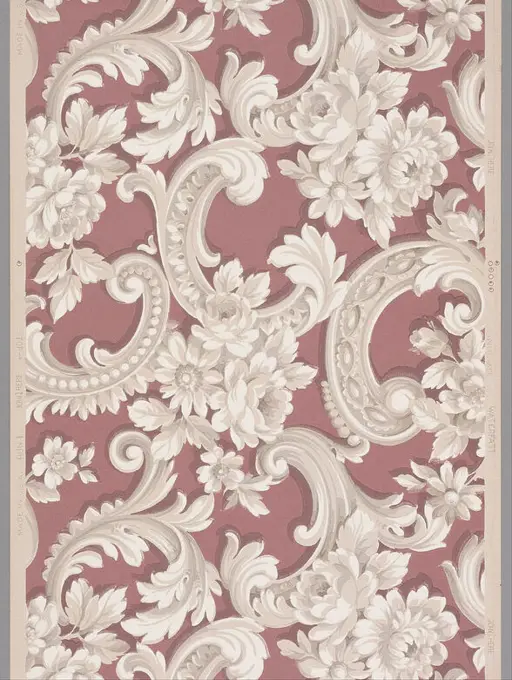
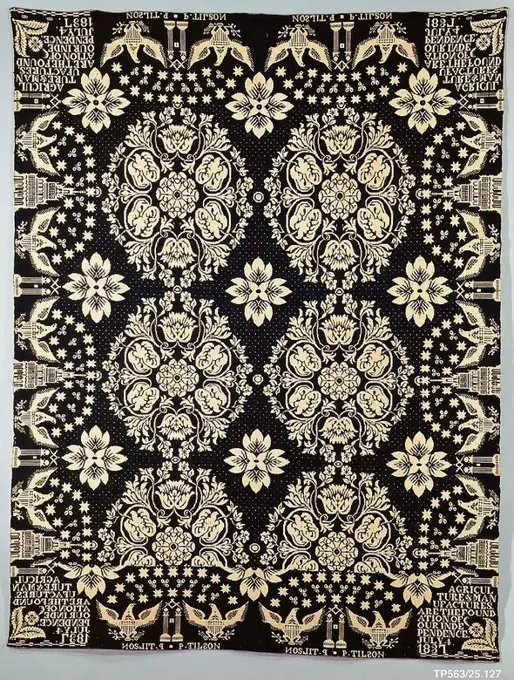
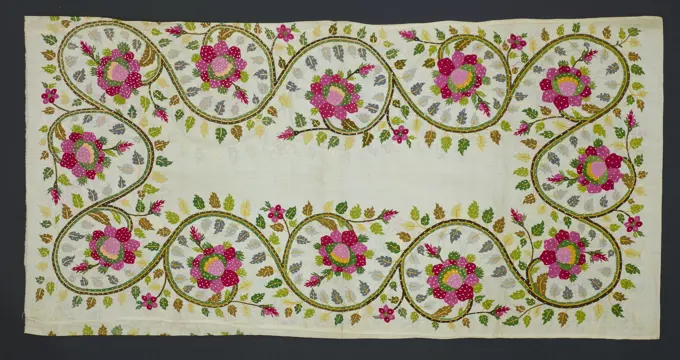
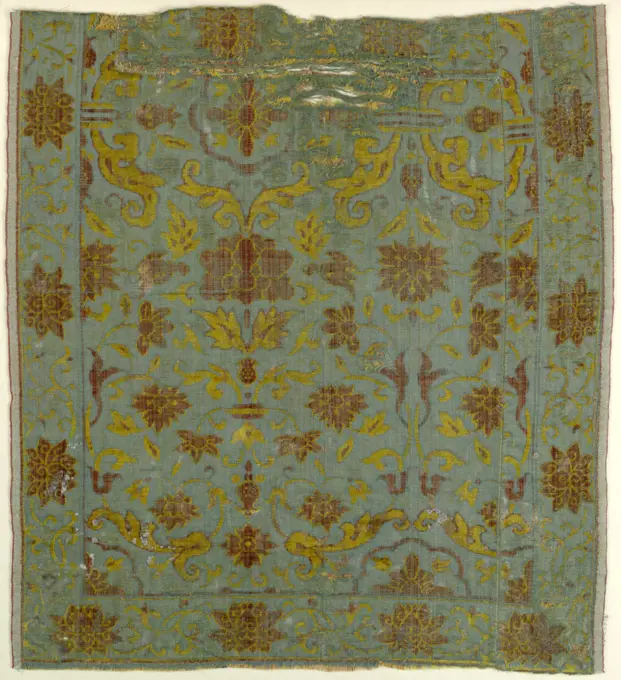
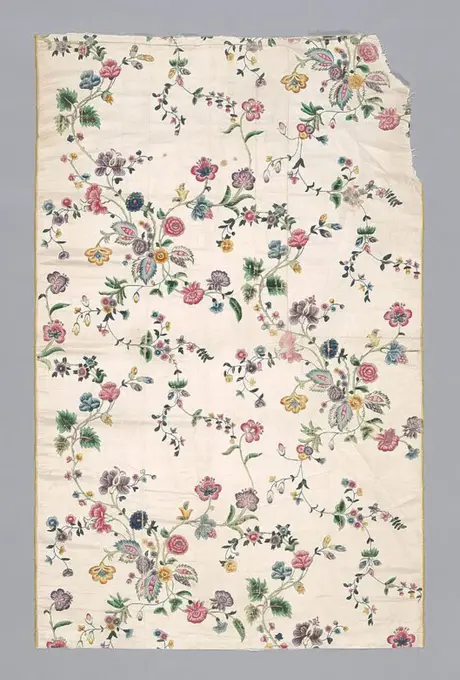
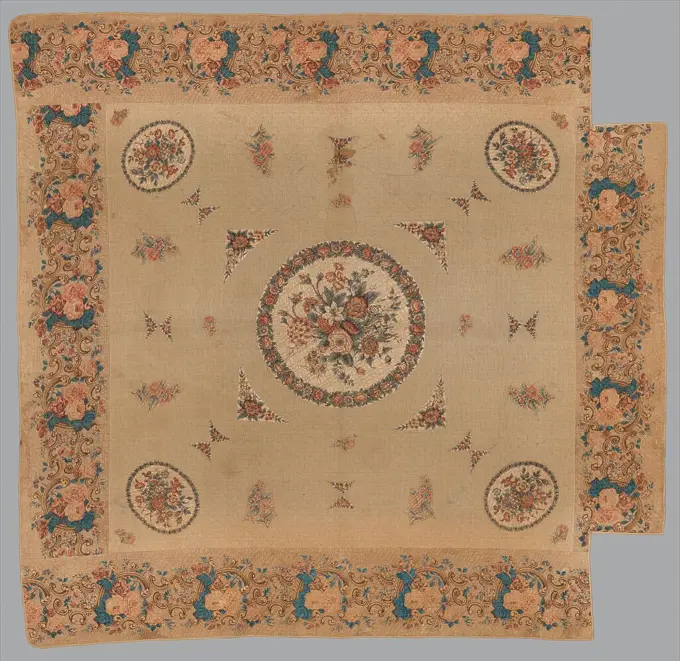
Fragment, Medium: silk, cotton Technique: plain weave plus plain weave, Detached circular flower motifs., 17th century, woven textiles, FragmentSidewall And Border (USA); machine-printed; 94 x 49 cm (37 x 19 5/16 in.)Textile (India); cottonPiece Japan 18th centuryTextile, Medium: cotton Technique: mordants for 2 reds, purple and black applied by pen and brush; madder dyed; blue applied over resist., Fragile curving stems on a deep red background., India, mid-18th century, printed, dyed & painted textiles, TextileTextile, Medium: silk, metal Technique: plain weave with supplementary weft floats (brocade), Two fragments of a continuous pattern in the bizarre style placed side by side. Ground in shades of gold with floral design in red, green, yellow and blue. Each fragment has one selvage present., possibly France, possibly Italy, early 18th century, woven textiles, TextileFragment; silkFragment (France); cotton; Warp: 78cm (30 3/4in.). Weft: 68cm (26 3/4in.) Seamed in the middle. Height of repeat: 29cm (11 1/2in.) Width of repeat: 22cm (8 3/4in.); Bequest of Elinor Merrell; 1995-50-216Fragment, Medium: linen Technique: block printed on plain weave, Fragment printed in blue on white in a design of a stripe with a flowering vine., England, late 18th century, printed, dyed & painted textiles, FragmentCover. Turkey. Date: 1601-1725. Dimensions: 134 x 56 cm (52 3/4 x 22 in.). Tray cloth embroidered over all in a repeated rose spray pattern in red, green, white, blue, rose and brown. Origin: Turkey. Museum: The Chicago Art Institute, Chicago, USA.Fragment, Medium: silk Technique: cut and uncut supplementary warp pile (velvet) in satin foundation, Incomplete section of a large symmetrical floral repeat with curvilinear tooth leaves and small and large flowers. In blue-green cut and uncut velvet on a cream satin ground., France or Italy, early 18th century, woven textiles, FragmentTextile Fragment. France, 1730s. Textiles; fragments. Silk plain weave with silk weft patterning and silk supplementary-weft patterningMulticolored silk tissue, anonymous, 1740 - 1760 Four fragments of a silk tissue. Loose asymmetrical bouquets on a slightly beige stock. With saumon, blue, yellow and red colored flowers. Two jobs sewed four half jobs together. Somewhat damaged. Note: Self -sides; 0.6 cm, plain binding. France (possibly) silk Four fragments of a silk tissue. Loose asymmetrical bouquets on a slightly beige stock. With saumon, blue, yellow and red colored flowers. Two jobs sewed four half jobs together. Somewhat damaged. Note: Self -sides; 0.6 cm, plain binding. France (possibly) silkFragment 18th century possibly French. Fragment 230227Textile; silk; Bequest of Richard Cranch Greenleaf in memory of his mother, Adeline Emma Greenleaf; 1962-56-70-a,bTextile Fragment, 1800s. Japan, 19th century. Silk, metallic thread; average: 57.1 x 28.6 cm (22 1/2 x 11 1/4 in.).Fragment of a tissue in linen and wool. Fragment (3 pieces sewn together) with rows of stylized flowers in orange and green on Écru Fond.Fragment; silk; Warp x Weft: 112 x 92 cm (44 1/8 x 36 1/4 in.); measurements reflect dimensions before separation; 1961-84-4-a,bTextile (England); Printed by Bromley Hall (United Kingdom); cottonLength 1752 Anna Maria Garthwaite British. Length 231076Sidewall, Block printed on handmade paper, Bouquets of red flowers set within floral garlands. Printed in red, pink, green, brown and pale yellow on dotted yellow ground. One section has a ribbon and rod border, printed in grisaille, attached., France, ca. 1800, Wallcoverings, SidewallCradle dress with embroidery; Point De Dresde and Fils Tirés, c. 1750 Crib rug made of cotton with embroidery. The pattern has a cartouche of C-shaped band work within which a cup on a foot. The cup is filled with pears, pomegranates and flower branches. Two putti float above the cup and two winged putti support on the foot of the jar. The field around the cartouche is filled with flower branches.  cotton (textile) embroidering Crib rug made of cotton with embroidery. The pattern has a cartouche of C-shaped band work within which a cup on a foot. The cup is filled with pears, pomegranates and flower branches. Two putti float above the cup and two winged putti support on the foot of the jar. The field around the cartouche is filled with flower branches.  cotton (textile) embroideringFragment (Iran); cottonFragments, Medium: silk, cotton Technique: two interconnected structures, Formal pattern of a large ogee vine enclosing large blossoms. Pairs of winged figures are incorporated in the pattern. Blue pattern on a yellow ground., Spain or Italy, 17th century, woven textiles, FragmentsCeiling Paper (USA); Manufactured by Maxwell & Co., S.A. (United States); machine-printed paper, liquid mica; 83.5 x 48.5 cm (32 7/8 x 19 1/8 in.)Sample (USA); Manufactured by Orinoka Mills (United States); 1989-80-63Textile, Medium: cotton Technique: relief printed, glazed, On light tan 'tea ground' is a large repeat of an exotic vase containing an elaborate bouquet of fantastical flowers printed in red, yellow, blue and 'double green' of blue printed over yellow. High quality of printing., England, 1810-1830, printed, dyed & painted textiles, TextilePiece of fabric. unknown, authorPiece of fabric. unknown, author"Le Perroquet Chinois" 18th century French, Beauvais. "Le Perroquet Chinois" 229852Brocaded Textile, 1500s. Italy, 16th century. Brocade; silk and metal; overall: 46.3 x 52.7 cm (18 1/4 x 20 3/4 in.).Silk Fragment, 1350-1399. Italy, second half of 14th century. Lampas weave, silk and gold thread; overall: 29.5 x 22.9 cm (11 5/8 x 9 in.).Fragment 15th-16th century Northern Italian. Fragment. Northern Italian. 15th-16th century. Silk. Textiles-VelvetsTextile Fragment, 1800s. Japan, 19th century. Silk; average: 62.2 x 20.3 cm (24 1/2 x 8 in.).Piece 18th-19th century Japan. Piece. Japan. 18th-19th century. Silk. Textiles-WovenFragment multicolored brochure silk, anonymous, 1750 Fragment multicolored silk tissue. A white soil has a pattern of Kantlingers who form medallions in which flower bouquets. Netherlands silk Fragment multicolored silk tissue. A white soil has a pattern of Kantlingers who form medallions in which flower bouquets. Netherlands silkFragment of a fabric in linen and wool, anonymous, 1550 - 1599 Fragment (3 pieces sewn together) with flowers stylized in orange and green on écru fond fond. Italy Necklace: Linen (Material). impact: Wool. twill Fragment (3 pieces sewn together) with flowers stylized in orange and green on écru fond fond. Italy Necklace: Linen (Material). impact: Wool. twillTextile Fragment; silk, metallic yarnsFragment 16th century Italian or Spanish. Fragment 230198Textile (France); silkFragment, Medium: silk Technique: woven, Leaves on the diagonal and plant shapes in red and yellow., Spain, 17th century, woven textiles, FragmentTextile; cottonFragment 18th century French or Italian. Fragment 230322Textile fragment, Medium: silk; tempera Technique: printed and painted on plain weave, Cream-coloured ground with a design of vertical slender green serpentine stems with green leaves and flowers in blue, purple, rose, and white. Scattered floral sprays between the serpentines., China, 18th century, printed, dyed & painted textiles, Textile fragmentTablecloth from Linnamast with the portrait and coat of arms of Elisabeth I ,, 1550 - 1599 White linen dams of tablecloth with the portrait and the weapon of Queen Elisabeth I of England. Flanders (Possible) linen (material) damask White linen dams of tablecloth with the portrait and the weapon of Queen Elisabeth I of England. Flanders (Possible) linen (material) damaskGrace Halpin, Calico, c 1936 CalicoPiece 1830-35 British. Piece. British. 1830-35. Cotton. Textiles-PrintedLength of Woven Silk Made 1770-1775 Lyon. By the 1770s floral patterns had become smaller and were superimposed on striped backgrounds. More saturated colors also came into fashion.. Silk, warp-float faced 9 1 satin weave self-patterned by ground wefts .Textile, Medium: cotton Technique: resist printed on plain weave, Length from a quilt, of white hand-woven cotton resist printed in blue. Design of ascending curving vine with large flower heads and branching foliage; the leaves are deeply indented, with spiny stems. Lined with bands of white dimity alternating with blue striped cotton., USA, 18th century, printed, dyed & painted textiles, TextilePiece 18th-19th century Japan. Piece 67850Square Reversible Shawl, c. 1865. England, Norwich or France, Lyon or Scotland, Paisley, second half of 19th century. Cotton and wool; overall: 185.4 x 175.3 cm (73 x 69 in.).Textile, silk, 19th century, woven textiles, TextileFragment (France); silk, metallic threadUchishiki (Altar Cloth). Japan. Date: 1801-1825. Dimensions: 66.7 x 67.0 cm (26 1/4 x 26 3/8 in.). Square piece of kinran, plain compound silk of orange-brown ground with pattern woven in gilded paper strips finely cut, representing chrysanthemum and peony scrolls, lined with white linen. Origin: Japan. Museum: The Chicago Art Institute, Chicago, USA.Sidewall, Maxwell & Co., S.A., Chicago, Illinois, USA, Machine-printed paper, Medallion stripe design. Medallions on stripe are linked together with foliage swags. Printed in blue, green and tan on off-white patterned ground., USA, 1905-1915, Wallcoverings, SidewallFragment (Spain); silk, linen; Warp x Weft: 50.5 x 27 cm (19 7/8 x 10 5/8 in.)Printed Silk with Flower Design, late 1800s. France, late 19th century. Roller printed silk; overall: 34.1 x 59.2 cm (13 7/16 x 23 5/16 in.).Fragment 16th century Italian, Venice. Fragment 230149Chintz fragments, Medium: cotton Technique: mordants for 2 reds and purple applied over resist by brush and pen; madder dyed; blue applied over resist; yellow applied by brush; chintz on plain weave., Two sections of a border with birds, flowering vases and garlands. Guard border of yellow at the top., India or Persia, early 18th century, printed, dyed & painted textiles, Chintz fragmentsTextile, Technique: block printed, 19th century, printed, dyed & painted textiles, TextileFragment Made 1701-1800 Japan. Fancy compound satin, silk and gilt paper; 2 strips to m.m. .Fragment, Medium: silk Technique: supplementary warp forming cut and uncut raised pile in plain weave foundation (velvet), Scroll and quatrefoils in green on tan., 17th century, woven textiles, FragmentFragments, Medium: silk Technique: plain weave with supplementary warp floats., Pink and white striped fabric with floral sprigs., 1750-1800, woven textiles, FragmentsMabel Ritter, Tulip Pattern Quilt, c 1937 Tulip Pattern QuiltPiece French 19th centuryFragmentFurnishing silk ca. 1750 French By the mid-eighteenth century, French silks made in Tours, Nîmes, and above all Lyon dominated taste Europe-wide, increasingly surpassing Italian work. Such was the demand for colorful and naturalistically decorated furnishing silks like this example, as well as asymmetrically patterned dress silks, that it has been estimated that there were approximately 8,000 looms in Lyon by 1739. More than one third of the citys inhabitants was involved in the silk industry as weavers and, more tangentially, spinners, dyers, merchants, and retailers. This silk was displayed in European Textiles and Costume Figures, on view at the School of Industrial Arts in 1935, and at Walton High School in 1939.[Elizabeth Cleland, 2020. Furnishing silk. French. ca. 1750. Silk. Textiles-WovenBorder. Italy. Date: 1601-1700. Dimensions: 14.9 x 52.6 cm (5 7/8 x 20 3/4 in.). Linen, plain weave; embroidered with silk in back and long-armed cross stitches; lower edge finished with silk, twin cord. Origin: Italy. Museum: The Chicago Art Institute, Chicago, USA.Sidewall. Date/Period: 1936-56. Sidewall. Machine-printed on textured paper. Height: 730 mm (28.74 in); Width: 490 mm (19.29 in). Author: UNKNOWN.Napkin with swans under bridge. White linen damask napkin with a yacht and swans under bridge. Brand Crown HW 23Textile Fragment, 1723-1774. France, 18th century, period of Louis XV (1723-1774). Plain compound cloth, brocaded; silk; some details appliqued and embroidered; overall: 102.9 x 54.4 cm (40 1/2 x 21 7/16 in.).Piece 18th-19th century Japan. Piece. Japan. 18th-19th century. Silk. Textiles-WovenTextile. France, circa 1675. Textiles; textile lengths. Metallic thread and silk brocaded silkTextile fragment, Anonymous, 1818 - 1830 Textile fragment, pressure decoration in sloping jobs. Japan silk Textile fragment, pressure decoration in sloping jobs. Japan silkTextile; silk; Warp x Weft (a): 16.5 x 78.7 cm (6 1/2 x 31 in.) Warp x Weft (b): 48.3 x 78.7 cm (19 x 31 in.) Warp x Weft (c): 58.4 x 80 cm (23 x 31 1/2 in.)Sidewall, Robert Graves Co., New York, New York, Machine-printed, On tan ground, alternating brown and off-white rose bouquet within 'c'-scroll medallions of white and yellow mica., USA, 1890-1910, Wallcoverings, SidewallTextile, Kennet; Made by Morris & Co. (United Kingdom); England; cottonFragment, Medium: silk Technique: satin with supplementary wefts, Miniature sprigs in white on coral ground., 17th century, woven textiles, FragmentLength of Textile, 1723-1774. France, 18th century, period of Louis XV (1723-1774). Plain cloth, brocaded; silk and metal; overall: 117.5 x 54.8 cm (46 1/4 x 21 9/16 in.).Textile, Medium: cotton Technique: printed by engraved roller on plain weave, Group of natural scale flowers filling and falling over full width of fabric including rose, tulip, fichsia, morning glory. Muted colors on a tan background. Height of repeat: 41 cm (16 1/8'), 1840s, printed, dyed & painted textiles, TextileCoverlet, Agriculture & Manufactures pattern. Culture: American. Dimensions: 103 3/4 x 79 3/4 in. (263.5 x 202.6 cm). Date: 1837.This double cloth coverlet is woven in one wide panel of undyed cotton and dark blue wool. The central field has large floral medallions, and the borders are decorated with images of eagles with outspread wings alternating with Masonic symbols. Museum: Metropolitan Museum of Art, New York, USA.Fragment multicolored brochure silk, c. 1700 - c. 1760 Fragment multicolored silk tissue. The white soil has wavy, lobed tires and fields with a fine striped or a ZIG-Zag pattern. On the white pattern, the pattern has multicolored flower branches with small blue, pink and white flowers and large red flowers. Netherlands silk Fragment multicolored silk tissue. The white soil has wavy, lobed tires and fields with a fine striped or a ZIG-Zag pattern. On the white pattern, the pattern has multicolored flower branches with small blue, pink and white flowers and large red flowers. Netherlands silkTurkish Pillow cover, 19th Century, embroidered in coloured threads. silks on cotton. Chain stitch and french knots, tambour work. Scrolling floral design, peonies in shades of pink, yellow and green... From the collection of William Morris, Bequeathed by May Morris, 1939.Fragment, Medium: silk Technique: supplementary warp forming raised pile (velvet), Yellow and brown floral and scroll motifs on blue background., Selvage at both side but piece is seamed in the center., China, 17th-18th century, woven textiles, FragmentTwo Lengths of Silk Damask, 1600s. Italy, 17th century. Damask, silk; overall: 49.8 x 58.5 cm (19 5/8 x 23 1/16 in.).Panel (Dress Fabric). Made in China for the European/American market. Date: 1701-1725. Dimensions: 116.9 × 74 cm (46 × 29 1/8 in.)Warp repeat: 60.7 cm (23 7/8 in.). Silk, plain weave; painted. Origin: China. Museum: The Chicago Art Institute, Chicago, USA.Textile; silkTextile, Medium: silk, linen, metallic Technique: two integrated structures; 2/1 twill with supplementary wefts plus 3/1 twill, Ogee lattice with checkered brackets in red and yellow., 17th century, woven textiles, TextileFragment 17th century Italian. Fragment 230334Fragment 18th century Italian. Fragment 230069Sample book, Medium: cardboard, paper, cotton Technique: block and roller printed on plain weave, Oblong book with blue cardboard covers contains 46 samples of printed cotton; two have been cut in half. Six individual patterns balance duplicates. Designs are small scale, printed mostly in bright red, blue green, and dark brown. Probably combination roller and block-printing. No selvage., England, ca. 1834, sample books, Sample bookAltar cloth 16th century Italian or French. Altar cloth 212799Chintz appliquéd quilt. Culture: American. Dimensions: 89 1/2 x 88 3/4 in. (227.3 x 225.4 cm). Date: ca. 1820-30.The quilt top, binding, and backing are made from white linen fabric. The top is decorated with chintz appliques and a chintz border. The central floral medallion and the four corner ovals are printed in shades of pink, red, brown, and blue-green. The chintz border is printed with roses on a vermicelli background. There are fine double shells quilted in the central area and parallel diagonal lines quilted in the border. Museum: Metropolitan Museum of Art, New York, USA.Sarong (Indonesia); cottonArras. unknown, manufacturePillowcase ca. 1700 British. Pillowcase. British. ca. 1700. Silk and linen. TextilesPiece 18th-19th century Japan. Piece 67707Bedspread with pattern of volutes. Children's sprei of stitched Ecru sides. Pattern with Volutes.Kesa Made 1825-1875 Japan. .Fragment 18th century Italian. Fragment 230075