Woven Textile Fragments

A variety of textile fragments showcasing intricate patterns and colors, highlighting historical fabric techniques from various cultures.

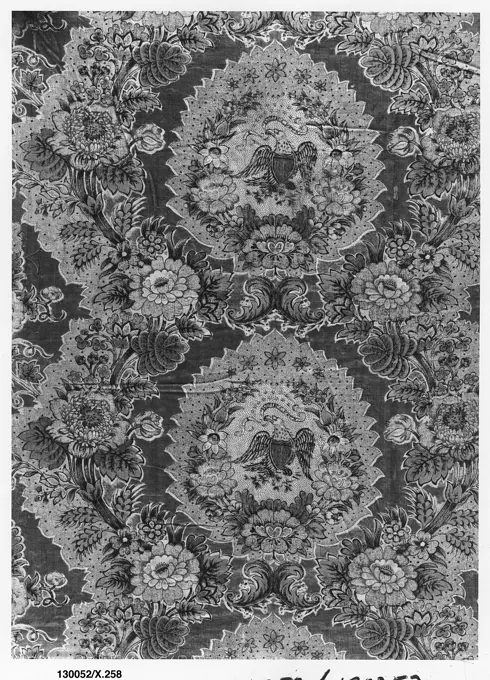
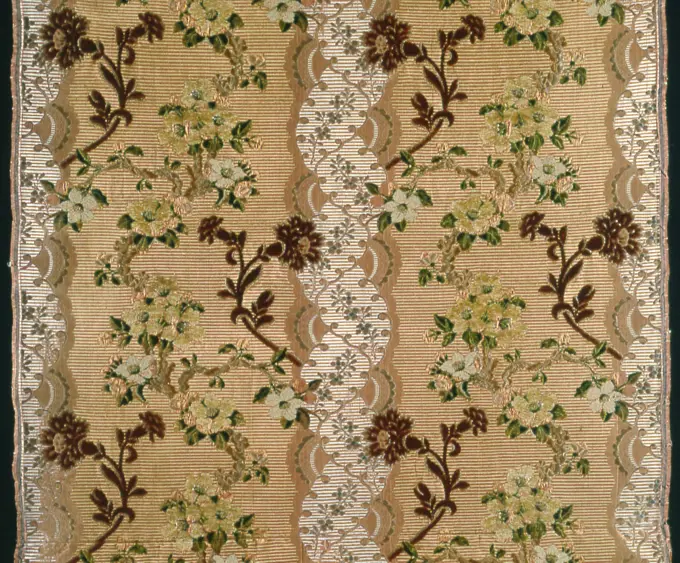
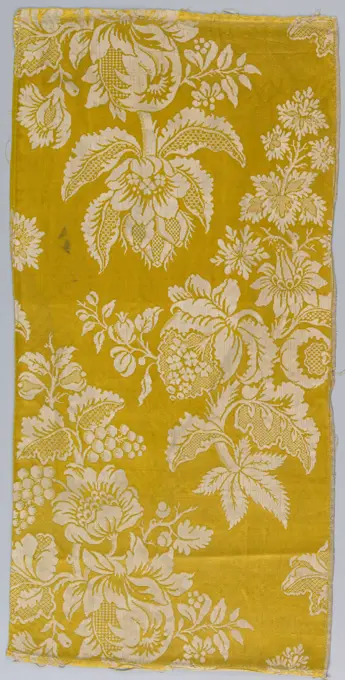
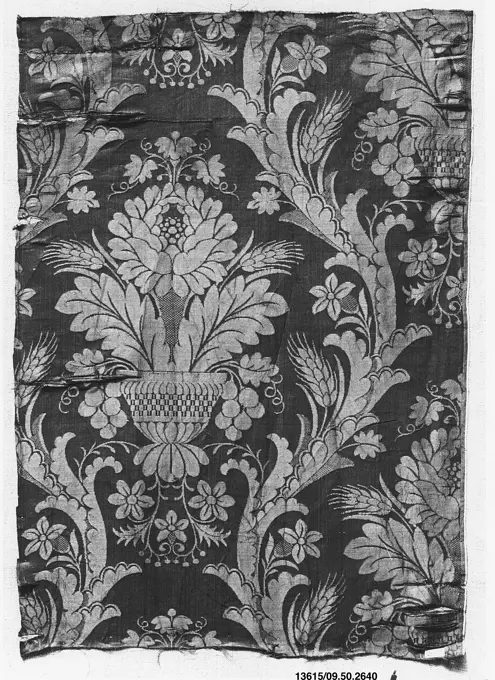
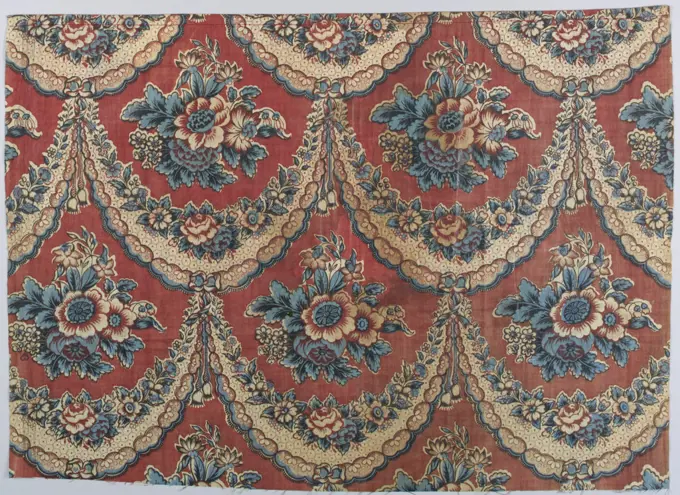
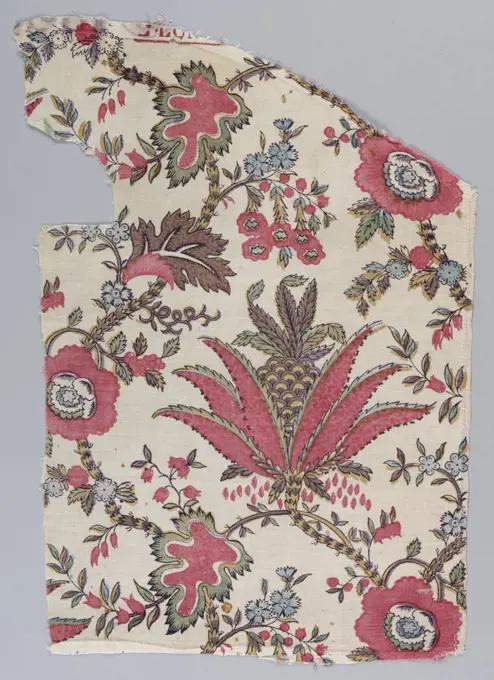
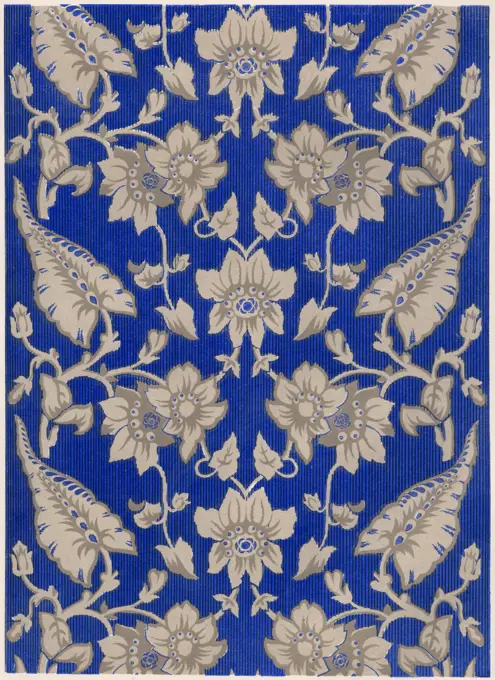
Fragment (France); cotton; Warp: 78cm (30 3/4in.). Weft: 68cm (26 3/4in.) Seamed in the middle. Height of repeat: 29cm (11 1/2in.) Width of repeat: 22cm (8 3/4in.); Bequest of Elinor Merrell; 1995-50-216
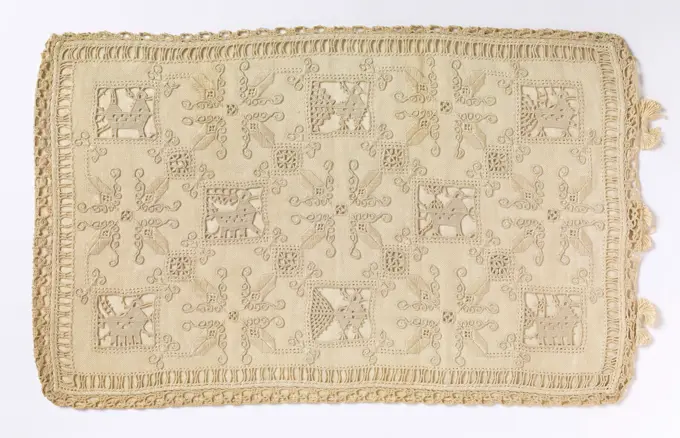
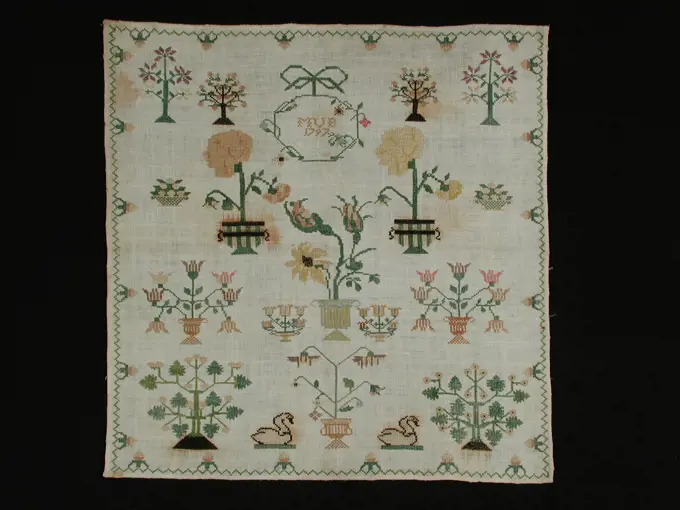
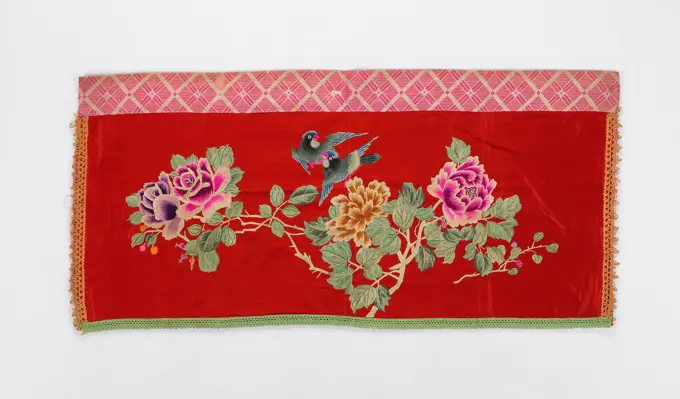
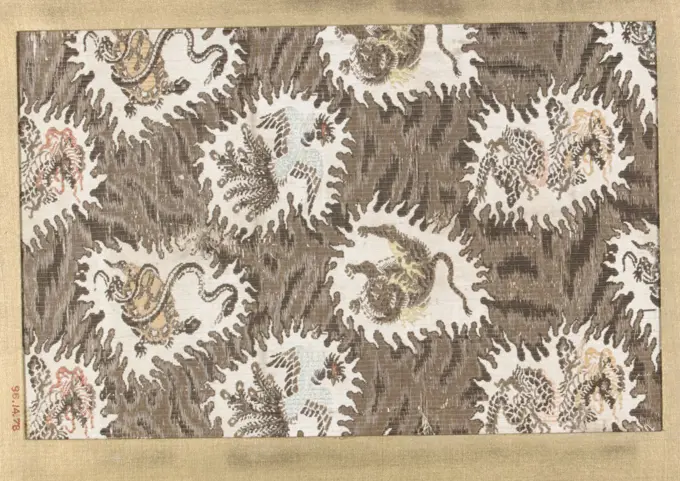
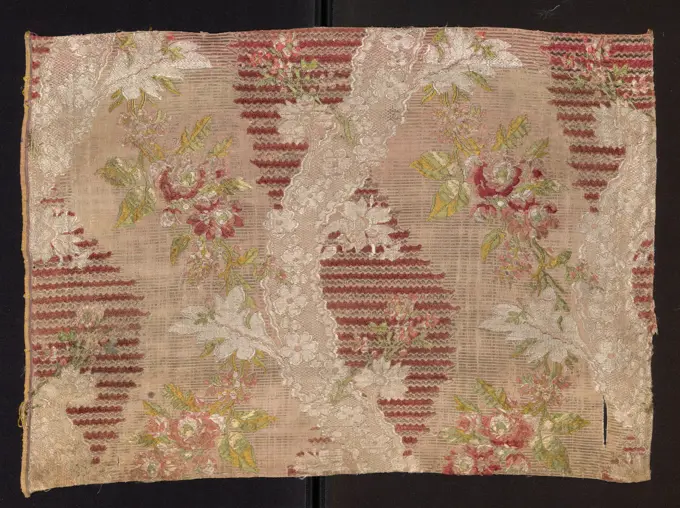
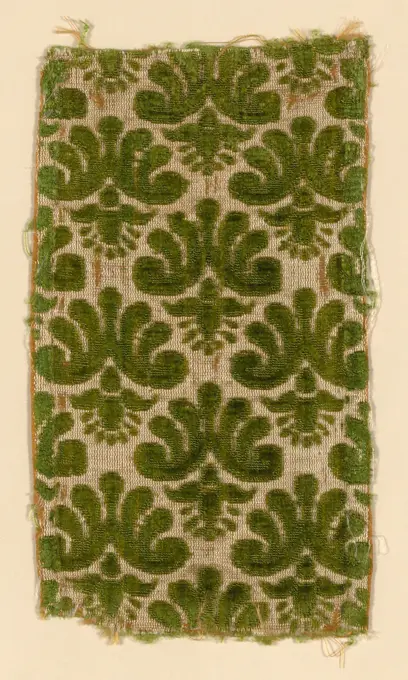
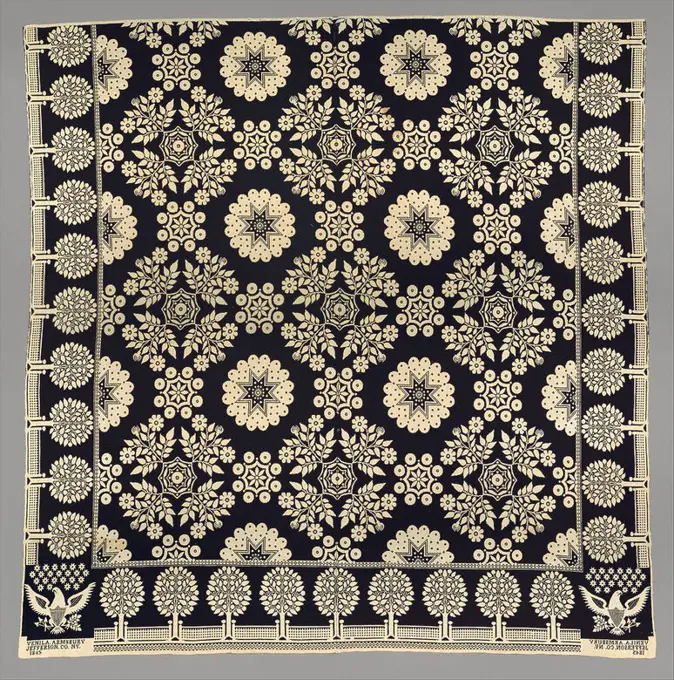
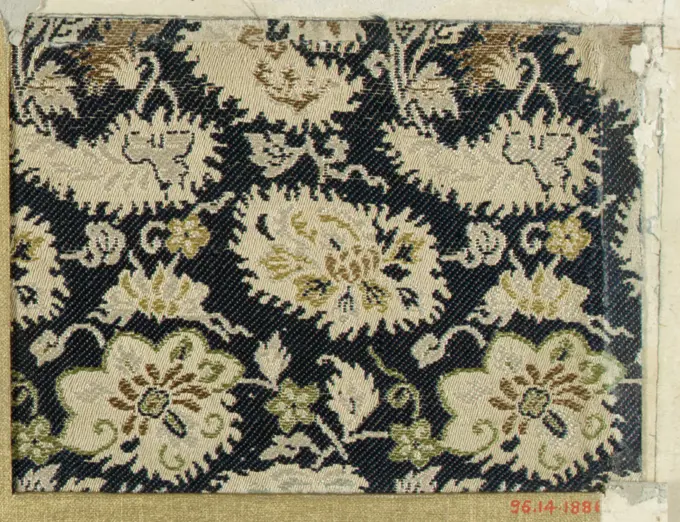
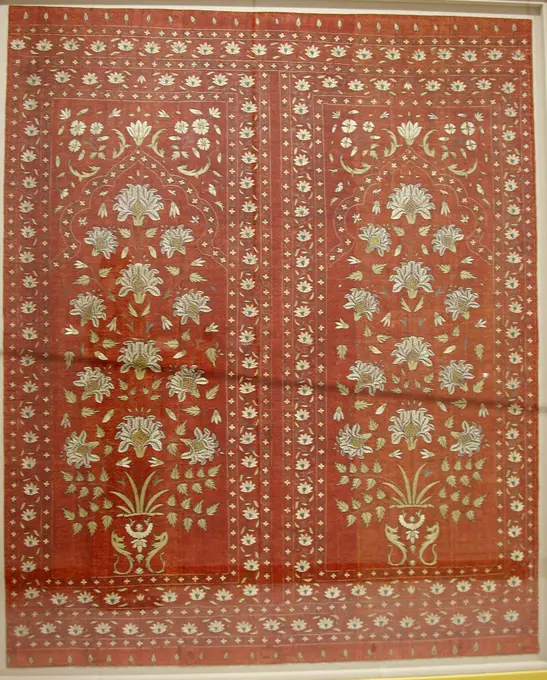
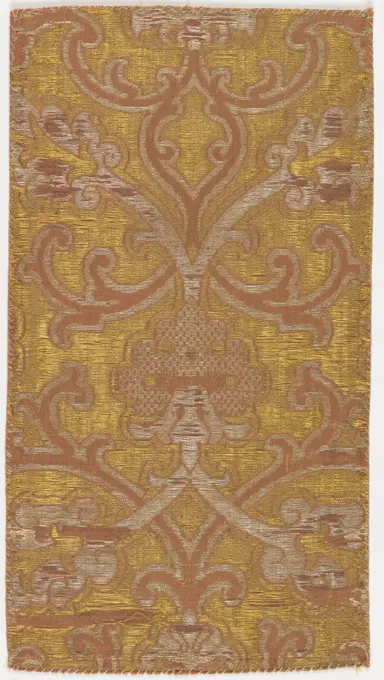
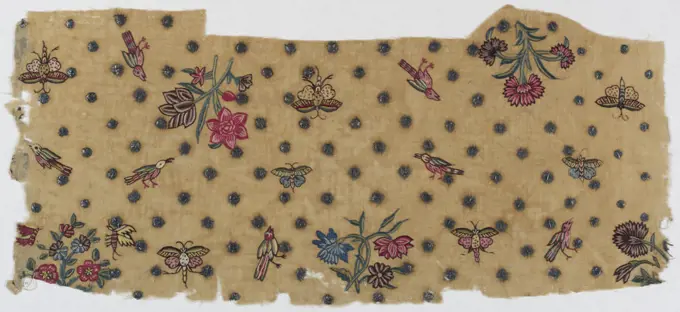
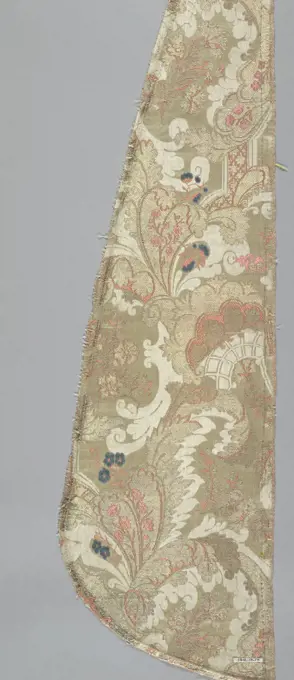
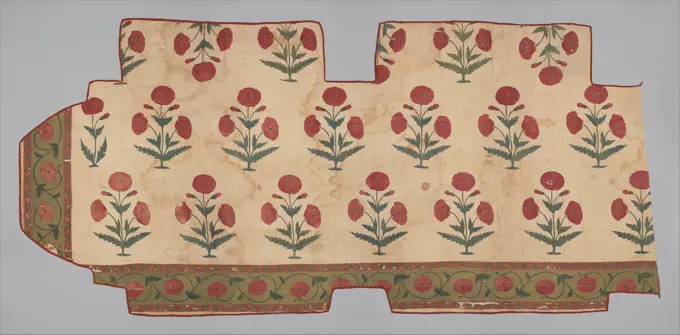
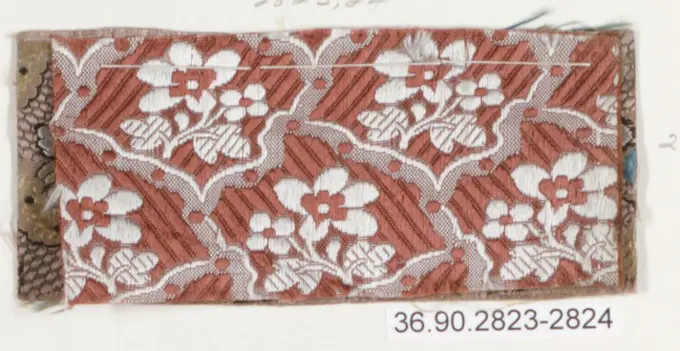
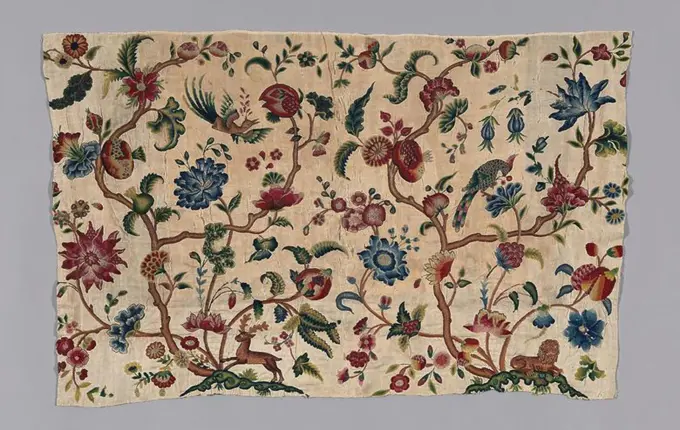
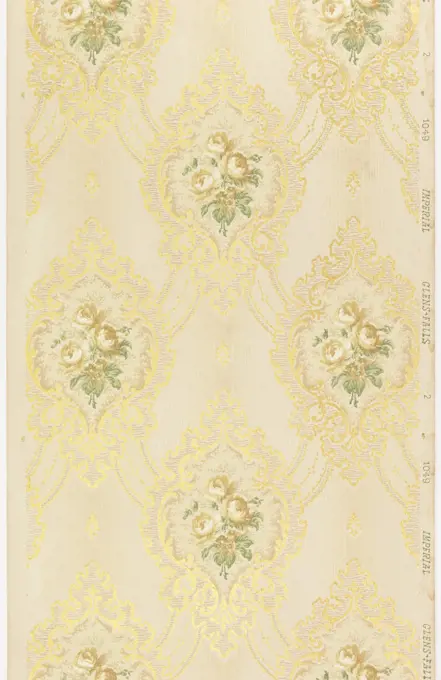
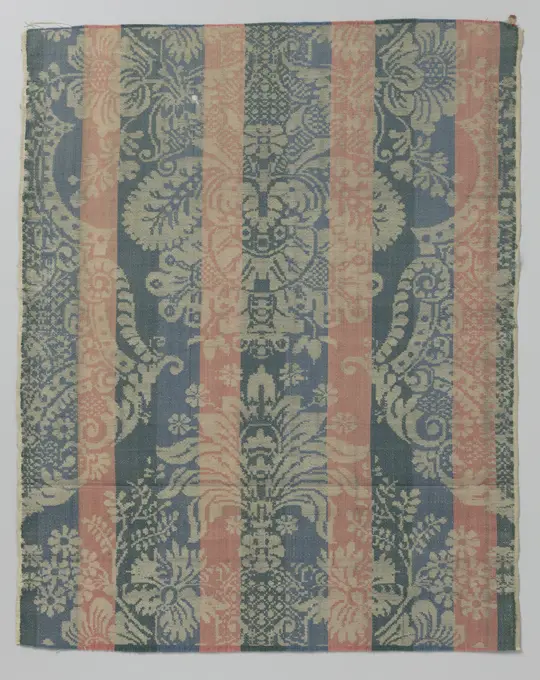
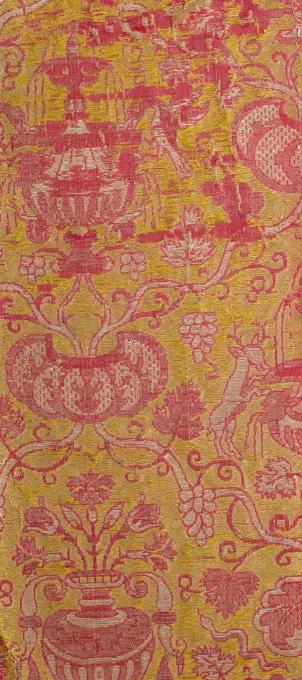
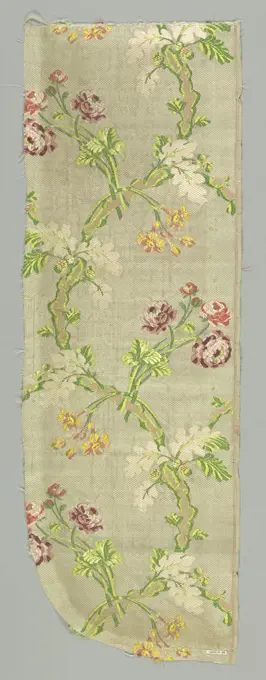
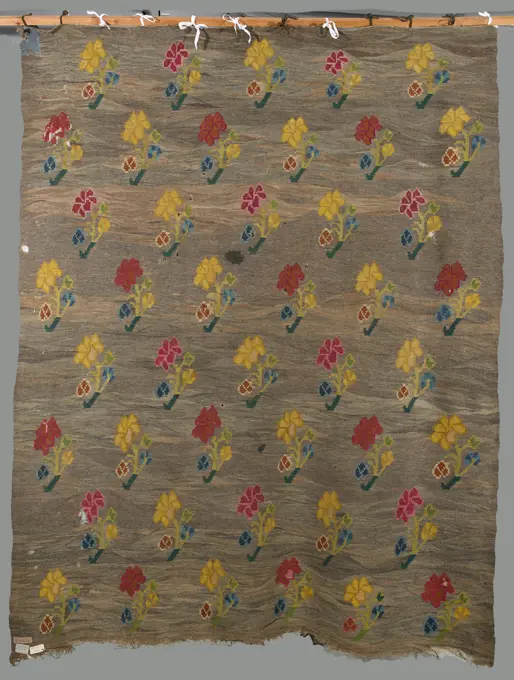
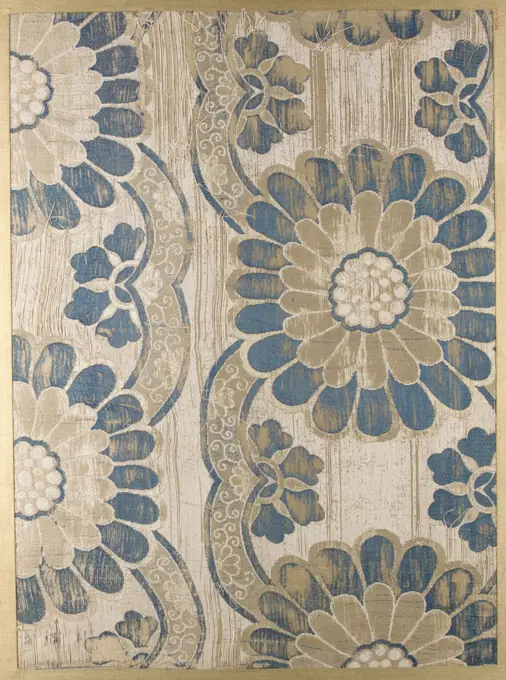
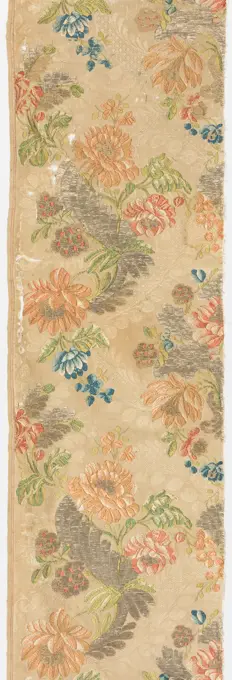
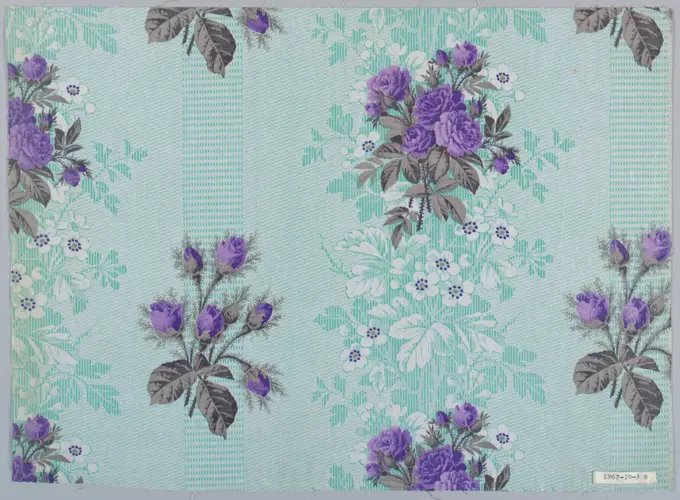
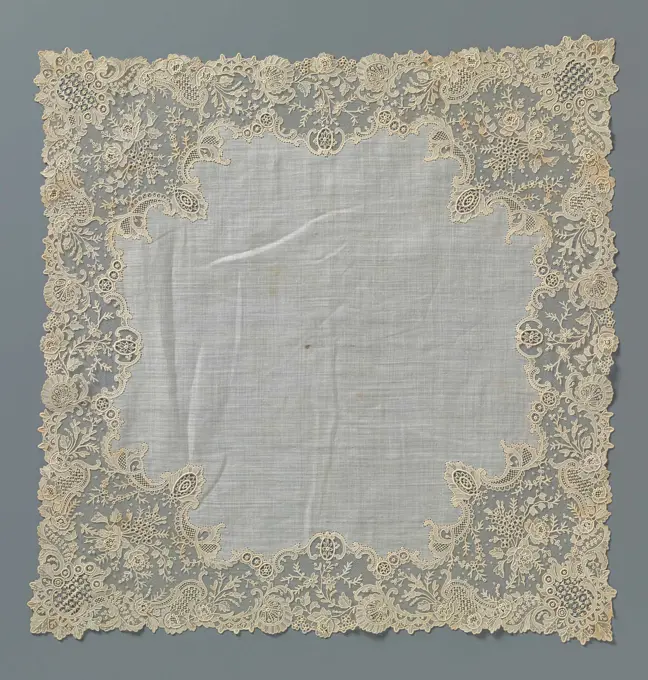
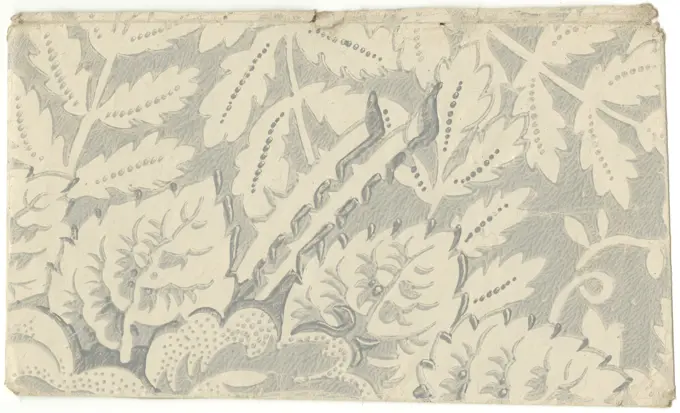
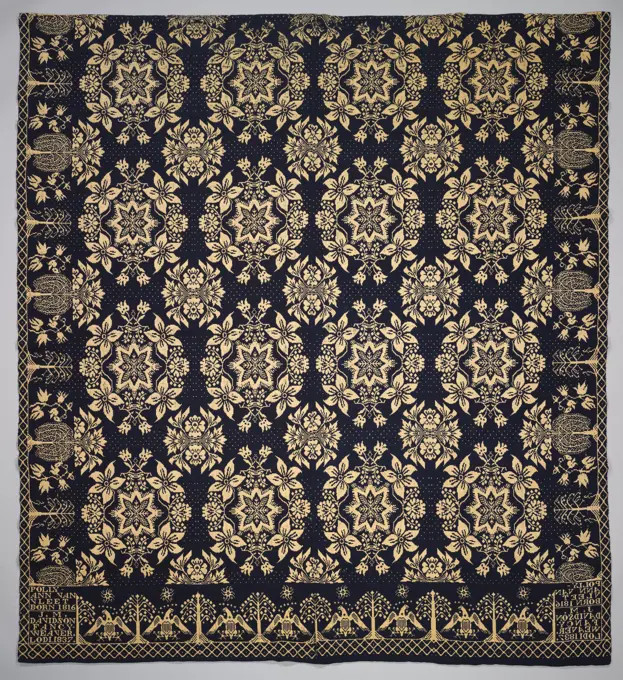
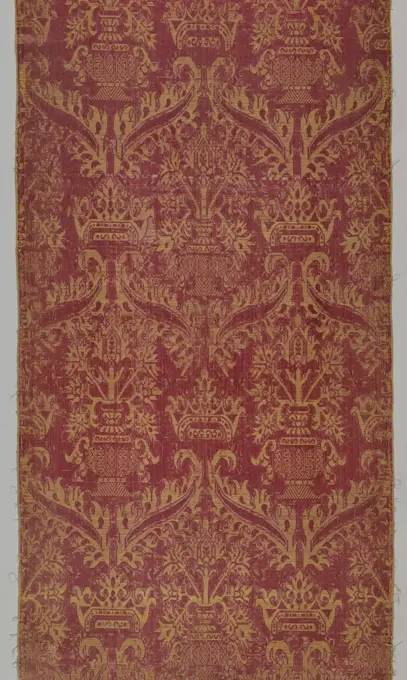
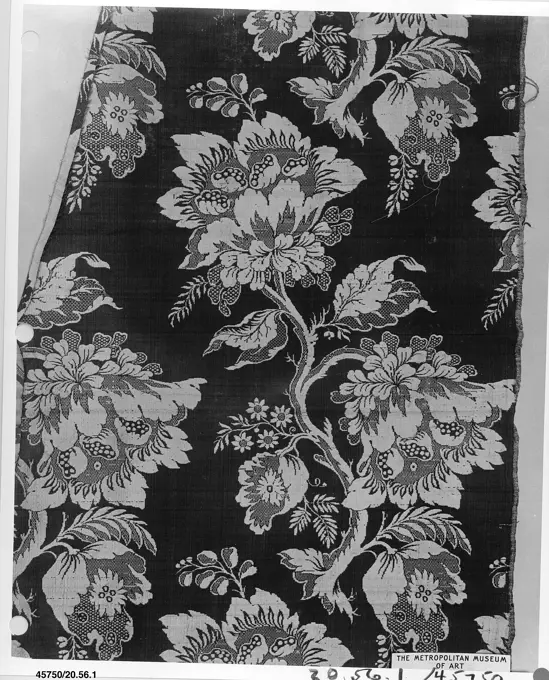
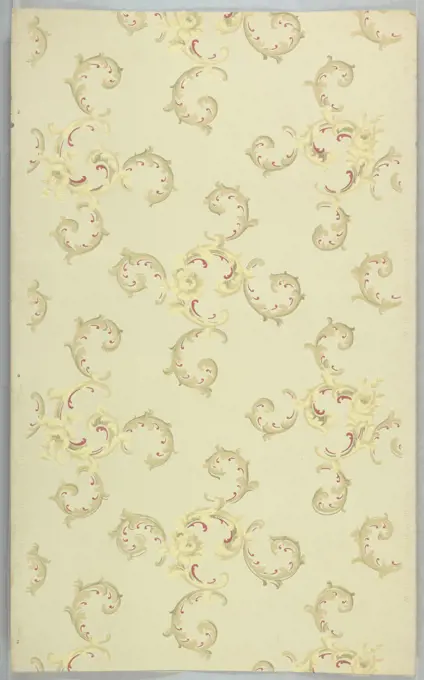
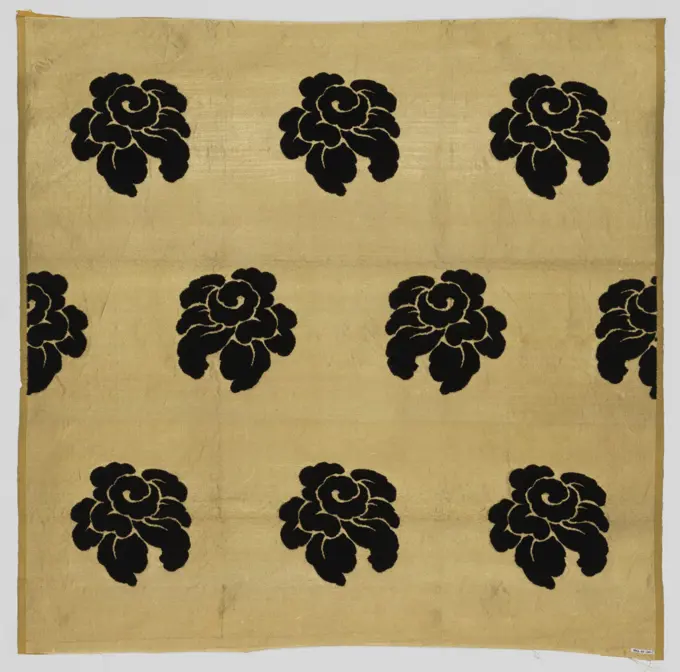
Textile Fragment, 1800s - early 1900s. Japan, 19th - early 20th century. Silk; average: 16.6 x 10.2 cm (6 9/16 x 4 in.).Fragment (England); cottonPillow Cover (USA); linenTextile; silkPiece 18th-19th century Japan. Piece 65922Fragment, silk, metallics woven, portion of a branch in metallics with polychrome flowers on white ground, 1750-1800, woven textiles, FragmentPiece ca. 1830 British. Piece 230811Excerpt yellow with red satine sofaatel with pattern of flower ornament flanked by vases, anonymous, c. 1500 - c. 1599 Fragment yellow with red satine with a pattern of a large flower ornament, flanked by vases from which wide garlands develop. Fond is formed by the yellow warp. Spain Ketting an element: Silk. Entry: Linen (Material) broach Fragment yellow with red satine with a pattern of a large flower ornament, flanked by vases from which wide garlands develop. Fond is formed by the yellow warp. Spain Ketting an element: Silk. Entry: Linen (Material) broachSampler worked in cross stitch in colored silk on cream cotton with linen effect, marked MUB 1797, merklap embroidery needlework footage silk cotton, textile embroidery cross stitch Square patch of cream-colored cotton with linen effect in the spun thread. Around hem edge of 0.4 cm wide. On the lap is embroided with silk yarn in the colors black dark gray green gray green light gray green yellow green pink mauve carmine red light gray blue light yellow hard yellow beige orange brown white and ivory color embroided: MUB 1797 needleworkFragment (Spain); wool, linenValance for a Wedding Bed, 20th century, 29 3/8 x 14 in. (74.61 x 35.6 cm), Satin, silk, cotton, embroidery, China, 20th centuryPanel Made 1768-1770 France. Silk and silk chenille, plain weave with supplementary patterning warps, supplementary patterning wefts and supplementary brocading wefts . Style of L. Galy Gallien et CompeFragment (Towel) Made 1601-1700 Turkey. Embroidered all-over pattern .Dorothy Posten, Table Cover, c 1937 Table CoverPiece 18th-19th century Japan. Piece 65810Fragment of the fabric;  after. 18th century (1740-00-00-1760-00-00);Fabrics, purchase (provenance)Quilt Indian, Coromandel Coast, for Western market 1783-89Fragment, Medium: silk Technique: damasse (5 harness satin plus 14 twill), Pattern of vases with birds on either side in a checkerboard framework. In red and yellow., 17th century, woven textiles, FragmentBorder (USA); machine-printed on ungrounded paper; 48 x 24 cm (18 7/8 x 9 7/16 in.)Fragment Made 1590-1610 Italy. Silk, warp-float faced satin weave with supplementary pile warps forming cut, uncut and voided velvet .Coverlet. Culture: American. Dimensions: 83 x 84 in. (210.8 x 213.4 cm). Maker: Harry Tyler (1801-1858). Date: 1845. Museum: Metropolitan Museum of Art, New York, USA.Cravat end. Date/Period: Early 18th century. Cravat end. Medium: linen. Technique: needle lace with ground of loop and twist with twist return. Author: UNKNOWN.Piece. Culture: Italian, probably Venice. Dimensions: Overall: 25 x 23 3/4 in. (63.5 x 60.3 cm). Date: 16th century.Velvet with the pattern delineated solely by the contrast between two heights of the dense silk velvet pile was particularly popular in the sixteenth century. This pattern of lobed palmettes, sometimes incorporating crowns, was made into robes or sashes worn by the senators of the Venetian Republic. It was also used to make ecclesiastical vestments. The crimson shade is associated with the Venetian senators, but the Museum also has an example woven in deep blue silk. Museum: Metropolitan Museum of Art, New York, USA.Piece 18th-19th century Japan. Piece 67599Tent Lining Fragment 18th century This section from a tent lining is immediately distinguished from contemporary embroideries made for export by the use of the favorite Mughal motif of the single flowering plant within an arched niche. It would have hung on the inside of a tent made of a plain cotton textile, enlivening the interior space of a home-away from-home, the tent city erected by the court on the move during campaigns or the seasonal migrations between capitals.. Tent Lining Fragment 448936Ceiling Paper (USA); Manufactured by Maxwell & Co., S.A. (United States); machine-printed paper, liquid mica; 85.5 x 49 cm (33 11/16 x 19 5/16 in.)Textile Fragment 17th century. Textile Fragment 454475Fragment, Medium: silk, linen and metallic thread Technique: brocatelle, Symmetrical arabesques and a pomegranate motif filled with a checked diaper pattern. ln dark yellow and mauve., Spain, 17th century, woven textiles, FragmentFragment, Medium: cotton, silk, metallic thread Technique: chain stitch embroidery on plain weave, Cotton muslin with Mughal-style embroidery, mainly in chain stitch, showing detached floral sprays, birds and insects in colored silks and metallic thread., India, 18th century, embroidery & stitching, FragmentCeiling paper, Maxwell & Co., S.A., Chicago, Illinois, USA, Machine-printed paper, Floral quatrefoil motif within foliate circle. A floral wreath fills the juncture where four foliate circles join., USA, 1905-1915, Wallcoverings, Ceiling paperFragment, Medium: silk, metallic yarns Technique: satin weave with supplementary weft patterning (brocade), chenille, Fragment of white satin brocaded in gold metallic thread, pink and terra-cotta silks and blue chenille has a large-scale scrolling leaves and small floral sprays., France, 18th century, woven textiles, FragmentTextile; silkSidewall (USA); Manufactured by Maxwell & Co., S.A. (United States); machine-printed paper, liquid mica; 90 x 49 cm (35 7/16 x 19 5/16 in.)Fragment silk tissue. Fragment of blue and yellow silk with repeating pattern of peacocks with head to each other, interspersed by small trees and floral baskets. Fragment along the bottom deposited with passing with frills.Dworski Kilim;  around 1850 (1841-00-00-1860-00-00);Kilimy, purchase (provenance)Fragment of a Floorspread late 17th century On this fragment from what was once a magnificent floorspread, later cut and hemmed for a different purpose, stately rows of poppies line the central field. Like several Mughal-period pile carpets, the main motif changes direction in some areas; here, alternate poppy plants appear upside down in the top row. The spread was made through the laborious dyeing process known as kalamkari; remarkably, the usually fugitive green is very well preserved. In this process, green was achieved by painting a yellow dye over areas already tinted with indigo, but the yellow often faded, leaving only the undercoat of blue on historic kalamkaris.. Fragment of a Floorspread 453184Piece French 19th century View more. Piece. French. 19th century. Textiles-WovenTextile, Peri; Designed by Owen Jones (British, 1809 - 1874); Manufactured by Warner, Sillet & Ramm (United Kingdom); England; silkPortion from a Valance. England. Date: 1701-1725. Dimensions: 55.6 × 87.6 cm (21 7/8 × 34 1/2 in.). Linen, plain weave over coarser and heavy plain weave linen, embroidered through both layers in wool yarns; in chain, long, short and feather stitches; French knots. Origin: England. Museum: The Chicago Art Institute, Chicago, USA.Sidewall, Imperial Wallcoverings Inc., Machine-printed paper, Floral bouquet within medallion. Flowers printed in shades of tan and green with metallic gold medallions. Medallions are connected by swags. Printed on striped off-white background., Glens Falls, New York, USA, 1905-1915, Wallcoverings, SidewallTextile; Manufactured by Schwartz-Huguenin; cottonNapkin van Wit Linnamast ,, 1603 - 1627 Wit linen damask napkin with a pattern of stripped flowers with the arms and name inventions "Zoete van Lueke" and "Hertaign", marked GL 22. Northern Netherlands linen (material) damask Wit linen damask napkin with a pattern of stripped flowers with the arms and name inventions "Zoete van Lueke" and "Hertaign", marked GL 22. Northern Netherlands linen (material) damaskExcerpt of coarse linen fabric with a floral pattern on striped fond, anonymous, c. 1680 - c. 1700 Coarse linen tissue. Fond of vertical green, blue and red striped satin, weaving with a pattern in white twill, consisting of a diamond -shaped centerpiece of stylized flowers and leaves, surrounded by elegant corrugated lines. Germany Chain: Wool. impact: Linen (Material) damask Coarse linen tissue. Fond of vertical green, blue and red striped satin, weaving with a pattern in white twill, consisting of a diamond -shaped centerpiece of stylized flowers and leaves, surrounded by elegant corrugated lines. Germany Chain: Wool. impact: Linen (Material) damaskSidewall (USA); Manufactured by York Card & Paper Co.; machine-printed paper, liquid mica; 92.5 x 47 cm (36 7/16 x 18 1/2 in.)Fragment; silkFragments of silk fabric  motifs of vases with flowers and fountains unknownFragment, Medium: silk Technique: plain weave with discontinuous supplementary weft patterning (brocade), White ground with large serpentine branch from which spring sprays of realistically drawn flowers, acorns and foliage, brocaded in polychrome silks., England, 1750-1800, woven textiles, FragmentRug;  19th/20th century (1891-00-00-1910-00-00);Wierzejski, Tadeusz (1892-1974) - collection, gift (provenance), flowers, Polish (culture), decorative fabrics, equipment and home equipmentGold-Thread Embroidered Cover, 1800s. Turkey, Ottoman period. Silk, gilt-metal, silver-metal, paper, cotton padding; satin weave, embroidery; average: 194.3 x 157.5 cm (76 1/2 x 62 in.).Piece 18th century Italian. Piece 217298Fragment of Persian silk fabric unknownPiece 18th-19th century Japan. Piece 65844Fragment (India); cottonFragment (Italy); silkTextile (France); silkFragment (Spain); silk; Warp x Weft: 125.4 x 52.4 cm (49 3/8 x 20 5/8 in.)Crewel Wool Fragment (France); wool on cottonTextile (France); Manufactured by Schwartz-Huguenin; cottonTextile, Medium: cotton Technique: red and black printed by engraved roller, red (background) and blue printed by relief or block, on plain weave, Offset clusters of red and blue flowers enclosed by floral swags and tassels on a red ground., France, 1830-40, printed, dyed & painted textiles, TextileRug;  around 1850 (1840-00-00-1860-00-00);Flowers, plant ornaments, Poland (culture), message (provenance), roses, decorative fabrics, equipment and home equipmentBrocaded Textile, 1700s. Italy, 18th century. Plain cloth, brocaded (); silk and metal; overall: 29.2 x 44.8 cm (11 1/2 x 17 5/8 in.).Velvet Fragment, 1600s. Italy, Genoa, 17th century. Velvet; overall: 40.2 x 53.8 cm (15 13/16 x 21 3/16 in.).Fragment, Medium: silk, metallic yarns Technique: satin weave with patterning in supplementary warp pile (cut and uncut velvet), Textile fragment in the bizarre’ style. Satin weave with patterning in supplementary warp pile (cut and uncut velvet) showing small portion of whole design showing floral motifs in silver, green and white on a dark red field. Elements of lace patterning., France, early 18th century, woven textiles, FragmentCompoundsatinHandkerchief with a border of needle side with corner crossheads. Handkerchief with an edge of natural needle side: Brussels mesh edge. For a large, lobd, batters centerpiece runs a lace edge with corner crossheads, filled with open grid work. Inner and outside contours are composed of fine C-Volutes, ovals, laps and acanthus leaves. On the mesh network, varies are fine roses, lines, rose bowls and forgetmijnites. A more closed edge shows roses, scaly edges, impeller palms with godridge edge and seed beads with a raster filling.Fragment 17th century Italian. Fragment. Italian. 17th century. Silk. Textiles-WovenPiece 18th-19th century Japan. Piece 67536Civil War envelope folded from wallpaper to Dr. John Rison  | Library of CongressPiece 18th century Japan. Piece 71356Fragment (Spain); silk; Warp x Weft: 370 x 51 cm (12 ft. 1 11/16 in. x 20 1/16 in.)Textile (England); cottonSidewall (USA); Manufactured by Robert Graves Co. (United States); machine-printed; 49.5 x 39.5 cm (19 1/2 x 15 9/16 in.)Textile, Medium: linen, cotton Technique: block printed and painted on plain weave (yellow applied by block but the blue seems to have been applied by brush), Slightly more than one minumum unit of a half drop repeat a floral vine incorporating a pineapple. Multi-colors on an undyed background., Note small part of stamp at top., France, mid-late 18th century, printed, dyed & painted textiles, TextileCoverlet, 1837. J.M. Davidson (American). Double weave; blue wool and white cotton; overall: 235 x 207 cm (92 1/2 x 81 1/2 in.).Sampler 19th century German. Sampler 228664Textile (Japan); silk, metallic threadTextile, Red and yellow fabric, 17th century, woven textiles, TextileTextile; silk, metallic threadBorder Italian, probably Burano late 19th centuryPiece French ca. 1730-35Piece. Culture: French. Dimensions: L. 37 1/2 x W. 21 inches95.3 x 53.3 cm. Date: ca. 1760-70. Museum: Metropolitan Museum of Art, New York, USA.Sidewall - Sample (USA); 53.5 x 49.5 cm (21 1/16 x 19 1/2 in.)Cover For Card Case (Italy); silk, paper, paillettesPiece 18th-19th century Japan. Piece. Japan. 18th-19th century. Silk, metallic thread. Edo period (1615-1868). Textiles-WovenLap of embroidered silk, anonymous, c. 1700 - c. 1799 Lap of two pieces of embroidered silk, with a pattern of flower branches in green, pink, blue, yellow and gray.  silk Lap of two pieces of embroidered silk, with a pattern of flower branches in green, pink, blue, yellow and gray.  silkSample Book (USA); Distributed by S.A. Maxwell & Co.; machine-printed paper, oatmeal paper; 71 x 46 x 7 cm (27 15/16 x 18 1/8 x 2 3/4 in.)Piece 18th-19th century Japan. Piece 66921Ceiling paper, Maxwell & Co., S.A., Chicago, Illinois, USA, Machine-printed paper, Four acanthus scrolls branch out from a C scroll containing a single flower. Printed on a light yellow ground., USA, 1905-1915, Wallcoverings, Ceiling paperTextile (France); silk, metallic thread; Anonymous bequest in memory of Albert and Rebecca Elsberg; 1938-82-200-cRibbon of side brokaat; A silver -colored zigzag pattern has been applied to a white surface with red and pink flowers, anonymous, c. 1790 - c. 1810 Ribbon of side brokaat; A silver -colored zigzag pattern has been applied to a white surface between which red and pink flowers. The edges are trimmed with a decorative band. Frak of silver thread at the ends. West-Europa geheel: silk. silver thread. brocade (textile) Ribbon of side brokaat; A silver -colored zigzag pattern has been applied to a white surface between which red and pink flowers. The edges are trimmed with a decorative band. Frak of silver thread at the ends. West-Europa geheel: silk. silver thread. brocade (textile) A fine floral design in silk  brocade by Campbell, Harrison  and Lloyd of Spitalfields, London, and displayed at the  Crystal Palace exhibition.     Date: 1851Ceiling Paper (USA); Manufactured by Carey Bros. W.P. Mfg. Co.; machine-printed paper; 91 x 49 cm (35 13/16 x 19 5/16 in.)Semi silk fabric  lace river” with flower bunches unknownSilk fabric, Eastern unknownPanel Made 1850-1870 Lyon. Silk, warp-float faced 7 1 satin weave self-patterned by ground weft floats and areas of plain and twill weaves; woven on loom with Jacquard attachment .Textile Fragment, 1800s. Japan, 19th century. Silk, metallic thread; overall: 31 x 15.5 cm (12 3/16 x 6 1/8 in.).Sampler, Medium: linen embroidery on linen foundation Technique: embroidered in double running, overcasting, buttonhole over a cord, satin, hemstitching, and eyelet stitches on plain weave foundation, Bands of pattern in white., England, mid-17th century, embroidery & stitching, SamplerNapkin from white Linnamast ,, 1800 - 1900 White linen Damstic napkin with stripped flowers and flower edge. Netherlands (possibly) linen (material) damask White linen Damstic napkin with stripped flowers and flower edge. Netherlands (possibly) linen (material) damaskNapkin of linen damask with a flower pattern. Napkin of linen damask with a branch with large flowers and fruits. A napkin (BK-1977-291-B) belongs to the napkin.Embroidery: Counted Stitches (Italy); silk, jute