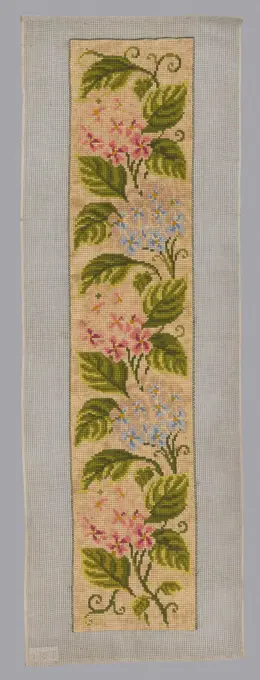
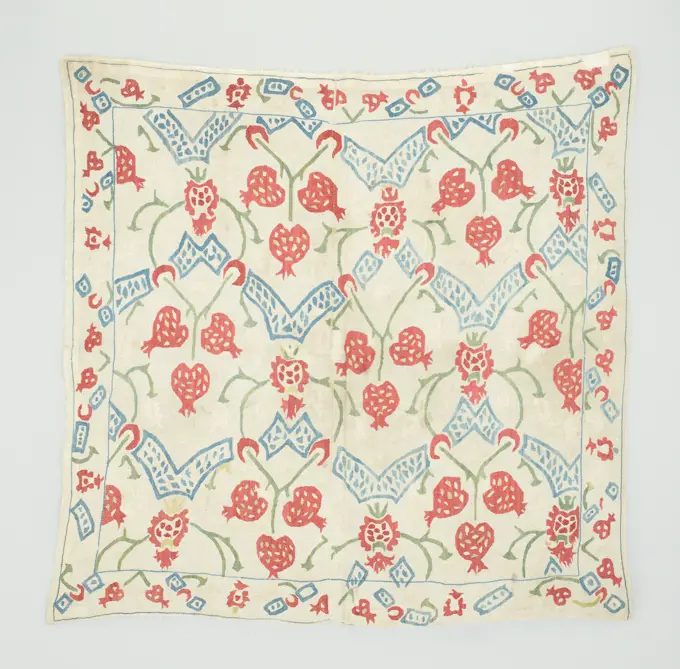
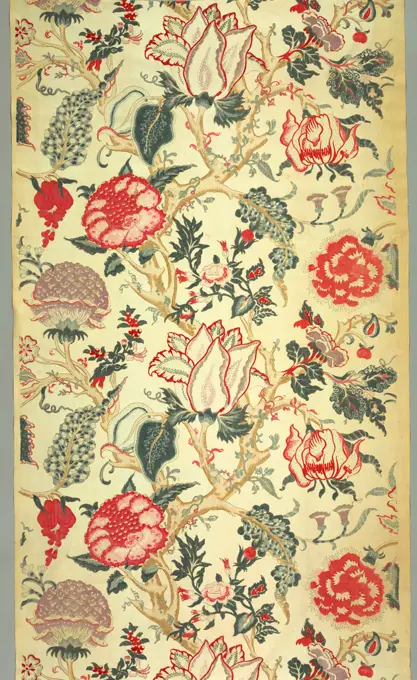
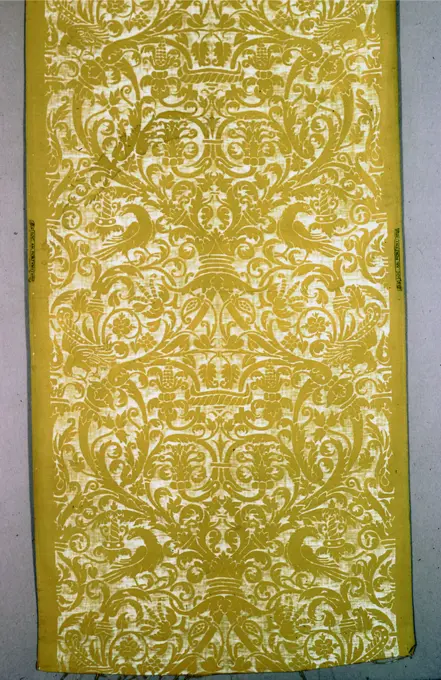
Woven Textile Fragments

A variety of textile fragments showcasing intricate patterns and colors, highlighting historical fabric techniques from various cultures.

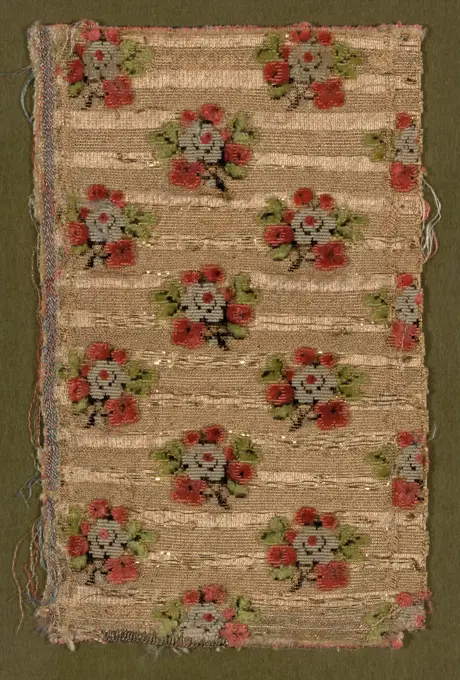
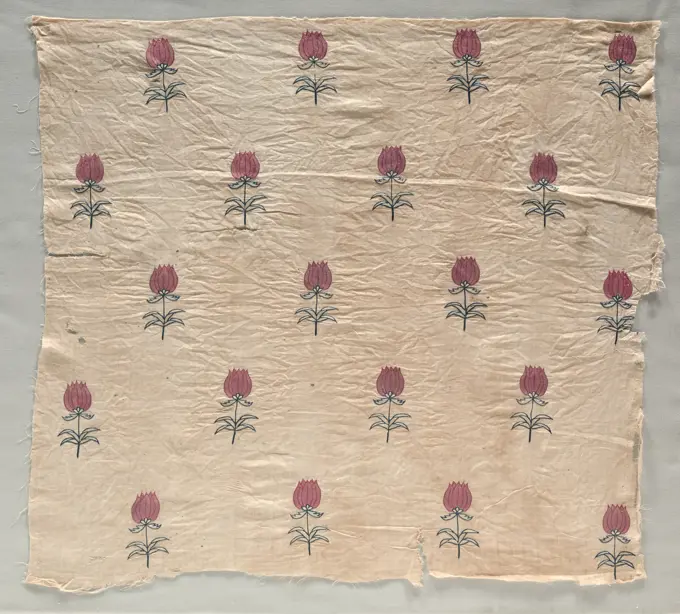
Fragment (France); cotton; Warp: 78cm (30 3/4in.). Weft: 68cm (26 3/4in.) Seamed in the middle. Height of repeat: 29cm (11 1/2in.) Width of repeat: 22cm (8 3/4in.); Bequest of Elinor Merrell; 1995-50-216
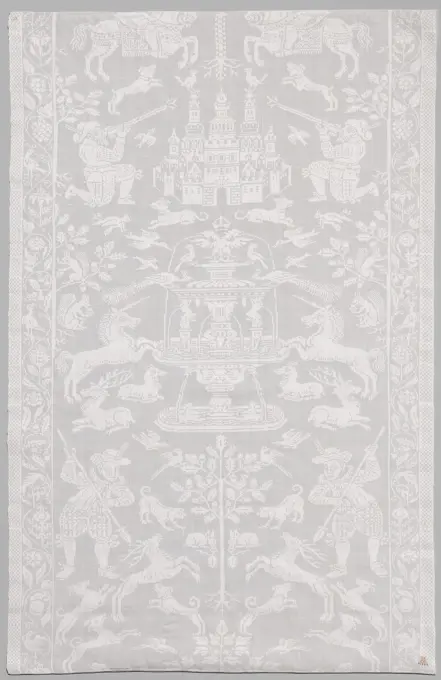
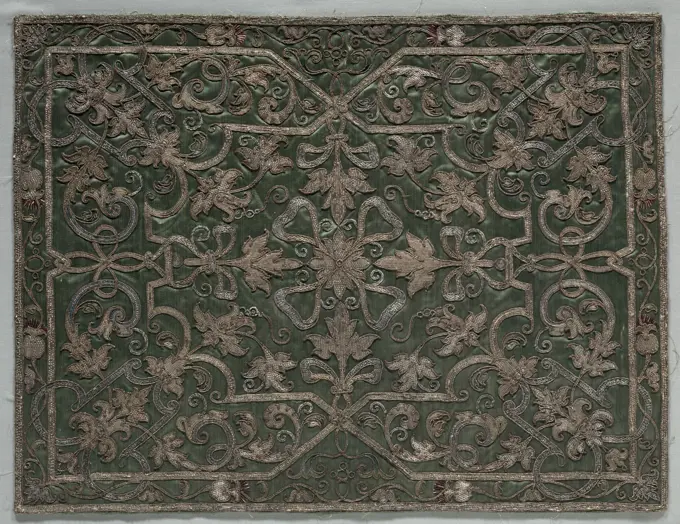
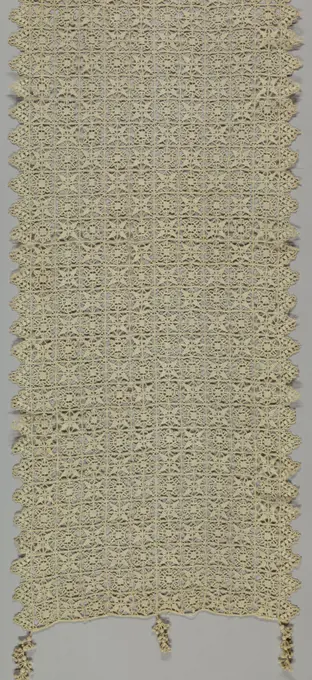
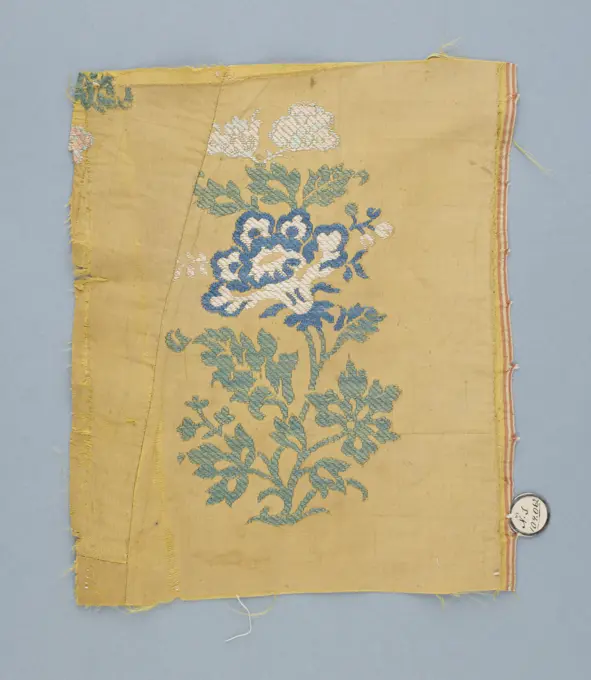
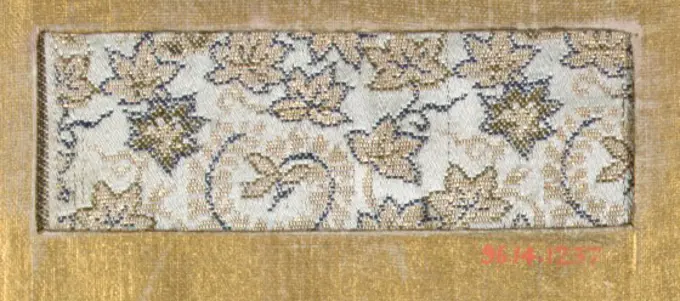
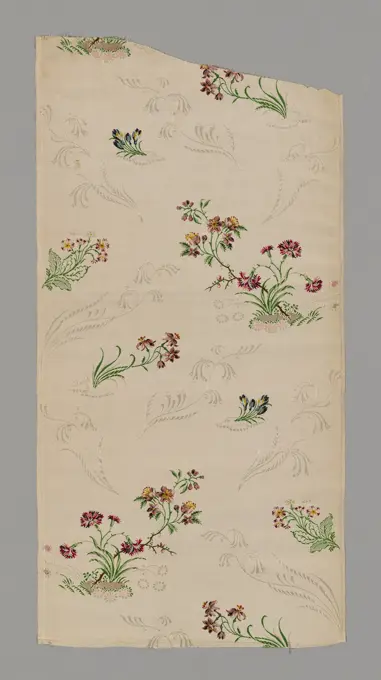
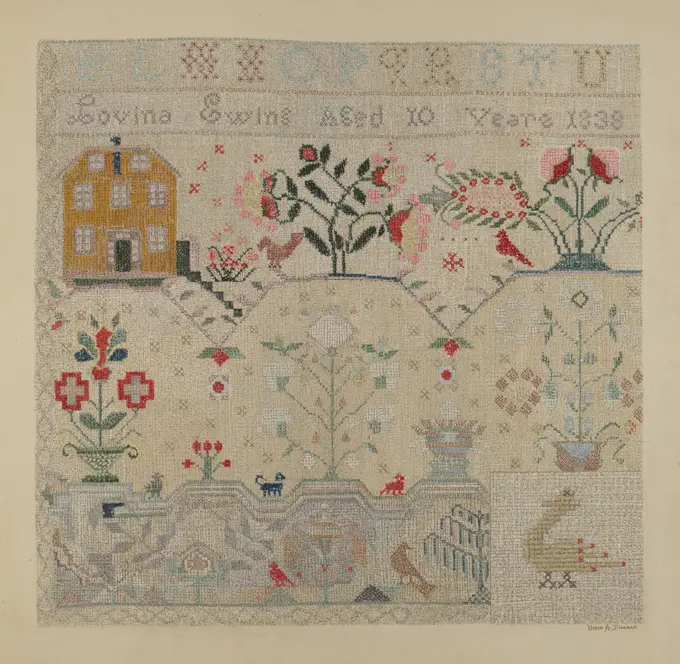
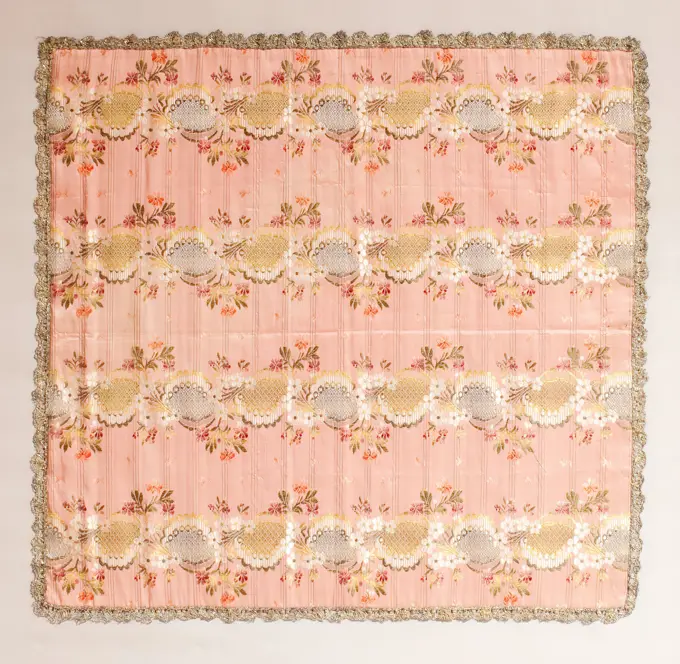
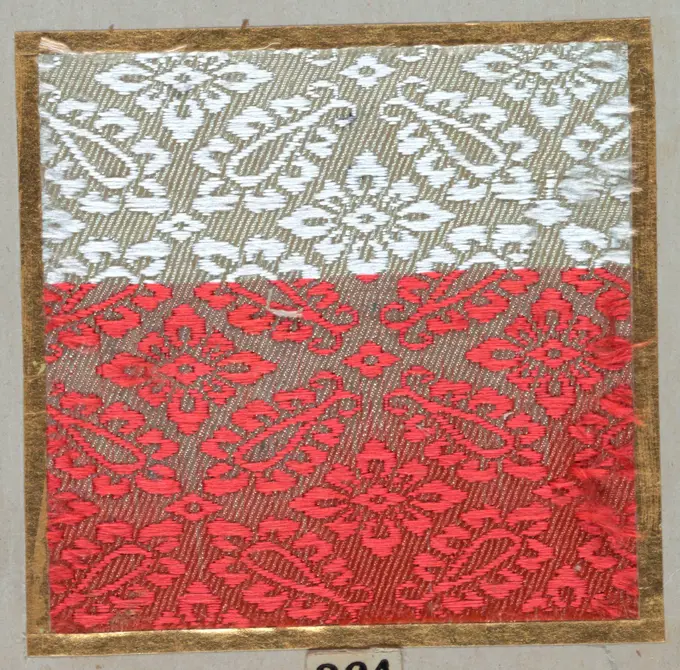
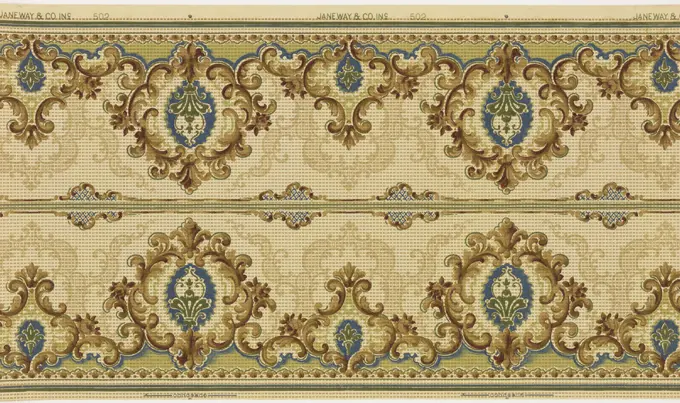
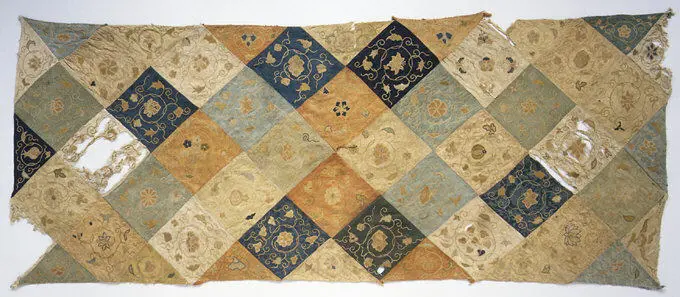
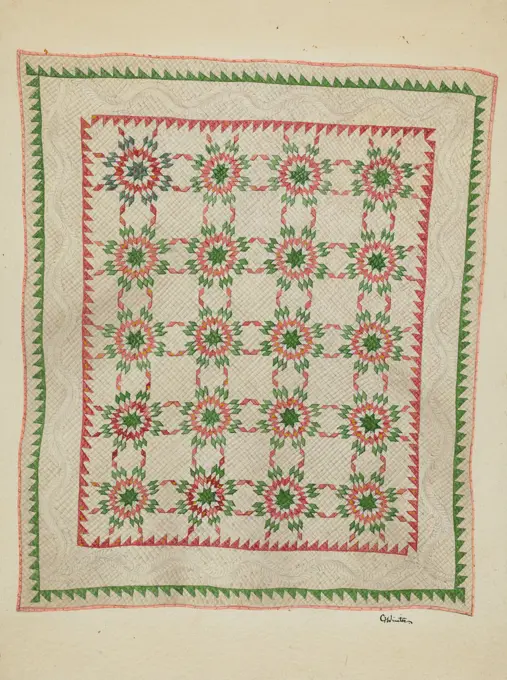
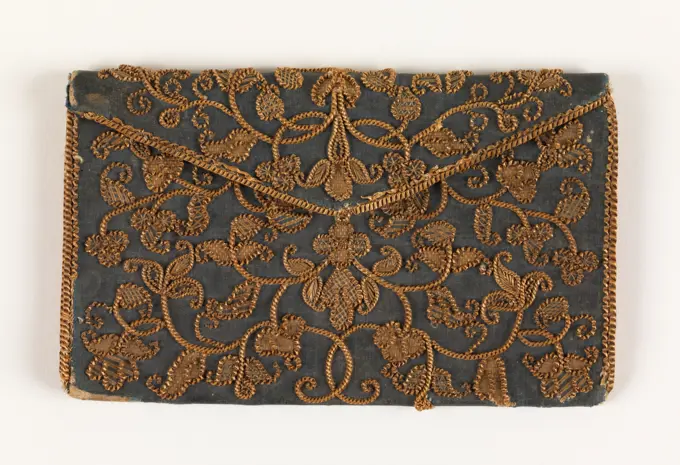
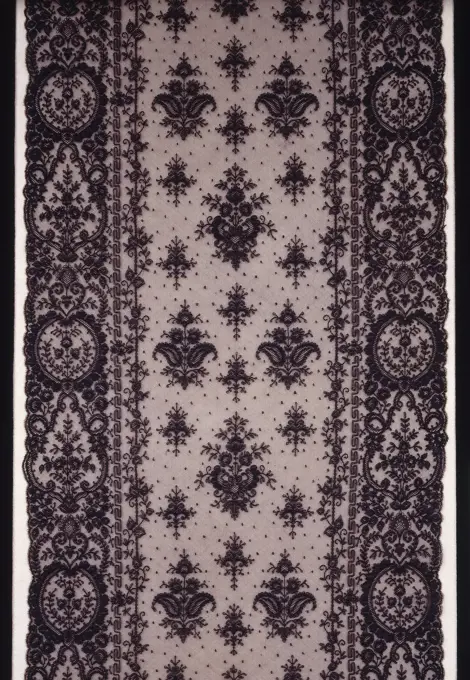
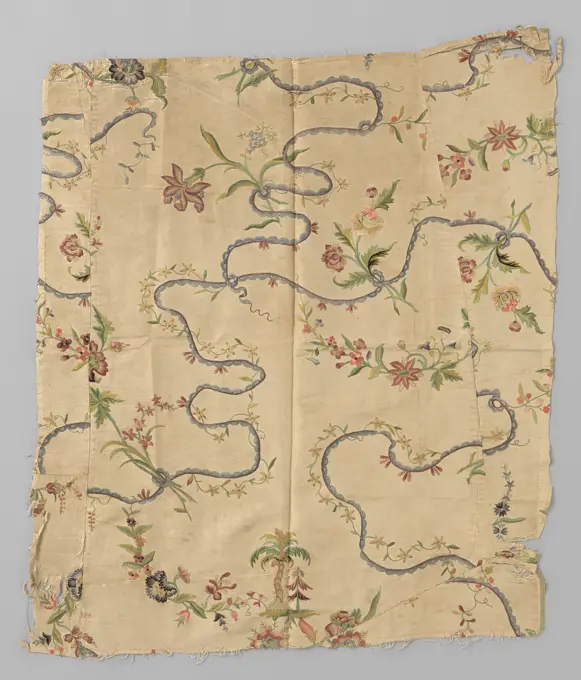
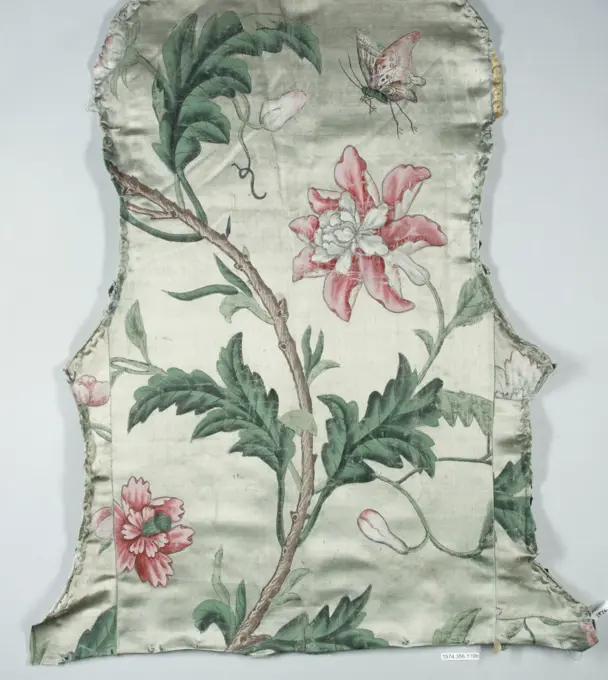
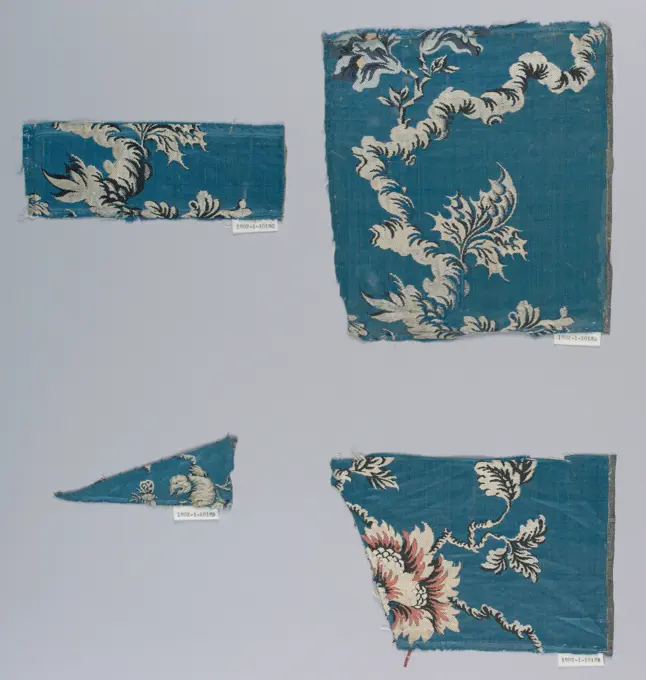
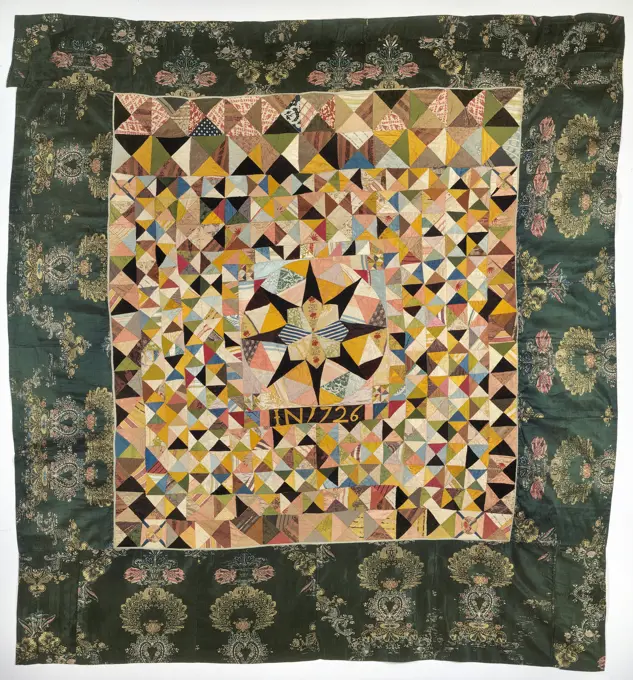
Cravat end 17th century Italian, Venice. Cravat end 218060Green felt rug (mōsen) decorated with roundels, 19th century, Unknown, 84 x 53 in., Cloth: wool felt; shibori (tie-dyeing), 19th century, Fabric made in Mongolia for the Japanese market.Embroidery in the form of a cross to decorating the chasuble;  IIPO .Xixw. (1851-00-00-1900-00-00);Fragment, Medium: silk, linen Technique: woven, combination of two structures, satin and plain weave., Pomegranite buds and foliage in red and yellow., 17th century, woven textiles, FragmentFragment (Japan)Quilt block -Piece early 19th century Japan. Piece 65919Sidewall - Sample, Mallow, 1887; Designed by Morris & Co. (United Kingdom); Manufactured by Jeffrey & Company (United Kingdom); block-printed paperCeiling paper, Cresswell & Washburn Ltd, Philadelphia, Pennsylvania, 1880 - 1900, Machine-printed paper, liquid mica, Small floral clusters tied with bow knot and connected by cord or ribbon., Philadelphia, Pennsylvania, USA, 1905-1915, Wallcoverings, Ceiling paperCostume piece early 19th century French. Costume piece 218297Sample, Orinoka Mills, (Philadelphia, Pennsylvania, USA), Green warp with light orange weft forming a pattern in columns., USA, ca. 1910, woven textiles, SampleTextile, Medium: silk Technique: woven, Light green ribbed silk brocaded with multicolored silk patterned with floral sprays and figures seated under a tree., France, 1750-1800, woven textiles, TextilePercival Jenner, Silk Kerchief, c 1937 Silk KerchiefTextile (France); silk, metal threadPiece 18th-19th century Japan. Piece. Japan. 18th-19th century. Silk. Edo period (1615-1868). Textiles-WovenSidewall Sample; machine-printed on paper; 22.5 x 22.5 cm (8 7/8 x 8 7/8 in.)Fragment. Date/Period: 14th century. Fragment. Medium: silk, gilded animal membrane around linen core. Technique: 4&1 satin and plain weave (lampas). Height: 616 mm (24.25 in); Width: 438 mm (17.24 in). Author: UNKNOWN.Embroidered Turkish kerchief. unknownTextile (USA); cottonTextile, Medium: cotton Technique: roller and block printed on plain weave, Allover design of floral sprays in red, green and tan on light blue background., England, late 19th century, printed, dyed & painted textiles, TextileCushion Cover, 1700s. China, Qing dynasty (1644-1911). Silk, metallic thread; overall: 52.1 x 42.6 cm (20 1/2 x 16 3/4 in.).Steel Spanning material to the design of Theo Nieuwenhuis in Passe-Partout, Theo Nieuwenhuis, c. 1910 Steel Spanning fabric from jacquard -woven cotton designed by Theo Nieuwenhuis. Floral motif in Spitsovaal, olive -green impact on yellow -green chain. In original passe-partout. Netherlandsmaker: Helmond Staal: Cotton (Textile). PASE-PARTOUT: Cardboard jacquard Steel Spanning fabric from jacquard -woven cotton designed by Theo Nieuwenhuis. Floral motif in Spitsovaal, olive -green impact on yellow -green chain. In original passe-partout. Netherlandsmaker: Helmond Staal: Cotton (Textile). PASE-PARTOUT: Cardboard jacquardVelvet Fragment, early 1600s. Italy, early 17th century. Velvet (cut, uncut, and voided); silk; overall: 67.3 x 18.4 cm (26 1/2 x 7 1/4 in.).Textile (Italy); Designed by Mariano Fortuny (Spanish, active Italy, 1871 - 1949); L x W: 58 × 30 in. (147.3 × 76.2 cm); 1972-52-1Textile, Les Coquecigrues; Manufactured by Oberkampf & Cie. (France); France; cottonPincushion covered with point the Gaze de Bruxelles. Pincushion covered with point De Gaze de Bruxelles, with a crowned E.Textile, China, 18th-19th century, woven textiles, TextileFragment multicolored brochure silk, anonymous, 1750 Fragment silk tissue with a white soil on which a pattern of white wavy ribbons on which leaves and brushes. The ribbons are tied with multicolored flower branches. France silk twill Fragment silk tissue with a white soil on which a pattern of white wavy ribbons on which leaves and brushes. The ribbons are tied with multicolored flower branches. France silk twillTextile; cottonValentine - Mechanical -- a decorated armoire (chest) ca. 1875 Anonymous, British, 19th century. Valentine - Mechanical -- a decorated armoire (chest). Anonymous, British, 19th century. ca. 1875. Heavy card stock, chromolithography, die-cut scraps,stringElizabethan ornamentTextile; cottonLinnamast napkin with a hunting scene, anonymous, c. 1625 - c. 1650 White Linen Damas napkin with hunting on horseback, with central fountain and houses. At the bottom of a tree of life. Marked with red -brown cross stitch "BR", a crown and "28" in diagonally opposite corners. The napkin includes a napkin with invnr. BK-1967-153-A. Flanders (Possible) linen (material) damask White Linen Damas napkin with hunting on horseback, with central fountain and houses. At the bottom of a tree of life. Marked with red -brown cross stitch "BR", a crown and "28" in diagonally opposite corners. The napkin includes a napkin with invnr. BK-1967-153-A. Flanders (Possible) linen (material) damaskApparel from a Dalmatic, early 1500s. Italy, early 16th century. Silk, gold and silver thread; embroidery; overall: 41.9 x 54.6 cm (16 1/2 x 21 1/2 in.).Napkin with the Battle of Malplaquet and the bridle portrait and weapon of John Churchill Hertog of Marlborough, Anonymous, in or after 1709 Napkin van Linnamast with the Battle of Malplaquet and the equestrian portrait and weapon of John Churchill Hertog by Marlborough. Woven: Gen/ Marlb/ Oroug and Malplaque. Kortrijk linen (material) damask  Malplaquet Napkin van Linnamast with the Battle of Malplaquet and the equestrian portrait and weapon of John Churchill Hertog by Marlborough. Woven: Gen/ Marlb/ Oroug and Malplaque. Kortrijk linen (material) damask  MalplaquetCover, Medium: linen Technique: bobbin lace, Square grid in which a four pointed star and rosette alternate. They are bobbin lace made to look like gauze. Three knotted tassels are at each end. Intended to look like reticella., Italy, late 19th century, lace, CoverFlowers and animals. Leaf with all kinds of different flowers and animals. In bronze on light green colored paper. Numbered at the bottom: N: 5.Pieces of white silk, c. 1725 - c. 1799 Fragment of stola on white silk with woven flowers of silk and gold thread that served as Stola. This belongs to a set with a manipel and another loose piece. The Stola consists of six pieces, the manipel from eight pieces, another loose piece.  silk. metal thread Fragment of stola on white silk with woven flowers of silk and gold thread that served as Stola. This belongs to a set with a manipel and another loose piece. The Stola consists of six pieces, the manipel from eight pieces, another loose piece.  silk. metal threadLeaf with diamond pattern of ranks with flower as field filling, Paul Reimund, 1783 - 1815 brocade paper Leaf with diamond pattern of seals with a flower branch as the field filling. Numbered at the bottom: No. 15. Nuremberg paper. paint (coating) relief printing ornament derived from plant formsFragment of silk fabric unknownFragment Made 1750-1775 France. Silk, cut, uncut, and voided velvet with additional patterning wefts of gold foil (cut strips wound around silk core) against satin weave foundation .Textile, Medium: cotton Technique: printed on plain weave, Reproduction of a medium-scale design of continuous twining vines and leaves in rust, biege and black, on beige ground. Peppering of black dots on the biege ground outlines the pattern. Two plain cloth selvages printed to edge. 7.5 cm ruffle down one long side. Hand and machine stitching., USA, 19th century, printed, dyed & painted textiles, TextilePiece 18th century Japan. Piece 72012Handdwaal from white Linnamast ,, c. 1550 - c. 1749 White Linnamast Handdwaal with a pattern of palmets and branches with leaves, flowers and fruits, brand ieg and 1. Southern Netherlands (Possible) linen (material) damask White Linnamast Handdwaal with a pattern of palmets and branches with leaves, flowers and fruits, brand ieg and 1. Southern Netherlands (Possible) linen (material) damaskPiece 18th century Portuguese. Piece. Portuguese. 18th century. Silk and metal thread. Textiles-WovenFragment; silk, metallicFragment, Medium: silk Technique: cut and uncut supplementary warp pile (velvet) on satin ground, Fragment of tomato-red cut and uncut velvet. Patterned ground of uncut pile with large swinging floral design in cut pile., Spain, 18th century, woven textiles, FragmentPiece 18th-19th century Japan. Piece 66956Purse, Medium: silk, metal Technique: woven, Envelope-shaped purse or letter case of faded red silk with woven design in silver. Back and front, fountain with large flowers at sides. Border of zigzag and pointed shapes. Flap has symmetrical foliage decoration. Edged with narrow silver braid. Lined with pink taffeta., France, late 17th-early 18th century, costume & accessories, PurseVelvet Fragment, 1400s. Italy or Spain, 15th century. Velvet weave (cut with two heights of pile, voided, brocaded): silk and gold thread; overall: 19.1 x 21.6 cm (7 1/2 x 8 1/2 in.).Textile (England); cottonFragment Silk fluble with stylized leaves, anonymous, 1500 - 1599 Fragment Silk flows with stylized leaves placed on orange soil in rows interspersed with blocks. Italy silk Velvet chiseled Fragment Silk flows with stylized leaves placed on orange soil in rows interspersed with blocks. Italy silk Velvet chiseledFragment silk ciselé velvet .. a fragment of a black silk velvet, on the basis of rips, in velvet with harp-shaped figures.Fragment (France); silkSampler (Mexico); Embroidered by Maria Guadalupe de Alba; wool, silk, and cotton embroidery on cotton foundationBorder, Medium: cotton foundation, wool and metallic embroidery, sequins Technique: embroidered on plain weave, Dress fragment of fine white cotton muslin. Broad border of colored wool and gold embroidery showing scattered wheat sheaves and bunches of grapes tied with ribbons. Sequins encircle wheat and form clusters along border, above a band of frayed metallic yarn., France, 19th century, embroidery & stitching, BorderTextile; cottonPiece 18th-19th century Japan. Piece 67502Border (USA); Made by Cresswell & Washburn Ltd; machine-printedPanel (From a Dress) Made 1743-1754 England. Silk, plain weave with supplementary brocading wefts and self-patterned by complementary ground weft floats .Byron Dingman, Sampler, c 1938 SamplerTextile (France); cotton; Warp x Weft: 119 x 97 cm (46 7/8 x 38 3/16 in.); Bequest of Elinor Merrell; 1995-50-249Textile, Medium: silk Technique: Jacquard woven 7&1 satin (yellow-green) with discontinuous supplementary wefts (multicolor) floating from face to face. Loomed width: 23 inches, Dress silk, France, 1880-89, woven textiles, TextileFragment, 1700s. India, Jaipur , 18th century. Embroidery; silk on linen; overall: 50.2 x 52.7 cm (19 3/4 x 20 3/4 in.).Advertisement for Rosebank Fabrics. The tea caddy is decorated with the arms of the De Wendt family. Eyso de Wendt served as a Dutch East India Company(VOC) merchant in Canton in South China in the late 1740s. The tray is decorated with the arms of the Clifford family.Originally from England, a branch of the family ran a successful banking firm in Amsterdam.Panel, c. 1750, 24 1/2 x 21 1/2 in. (62.23 x 54.61 cm), Silk; complex weave, France, 18th century, In the late eighteenth century, woven textile designs shifted from the large, elaborate patterns of the Rococo style to the more restrained taste of the Neo-Classical style. Sprays of small flowers accompany thin bands of rocaille (shell encrusted or pebbly) motifs, woven with gold and silver, as well as multi-colored threads.Strip 16th century. Strip. 16th century. Metal wrapped thread; velvet. Attributed to Turkey. TextilesHandkerchief 1840-60 American. Handkerchief 169694Pillar print textile ca. 1830 British. Pillar print textile 226340Fragment of brocaded silk 18th century Italian, Venice. Fragment of brocaded silk 230426Piece 18th century Japan. Piece 71256Elizabethan ornamentFragment (Japan)Frieze, Janeway & Co. Inc., New Brunswick, New Jersey, 1848 - 1914, Machine-printed paper, Alternating large and small medallions on a dotted background. Two borders printed across the width., New Brunswick, New Jersey, USA, 1905-1915, Wallcoverings, FriezeCeiling Paper; machine-printed; 22 x 15.5 cm (8 11/16 x 6 1/8 in.)Sidewall And Border (USA); machine-printed; 84 x 48 cm (33 1/16 x 18 7/8 in.)Textile (England); cottonWoman's wedding shawl, 19th-20th century, 75 1/2 x 47 1/8 in. (191.77 x 119.7 cm), Cotton, silk; needlework, Pakistan, 19th-20th centurySamples (USA); Manufactured by Orinoka Mills (United States); Warp x Weft (a): 23 × 65 cm (9 1/16 × 25 9/16 in.) Warp x Weft (b): 22 × 65 cm (8 11/16 × 25 9/16 in.)Fragment late 16th century Italian. Fragment 230457Sampler. Date/Period: 19th century. Sampler. Medium: silk embroidery on linen foundation. Technique: embroidered in satin, cross, four-sided, back, running, stem, eyelet, threaded running, and threaded double running stitches on plain weave foundation. Height: 1,230 mm (48.42 in); Width: 420 mm (16.53 in). Author: Maria Pastraromero.Textile, Medium: wool Technique: printed by engraved roller on 1x2 weft faced twill., Brightly colored blossoms on curving vines against an ombre green background., probably France, ca. 1860s, printed, dyed & painted textiles, TextilePanel Made 1875-1900 England. Wool and silk three-color complementary weft, weft-float faced 1 6 diamond twill weave . J. W. & C. Ward (Producer)Piece 16th-17th century Italian. Piece. Italian. 16th-17th century. Silk. Textiles-VelvetsFragment of silk fabric  naturaIIstic flower pattern unknownLegging Panels ca. 1870 Eastern Cree. Legging Panels 319133Spreads. Spray of needle and dick side with Belgian weapon and spell: Union fait La Force. Side type: War Lace.Embroidered Patchwork Panel ca. 14th century China This patchwork panel comprises various silk textiles, mostly satins and damasks, exquisitely embroidered with the motifs of flowers, fruit, and the occasional butterfly in a technique called needle looping. Worked in silk over gilt paper, the technique allows the luminous gold to show where loops are intentionally skipped. The patches in this Chinese example seem to have been constructed and embroidered as self-contained units that were stitched together to form a larger panel. By contrast, Korean patchwork cloths are usually fashioned from fragments of unadorned, rather than embroidered fabrics, though there are non-patchwork bojagi fashioned from a single cloth with embroidered decoration. This textile was probably used in a Buddhist context but its precise function is unknown. A comparable example, traditionally associated with the Chinese monk Wuxue Zuyuan (1226-1286), resides in the collection of the Buddhist temple Engakuji in KaCharlotte Winter, Patchwork Quilt, c 1936 Patchwork QuiltLetter Case; silk and straw embroidery on silk foundationSprinkled purple ornament tile, openwork stylized pointed leaf coming from corner, surrounded by creeper leaves, oak leaves, wall tile tile sculpture ceramic earthenware glaze, Baked 2x glazed painted Yellow shard square two nail holes. Purple on white.Sari, mid 20th century, 195 x 47 in. (495.3 x 119.38 cm), Silk, metallic threads, India, 20th centuryStole Made 1875-1900 France. Silk, Pusher machine lace .Fragment scanning of crème-colored rips silk with colorful embroidery with whimsical winding ribbons with O.A. palm trees and low huts (), Branches and tendrils. Fragment scanning of cream-colored rips silk with colorful embroidery of symmetrical-wide and whimsical winding, scalloped ribbons of half light blue, half purple. There are a palm tree alternately at large distances and a covered pergola (low huts). Loose branches with nuanced colored flowers are bound in a loop from the ribbons, while thinner tunes with fine flowers swing around the ribbons.Upholstery panels for an armchair ca. 1764-64 German, Würzburg The settees and chairs illustrated here (see 1974.356.114-.121) were made for the Franckenstein Pavilion in the gardens of Seehof Castle near Bamberg, one of the three summer residences in Southern Germany used by Adam Friedrich von Seinsheim, prince bishop of Würzberg and Bamberg. A true garden enthusiast, it was under von Seinsheim that the gardens of Seehof were embellished, which must have resembled the still extant Rococo gardens completed by von Seinsheim at Veitshöchheim. His love for gardens and garden imagery also carried over into the interior decoration and furnishings of his castles, as the Seehof furniture demonstrates. A unique example of German Rococo furniture executed in a more flamboyant style than its French prototypes, the ensemble was designed specifically for the Garden Room in the Franckenstein Pavilion. Used as an audience room, it was referred to as the "Green Trellis Chamber" in the 1774 Seehof invSide piece of a cantonnière with palm tree, flowers and drapery, manufacture royale de beauvais, c. 1780 - c. 1784 Lambal of a cantonnière with against a crêmewit fond a trunk like a palm tree. Around it a ribbon that is tied with a bow and a flower guilland. At the crown on the bottom of a dark red curtain, with cords with brushes hanging. maker: Beauvaisdesigner: France Ketting: Wool. Entry: Wool. Entry: Silk tapestry Lambal of a cantonnière with against a crêmewit fond a trunk like a palm tree. Around it a ribbon that is tied with a bow and a flower guilland. At the crown on the bottom of a dark red curtain, with cords with brushes hanging. maker: Beauvaisdesigner: France Ketting: Wool. Entry: Wool. Entry: Silk tapestryFragments; silkBorder Fragment (France); cottonQuilt -