Woven Textile Fragments

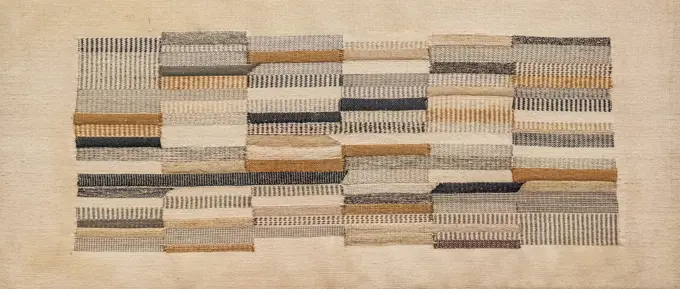
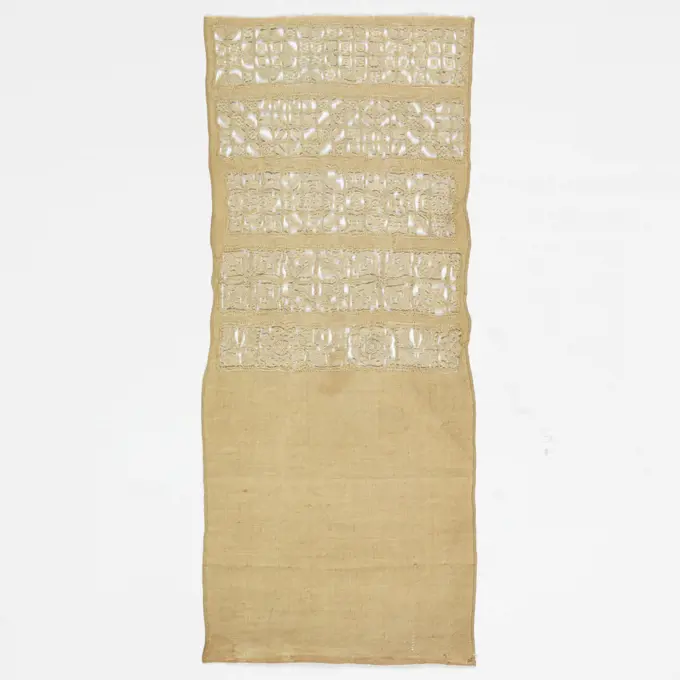
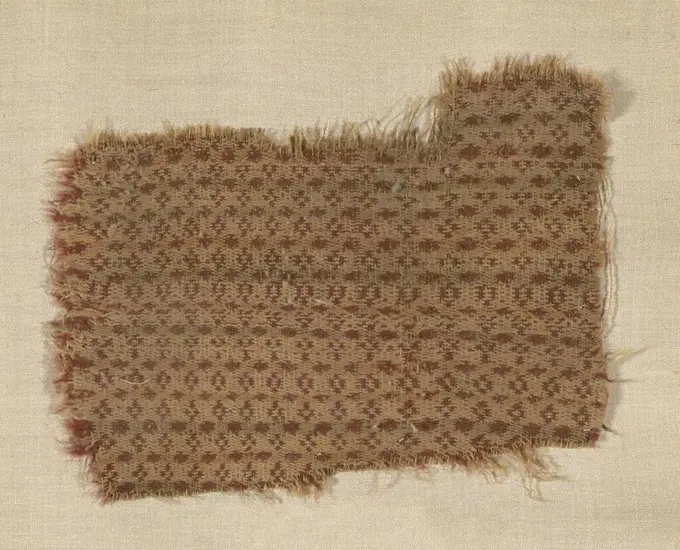
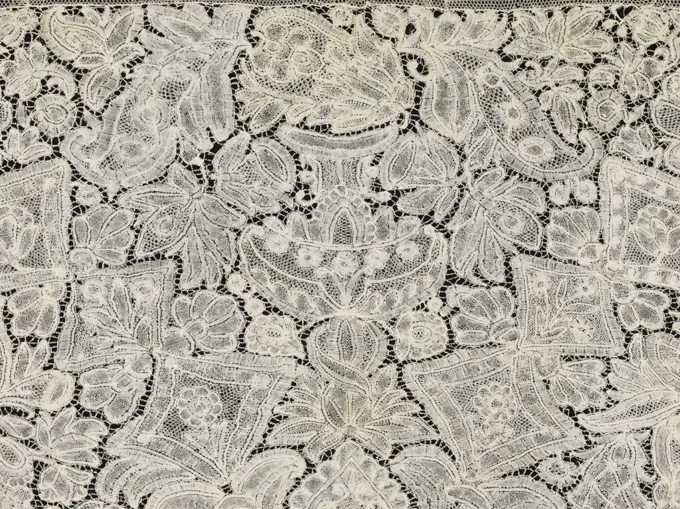
Various textile fragments featuring floral patterns and intricate designs, highlighting rich materials and weaving techniques from different eras.
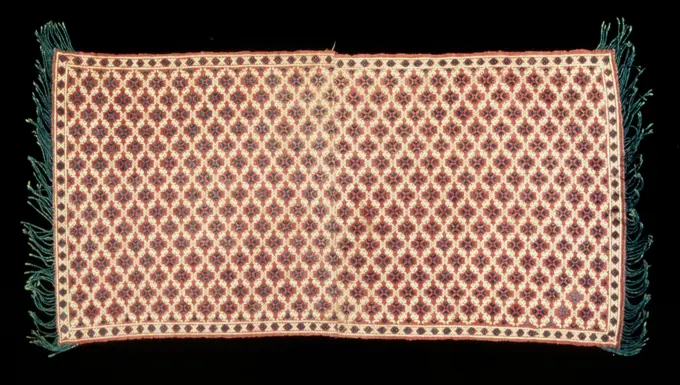
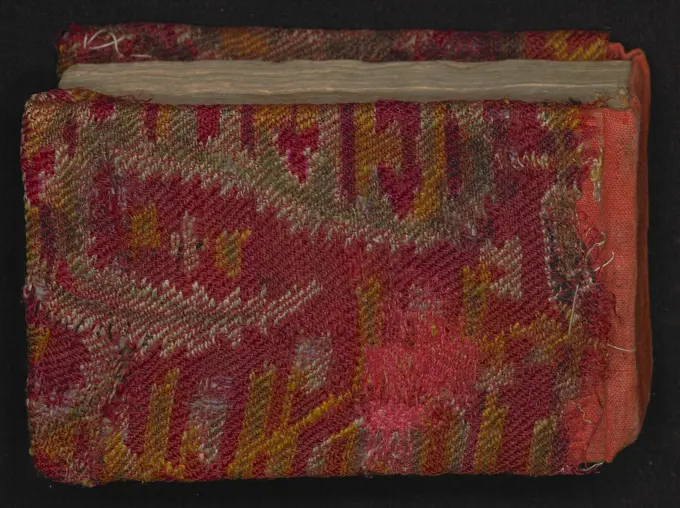
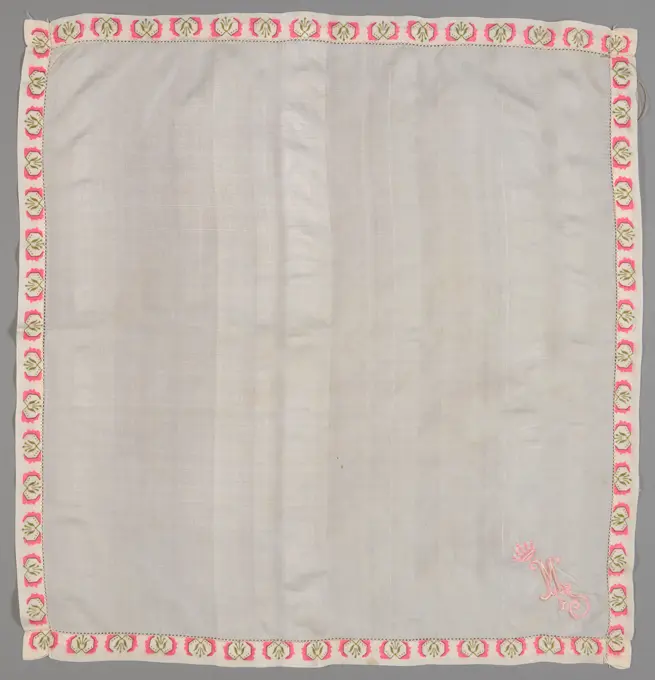
Cover, 19th century, L.40-1/2 x W.21 in., cotton; needlework, Armenia, 19th century
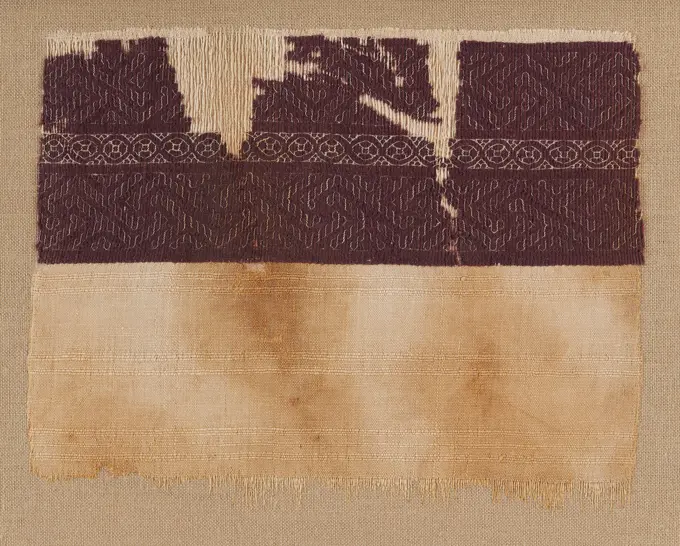
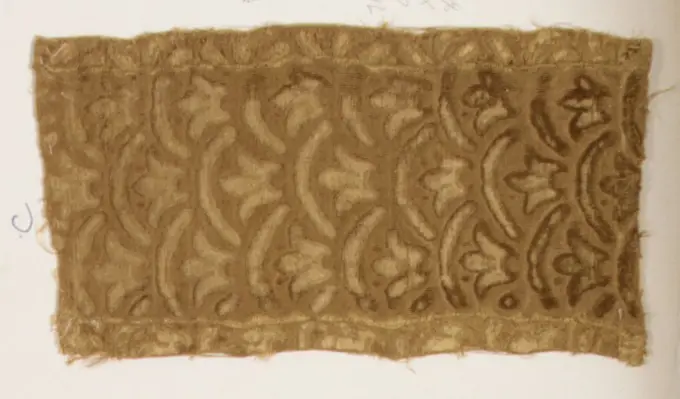
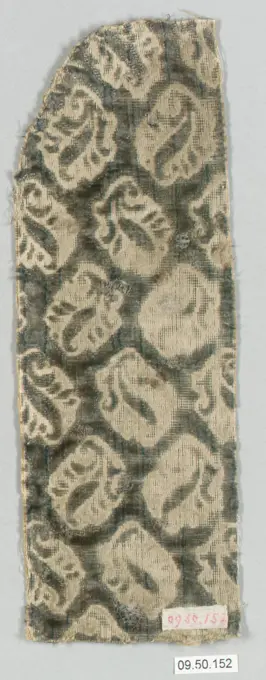
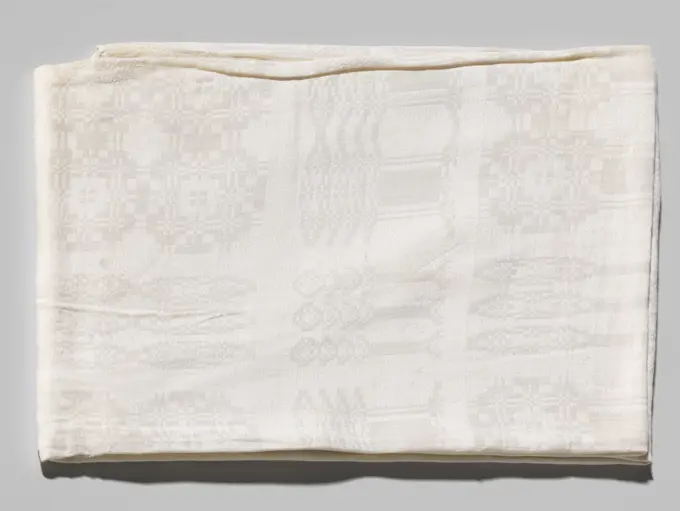
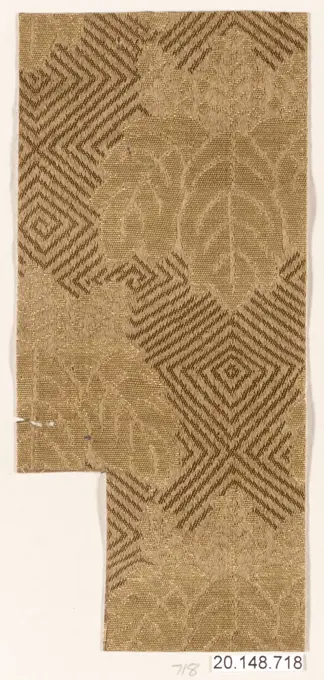
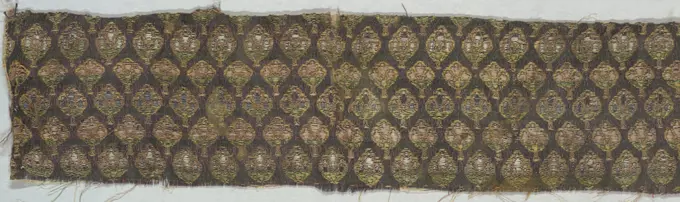
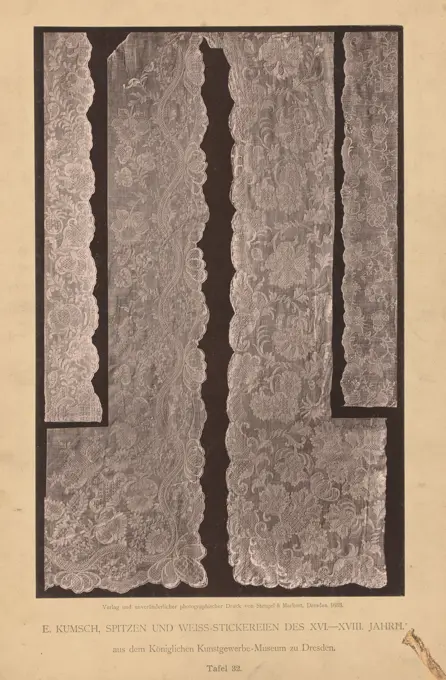
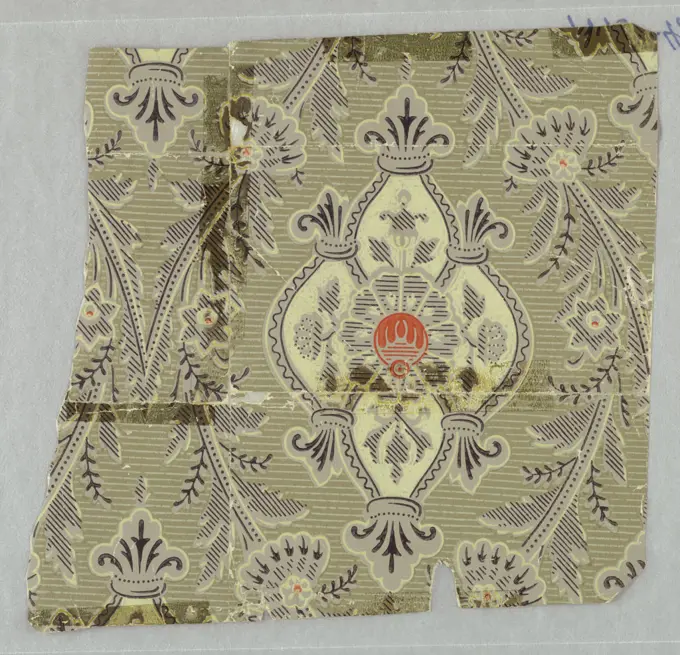
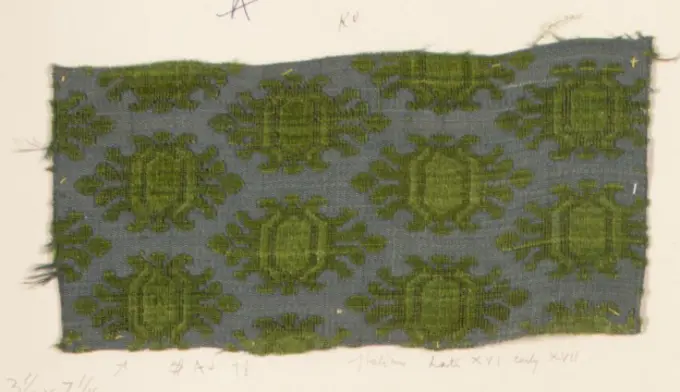
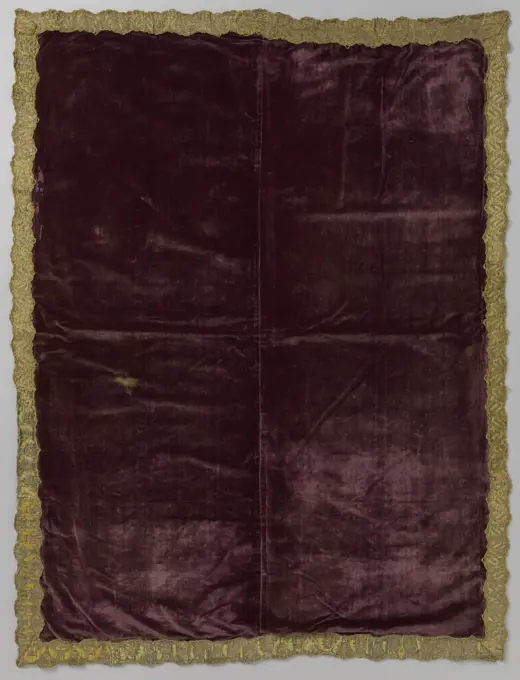
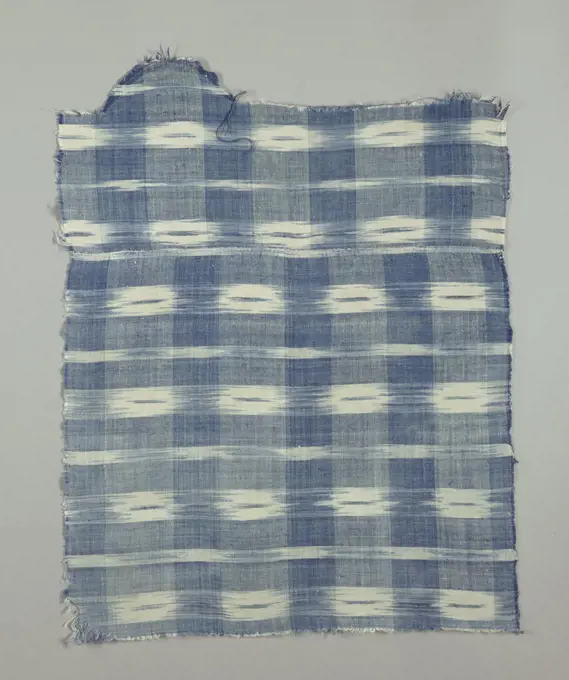
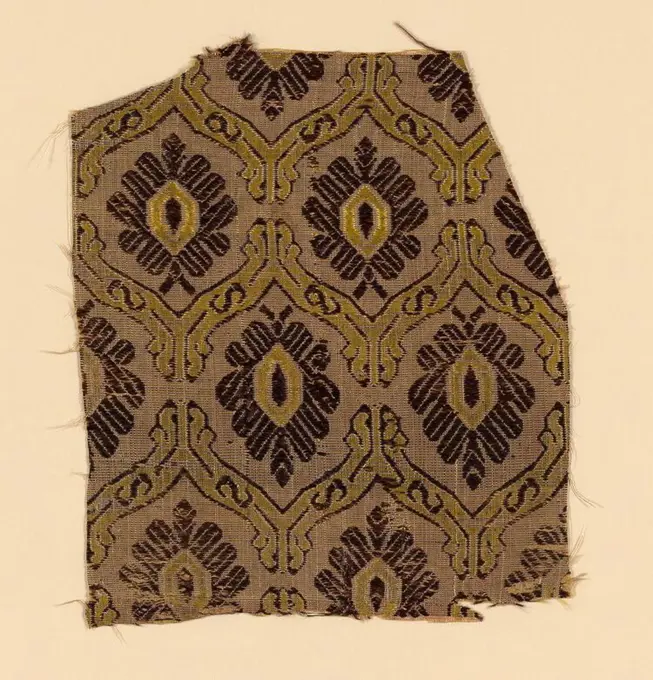
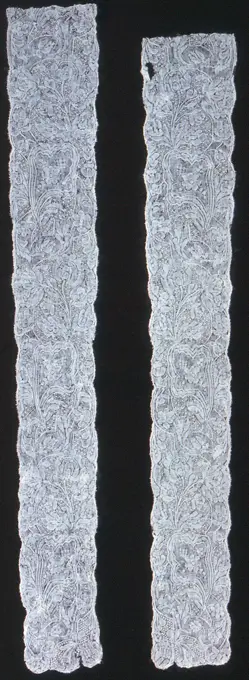
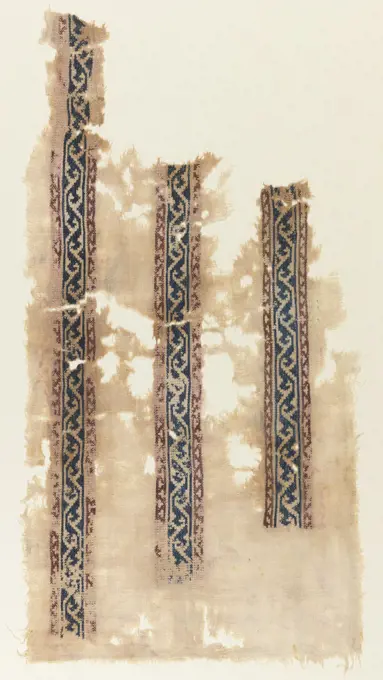
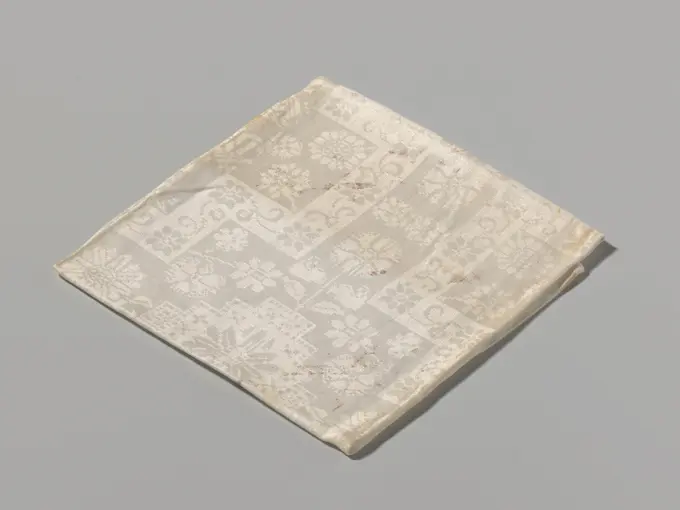
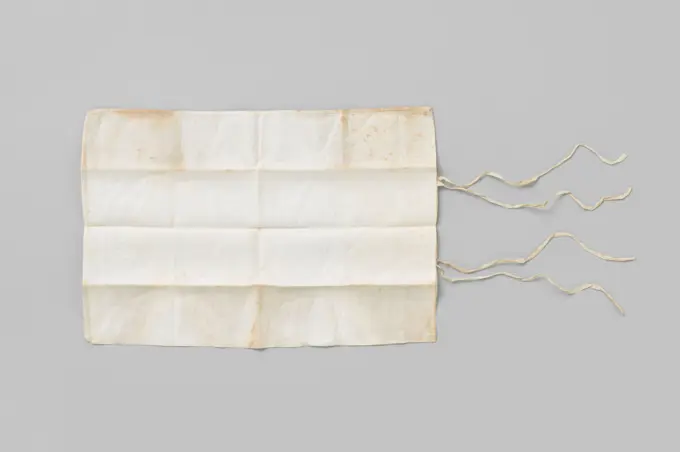
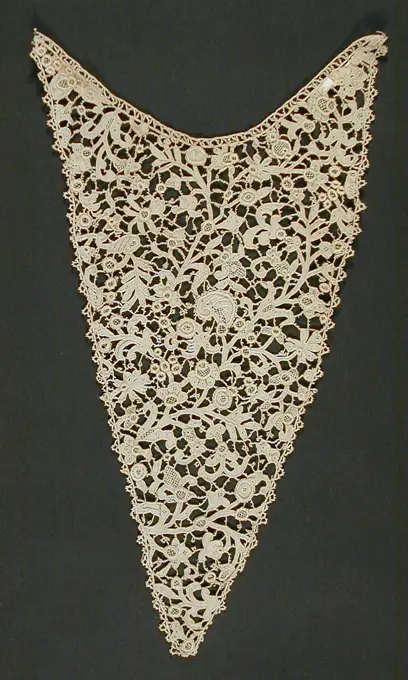
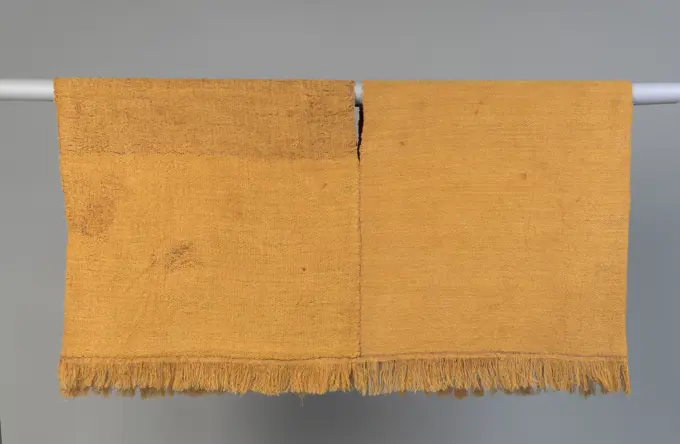
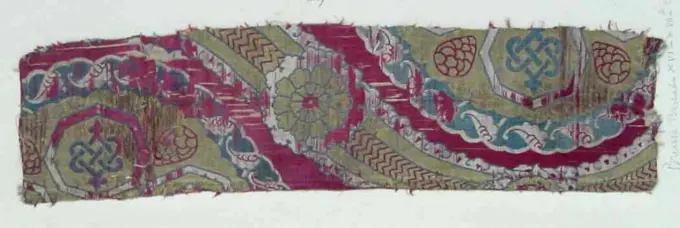
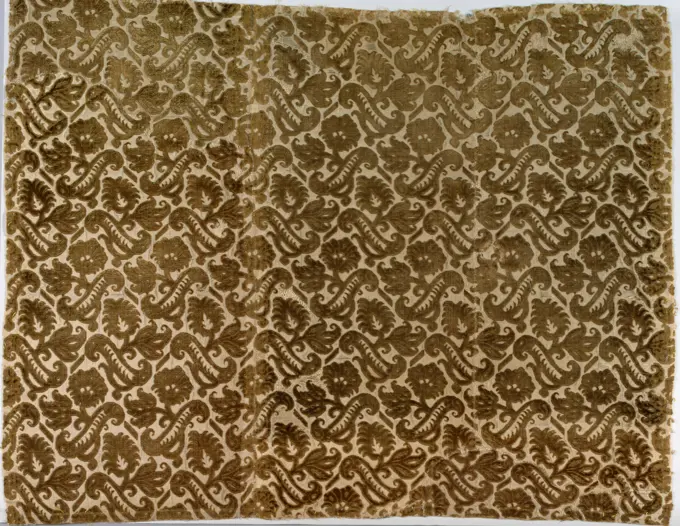
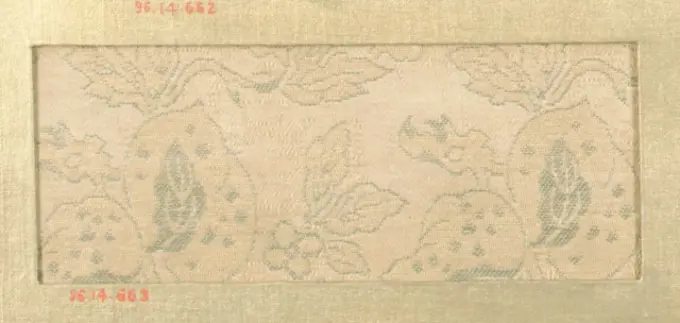
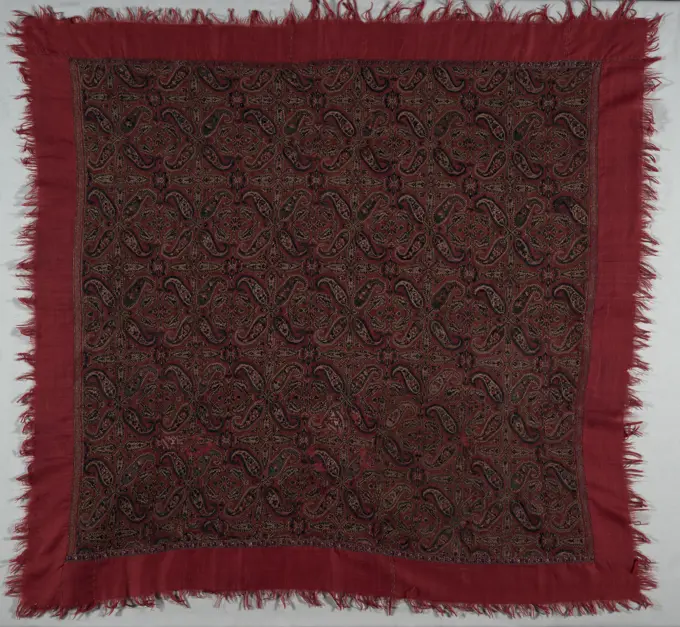
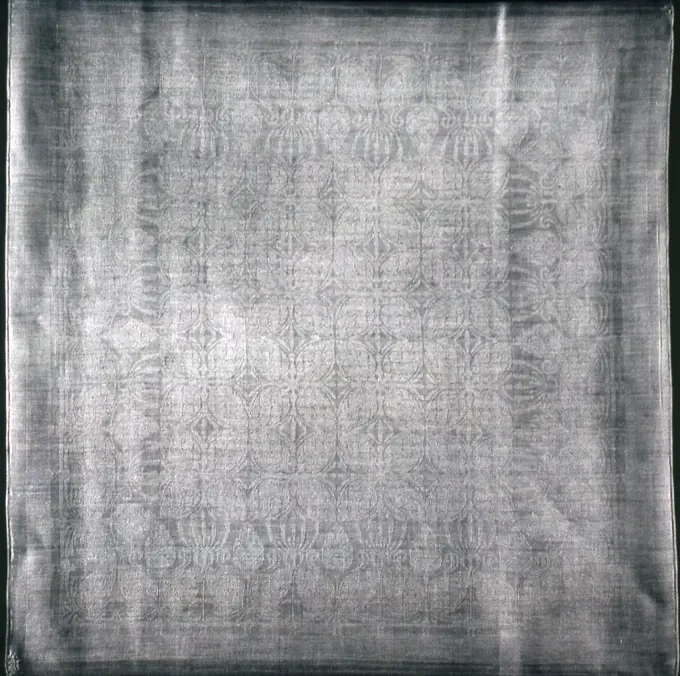
Fragment, Medium: silk, metallic Technique: plain weave and, Selvage to selvage width with design of flowers facing in alternate directions in blue and silver., 17th century, woven textiles, Fragment. Elongated palm scarf of woven wool and silk with a white fond, wide cross edges of Bota's with voluntary in donkerkobalt blue and red on snake garlands and in the middle. An edge all around with unilaterally oriented, upright botas, which opposite each other at the top and at the top, a row of seven pieces. They correspond to the front-over botas of the middle edge and corner motifs. Around every Bota is a white border as an aurea pool saved on the entire, while a very stuffed pattern of hose slides of tendrils. The inside of all Bota's has two concentric tires and serpentine voluntaries in between. A foot or vase or leaf rosette is missing at all. The outer edge consists of narrow, cross-cutting edges with the corners with swingers on either side, caught in very narrow lists. The technique consists of a white silk necklace with woolen weft, 1/3 woven. The pattern has been launched and the flotted wires are not cut on the back. The thick wool frills is prepared, from crossing, white Fragment of the fabric; Egyptian workshop; III-V century (201-00-00-500-00-00);Fragment 17th century possibly Italian. Fragment 230606Cover, 19th century, L.40-1/2 x W.21 in., cotton; needlework, Armenia, 19th centuryFragment 17th-18th century Italian. Fragment 230419Fragment (Iran); silkPiece 16th-17th century Italian. Piece 215553Napkin with the Oranjeboom, Anonymous, 1700 - 1725 Napkin from white Linnamast with the Oranjeboom. Biling -sided symmetrically surprising peel pattern: a square of nine blocks in the middle; Side in groups placed Cypres-like trees that cut each other along the Negen. Northern Netherlands (Possible) linen (material) damask Napkin from white Linnamast with the Oranjeboom. Biling -sided symmetrically surprising peel pattern: a square of nine blocks in the middle; Side in groups placed Cypres-like trees that cut each other along the Negen. Northern Netherlands (Possible) linen (material) damaskPanel, Medium: Warp; s-spun, teo ply Z-twist. Wefts; S-spun linen, S-spun wool. Texhnique: slit tapestry with supplementary wrapping and supplementary wefts forming pile., Bands of pile at top and bottom with a band of purple tapestry in the center. Selvedge at left., Egypt, 4th-5th century, woven textiles, PanelFragment; linenFragment of coarse linen tissue, with blue, white and dark brown studs, anonymous, c. 1800 - c. 1825 Fragment of coarse linen fabric, with blue, white and dark brown studs on brown surfaces. Spain.  linen (material) Fragment of coarse linen fabric, with blue, white and dark brown studs on brown surfaces. Spain.  linen (material)Piece 18th century Japan. Piece 71714Fragment green silk fluble with pattern of stripped flower branches, anonymous, c. 1570 - c. 1599 Fragment green silk velvet with pattern of stripped flower branches. Italy silk Velvet chiseled Fragment green silk velvet with pattern of stripped flower branches. Italy silk Velvet chiseledFragment late 16th century Italian. Fragment 230222Piece 18th-19th century Japan. Piece 67833Fragment, Medium: silk Technique: woven, Offset repeat of tightly arranged vegetal or floral forms., Iran, 18th-19th century, woven textiles, FragmentDresden, Stengel & Markert, Four pieces of German lace from around 1770, recto - printed, This print is part of a cover with 49 prints and a list of illustrations., photomechanical print, photographs, photographically illustrated books, E. KUMSCH, SPITZEN AND WHITE STICKERS OF THE 16th-18th CENTURY, Table 32., height 355 mm, width 229 mm, photographer, 1888 - 1888, paper, papier, collotype, clichémaker, printer, drukker, Publication (Event), Publication, publisherSidewall - fragment, Block-printed on satin ground, Quatrefoil medallion with red center, surrounded by foliate diaper. Printed on gray satin or polished ground., 1840-70, Wallcoverings, Sidewall - fragmentHandkerchief Made 1850-1875 Belgium. Linen, plain weave; embroidered in padded overcast and padded satin stitches; edged with mixed lace known as Brussels application lace bobbin lace applied to machine-made net .Tissue unknownFragment red silk samiet. Fragment of red silk with pattern in yellow from stars, rosettes and arabes.Fragment; silkFragment late 16th century Italian. Fragment. Italian. late 16th century. Silk. Textiles-VelvetsTablecloth of silk velvet, finished with gold galon, 1600 - 1699 Tablecloth of silk velvet, plain purple-purple, finished with gold galon, the contours of which are wave.  silk. linen (material). cotton (textile) velvet (fabric weave) Tablecloth of silk velvet, plain purple-purple, finished with gold galon, the contours of which are wave.  silk. linen (material). cotton (textile) velvet (fabric weave)R Copis in the fifth Dewanagari illustrated with miniatures;  18th century (1701-00-00-1800-00-00);Textile, Medium: cotton Technique: warp and weft resist (ikat) on handwoven plain weave, Alternating warp stripes of light blue and white intersect with blue and white weft stripes to form a large scale plaid pattern with both solid color and ikat stripes., France, early 19th century, printed, dyed & painted textiles, TextileElizabeth Moutal, Shaker Textile, c 1936 Shaker TextileFragment (France); plain compound cloth, brocaded silk, cotton and metalBliżej Kultury unknownFragment, Medium: silk, metallic thread Technique: compound weave with continuous supplementary weft, Flowers and incomplete ogival form on a dark red ground., Turkey, 17th-18th century, woven textiles, FragmentTextile swatch, Deerfield Society of Blue and White Needlework, (Deerfield, Massachusetts, USA, 1896-1926), Deerfield, Massachusetts, USA, 1910-20, Textile swatchFront of cotton tulle with tambourish. Front of lace: white tambourish on natural-colored machine tulle. The pattern has garlands of arches and olive branches, laurel wreaths and a flower pot, inside a soutache ornament. The display is finished on three sides with dot gallon and has copper rings along the top.Length of wool damask ca. 1710 () British or French. Length of wool damask. British or French. ca. 1710 (). Wool. Textiles-WovenPiece 18th-19th century Japan. Piece 67754Cap Crown and a Pair of Lappets. Belgium, Flanders, Brussels. Date: 1720-1729. Dimensions: a: 18 × 22.7 cm (7 1/8 × 8 7/8 in.)b: 64.4 × 11.8 cm (25 3/8 × 4 5/8 in.)c: 64.7 × 12 cm (25 1/2 × 4 3/4 in.). Linen, bobbin part lace of a type known as "Brussels". Origin: Flanders. Museum: The Chicago Art Institute, Chicago, USA.Handkerchief, early 1800s. France, early 19th century. Embroidery: linen; overall: 38.7 x 38.7 cm (15 1/4 x 15 1/4 in.).Katagami stencil; miniature ornament (komon) of groups of tiny bamboo leaves. unknown, authorPiece 18th-19th century Japan. Piece. Japan. 18th-19th century. Silk. Edo (1615-1868). Textiles-WovenSiapo (tapa cloth), 1900s, Smoa, maker unknown. Gift of Thomas Trood, 1917.Shawl (doshalla), 18th century, 55 3/4 x 80 3/8in. (141.6 x 204.2cm), Wool, India, 18th centuryHalfovaal -shaped fragment of bobbin with spreading pattern and leaf edge, anonymous, c. 1870 Halfovaal-shaped fragment of black bobbin: Chantilly side. Spray pattern with dots on a fine hexagonal grid. A scalloped edge of large leaves runs along the curved side. Above the large leaves a flower branch with round -leaf flowers alternately alternated with a flower branch with flowers with heart -shaped petals. The other sides have been cut and not finished. The side is possible a fragment of a hat veil. Bayeux silk bobbin lace Halfovaal-shaped fragment of black bobbin: Chantilly side. Spray pattern with dots on a fine hexagonal grid. A scalloped edge of large leaves runs along the curved side. Above the large leaves a flower branch with round -leaf flowers alternately alternated with a flower branch with flowers with heart -shaped petals. The other sides have been cut and not finished. The side is possible a fragment of a hat veil. Bayeux silk bobbin lacePiece early 18th century China. Piece 69954Textile (France); Made by Herman A. Elsberg (American, 1869-1938); silk, cottonFragment. Italy. Date: 1625-1675. Dimensions: 18.8 x 15.7 cm (7 3/8 x 6 1/4 in.). Silk, plain weave with self-patterning ground wefts. Origin: Italy. Museum: The Chicago Art Institute, Chicago, USA.Cap Streamers (Belgium); linenUchishiki (Altar Cloth) Made 1870-1890 Japan. Silk, 7 1 satin damask weaveLining Silk, 7 1 satin damask weaveTassels Plied silk 4 element square braid cord, knotted and silk-wrapped-cotton ball; cut fringe .Jewish breastplateLumbar ,, 1725 - 1770  North Netherlands linen (material). bobbin lace  North Netherlands linen (material). bobbin laceTextile, Medium: linen, silk Technique: embroidered on plain weave, Section of undyed linen cloth with three parallel bands extending partially across it with interlocked continuous reserved scrolls on dark blue silk cross-stitch ground, red cross-stitch guard bands with small trefoil reserves., Egypt, 12th-13th century, embroidery & stitching, TextileNapkin with pattern of flowers and band work, anonymous, 1730 - 1780 White linen Damas napkin with a pattern of flowers and band work. Germany (possibly) linen (material) damask White linen Damas napkin with a pattern of flowers and band work. Germany (possibly) linen (material) damaskLumbar, 1650 - 1670 Lumbage of linen with open homen, brand AVG and V and I. Northern Netherlands linen (material) Lumbage of linen with open homen, brand AVG and V and I. Northern Netherlands linen (material)Ceiling paper, Maxwell & Co., S.A., Chicago, Illinois, USA, Machine-printed paper, Repeating large and small floral bouquets with vining. Singular five-petal flowers scattered between bouquets. Light beige ground. Printed in white, greys, light green and light metallic pink. Large center tear with tape stains., USA, 1905-1915, Wallcoverings, Ceiling paperFull frame view of an antique bedspread, patterned fabric with a feded strip, and a red border with small running stitches.Fragment with pattern of flower vase and grape vine ,, c. 1725 - c. 1730 Fragment with pattern of flower vase and grape vipel. France (possibly) Ketting an element: Silk lampas (textile material) Fragment with pattern of flower vase and grape vipel. France (possibly) Ketting an element: Silk lampas (textile material)Textile, Medium: cotton Technique: plain weave, Small sampler consisting of horizontal stripes in various designs. Fringes on both ends., Mexico, 19th century, woven textiles, TextileVestee. Italy, Burano, late 19th century. Costumes; Accessories. Linen needle lacePiece 19th century Japan. Piece 72237BALAS O FARDOS DE PAJA.Edging, Medium: linen Technique: machine made, Chantilly-type edging lace with a pattern of pendant medallions joined by swags above a border of conventionalized forms., France, 19th century, lace, EdgingSleeveless Tunic 12th-15th century Chimú Chimú men wore broad tunics, sometimes with a fringe at the bottom, often over elaborate loincloths. This example, made of bright ochre yarns loosely brocaded over a plain cotton ground, was woven in two pieces and joined by a seam in the middle, leaving open a slit for the neck. It appears the weaver ran out of one shade of ochre and completed the garment using yarn from a different dye lot (note the color change on the upper part of the proper right side the viewer’s left).. Sleeveless Tunic 312785Fragment 18th century possibly Italian. Fragment. possibly Italian. 18th century. Silk. Textiles-VelvetsTextile Fragment 16th-17th century. Textile Fragment 454531Fragment; silk; Bequest of Richard Cranch Greenleaf in memory of his mother, Adeline Emma Greenleaf; 1962-56-48Carpet or bedspread, photograph, photo, page, photos, photographically illustrated books, height 139 mm, width 97 mm, photographer, 1873 - 1878, photographic paper, photo paper, albumen print, albumine printPiece 19th century Japan. Piece 72032Fragment Made 1201-1300 Spain. .Fragment Made 1601-1650 Italy. Silk, plain weave with supplementary pile warps forming cut, uncut, and voided velvet .Bed Hanging (Italy); linenPiece 18th-19th century Japan. Piece 66387Fragment of a Shawl, late 1700s - early 1800s. India, Kashmir, late 18th - early 19th century. Tapestry twill; wool; overall: 95.3 x 98.4 cm (37 1/2 x 38 3/4 in.).Piece 19th century Japan. Piece 68177Fragment of the lace;  18th century (1701-00-00-1800-00-00);A child's arm.Napkin, Pine Cone: Design no. 607; Designed by Chris Lebeau (Dutch, 1875 - 1945); Manufactured by E.F.J. Van Dissel and Son; Netherlands; Warp x Weft: 66.7 x 69.9 cm (26 1/4 x 27 1/2 in.)Two Two, Anni Albers, 1952, rayon, linen, cotton, Bauhaus Copyright: xZoonar.com/Tolox 21630126Royal cloth, 20th century, 308 x 41 in. (782.3 x 104.1 cm), Cotton; raffia resist indigo dyed, Cameroon, 20th century, In Cameroon, a Baileke king surrounds himself with elaborate visual displays that declare his economic, political, and religious power. Large ndop cloths (this one is 25 feet long) are used to distinguish royal ritual spaces and often provide a backdrop for an appearance by the king.Fragment 17th century Italian. Fragment 230081Cloth (tzute), 1930-1940, 44 x 37 in. (111.76 x 93.98 cm), Cotton, Guatemala, 20th centurySampler, Medium: linen Technique: cutwork embroidery, Five cross borders of cutwork in different patterns. Sampler is unfinished., England, 17th century, embroidery & stitching, SamplerPiece 18th-19th century Japan. Piece 67391Tibetan printing mat, anonymous, 1890 - 1910 photograph  Rijks Ethnographic Museum paper. cardboard albumen print tools, implements of printer Rijks Ethnographic MuseumConciliate belt; Manufaktura Aleksander Unruga (Kobyłka; Pasów Factory; 1781-1787); 1781-1784 (1781-00-00-1784-00-00);Fragment. Egypt. Date: 301 AD-400 AD. Dimensions: 10.8 × 15.2 cm (4 1/4 × 6 in.). Wool, compound weave. Origin: Egypt. Museum: The Chicago Art Institute, Chicago, USA.Piece of Homespun Wool. Dated: c. 1938. Dimensions: overall: 33.1 x 24.7 cm (13 1/16 x 9 3/4 in.). Medium: watercolor and pen and ink on paperboard. Museum: National Gallery of Art, Washington DC. Author: Hugh Clarke.Flounces, Medium: linen Technique: bobbin lace, Brussels style, 19th century, lace, FlouncesCartons for stained glass windows, Anonymous, 1878 - 1938 photograph   photographic support. cardboard  applied arts, arts and crafts; industrial designPassement of glossy light green cord through which loops are braided, c. 1920 Passement of glossy light green cord, causing loops to be braided on cardboard. NijmegenFrance (possibly) cardboard Passement of glossy light green cord, causing loops to be braided on cardboard. NijmegenFrance (possibly) cardboardPillowcase, 1692 - 1735 Pillowcase of linen, later entertained. Marked Kroon GS 12 and Kroon SG 6. North Netherlands linen (material) Pillowcase of linen, later entertained. Marked Kroon GS 12 and Kroon SG 6. North Netherlands linen (material)Fragment with a Band of Baskets and Plants and a Loop Pile 4th-6th century Looped weave, formed from added weft threads that extend from the surface of the fabric, was produced in Egypt from as early as the Pharaonic period and was commonly used for domestic textiles. In the Byzantine period such fabrics continued to be used for interior furnishings but were also used for clothing. Loops of linen pile, found on the interior and exterior of tunics and possibly mantles as well, provided added warmth.. Fragment with a Band of Baskets and Plants and a Loop Pile 443545Fragment, Medium: silk, metallics Technique: woven, Striped fabric in dark green, gold and silver., India, 19th century, woven textiles, FragmentFragment (Greece); linen; Bequest of Marian Hague; 1971-50-132Piece of fabric from clothing. Kompania Fabryki Jedwabnej, manufactureCurtain (USA); cottonFragment (France); silkFragments, Medium: silk Technique: printed on satin weave, Ivory ground with a border design printed in green, red, pink, purple, orange and blue. Arches of feathery foliage and small round blossoms, berries and buds., France, 18th century, printed, dyed & painted textiles, FragmentsCeintuur ribbon of salmon pink taf side, anonymous, c. 1908 - c. 1910 Ceintuur ribbon of salmon pink taf side. China whole: Taffeta Ceintuur ribbon of salmon pink taf side. China whole: TaffetaShawl, Medium: cashmere wool Technique: embroidery, White Kashmir shawl with narrow border embroidered in bright silks in small 'cone' pattern; trimmed with narrow silk fringe. Arranged as cape with hood, by attaching edges at one point., India, 19th century, costume & accessories, ShawlQuilt, Star of Lemoyne pattern variation ca. 1860 American The ground fabric of this quilt top is black silk. The stars are pieced of a variety of colored silks. The plain black blocks are diamond quilted. Each individual piece of silk that combines to farm the stars is quilted around its edges. The quilt's backing is of a dull green glazed cotton, and the binding is of red silk.. Quilt, Star of Lemoyne pattern variation. American. ca. 1860. Silk and cotton. Made in United StatesFragment, Medium: silk, metallic Technique: uncut pile in plain weave foundation (velvet) with supplementary silver weft, Light blue velvet with design of conventionalized flowers facing alternately left, then right in alternate rows. In light blue with silver., Italy, 17th century, woven textiles, Fragment